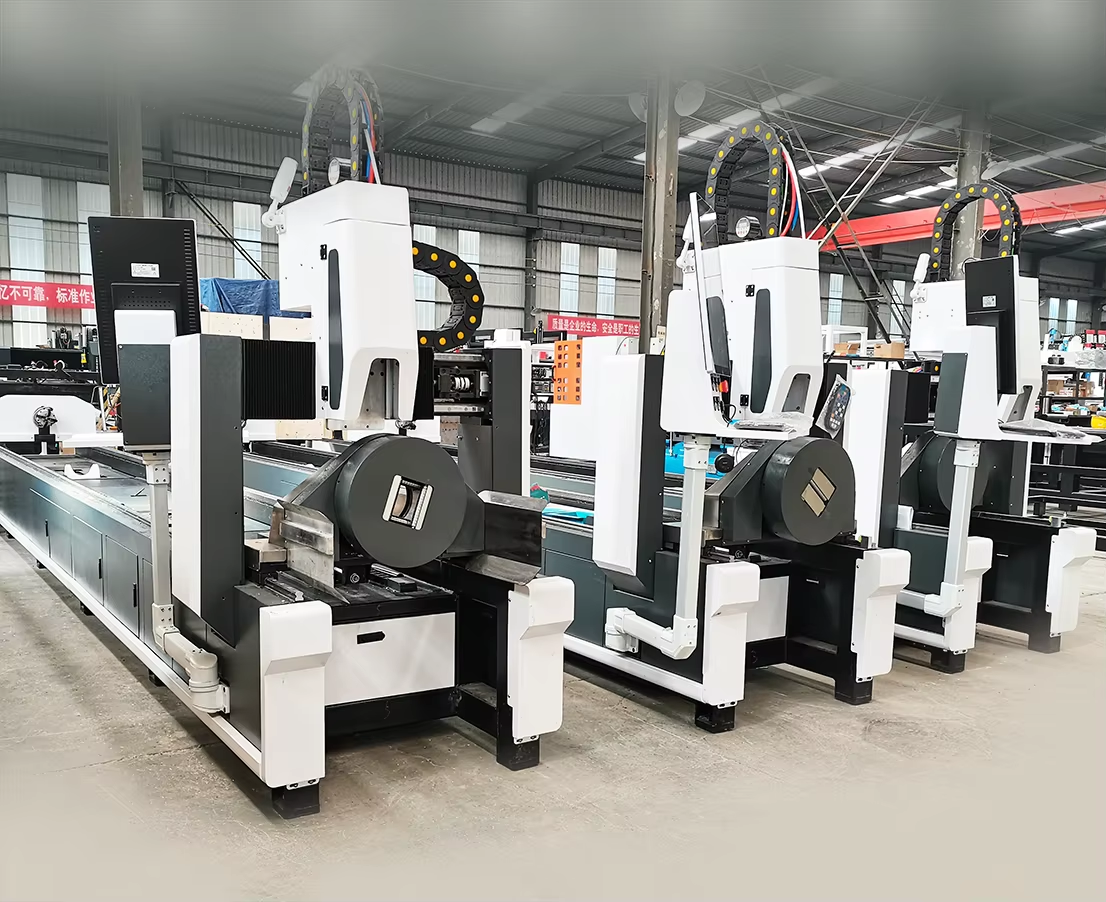


LT240: Overview
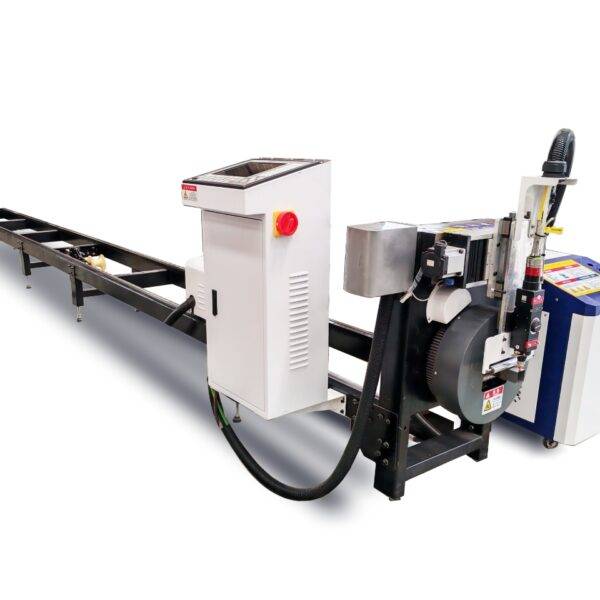
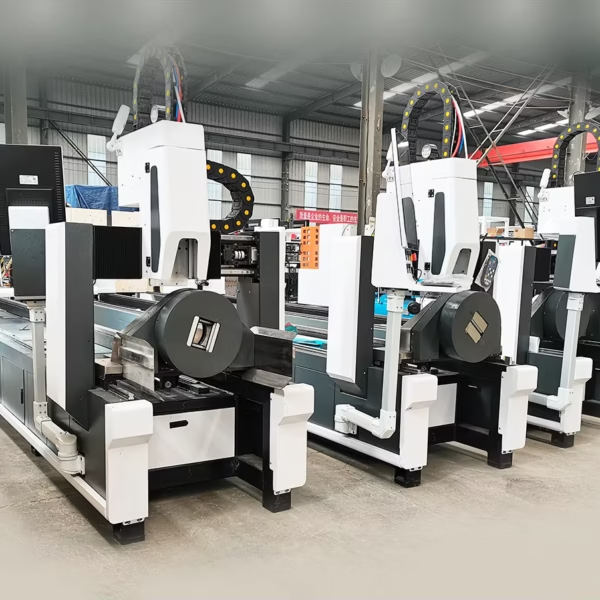
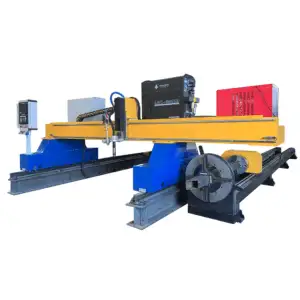
The LT240 is our general-purpose tube laser for round, square, rectangular and oval tubes from Ø20 to 240 mm, with 1.5 kW to 6 kW sources. Full-stroke pneumatic chucks centre each tube automatically, so a change of tube size takes little set-up.

Technical Specifications
| Tube diameter | 20–240 mm |
|---|---|
| Profiles | Round, square, rectangular, oval |
| Laser source | 1500–6000 W fiber |
| Positioning accuracy | ±0.03 mm |
| Chucks | Full-stroke pneumatic, self-centring |
| Materials | Carbon steel, stainless steel, aluminium |
| Software | Tube cutting software with nesting |
| Certification | CE, ISO 9001 |
| Warranty | 24 months on the whole machine (consumables excluded) |
Three Things That Decide Stability
Two tube lasers with the same data sheet can behave very differently after a year. Stability comes from three parts: the laser source, which must deliver the same power hour after hour; the linear guides, whose rolling elements carry the moving axes with little friction and keep them straight; and the servo drives, which turn the controller’s commands into the speed and position of the head and chucks. Ask for the brand of each in the quotation, and compare quotations on those lines.
Cutting Square and Rectangular Tube
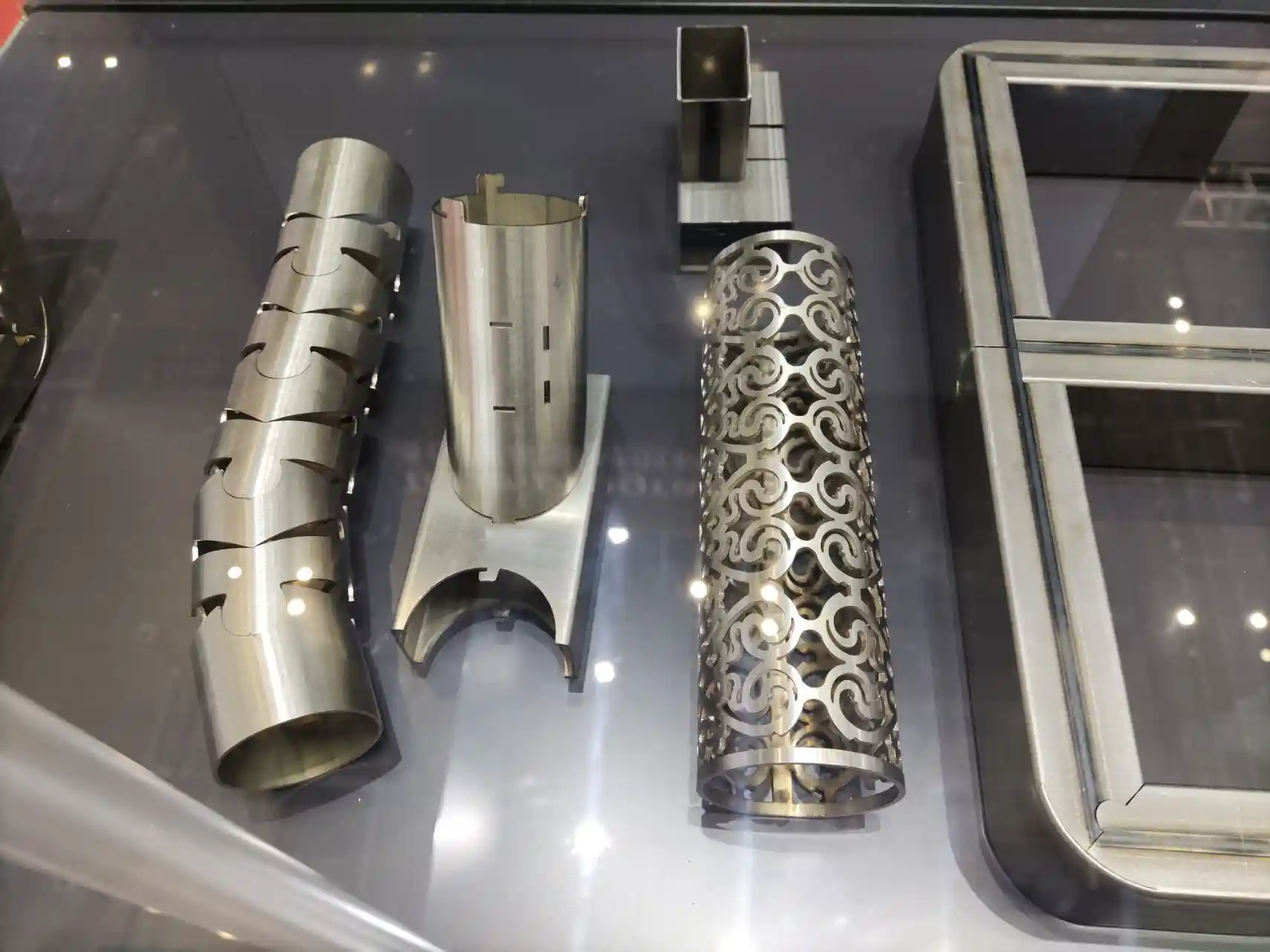
Round tube is the easy case: the surface passes under the head at a constant distance. On square and rectangular tube the head has to follow the corners while the tube rotates. If the speed and power do not adapt, the corners burn or keep a burr. Good tube software slows down and adjusts power at the corners and compensates for the corner radius, which varies between tube suppliers. Check sample parts from your own supplier’s tube, not only from a demo tube.
Edge-Finding and Real Tubes
Stock tube is never perfectly straight, square or centred. Edge-finding deals with that: before cutting, the head probes the tube to find its actual position and twist, and the program is corrected. Confirm that the software in your quotation includes it. On long tubes with holes along the length, this step decides whether the last hole is where the drawing says.
Nesting and Material Yield
The software places parts end to end along the stock length. Where two parts share a straight cut, one cut serves both (common-line cutting), which saves time and material. The remaining loss is the tailing, the piece the chucks hold at the end. If your tubes are expensive, compare the tailing length between offers; the dual-chuck LT240S is built to keep it short.
Write Down Your Tube Requirements First
| Item | What to note | Common mistake |
|---|---|---|
| Diameter | Smallest and largest today, and what you expect in three years | Looking only at today’s orders |
| Wall | Thickest wall per material | Using the average wall instead of the maximum |
| Materials | Share of carbon steel, stainless, aluminium, brass | Forgetting that reflective metals need attention |
| Features | Straight cuts, holes, saddle cuts, bevels | Underestimating saddle and bevel work |
| Batch pattern | Few sizes in large batches, or many sizes in small batches | Choosing loading without looking at batch size |
| Tolerances | Length, angle and edge requirements in numbers | Writing “good accuracy” instead of a value |
Once this list exists, every machine that misses one line can be dropped, and comparing the rest becomes much shorter.
Manual or Automatic Loading
Automatic bundle loading earns its money when the machine cuts many tubes of the same size every day, or runs two shifts. With many sizes in small batches, the tube size changes so often that a person loading by hand is more flexible, and a semi-automatic rack is usually enough. Decide by tubes per day and size changes per shift, not by how the demo machine was equipped.
Common Problems and How to Fix Them
| Problem | Usual cause | What to do |
|---|---|---|
| Burnt or burred corners on square tube | Speed and power not adapted at the corners | Use corner settings; enter the real corner radius of your tube |
| Holes out of position along a long tube | Tube bow or twist not compensated | Run edge-finding; reject stock outside straightness tolerance |
| Spatter inside the tube | Beam exits and hits the opposite wall | Adjust break-through parameters and cut order |
| Weld seam runs through a hole | Tube orientation not set to the seam | Orient the seam before cutting where the part allows |
| Edge quality varies along the tube | Height sensing disturbed by dirt or a damaged nozzle | Clean and calibrate the sensor; replace the nozzle |
What Decides the Price
| Item | Options | Effect on price and use |
|---|---|---|
| Laser power | 1.5–6 kW | Higher power for thick walls and throughput on medium walls |
| Bed length | Standard stock length or longer | Longer stock means fewer loads and less tailing per part |
| Loading | Manual, semi-automatic or bundle loader | Choose by volume and how often the tube size changes |
| Software | Nesting, 3D import, common-line | Programming speed and material yield |
The LT240 is quoted on request.
Where It Sits in the PCL Tube Laser Range
| Model | Tube size | Power | Best for |
|---|---|---|---|
| MAK100 | Ø10–100 mm | 1.5 kW | Entry model, small tubes |
| LT120S | Ø120 / □120 mm | 1.5–3 kW | Side-mounted, heavy walls up to 10 mm |
| LT240 (this machine) | Ø20–240 mm | 1.5–6 kW | Round, square, rectangular, oval |
| LT240S | Ø/□20–240 mm | 1.5–6 kW | Side-mounted, dual chucks, 200 kg tubes |
| LT360 | Ø20–360 mm | 1.5–6 kW | Large diameters, 6 m or 9 m stock |
From Inquiry to Production
- Tube list and samples. Send your main tube sizes, materials, daily volume and part drawings.
- Configuration and layout. We fix chuck size, bed length, source and loading, and send a layout drawing with the floor space, power and air connections.
- Build and test. The machine is assembled and tested before shipment; lead time is confirmed in the quotation.
- Site preparation. A level floor, the power connection, compressed air for the chucks and assist gas, and fume extraction ready before arrival.
- Installation and training. Installation and operator training are quoted with the machine; operators learn programming, nesting, daily checks and parameter adjustment.
- Support. 24-month warranty on the whole machine, consumables excluded.
Before You Order
- Tube sizes that make up most of your volume, and the largest one.
- Profiles: round, square, rectangular, oval or others.
- Tube supplier and corner radius of square tube.
- Daily volume and batch sizes, which decide the loading method.
- Who programs the parts, and the CAD format.
Maintenance
| When | What |
|---|---|
| Daily | Clean the protective window and nozzle; check chuck jaws; empty the slag tray. |
| Weekly | Clean dust from chucks and guides; drain the air filter; check the height sensor. |
| Periodically | Lubricate guides and racks; check chuck air seals; change chiller water. |
Safety Around a Tube Laser
Two hazards are specific to tube cutting. The tube rotates, often several metres of it outside the enclosure, so the area along the bed must be kept clear while the chucks turn. And the beam leaves the far side of the tube when it cuts through, so the cutting zone has to stay enclosed or shielded. Keep the interlocks on the doors and light curtains working, wear laser safety glasses rated for the laser wavelength where the cutting area is open, and connect the extraction before cutting coated or galvanized tube.
Strengths and Limits
Strengths
- Four profile types on one machine
- Self-centring chucks for quick size changes
- Wide power range up to 6 kW
Limits to know
- End loading for heavy tubes is slower than side loading (LT240S)
- Longer tailings than a dual-chuck design
- Above 240 mm see the LT360
LT240 FAQ
What tube sizes does the LT240 cut?
Ø20 to 240 mm, in round, square, rectangular and oval sections.
Which power should I choose?
1.5 kW to 6 kW. Lower power covers thin walls economically; higher power is for thick walls and throughput.
How are bowed or twisted tubes handled?
With edge-finding: the tube is probed before cutting and the program is corrected for its real position and twist. Send a few of your tubes for a test if your stock varies a lot.
LT240 or LT240S?
Same size range. The LT240S adds side loading for heavy tubes and dual chucks for shorter tailings.
Does it cut square tube corners cleanly?
Yes, with corner settings and the real corner radius of your tube entered; check samples from your supplier’s tube.
Can you cut samples?
Yes. Send the drawing, tube size and material.
Is automatic loading worth it?
For high daily tube counts of the same size or two-shift operation, usually yes. For many sizes in small batches, manual or semi-automatic loading is more flexible.
Compare all tube laser cutting machines side by side in our selection guide.
Send your tube sizes and annual volume. We recommend the power and quote the LT240.
Get a quote