CNC Plasma Cutting Machines
From portable hand cutters to 8-axis profile cutting lines: plasma machines for plate, weld-prep bevels, pipe and structural steel, built in Jinan, China and shipped worldwide.
- 6 models
- USD 1,200 – 80,000 FOB Qingdao
- 24 months warranty
- CE ISO 9001
-
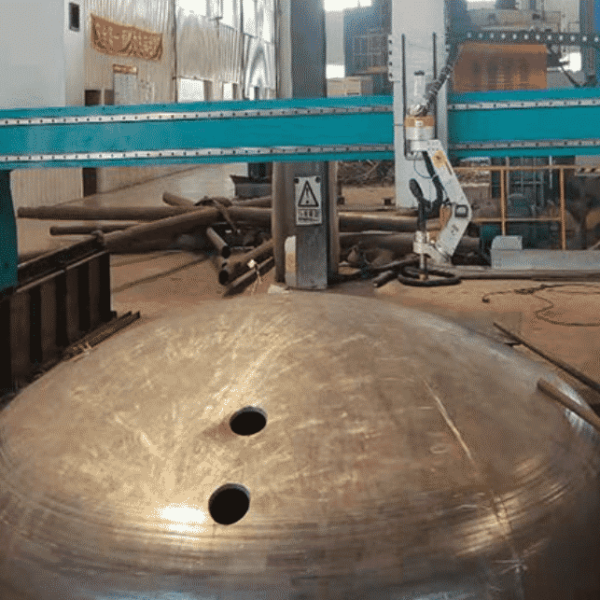
5 axis plasma cutting machine
USD 35,000 – 60,000 View details -
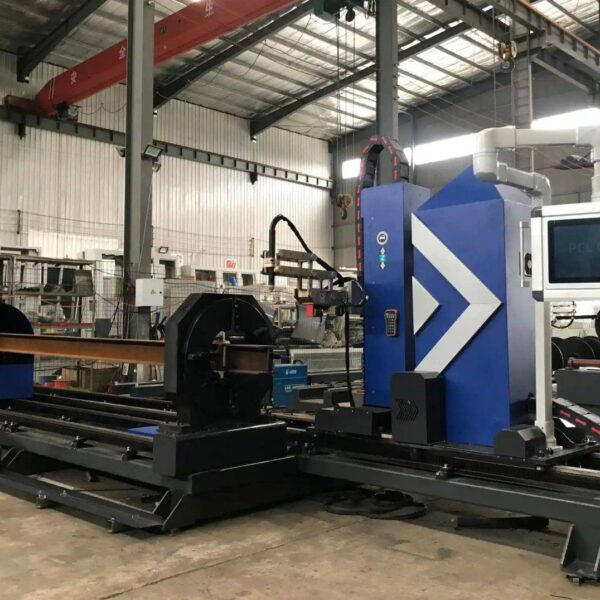
8 axis plasma cutting machine
USD 45,000 – 80,000 View details -
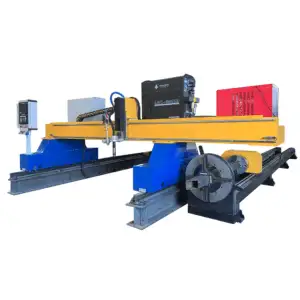
gantry plasma air cutting machine
USD 2,000 – 15,000 View details -
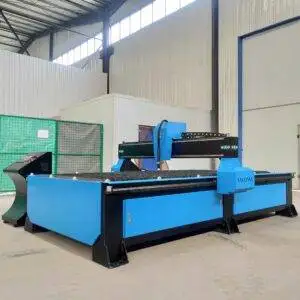
P3015 plasma cutting machine
USD 2,000 – 15,000 View details -
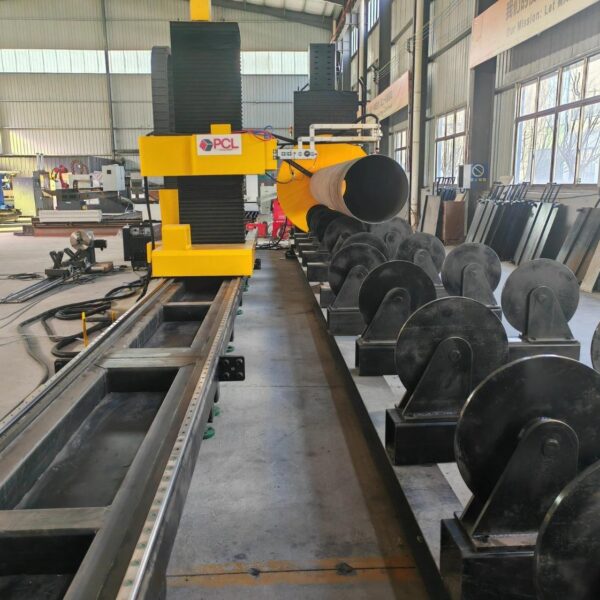
pipe plasma cutting machine
Price on request View details -
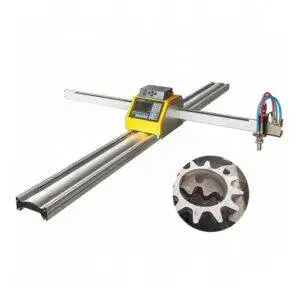
portable plasma air cutting machine
$1,200.00 View details
What Is CNC Plasma Cutting?
A plasma cutter sends an electric arc through a narrow nozzle together with a stream of gas. The arc heats the gas until it becomes plasma, hot enough to melt steel, and the gas jet blows the molten metal out of the cut. Because the arc needs a return path through the workpiece, plasma cuts any electrically conductive metal: carbon steel, stainless steel, aluminum, copper and brass.
In a CNC machine, the torch is carried by motorised axes that follow a cutting program. A height controller keeps the torch at the right distance from the plate by measuring the arc voltage, so the cut stays consistent even when the plate is not perfectly flat. Bevel heads add tilting axes, and pipe and profile machines add rotation, so the same principle covers flat parts, weld preparation, pipes and beams.
Who Uses Plasma Cutting Machines?
| Industry | Typical parts | Machines used |
|---|---|---|
| General fabrication | Brackets, flanges, base plates, gussets | P3015, gantry |
| Steel structures | Connection plates, beam copes, bolt holes, beam ends | Gantry, 8-axis profile |
| Pressure vessels and tanks | Bevelled plates, nozzle holes, pipe branches | 5-axis bevel, pipe |
| Shipbuilding and offshore | Bevelled panels, stiffeners, profiles | 5-axis bevel, 8-axis profile |
| Pipelines and plant piping | Saddles, miters, intersection holes | Pipe, 8-axis profile |
| Agricultural and construction machinery | Frames, arms, wear plates | Gantry, 5-axis bevel |
| Repair and site work | Cut-outs and modifications on site | Portable plasma cutter |
Which Plasma Cutting Machine Do You Need?
Our plasma range covers everything from a portable hand cutter to 8-axis profile cutting lines. Start with what you cut, then with how much of it:
| Machine | What it cuts | Key capability | Price (FOB Qingdao) |
|---|---|---|---|
| Portable plasma cutter | Plate and sheet, by hand or on a simple guide | Quality cutting 12–25 mm; AC 220 V / 380 V; 60% duty cycle | USD 1,200 |
| P3015 desk plasma cutter | Sheet and plate on a compact desk-type table | Integrated bed, ±0.05 mm positioning, downdraft fume extraction | USD 2,000–15,000 |
| Gantry plasma cutting machine | Large plates | Dual-drive gantry; plasma and optional flame torch for 1 mm to 200 mm+ plate | USD 2,000–15,000 |
| 5-axis bevel plasma cutter | Plate with weld-prep bevels | V, X, Y and K bevels; A/B swing ±45° (±60° optional); arc-voltage height control | USD 35,000–60,000 |
| Pipe plasma cutting machine | Round pipe | Ø50–1,500 mm (2,000 mm custom); wall 1–30 mm; saddle and intersection cuts | On request |
| 8-axis profile plasma cutter | Pipe, square tube, channel, H- and I-beams | Bevels up to ±60°; plasma up to 30 mm and flame up to 100 mm; 6 m or 12 m length | USD 45,000–80,000 |
Plate, Bevel, Pipe or Profile: Four Kinds of Plasma Cutting
Flat plate cutting
A desk or gantry machine moves the torch in X and Y over a flat plate and cuts parts from a nested layout. This is the workhorse of general fabrication: brackets, flanges, base plates and machine parts. The P3015 suits workshops with limited space; the gantry machine handles larger and heavier plates.
Bevel cutting
Thick parts that will be welded need bevelled edges. A 5-axis bevel head tilts the torch while it cuts, so V, X, Y and K bevels come off the machine ready to weld. That removes a separate grinding or milling step and makes weld preparation consistent.
Pipe cutting
A pipe plasma cutter rotates the pipe and moves the torch along it, so it can cut saddles, intersection holes and miters that are slow and inaccurate by hand. It is common in pipelines, pressure vessels and structural tube work.
Profile cutting
An 8-axis profile cutter handles round and square tubes, channels and H- or I-beams, cutting and bevelling both flange and web. With both a plasma torch and an oxy-fuel torch on one machine, it covers thin walls and heavy carbon-steel sections up to 100 mm.
Working Area and Table Size
Choose the working area from the plates you buy, not the parts you cut. Common steel plates are 1.5 m × 3 m, 2 m × 6 m and larger; a table that takes a full plate saves cutting and handling before the plate reaches the machine. Desk-type machines suit workshops that cut sheet and smaller plates; gantry machines are built to the plate width and length you specify, and their rails can be extended later. For pipe and profile machines, the important figures are the largest diameter or section and the longest length you need to load.
How Thick Can Plasma Cut?
Every plasma source has two thickness figures, and buyers often compare the wrong one. The severance figure is the thickest plate the arc can get through, slowly and with a rough edge. The quality cutting figure is what you can cut every day with a clean, square edge. As a rule of thumb, plan your machine around the quality figure and expect it to be roughly half to two-thirds of the severance figure.
| Plate thickness (carbon steel) | Recommended process | Machines |
|---|---|---|
| Up to about 25 mm | Air or industrial plasma | Portable, P3015, gantry, 5-axis, pipe, 8-axis |
| About 25–30 mm | Industrial plasma source | 5-axis, pipe and 8-axis with a matching source |
| Above 30 mm | Oxy-fuel (flame) torch | Gantry with flame torch; 8-axis 2-in-1 up to 100 mm |
The exact limits depend on the plasma source you choose. Send us your thickest and most common plate and we will size the source for you.
Air Plasma or Industrial Plasma Source?
Entry machines use air plasma: the cutting gas is ordinary compressed air, the consumables are cheap and set-up is simple. It suits carbon steel, stainless steel and aluminum in thin and medium thicknesses.
Bevel, pipe and profile machines usually run an industrial plasma source, such as Hypertherm, Kjellberg or LGK, which we fit to suit your budget. A stronger source cuts thicker plate at higher speed and keeps the edge squarer, which matters when parts go straight to welding.
CNC Controller, Software and Nesting
The controller and software decide how fast an operator goes from a drawing to finished parts. Parts are usually drawn in CAD and imported as DXF files. Nesting software then arranges as many parts as possible on each plate, which directly cuts material cost. Pipe and profile machines use dedicated software that turns an intersection, saddle or beam cope into a cutting path without manual programming.
- Torch height control: keeps the stand-off constant for a square edge and long consumable life.
- Lead-ins and pierce settings: start each cut off the part so the pierce mark stays in the scrap.
- Cut charts: current, speed and gas settings for each material and thickness, stored in the controller.
- Common-line cutting and bridging: reduce pierces and travel on nested parts.
Cut Quality: Common Problems and Fixes
Most edge problems on a plasma cutter come from speed, current, height or worn consumables, not from the machine frame. This table helps operators fix them quickly:
| Problem | Likely cause | What to do |
|---|---|---|
| Heavy dross on the bottom edge | Speed too low or current too high | Increase speed or follow the cut chart for the thickness |
| Small hard dross and lag lines | Speed too high | Reduce speed until the lag lines straighten |
| Bevelled or uneven edge | Worn nozzle, wrong stand-off or wrong direction of travel | Replace the nozzle, check height control, cut clockwise on outer contours |
| Arc fails to transfer or goes out | Worn electrode, low air pressure or wet air | Replace the electrode and check the air dryer and pressure |
| Round holes come out oval or tapered | Hole too small for the thickness or speed too high | Use hole-cutting settings; drill or laser very small holes |
| Short consumable life | Wet or oily air, too many pierces, high stand-off | Dry the air, use common-line cutting, check pierce height |
Cutting Different Metals
| Material | What to know |
|---|---|
| Carbon steel | The main plasma material. Thick carbon steel can also be cut with an oxy-fuel torch on the gantry and 8-axis machines. |
| Stainless steel | Cuts well with plasma; the edge may need cleaning before welding if appearance or corrosion resistance matters. |
| Aluminum | Cuts fast; expect a rougher edge than steel and keep the table clean of aluminum dust. |
| Copper and brass | Possible with plasma; they conduct heat away quickly, so use slower speeds and higher current. |
Fume Extraction: Downdraft or Water Table?
Plasma cutting produces smoke and fine dust, so every machine needs a way to remove it.
- Downdraft table: a fan pulls fumes down through the table into a filter. It keeps the workshop clean and leaves parts dry. The P3015 has a built-in downdraft table.
- Water table: the plate sits just above or in water, which traps dust and reduces noise and heat distortion. Parts come out wet and the water needs maintenance.
- For large gantry machines, sectional downdraft extraction only draws air under the section being cut, which saves fan power.
Running Costs
- Consumables: electrodes and nozzles wear with every pierce. They are the biggest running cost after power, so ask for consumable prices along with the machine price.
- Gas: air plasma needs a compressor with dry, oil-free air; industrial sources may also use oxygen or nitrogen. Oxy-fuel cutting needs oxygen and fuel gas.
- Power: check the voltage and phases of your supply against the plasma source before ordering.
- Maintenance: keep rails and racks clean, check torch height control and replace worn consumables before they spoil the edge.
Maintenance Schedule
| Interval | Task |
|---|---|
| Every shift | Check electrode and nozzle wear; drain the air filter; clean slag from the table slats |
| Weekly | Clean rails and racks; check torch cable and hoses; check height-control sensing |
| Monthly | Lubricate guides and racks; check gantry squareness and belt or gear backlash; clean the extraction filter |
| Yearly | Inspect drives and electrical cabinet; service the plasma source as its manufacturer specifies |
Safety in a Plasma Cutting Area
- Wear eye protection with the correct shade; the arc emits intense ultraviolet light.
- Run fume extraction or a water table whenever the machine cuts; plasma fumes contain fine metal particles.
- Keep the machine earthed and the plate connected to the work clamp.
- Keep flammable materials away from the table and have a fire extinguisher nearby.
- Use hearing protection near high-current cutting, especially without a water table.
Plasma or Fiber Laser?
| Factor | Plasma cutting | Fiber laser cutting |
|---|---|---|
| Best thickness range | Medium and thick plate | Thin and medium sheet |
| Edge quality | Good; small bevel on the edge | Very fine and square |
| Bevel and pipe cutting | Widely available on 5-axis, pipe and profile machines | Possible, at a higher cost |
| Investment | Lower | Higher |
If most of your parts are thin sheet with fine detail, look at our fiber laser cutting machines. For thick plate, bevels, pipes and beams, plasma is usually the more economical choice.
What Determines the Price of a Plasma Cutting Machine
| Cost factor | How it affects the price |
|---|---|
| Machine type | Portable and desk machines cost least; 5-axis bevel and 8-axis profile machines cost most |
| Working area | Larger tables and longer pipe or profile beds need more steel and longer rails |
| Plasma source | Brand and current rating set the cutting thickness and edge quality |
| Bevel head | A 5-axis head adds a large share to the price but removes manual weld preparation |
| Flame torch | Adds oxy-fuel cutting for thick carbon steel |
| Extraction | Downdraft or water table, and the filter unit |
| Software | Nesting and CAM software for plate, pipe or profile cutting |
Delivery, Installation and Training
Machines are packed for sea freight and shipped from Qingdao or other Chinese ports on request, with prices quoted FOB Qingdao. Desk-type machines ship largely pre-assembled and can be running soon after arrival; gantry, bevel, pipe and profile machines need rail alignment and commissioning. Installation guidance and operator training are available, on site on request or remotely, and every machine carries a 24-month warranty with remote technical support.
Buying Checklist
Send us these details and we can quote the right machine the first time:
- Materials you cut and the thickest and most common thickness of each.
- Plate size you buy, or the largest pipe diameter, section and length.
- Whether parts need bevels for welding.
- Typical parts: send a drawing or a DXF file.
- Daily output target and number of shifts.
- Power supply (voltage, phases, frequency) and available compressed air.
- Destination port, if you need help with freight.
Plasma Cutting Machine FAQ
What is the cheapest way to start CNC plasma cutting?
A desk-type machine such as the P3015 or a small gantry with an air plasma source. Both start from about USD 2,000 FOB Qingdao, depending on the configuration.
Can plasma cut stainless steel and aluminum?
Yes. Plasma cuts any electrically conductive metal, including carbon steel, stainless steel, aluminum and copper.
Do I need a 5-axis machine?
Only if your parts need bevelled edges for welding. A 5-axis head cuts V, X, Y and K bevels in one pass; for straight edges a standard X-Y machine is enough.
How thick can your plasma machines cut?
Quality cutting on the portable unit is 12–25 mm. The 8-axis profile cutter cuts up to 30 mm with plasma and up to 100 mm with its flame torch. The exact figure depends on the plasma source.
Which plasma sources can you fit?
Hypertherm, Kjellberg and LGK sources can be fitted to the bevel, pipe and profile machines, chosen to match your thickness and budget.
How is the machine shipped?
Machines are packed for sea freight and shipped from Qingdao or other Chinese ports on request. Desk-type machines ship largely pre-assembled.
What warranty do you give?
24 months on the whole machine, consumables excluded, with remote technical support.
Plasma or laser: which should I buy?
Laser for thin sheet with fine detail; plasma for thick plate, bevels, pipes and beams at a lower investment.
What power supply does a CNC plasma cutter need?
Portable units run on AC 220 V or 380 V. Industrial plasma sources usually need a three-phase supply; tell us your voltage and frequency and we match the source to it.
Can a plasma cutter cut bevels on pipe?
Yes. The 8-axis profile cutter bevels pipe, tubes and beams up to ±60°, and the pipe cutter handles saddles and intersection holes.
How long do plasma consumables last?
It depends on the current, the number of pierces and air quality. Dry, clean air and fewer pierces through common-line cutting make electrodes and nozzles last much longer.
What file format does the machine use?
Parts are usually drawn in CAD and imported as DXF files; the nesting software creates the cutting program.
Send us your plate sizes and thicknesses. We will recommend the machine and plasma source, and quote FOB Qingdao.
Get a quote