Tube Laser Cutting Machines
Fiber laser tube cutters for round, square, rectangular and oval tubes from Ø10 to 360 mm: compact, side-mounted and large-diameter models with 1.5–6 kW sources and ±0.03 mm positioning.
- 5 models
- USD 5,000 FOB Qingdao
- 24 months warranty
- CE ISO 9001
-

LT120S tube laser cutting machine
Price on request View details -
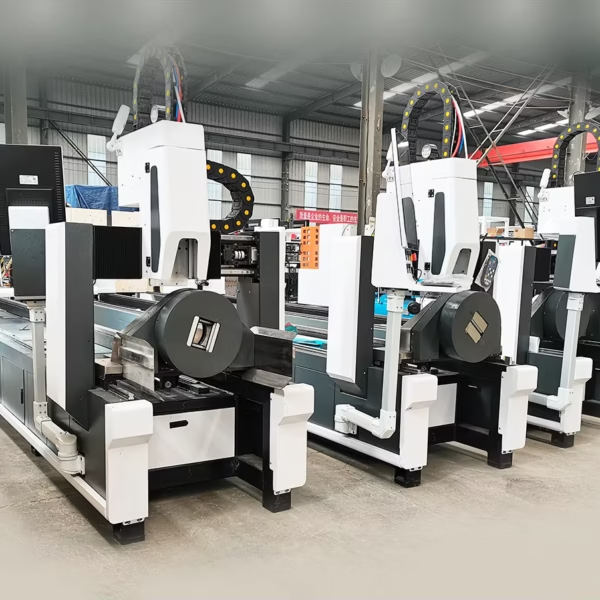
LT240 laser cutting machine
Price on request View details -
LT240S tube laser cutting machine
Price on request View details -
LT360 tube laser cutting machine
Price on request View details -
Sale!
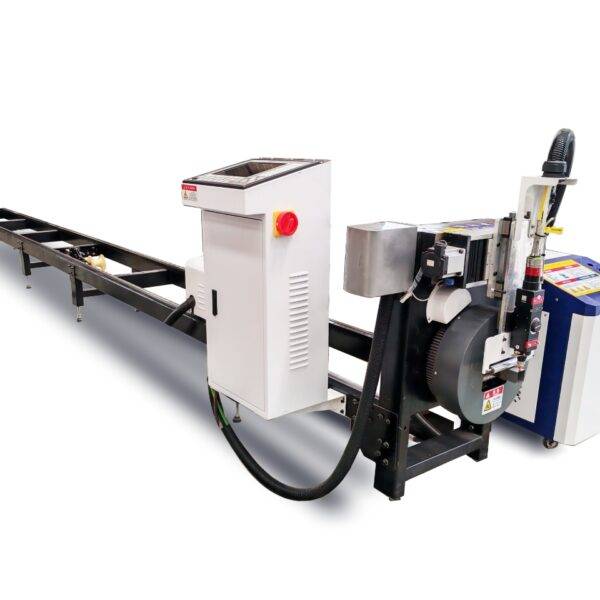
MAK100 tube laser cutting machine
Original price was: $5,500.00.$5,000.00Current price is: $5,000.00. View details
Which Tube Laser Fits Your Tubes?
A tube laser is sized by the largest tube it can clamp, the heaviest tube it can rotate and the stock length it accepts. Start from the tubes you cut most often, then check the largest one.
| Machine | Tube size | Laser power | Key feature |
|---|---|---|---|
| MAK100 | Ø10–100 mm; 3 m or 6 m length | 1.5 kW | Compact entry model; 150 r/min chuck; stock units at USD 5,000 |
| LT120S | Ø120 mm round, 120 × 120 mm square; carbon steel walls up to 10 mm | 1.5–3 kW | Side-mounted bed for forklift loading; tubes up to 180 kg |
| LT240 | Ø20–240 mm; round, square, rectangular, oval | 1.5–6 kW | Full-stroke pneumatic self-centring chucks |
| LT240S | Ø20–240 mm round, 20–240 mm square | 1.5–6 kW | Side-mounted bed; dual chucks for short tailings; tubes up to 200 kg |
| LT360 | Ø20–360 mm; 6 m or 9 m length | 1.5–6 kW | Large-diameter tubes and profiles; 120 r/min |
All four LT models position to ±0.03 mm. For tubes below 220 mm in low volumes, the 2-in-1 sheet and tube laser is an alternative. For heavy pipe, beams and channels with thick walls or weld bevels, see the 8-axis profile plasma cutter and the pipe plasma cutter.
Start from a Requirement List
Write down the smallest and largest diameter now and in three years, the thickest wall for each material, the features you cut (holes, saddle cuts, bevels), your batch pattern and your tolerances in numbers. Every machine that misses one of these can be dropped before you compare prices.
What a Tube Laser Replaces
In a conventional tube shop a part passes a saw, a drill or punch, a notching press and a deburring station, with measuring and handling between each. A tube laser does all of it from the 3D model in one clamping:
- Square and mitre cuts in any angle.
- Holes, slots and windows on any face.
- Saddle (fish-mouth) cuts for tube-to-tube joints.
- Slot-and-tab joints that locate parts for welding without fixtures.
- Part numbers and bend or weld lines marked by the laser.
Because the geometry comes from the file, parts fit at assembly. Shops usually see the biggest gain not in cutting time but in less fitting, fewer jigs and less rework at the welding station.
Side-Mounted or Conventional Bed
On the LT120S and LT240S the bed is turned to the side. A forklift can place heavy tubes directly at the chuck centre instead of threading them in from the end, and slag and sparks fall to the floor rather than onto the rails and racks, which keeps the guides clean. The side-mounted layout also needs less floor area. A conventional bed (LT240, LT360) suits longer stock and shops that plan bundle loading along the bed.
Tailings: Where Tube Material Is Lost
Every tube ends with a piece the chucks hold and the laser cannot reach; on a conventional two-chuck machine it is typically 100–300 mm, about 1.7–5 % of a 6 m tube. On stainless steel or brass that tail is expensive. A dual-chuck design such as the LT240S lets the head cut between the chucks, so the unusable end becomes much shorter. When you compare offers, ask each supplier for the tailing length on your tube sizes, and calculate it against your yearly tube consumption.
Chuck Layout Decides Tailings and Price
| Layout | Gain | Price paid | Fits |
|---|---|---|---|
| Two chucks | Compact, lower price, simple to install | Tailing at the end of each tube | Thin and medium tubes, mostly under 1 t, high speed |
| Two chucks with hand-over | Head can cut between the chucks | More chuck mechanics | Shorter tailings on medium and heavy tube |
| Three chucks | Middle chuck moves out of the way; tailing close to zero | Longer machine, more servo axes, higher price | Mixed steel-structure work with heavy tube |
| Four chucks | Bevels at both ends of a part; very long, heavy tubes | Highest cost and floor space | Shipbuilding, offshore, energy equipment |
Wall Thickness and Laser Power
Power should match the thickest wall, not exceed it by a wide margin: extra kilowatts cost money in purchase, electricity and maintenance. A common rule of thumb for tube lasers:
| Source power | Carbon steel | Stainless steel | Typical industries |
|---|---|---|---|
| 1.5–2 kW | about 6 mm | about 4 mm | Furniture, fitness equipment, thin-wall tube |
| 3–4 kW | about 12 mm | about 8 mm | Steel structures, construction machinery, scaffolding |
| 6–8 kW | about 20 mm | about 12 mm | Pressure piping, heavy machinery |
Size the source for your thickest wall with some reserve, often 20–30 %, if you also plan bevels or expect heavier tube later. The chart of the quoted source and a sample cut on your tube are what count.
Bevels: Check on Your Own Tube
Weld bevels on tube are usually 30–45°. A dedicated bevel head is stable but costly to maintain; a tilting mechanism on a standard head is cheaper but needs focus compensation on thick walls. A “±45°” figure on paper does not prove a weld-ready bevel: have it cut on your own tube.
Count the Total Cost
Compare machines on purchase price plus running cost (electricity, gas, consumables), maintenance, time lost on size changes and breakdowns, and material lost in tailings and scrap. A cheaper machine with long tailings, or one that sends every bevel to a lathe, can cost more within a year.
Software and Nesting
Tube cutting software imports the 3D tube model, unfolds it and nests several parts along one stock length, with common-line cuts where possible. Check that it imports the formats your designers use, handles your profile types (round, square, rectangular, oval, and open profiles if needed) and lets the operator re-sequence parts at the machine.
Where Tube Lasers Pay Off
- Furniture and shop fittings: chairs, tables, racks and display systems.
- Fitness equipment and playground structures.
- Agricultural machinery and trailers.
- Automotive and motorcycle frames, exhaust and roll-cage parts.
- Scaffolding, handrails, balustrades and light steel structures.
Buying Checklist
- Largest and most common tube size, wall thickness and material.
- Heaviest single tube and stock length (6 m, 9 m).
- Profile types, including any open or special profiles.
- Tailing length on your tubes.
- Loading method: manual, side loading or bundle loader.
- Software import formats and nesting features.
- Sample cuts on your own tube.
Tube Laser Cutting Machine FAQ
What is the cheapest way to start tube laser cutting?
The MAK100 handles tubes from Ø10 to 100 mm with a 1.5 kW source; stock units are offered at USD 5,000 FOB Qingdao.
Which machine handles heavy-wall tubes?
What is the largest tube you can cut?
The LT360 cuts tubes from Ø20 to 360 mm in 6 m or 9 m lengths. For larger or very thick pipe, a pipe plasma cutter is usually more economical.
Can a tube laser cut rectangular and oval tubes?
Yes. The LT240 supports round, square, rectangular and oval sections; confirm special profiles with a drawing.
Can you cut samples on my tube?
Yes. Send the drawing or 3D file, the tube size and material, and we cut samples before you order.
Send your tube sizes and annual volume. We recommend a model and quote with tailing length and loading options.
Get a quote