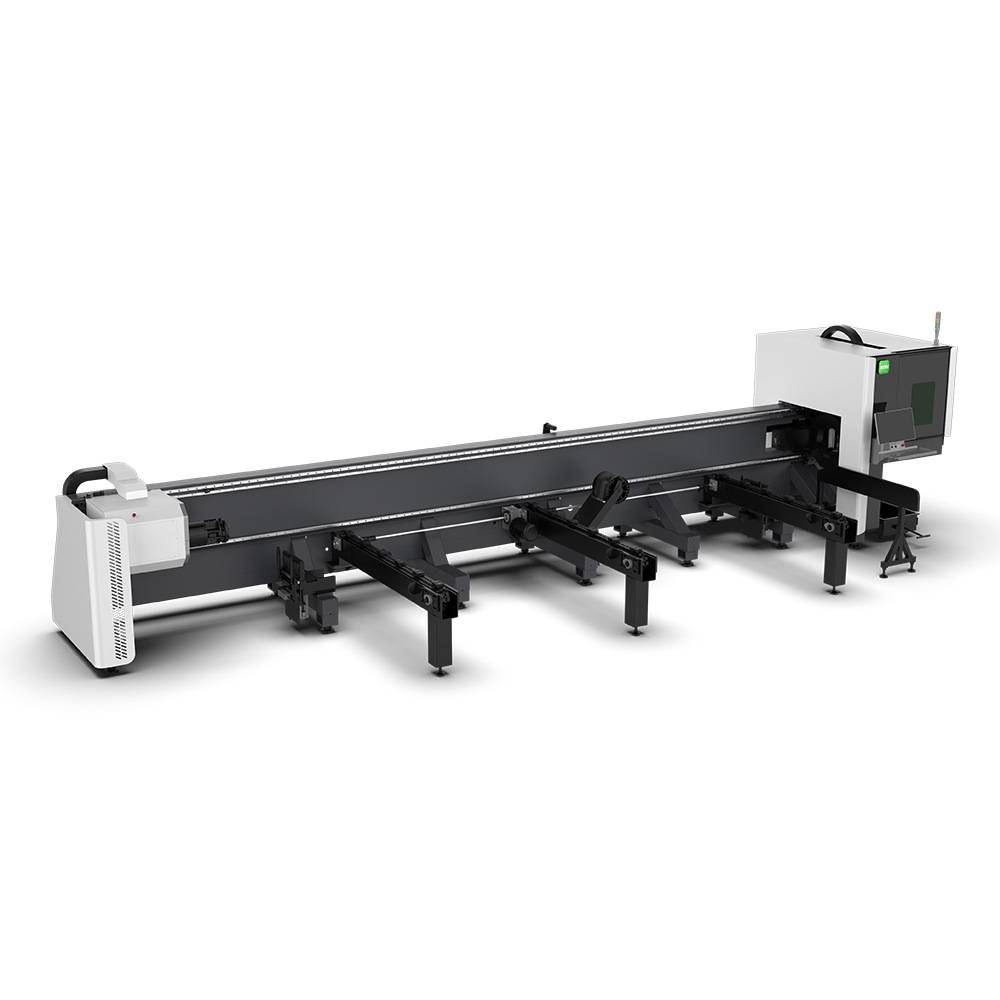
LT120S: Overview
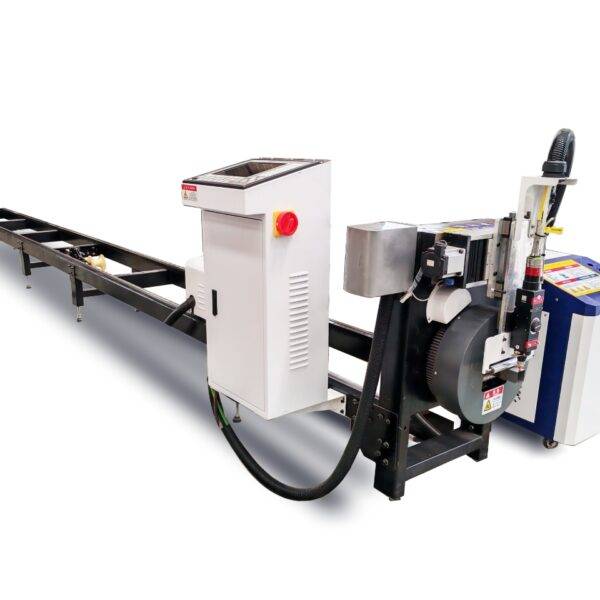
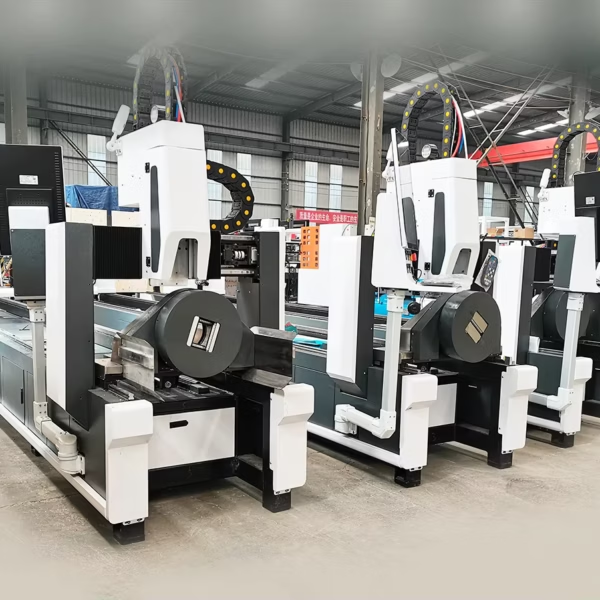
The LT120S is a side-mounted tube laser for small tubes with heavy walls: up to Ø120 mm round or 120 × 120 mm square, carbon steel walls up to 10 mm, single tubes up to 180 kg. The bed is turned to the side so a forklift can set heavy tubes straight into the chucks.
Technical Specifications
| Max tube size | Round Ø120 mm, square 120 × 120 mm |
|---|---|
| Wall thickness | Carbon steel up to 10 mm |
| Laser source | 1.5–3 kW fiber |
| Positioning accuracy | ±0.03 mm |
| Max single tube weight | 180 kg |
| Clamping | Full-stroke pneumatic dual chucks |
| Bed layout | Side-mounted |
| Certification | CE, ISO 9001 |
| Warranty | 24 months on the whole machine (consumables excluded) |
Heavy Wall Changes the Priorities
For thin stainless tube, a tube laser is judged on speed and smooth loading. For thick-wall carbon steel, other things come first: how hard the chucks can clamp, how stiff the structure is, and how safely a heavy tube can be handled. A 6 m tube with a 10 mm wall is heavy for its diameter. If it slips in the jaws while rotating, accuracy is gone and the tube can damage the machine.
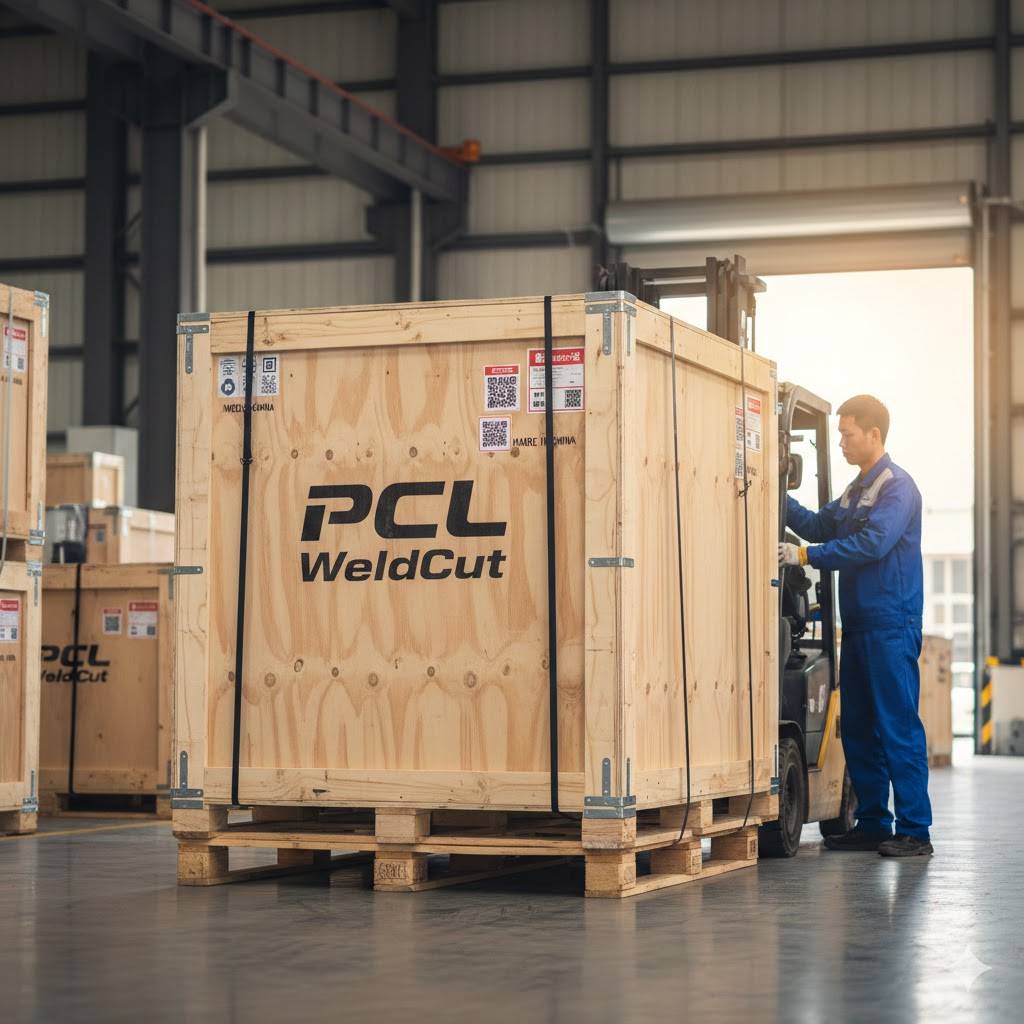
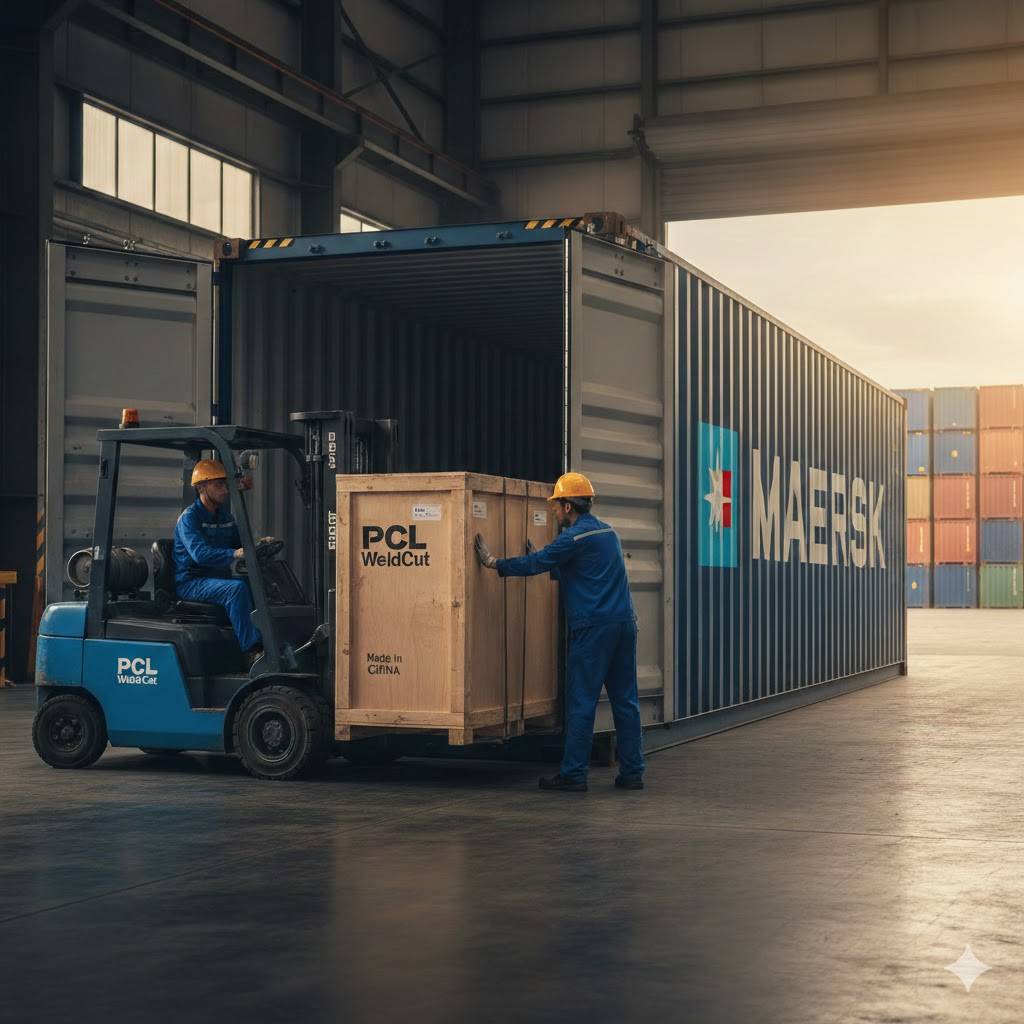
The LT120S answers that with full-stroke pneumatic chucks sized for 180 kg tubes and a side-mounted bed. Loading from the side means the forklift sets the tube at the chuck centre instead of someone threading it in from the end, which is slower and riskier with heavy stock.
Why Slag Falling Away Matters
Thick walls produce more molten metal. On a conventional bed some of it lands on the rails and racks under the cutting zone. On the side-mounted LT120S it falls to the floor, so the guides stay clean. That matters for long-term accuracy: grit on a rail or rack wears it and shows up later as holes that are slightly out of place.
Laser Power for Heavy Walls
Tube walls are cut at a much lower speed than flat sheet of the same thickness, because the head works on a curved, rotating surface and the melt has to leave the tube. A common rule of thumb for tube lasers:
| Source power | Carbon steel | Stainless steel | Typical industries |
|---|---|---|---|
| 1.5–2 kW | about 6 mm | about 4 mm | Furniture, fitness equipment, thin-wall tube |
| 3–4 kW | about 12 mm | about 8 mm | Steel structures, construction machinery, scaffolding |
| 6–8 kW | about 20 mm | about 12 mm | Pressure piping, heavy machinery |
Size the source for your thickest wall with some reserve, often 20–30 %, if you also plan bevels or expect heavier tube later. The chart of the quoted source and a sample cut on your tube are what count.
For the LT120S that means: with 10 mm carbon steel walls as the target, take the upper end of its 1.5–3 kW range.
Common Problems and How to Fix Them
| Problem | Usual cause | What to do |
|---|---|---|
| Tube slips during rotation | Clamping force too low for the tube weight | Raise chuck pressure; check jaws and air supply |
| Slow or failed piercing on 8–10 mm walls | Pierce settings meant for thin wall | Use staged piercing from the material library; clean the nozzle |
| Heavy dross on the underside | Speed too high or gas pressure too low for the wall | Reduce speed, check oxygen pressure and nozzle size |
| Spatter on the far wall | Beam exits the cut and hits the opposite wall | Adjust break-through parameters; plan the cut order |
| Holes drift over the shift | Grit on rails or racks, or air pressure dropping | Clean guides; check the compressor and air dryer |
What Decides the Price
| Item | Options | Effect on price and use |
|---|---|---|
| Laser power | 1.5–3 kW | Higher power cuts heavy walls faster and with a cleaner edge |
| Chucks | Full-stroke pneumatic dual chucks | Standard on the LT120S; sized for 180 kg tubes |
| Loading | Manual side loading or a loading rack | Racks pay off when many heavy tubes are cut per shift |
| Software | Nesting, 3D import | Decides programming time for new parts |
The LT120S is quoted on request; send your tube list and we price the configuration that fits.
Where It Sits in the PCL Tube Laser Range
| Model | Tube size | Power | Best for |
|---|---|---|---|
| MAK100 | Ø10–100 mm | 1.5 kW | Entry model, small tubes |
| LT120S (this machine) | Ø120 / □120 mm | 1.5–3 kW | Side-mounted, heavy walls up to 10 mm |
| LT240 | Ø20–240 mm | 1.5–6 kW | Round, square, rectangular, oval |
| LT240S | Ø/□20–240 mm | 1.5–6 kW | Side-mounted, dual chucks, 200 kg tubes |
| LT360 | Ø20–360 mm | 1.5–6 kW | Large diameters, 6 m or 9 m stock |
From Inquiry to Production
- Tube list and samples. Send the tube sizes, wall thicknesses, heaviest tube and part drawings.
- Configuration and layout. We fix chuck size, bed length, source and loading, and send a layout drawing with the floor space, power and air connections.
- Build and test. The machine is assembled and tested before shipment; lead time is confirmed in the quotation.
- Site preparation. A level floor, the power connection, compressed air for the chucks and assist gas, and fume extraction ready before arrival.
- Installation and training. Installation and operator training are quoted with the machine; operators learn programming, nesting, daily checks and parameter adjustment.
- Support. 24-month warranty on the whole machine, consumables excluded.
Before You Order
- Heaviest tube (length × weight) you will load.
- Thickest wall and material.
- How tubes reach the machine: forklift, crane, rack.
- Power and compressed air available at the machine position.
Maintenance
| When | What |
|---|---|
| Daily | Clean the protective window and nozzle; clear slag below the cutting zone; check jaws. |
| Weekly | Clean rails and racks; drain the air filter and check chuck air pressure. |
| Periodically | Lubricate rails and racks; check jaw wear; change chiller water. |
Safety Around a Tube Laser
Two hazards are specific to tube cutting. The tube rotates, often several metres of it outside the enclosure, so the area along the bed must be kept clear while the chucks turn. And the beam leaves the far side of the tube when it cuts through, so the cutting zone has to stay enclosed or shielded. Keep the interlocks on the doors and light curtains working, wear laser safety glasses rated for the laser wavelength where the cutting area is open, and connect the extraction before cutting coated or galvanized tube.
Strengths and Limits
Strengths
- Built for heavy walls on small tubes
- Forklift side loading
- Slag falls clear of rails and racks
- Compact footprint
Limits to know
- Limited to 120 mm
- Power tops out at 3 kW
- Larger tubes need the LT240S
LT120S FAQ
What is the largest tube the LT120S cuts?
Round tubes up to Ø120 mm and square tubes up to 120 × 120 mm.
How thick can the walls be?
Carbon steel walls up to 10 mm.
How heavy can a tube be?
Up to 180 kg for a single tube.
Why side-mounted?
Forklift loading at the chuck centre, cleaner guides because slag falls to the floor, and a smaller footprint.
Which laser power should I choose?
1.5 kW to 3 kW. For mostly 8–10 mm walls, take the higher power.
Can you cut samples?
Yes. Send the drawing, tube size and material.
Compare all tube laser cutting machines side by side in our selection guide.
Send your tube sizes and wall thickness. We quote the LT120S with samples on your tube.
Get a quote