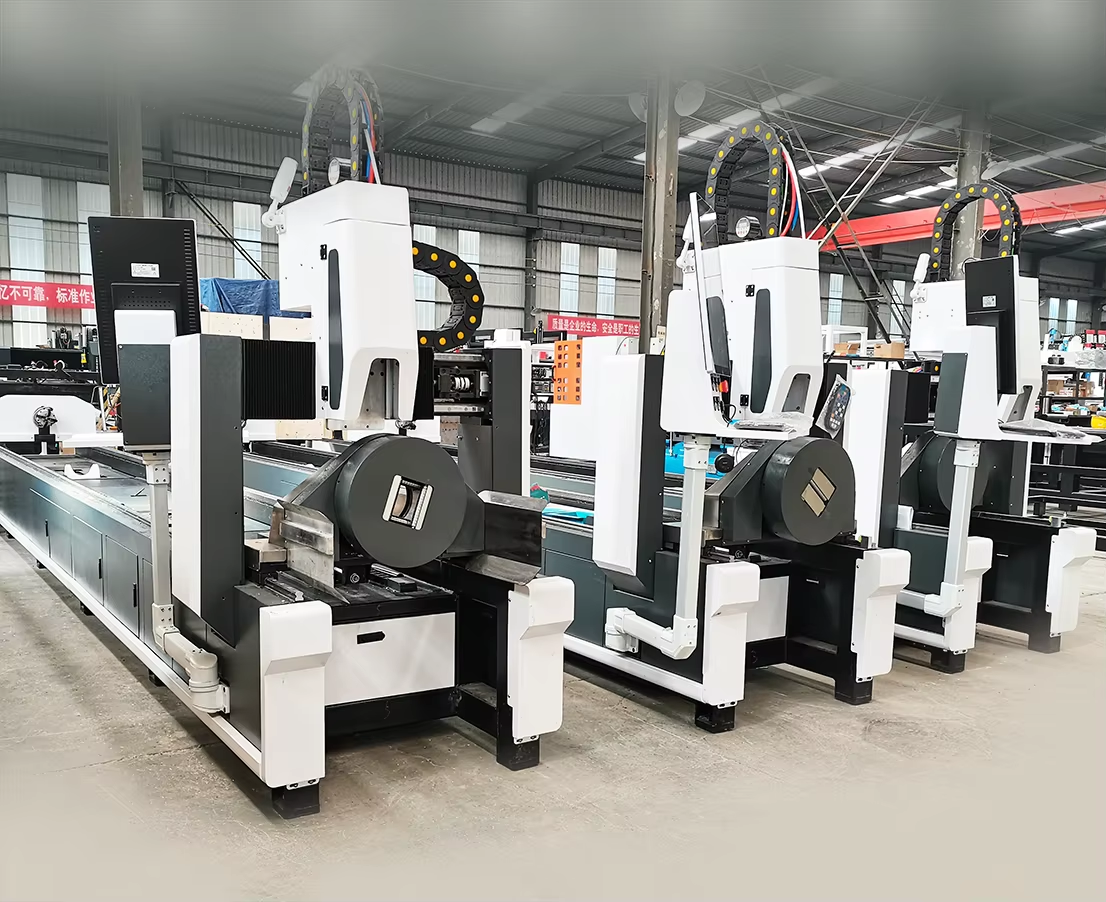


LT360: Overview
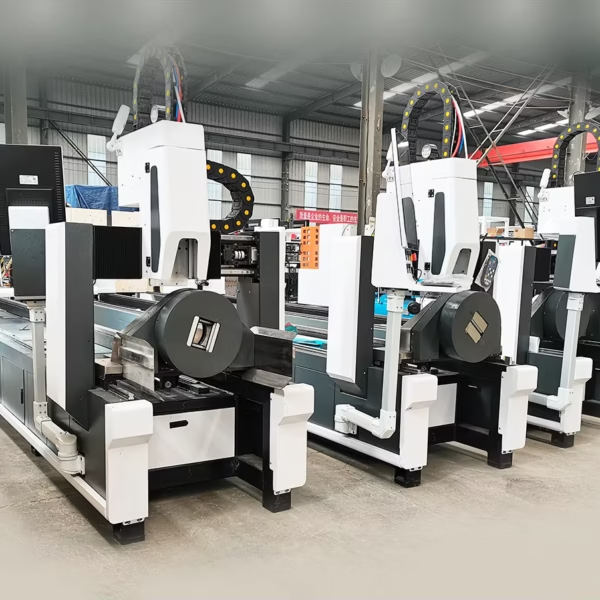
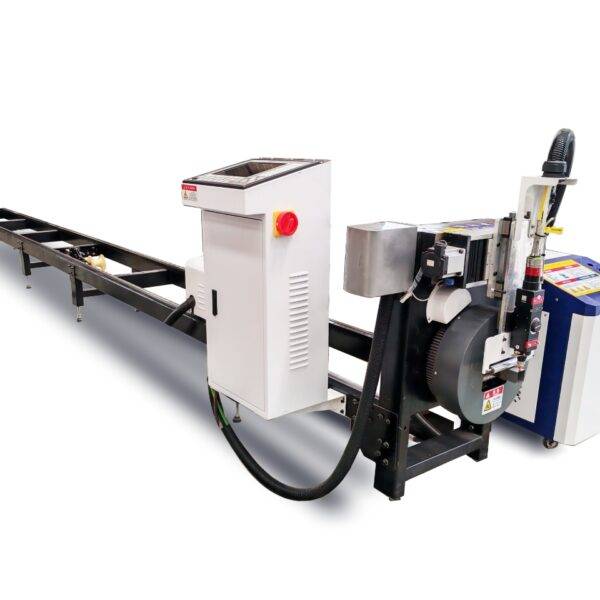
The LT360 is the large-diameter tube laser in our range: Ø20 to 360 mm, 6 m or 9 m stock, 1.5 kW to 6 kW, and up to 120 r/min. It is used for structural tube, frames for machinery and vehicles, and any work where large tubes used to be sawn, drilled and coped by hand.
LT360 Cutting Demonstration
The LT360 cutting a large tube.

Technical Specifications
| Tube diameter | Ø20–360 mm |
|---|---|
| Processing length | 6000 mm or 9000 mm |
| Laser source | 1.5–6 kW fiber |
| Positioning accuracy | ±0.03 mm |
| Max rotary speed | 120 r/min |
| Profiles | Round, square, rectangular and irregular |
| Materials | Carbon steel, stainless steel, aluminium, brass |
| Certification | CE, ISO 9001 |
| Warranty | 24 months on the whole machine (consumables excluded) |
Long, Heavy Tubes Need Support
A 9 m tube of 300 mm diameter sags between the chucks and whips when it rotates. Follow-up supports under the tube rise and fall with its profile and hold it in line, so the head sees the tube where the program expects it. On large tubes, the number and design of these supports matter as much as the chuck accuracy; ask how many the quoted machine has and how they handle square tube.
Steel Structures: Tolerances Are Tightening
Structural steel used to need little more than holes that a bolt would pass through, and flame cutting was enough. Fabricators now increasingly work to tolerances of a couple of millimetres or less on connections, and laser-cut tube with accurately placed holes and copes lets members fit at assembly without reaming or grinding. For beams rather than tubes, see the HF30120 H-beam laser line.
Plan the Power Supply for the Whole Line
The source rating is only part of the load. As an example for a 4 kW tube laser: the machine itself, with servos and accessories, draws around 10 kW, the chiller around 6 kW, and an air compressor around 5.5 kW when cutting with air, plus the extraction. Machines rarely run everything at full load, but the connection must cover it. Ask for the full power list of your configuration before you plan the electrical work.
Weld Bevels on Tube
Tube that is butt-welded in steel structures, piping and machinery usually needs a bevel, most often between 30° and 45°. There are two ways to cut it on a tube laser: a dedicated bevel head with tilting optics, which gives stable results but costs more to buy and maintain, or a tilting mechanism carrying a standard head, which is cheaper but needs focus compensation on thick walls. Either way, “±45°” on a data sheet does not prove a weld-ready bevel on a thick wall. Have bevels cut on your own tube and check the angle and land before you buy.
The LT360 as listed cuts square ends, holes, copes and saddle cuts. If most of your tube needs weld bevels, tell us; for heavy pipe and sections with bevels, the 8-axis profile plasma cutter bevels up to ±60°.
Software for Steel Structures
In steel-structure work, the detailing model already contains every member. A tube laser whose software imports the 3D model directly saves the time of redrawing each part. If your office works in Tekla or a similar package, send a few member files and we check the import before you order.
Common Problems and How to Fix Them
| Problem | Usual cause | What to do |
|---|---|---|
| Holes out of line on long tubes | Sag or whip between chucks | Check follow-up supports; reduce rotation speed for heavy tubes |
| Tube twist shifts features | Twisted stock | Run edge-finding along the tube before cutting |
| Spatter inside large tubes | Beam exits and hits the far wall | Adjust break-through parameters; plan the cut order |
| Edge quality worse on thick walls | Power or gas not matched to the wall | Use the material library; consider a higher-power source |
| Slow unloading of long parts | No unloading support | Add an unloading table matched to part length |
What Decides the Price
| Item | Options | Effect on price and use |
|---|---|---|
| Length | 6 m or 9 m | 9 m takes longer stock, fewer loads, less tailing per part |
| Laser power | 1.5–6 kW | Thick walls and throughput |
| Supports and unloading | Number of follow-up supports, unloading table | Accuracy and handling on heavy tubes |
| Loading | Manual or bundle loading | Pays off at high volume |
The LT360 is quoted on request.
Where It Sits in the PCL Tube Laser Range
| Model | Tube size | Power | Best for |
|---|---|---|---|
| MAK100 | Ø10–100 mm | 1.5 kW | Entry model, small tubes |
| LT120S | Ø120 / □120 mm | 1.5–3 kW | Side-mounted, heavy walls up to 10 mm |
| LT240 | Ø20–240 mm | 1.5–6 kW | Round, square, rectangular, oval |
| LT240S | Ø/□20–240 mm | 1.5–6 kW | Side-mounted, dual chucks, 200 kg tubes |
| LT360 (this machine) | Ø20–360 mm | 1.5–6 kW | Large diameters, 6 m or 9 m stock |
For pipe above 360 mm or very thick walls, the pipe plasma cutter covers Ø50–1500 mm.
From Inquiry to Production
- Tube list and samples. Send your largest tubes, stock length, materials and typical connection drawings.
- Configuration and layout. We fix chuck size, bed length, source and loading, and send a layout drawing with the floor space, power and air connections.
- Build and test. The machine is assembled and tested before shipment; lead time is confirmed in the quotation.
- Site preparation. A level floor, the power connection, compressed air for the chucks and assist gas, and fume extraction ready before arrival.
- Installation and training. Installation and operator training are quoted with the machine; operators learn programming, nesting, daily checks and parameter adjustment.
- Support. 24-month warranty on the whole machine, consumables excluded.
Before You Order
- Largest diameter, wall and weight of tube.
- Stock length delivered by your supplier: 6 m or 9 m.
- Tolerances on your connection drawings.
- Power connection available, including chiller, compressor and extraction.
- Space for loading and unloading long parts.
Maintenance
| When | What |
|---|---|
| Daily | Clean the protective window and nozzle; check chuck jaws; clear slag. |
| Weekly | Clean guides and racks; check follow-up supports; drain the air filter. |
| Periodically | Lubricate guides and racks; check chuck air seals; change chiller water. |
Safety Around a Tube Laser
Two hazards are specific to tube cutting. The tube rotates, often several metres of it outside the enclosure, so the area along the bed must be kept clear while the chucks turn. And the beam leaves the far side of the tube when it cuts through, so the cutting zone has to stay enclosed or shielded. Keep the interlocks on the doors and light curtains working, wear laser safety glasses rated for the laser wavelength where the cutting area is open, and connect the extraction before cutting coated or galvanized tube.
Strengths and Limits
Strengths
- Large diameters up to 360 mm
- 9 m stock option
- Replaces sawing, drilling and coping of large tubes
Limits to know
- Needs floor space for long stock and parts
- Power connection must cover chiller, compressor and extraction
- Very large or thick pipe is cheaper on plasma
LT360 FAQ
What is the largest tube the LT360 can cut?
Ø360 mm, in 6 m or 9 m lengths.
Which materials can it cut?
Carbon steel, stainless steel, aluminium and brass.
How much power does the whole machine need?
More than the source rating: machine, chiller, compressor and extraction together. We send the power list for your configuration.
Why do follow-up supports matter?
They hold long, heavy tubes in line during rotation so holes and copes land in the right place.
Can it cut irregular profiles?
Send a drawing of the section and we confirm.
Can you cut samples?
Yes. Send the drawing, tube size and material.
Can the LT360 cut weld bevels?
The listed configuration cuts square ends, holes, copes and saddle cuts. Tell us if you need bevels; for heavy bevelled sections, compare the 8-axis profile plasma cutter.
Can it import our detailing models?
Send a few member files from your software and we check the import before you order.
Compare all tube laser cutting machines side by side in our selection guide.
Send your largest tube and stock length. We quote the LT360 in the right length and power.
Get a quote