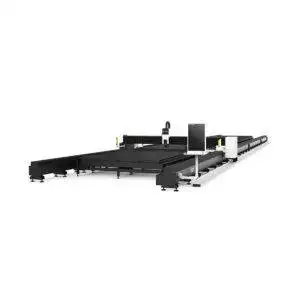
LFH6020: Overview
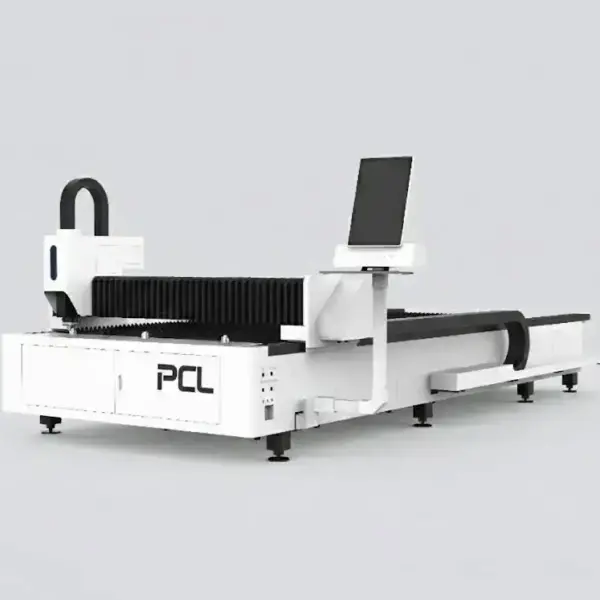
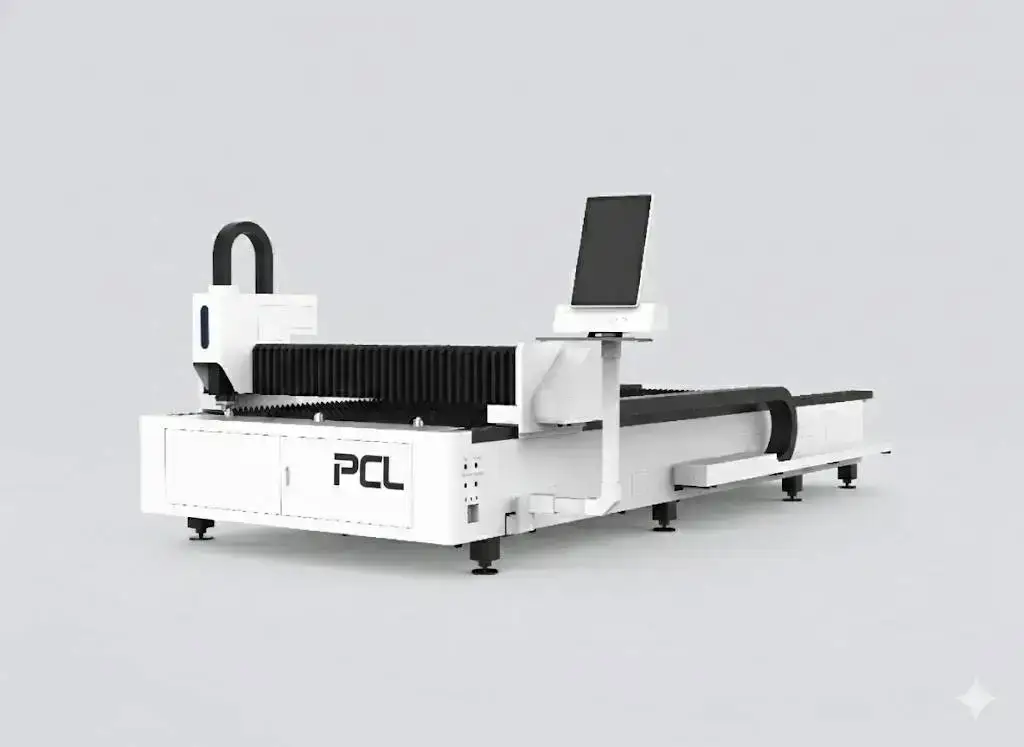
The LFH6020 is our 6000 × 2000 mm production laser, with 1 kW to 12 kW sources, Yaskawa or Fuji servo drives, a Raytools auto-focus head, CypCut/FSCUT control and a dual-temperature chiller. It is meant for long sheets cut all day.

Technical Specifications
| Working area | 6000 × 2000 mm |
|---|---|
| Laser source | 1–12 kW; IPG, Raycus or Max |
| Positioning accuracy | ±0.03 mm/m |
| Max linkage speed | 120 m/min |
| Drive | Yaskawa or Fuji servo motors |
| CNC system | CypCut / FSCUT |
| Cutting head | Raytools auto-focus |
| Cooling | Dual-temperature water chiller |
| Frame | Heat-treated, stress-relieved |
| Certification | CE, ISO 9001 |
| Warranty | 24 months on the whole machine (consumables excluded) |
What the Power Options Cut
Typical maximum thickness from 1 kW to 60 kW; the last column marks the powers this machine can carry. Treat the figures as the ceiling, not the daily working range.
| Laser power | Carbon steel (O₂) | Stainless (N₂) | Aluminium (N₂) | Brass (N₂) | This model |
|---|---|---|---|---|---|
| 1 kW | 10 mm | 5 mm | 3 mm | 3 mm | ✓ |
| 1.5 kW | 16 mm | 6 mm | 4 mm | 3 mm | ✓ |
| 2 kW | 20 mm | 8 mm | 6 mm | 5 mm | ✓ |
| 3 kW | 22 mm | 10 mm | 8 mm | 6 mm | ✓ |
| 4 kW | 25 mm | 12 mm | 10 mm | 8 mm | ✓ |
| 6 kW | 25 mm | 20 mm | 16 mm | 12 mm | ✓ |
| 8 kW | 40 mm | 30 mm | 30 mm | 16 mm | ✓ |
| 12 kW | 40 mm | 40 mm | 40 mm | 16 mm | ✓ |
| 20 kW | 80 mm | 100 mm | 60 mm | 20 mm | – |
| 60 kW | 200 mm | 150 mm | – | – | – |
Maximum thickness is a ceiling, cut slowly and with a rougher edge. Plan daily production a few millimetres below it, and confirm with the cutting chart of the exact source and head in your quotation.
Typical Cutting Speeds
| Thickness | 1.5 kW | 3 kW | 6 kW | 12 kW |
|---|---|---|---|---|
| 2 mm | 5.0 | 3.8–4.2 | – | – |
| 3 mm | 3.6 | 3.2–3.6 | 3.5–4.2 | – |
| 4 mm | 2.5 | 3.0–3.2 | 3.3–3.8 | – |
| 6 mm | 1.4 | 2.2–2.5 | 2.7–3.2 | – |
| 8 mm | 1.2 | 1.8–2.2 | 2.2–2.5 | – |
| 10 mm | 1.0 | 1.0–1.3 | 2.0–2.3 | 2.0–2.3 |
| 12 mm | 0.8 | 0.9–1.0 | 1.9–2.1 | 3.0–3.5 |
| 16 mm | 0.5 | 0.6–0.7 | 1.2–1.4 | 2.8–3.0 |
| 20 mm | – | 0.5–0.55 | 0.6–0.7 | 1.5–1.6 |
| 25 mm | – | – | 0.4–0.5 | 0.8–1.0 |
| Thickness | 1.5 kW | 3 kW | 6 kW | 12 kW |
|---|---|---|---|---|
| 1 mm | 20 | 28–35 | 40–50 | 50–60 |
| 2 mm | 7 | 18–24 | 25–30 | 40–45 |
| 3 mm | 4.5 | 7–10 | 15–18 | 30–35 |
| 5 mm | 1.5 | 3.0–3.6 | 7–8 | 15–18 |
| 6 mm | 0.8 | 2.0–2.7 | 6–7 | 13–15 |
| 8 mm | – | 1.0–1.2 | 3.5–3.8 | 8–10 |
| 10 mm | – | 0.5–0.6 | 1.6–2.0 | 6.5–7.5 |
| 12 mm | – | – | 1.0–1.2 | 5.0–5.5 |
| 16 mm | – | – | 0.5–0.6 | 2.0–2.3 |
| 20 mm | – | – | 0.2–0.35 | 1.2–1.4 |
Speeds in m/min. Typical values for good-quality cutting; edge requirements, material grade, gas purity and the head change them. Your quotation includes the chart for the exact configuration.
Notes on the Components
The dual-temperature chiller runs two circuits, one for the source and one for the head optics, because the two need different temperatures; a single-circuit chiller is a compromise for one of them. CypCut/FSCUT is the most widely used control in Chinese laser cutters, so operators who have used one machine can usually run this one, and nesting help is easy to find. The stress-relieved frame matters more on a 6 m bed than on a 3 m one, because any drift is multiplied over the length.

Where It Sits in the PCL Laser Range
| Model | Working area | Power | Best for |
|---|---|---|---|
| GF3012 | 3000 × 1200 mm | 6–60 kW | High power on a compact bed |
| LFP3015 | 3000 × 1500 mm | 1–12 kW | Open single table; standard sheets |
| LFP4020 | 4000 × 2000 mm | 1–30 kW | Dual exchange table for volume |
| LFH4020 | 4000 × 2000 mm | 1–30 kW | High-power plate on a plate-welded bed |
| LFP6020 | 6000 × 2000 mm | 1.5–3 kW | Long sheets at lower investment |
| LFH6020 (this machine) | 6000 × 2000 mm | 1–12 kW | Large-format production |
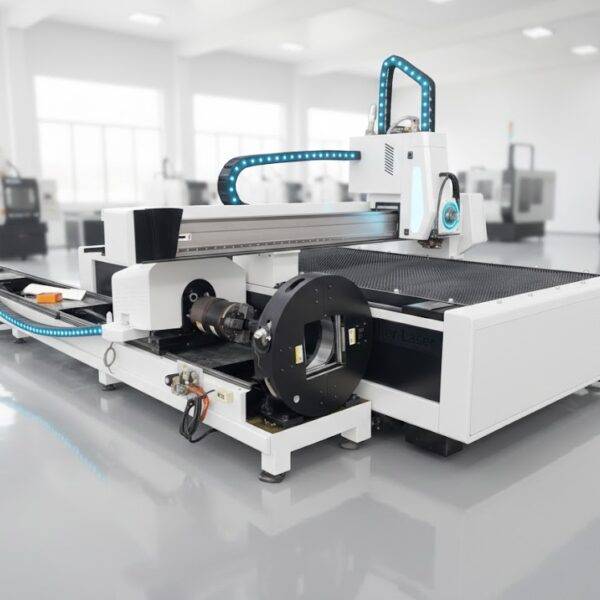
| 2-in-1 sheet & tube | 3015 or 4020 + tubes Ø20–220 mm | 1–12 kW | Sheet and tube on one machine |
Common Problems and How to Fix Them
| Problem | Usual cause | What to do |
|---|---|---|
| Dimensions drift over a long sheet | Dirt on racks or rails, or thermal growth of the plate | Clean rails and racks; cut in an order that spreads the heat |
| Dross under stainless or aluminium | Speed too high, nitrogen pressure too low or focus not deep enough | Lower the speed or raise pressure; move the focus down (negative) as thickness grows |
| Heavy dross under thick carbon steel | Speed too high, oxygen pressure low, focus too negative, nozzle partly blocked | Reduce speed by 5–8 %; keep oxygen at 0.5–0.7 bar; set focus +3 to +4 mm; check the nozzle |
| Pierce blow-out on thick plate | Single-step pierce on heavy plate | Use staged piercing and let the plate cool between pierces |
| Not cutting through | Pierce not finished, focus not positive enough on oxygen cuts, dirty protective window | Let all pierce stages finish; raise focus in 1 mm steps; clean or replace the window |
What Decides the Price
| Item | Options | Effect |
|---|---|---|
| Laser source | Brand (Raycus, IPG, Max) and power | The largest single item; higher power costs more and needs a bigger chiller and supply |
| Cutting head | Raytools or WSX auto-focus | Auto-focus and protection against collisions |
| Drive | Servo brand, rails and racks | Accuracy over the years |
| Power | 1–12 kW | Higher power for thick plate and speed |
| Cooling | Dual-temperature chiller | Matched to the source power |
The LFH6020 is quoted on request.
From Inquiry to Production
- Parts and samples. Send your sheet formats, volume and thickness mix.
- Configuration. We fix the source, head, table and options, and send a layout with floor space, power, gas and extraction connections.
- Build and test. The machine is assembled and tested before shipment; lead time is confirmed in the quotation.
- Site preparation. Level floor, power supply, assist gas and compressed air, and fume extraction ready before arrival.
- Installation and training. Quoted with the machine; operators learn nesting, cutting parameters, daily checks and simple fault finding.
- Support. 24-month warranty on the whole machine, consumables excluded.
Before You Order
- Sheets per shift and thickness mix.
- Crane access along the 6 m bed.
- Power and gas supply for the chosen source.
- Operators familiar with CypCut/FSCUT, or training needed.
Maintenance
| When | What |
|---|---|
| Daily | Check and clean the protective window; check nozzle condition and centring; check gas pressures. |
| Weekly | Remove slag; clean rails and racks; check both chiller circuits. |
| Periodically | Replace slats; lubricate rails and racks; change chiller water and filters; calibrate the height sensor. |
Safety
Laser light reflected from the sheet is invisible and can injure eyes, so the cutting area must be enclosed or fenced off and the door interlocks must stay working. Keep the extraction running and its filters clean; dust in the bed and filters can catch fire, especially after aluminium. Keep oxygen equipment free of oil and grease, and secure gas cylinders.
Strengths and Limits
Strengths
- 6 m bed with up to 12 kW
- Widely known CypCut/FSCUT control
- Dual-temperature chiller
Limits to know
- Single table: loading time counts
- Large floor space
- High power needs a large supply
LFH6020 FAQ
What power range is available?
1 kW to 12 kW from IPG, Raycus or Max.
Which controller does it use?
CypCut / FSCUT.
How accurate is it?
±0.03 mm per metre positioning, 120 m/min maximum linkage speed.
LFH6020 or LFP6020?
The LFP6020 is the open, lower-cost 6 m machine with 1.5–3 kW. The LFH6020 takes up to 12 kW and is built for full-shift production.
How long does loading a 6 m sheet take?
It depends on your crane and staff; plan it into the cycle, because the laser waits during loading.
Can operators from other machines run it?
Usually yes; CypCut/FSCUT is widely used, and training covers the differences.
Compare all fiber laser cutting machines side by side in our selection guide.
Send your sheet sizes and volume. We size the source and quote the LFH6020.
Get a quote