LFP6020: Overview
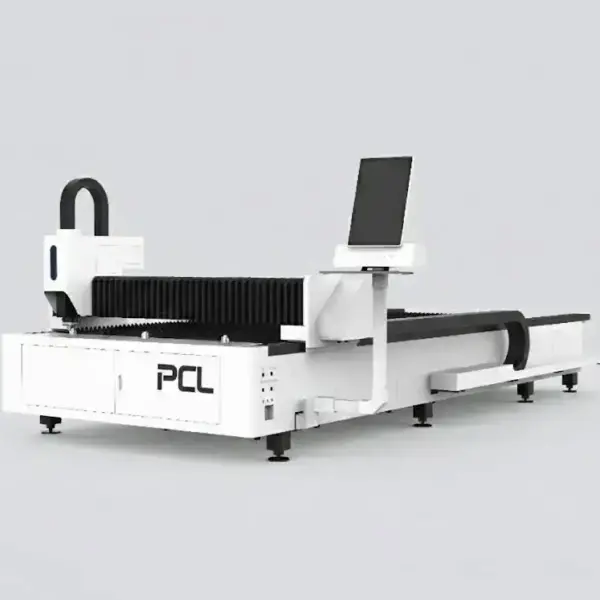
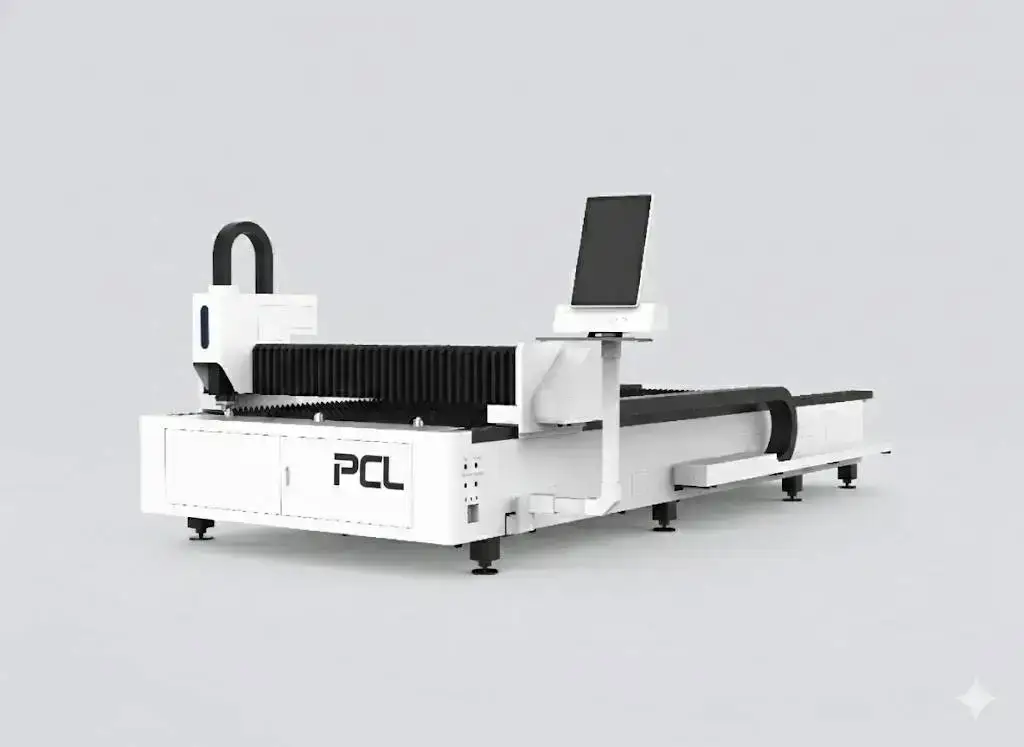
The LFP6020 is an open single-table laser with a 6000 × 2000 mm bed and 1.5 kW to 3 kW sources. It is the economical way to cut 6 m sheets: base plates and strips for steel structures, large letters, elevator panels and machine-frame parts.
LFP6020 Demonstration
The LFP6020 cutting on its 6 m bed.
Technical Specifications
| Working area | 6000 × 2000 mm |
|---|---|
| Layout | Open frame, single table |
| Laser source | 1.5–3 kW; Raycus or Max |
| Drive | Servo motors and drives |
| Fume extraction | Zoned extraction under the bed |
| Certification | CE, ISO 9001 |
| Warranty | 24 months on the whole machine (consumables excluded) |
What the Power Options Cut
Typical maximum thickness from 1 kW to 60 kW; the last column marks the powers this machine can carry. Treat the figures as the ceiling, not the daily working range. With these powers the LFP6020 is a machine for thin to medium plate on long formats; for heavy plate on a 6 m bed, see the LFH6020.
| Laser power | Carbon steel (O₂) | Stainless (N₂) | Aluminium (N₂) | Brass (N₂) | This model |
|---|---|---|---|---|---|
| 1 kW | 10 mm | 5 mm | 3 mm | 3 mm | – |
| 1.5 kW | 16 mm | 6 mm | 4 mm | 3 mm | ✓ |
| 2 kW | 20 mm | 8 mm | 6 mm | 5 mm | ✓ |
| 3 kW | 22 mm | 10 mm | 8 mm | 6 mm | ✓ |
| 4 kW | 25 mm | 12 mm | 10 mm | 8 mm | – |
| 6 kW | 25 mm | 20 mm | 16 mm | 12 mm | – |
| 8 kW | 40 mm | 30 mm | 30 mm | 16 mm | – |
| 12 kW | 40 mm | 40 mm | 40 mm | 16 mm | – |
| 20 kW | 80 mm | 100 mm | 60 mm | 20 mm | – |
| 60 kW | 200 mm | 150 mm | – | – | – |
Maximum thickness is a ceiling, cut slowly and with a rougher edge. Plan daily production a few millimetres below it, and confirm with the cutting chart of the exact source and head in your quotation.
Typical Cutting Speeds
| Thickness | 1.5 kW | 2 kW | 3 kW |
|---|---|---|---|
| 2 mm | 5.0 | 5.2 | 3.8–4.2 |
| 3 mm | 3.6 | 4.2 | 3.2–3.6 |
| 4 mm | 2.5 | 3.0 | 3.0–3.2 |
| 6 mm | 1.4 | 1.8 | 2.2–2.5 |
| 8 mm | 1.2 | 1.3 | 1.8–2.2 |
| 10 mm | 1.0 | 1.1 | 1.0–1.3 |
| 12 mm | 0.8 | 0.9 | 0.9–1.0 |
| 16 mm | 0.5 | 0.7 | 0.6–0.7 |
| 20 mm | – | 0.4 | 0.5–0.55 |
| Thickness | 1.5 kW | 2 kW | 3 kW |
|---|---|---|---|
| 1 mm | 20 | 28 | 28–35 |
| 2 mm | 7 | 10 | 18–24 |
| 3 mm | 4.5 | 5 | 7–10 |
| 5 mm | 1.5 | 2 | 3.0–3.6 |
| 6 mm | 0.8 | 1.5 | 2.0–2.7 |
| 8 mm | – | 0.6 | 1.0–1.2 |
| 10 mm | – | – | 0.5–0.6 |
Speeds in m/min. Typical values for good-quality cutting; edge requirements, material grade, gas purity and the head change them. Your quotation includes the chart for the exact configuration.
Why an Open 6 m Bed
Long sheets are awkward to load. The open frame lets a forklift set them down from the side or the front, and the operator can see the whole sheet. Zoned extraction only draws air under the part of the bed being cut, so the fan does not have to pull through 12 m² of grid at once. Leaving out the enclosure and exchange table keeps the price well below a 6 m production machine.
Where It Sits in the PCL Laser Range
| Model | Working area | Power | Best for |
|---|---|---|---|
| GF3012 | 3000 × 1200 mm | 6–60 kW | High power on a compact bed |
| LFP3015 | 3000 × 1500 mm | 1–12 kW | Open single table; standard sheets |
| LFP4020 | 4000 × 2000 mm | 1–30 kW | Dual exchange table for volume |
| LFH4020 | 4000 × 2000 mm | 1–30 kW | High-power plate on a plate-welded bed |
| LFP6020 (this machine) | 6000 × 2000 mm | 1.5–3 kW | Long sheets at lower investment |
| LFH6020 | 6000 × 2000 mm | 1–12 kW | Large-format production |
| 2-in-1 sheet & tube | 3015 or 4020 + tubes Ø20–220 mm | 1–12 kW | Sheet and tube on one machine |
Typical Work
- Base plates, strips and connection plates for steel structures.
- Large letters and logos.
- Agricultural machinery parts.
- Long stainless panels for elevators.
- Mixed plate sizes in a job shop.
Common Problems and How to Fix Them
| Problem | Usual cause | What to do |
|---|---|---|
| Dimensions drift over a long sheet | Dirt on racks or rails, or thermal growth of the plate | Clean rails and racks; cut in an order that spreads the heat |
| Burnt corners and small holes | Heat builds up where the head slows down | Use corner power ramping; change cut order to spread the heat |
| Parts tip up and hit the head | Small parts falling between slats | Leave micro-joints; replace worn slats; cut small parts last |
| Not cutting through | Pierce not finished, focus not positive enough on oxygen cuts, dirty protective window | Let all pierce stages finish; raise focus in 1 mm steps; clean or replace the window |
What Decides the Price
| Item | Options | Effect |
|---|---|---|
| Laser source | Brand (Raycus, IPG, Max) and power | The largest single item; higher power costs more and needs a bigger chiller and supply |
| Cutting head | Raytools or WSX auto-focus | Auto-focus and protection against collisions |
| Drive | Servo brand, rails and racks | Accuracy over the years |
| Table | Open single table, 6000 × 2000 mm | Long sheets at the lowest cost per square metre of bed |
| Power | 1.5–3 kW | For thin to medium plate |
The LFP6020 is quoted on request.
From Inquiry to Production
- Parts and samples. Send your longest parts and the sheet formats you buy.
- Configuration. We fix the source, head, table and options, and send a layout with floor space, power, gas and extraction connections.
- Build and test. The machine is assembled and tested before shipment; lead time is confirmed in the quotation.
- Site preparation. Level floor, power supply, assist gas and compressed air, and fume extraction ready before arrival.
- Installation and training. Quoted with the machine; operators learn nesting, cutting parameters, daily checks and simple fault finding.
- Support. 24-month warranty on the whole machine, consumables excluded.
Before You Order
- Longest parts and sheet formats.
- Forklift or crane access along the 6 m bed.
- Thickness mix: the LFP6020 is for thin to medium plate.
- Space for a guarded zone around an open bed.
Maintenance
| When | What |
|---|---|
| Daily | Check and clean the protective window; check nozzle condition and centring; check gas pressures. |
| Weekly | Remove slag along the full bed; clean rails and racks; check extraction zones. |
| Periodically | Replace slats; lubricate rails and racks; change chiller water and filters. |
Safety
An open machine has no housing around the beam, and the light reflected from the sheet is invisible and can injure eyes. Keep the area around the bed fenced off while cutting, give anyone inside it laser safety glasses rated for the wavelength, and keep the extraction running. Slag and dust in the bed can catch fire, especially after cutting aluminium; clean the bed regularly and keep an extinguisher nearby. Oxygen cylinders and lines must be kept free of oil and grease.
LFP6020 FAQ
What is the working area?
6000 × 2000 mm, so 6 m sheets fit without cutting them down.
Which power is available?
1.5 kW to 3 kW from Raycus or Max. For more power on a 6 m bed, see the LFH6020 with up to 12 kW.
How is it loaded?
By forklift or crane from the side or the front of the open frame.
How are fumes handled?
Zoned extraction under the bed, connected to a filter unit.
Can it cut 6 m strips without stopping?
Yes, the bed is 6000 mm long, so strips and long parts are cut in one sheet.
Is 3 kW enough for steel structures?
For base plates and connection plates in thin to medium thickness, yes. For heavy plate, see the LFH6020 or LFH4020.
Compare all fiber laser cutting machines side by side in our selection guide.
Send your longest parts and material. We confirm the configuration and quote the LFP6020.
Get a quote