Beam Processing Center with Narrow Gap welding for for LNG Projects
In this article
Optimization of Beam Processing for LNG Structural Frameworks
In the landscape of liquefied natural gas (LNG) infrastructure, the structural integrity of processing modules and storage facilities is paramount. Industrial engineers are increasingly turning to automated Beam Processing Centers to meet the rigorous demands of these projects. A critical component in this workflow is the application of Plasma Cutting technology. Unlike standard fabrication, LNG projects involve heavy-wall H-beams and complex structural sections that must withstand cryogenic temperatures and extreme mechanical loads. The primary objective is to prepare these sections for narrow gap welding, a process that minimizes heat input and reduces the volume of filler metal required for thick-section joints.
The transition toward automated plasma systems in beam processing is driven by the need for repeatability and precision. For LNG terminals, where modular construction is the norm, every structural element must align perfectly during site assembly. This necessitates a level of accuracy that manual layout and cutting cannot achieve. By utilizing multi-axis robotic plasma heads, fabricators can execute complex cuts on H-beams, channels, and hollow sections with a high degree of fidelity to the original BIM models.
The Critical Role of Intersection Accuracy
In high-end structural engineering, intersection accuracy refers to the precision with which two or more structural members meet. In LNG modules, these intersections are often highly congested, requiring precise coping, notches, and bolt-hole alignments. When preparing joints for narrow gap welding, the tolerance for fit-up is significantly tighter than in conventional structural steelwork. Even a 2mm deviation can lead to improper gas shielding or lack of fusion in the root pass of a narrow gap weld.
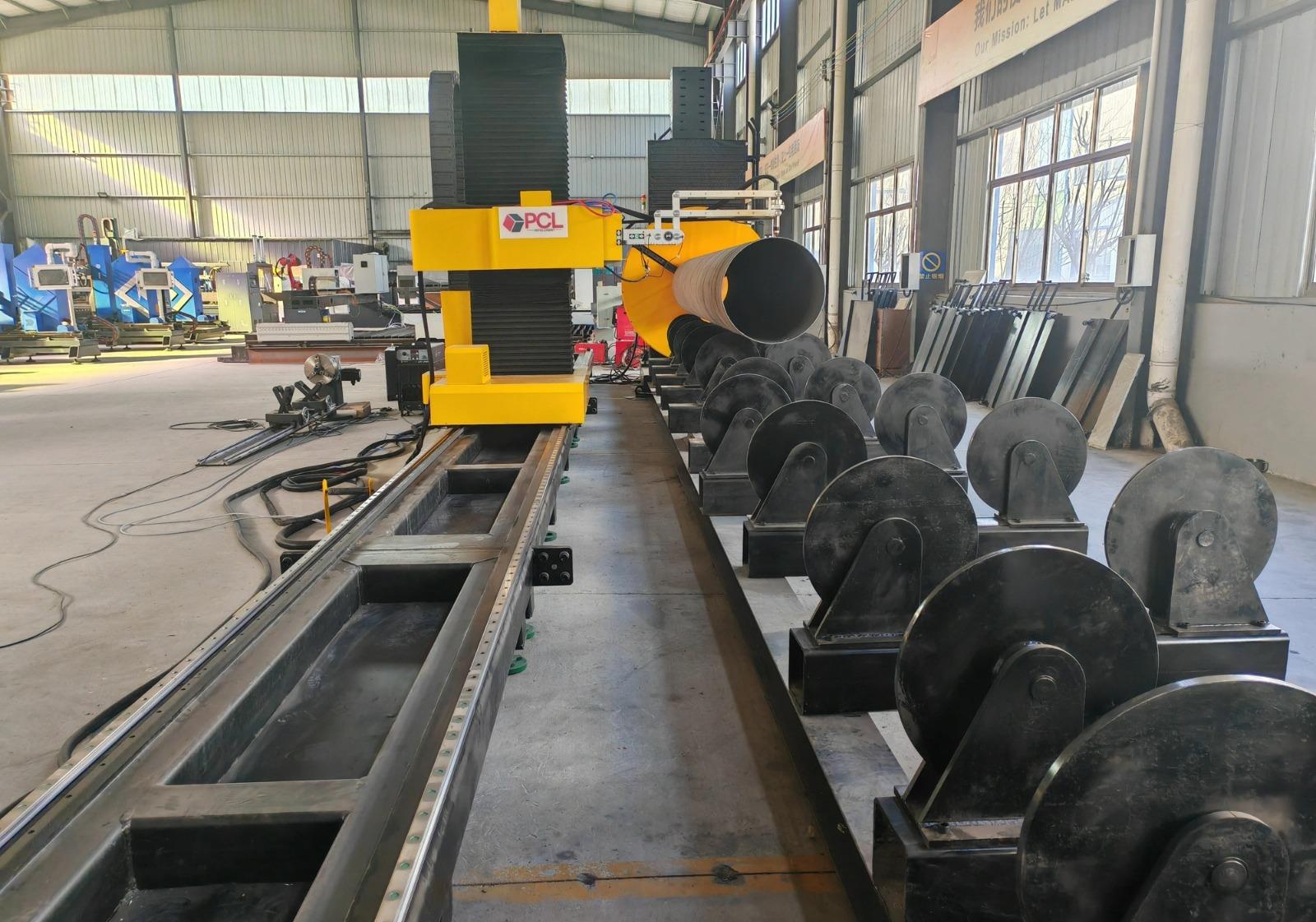
Automated beam centers utilize sophisticated measuring systems—often employing laser or mechanical probes—to map the actual dimensions of the H-beam before the first cut is made. This is essential because “mill-fresh” steel often possesses slight camber, sweep, or flange tilt that deviates from theoretical dimensions. The plasma system adjusts the cutting path in real-time based on this measured data. This ensures that the intersection geometry is perfectly perpendicular or skewed according to the design, facilitating a seamless fit-up that is ready for the narrow gap torch without the need for manual grinding or “make-ready” work.
H-Beam Processing and Low Maintenance Operations
From an operational standpoint, the efficiency of a beam processing center is measured by its uptime. H-beam processing in LNG projects involves high-duty cycles and continuous throughput. Plasma cutting systems are uniquely suited for this environment due to their robust nature and relatively low maintenance requirements compared to other thermal cutting technologies. The mechanical components of a plasma torch—the electrode, nozzle, and swirl ring—are designed for rapid replacement, allowing the machine to return to production within minutes.
Modern plasma power sources have evolved to include predictive maintenance features. These systems monitor arc voltage and gas flow rates to alert operators before a consumable failure occurs. In an LNG fabrication facility, where production delays can result in significant liquidated damages, the reliability of the plasma arc is a key logistical advantage. Furthermore, the ability of plasma to handle mill scale, rust, and surface contaminants common on heavy structural steel reduces the need for pre-processing cleaning, further streamlining the workflow and reducing the total cost of ownership for the facility.
Advanced Beveling for Narrow Gap Preparation
The defining characteristic of narrow gap welding is the steep, narrow groove angle, typically ranging from 1 to 5 degrees. Preparing these joints on large H-beams requires a 5-axis or 6-axis plasma head capable of executing high-definition bevels. This process, known as beveling, is where the plasma system proves its worth in LNG applications. The plasma arc is capable of creating V, Y, and X-shaped grooves with consistent land thicknesses, which is vital for maintaining the structural integrity of the root pass.
When preparing heavy flanges for narrow gap joints, the plasma system must maintain a constant torch-to-workpiece distance while navigating the transition from the flange to the web. The ability to perform “beveled copes” or “weld access holes” (rat holes) with precise geometry ensures that the welding robot has clear access to the root of the joint. This precision reduces the likelihood of weld defects such as slag inclusions or porosity, which are often cited as the primary causes of failure in cryogenic structural tests.
Thermal Zone Management and Material Integrity
Industrial engineers must also consider the Heat Affected Zone (HAZ) when selecting cutting parameters. While plasma is a thermal process, high-definition plasma systems use constricted arc technology and specialized gas mixtures (such as oxygen or nitrogen/hydrogen) to minimize the width of the HAZ. In LNG applications involving high-strength low-alloy (HSLA) steels, maintaining the metallurgical properties of the base metal is crucial. Precise plasma cutting ensures that the edge chemistry remains suitable for high-integrity welding, preventing embrittlement at the interface of the weld and the structural beam.
Economic Implications for Large-Scale Energy Projects
The shift toward integrated beam processing centers with plasma capability represents a significant capital investment, yet the ROI is realized through drastic reductions in man-hours per ton. By consolidating cutting, beveling, and marking into a single automated station, LNG contractors can ensure that every beam arrives at the welding station with 100% accuracy. This eliminates the “bottleneck” at the fit-up stage, which is traditionally the most labor-intensive part of structural fabrication.
Furthermore, the data integration between the processing center and the project management software allows for real-time tracking of every structural member. As the plasma torch engraves part numbers and weld symbols directly onto the H-beams, the traceability required for LNG regulatory compliance is automated. This synergy between physical processing and digital oversight is the hallmark of modern industrial engineering in the energy sector.
Conclusion: The Future of LNG Fabrication
The demand for LNG infrastructure shows no signs of waning, necessitating more efficient and reliable methods of structural fabrication. By prioritizing plasma cutting for its intersection accuracy and low maintenance profile, beam processing centers provide the necessary foundation for the implementation of narrow gap welding. This technological combination ensures that heavy H-beams are processed with the speed and precision required for the next generation of energy projects, maintaining the highest standards of safety and structural performance in the most demanding environments on Earth.





