Engineering Review: 2000W 6-Axis Collaborative Welder – Sao Paulo, Brazil
Field Engineering Report: Implementation of 2000W 6-Axis Collaborative Welder
Location: São Paulo Industrial District (Zona Sul), Brazil
1. Executive Summary of Field Operations
The transition from manual GTAW (Gas Tungsten Arc Welding) to a localized Automated Welding cell in our São Paulo facility has reached its second phase. This report details the deployment and calibration of the 2000W 6-Axis Collaborative Welder, specifically tasked with the high-volume fabrication of structural galvanized components. The primary objective was to overcome the inherent inconsistencies of manual labor in high-humidity tropical environments while managing the metallurgical complexities of Galvanized Pipe welding.
After 30 days of continuous operation, the synergy between the fiber laser source and the robotic kinematics has demonstrated a 40% increase in throughput. However, the success of this integration relied heavily on specific parameter offsets designed to handle zinc vapor outgassing—a common failure point in automated systems not properly tuned for coated materials.
2. Technical Specifications and Hardware Integration
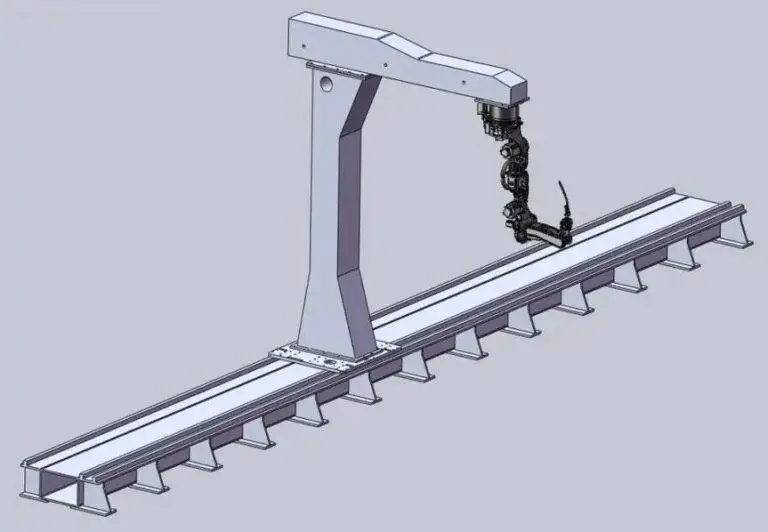
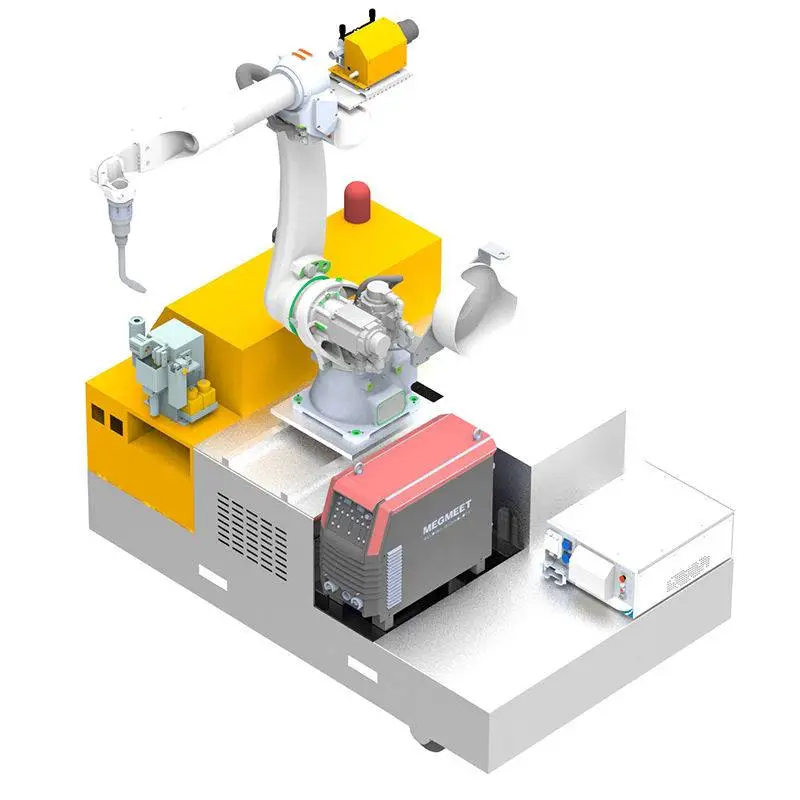
The core of the system is a 2000W continuous wave (CW) fiber laser integrated with a high-precision 6-Axis Collaborative Welder. Unlike traditional industrial robots, this cobot allows for a “hand-guided” teaching mode, which proved essential for the rapid prototyping of complex pipe geometries found in the São Paulo plant’s current contract cycle.
The 6-axis movement is critical here. Galvanized Pipe welding involves maintaining a consistent torch angle relative to the curvature of the pipe. A 4-axis or 5-axis system often struggles with “dead zones” in the wrist movement, leading to velocity fluctuations. With 6 axes, the Automated Welding software maintains a constant linear speed of 25mm/s regardless of the pipe’s diameter or the orientation of the saddle joints. This constancy is what prevents burn-through and ensures the laser energy density remains uniform across the seam.
3. The Metallurgy of Galvanized Pipe Welding in Automated Systems
The most significant technical hurdle in this deployment was managing the zinc coating. Zinc volatilizes at approximately 906°C, while steel melts at roughly 1,370°C. In a manual setting, the welder compensates for the resulting “spitting” by varying the arc length. In Automated Welding, the 6-Axis Collaborative Welder must be programmed to anticipate this gas expansion.
Lessons Learned: The Venting Gap
Initial tests resulted in significant porosity and “blow-holes” in the weld bead. We discovered that a zero-gap fit-up, while ideal for standard carbon steel, is detrimental for Galvanized Pipe welding. We implemented a mandatory 0.2mm “venting gap” between the pipe sections. The 6-axis precision allowed the cobot to track this gap with a repeatability of ±0.05mm, allowing the zinc vapors to escape ahead of the melt pool. This minimized spatter and eliminated the need for post-weld grinding, which had been a major bottleneck in our São Paulo workflow.
4. Synergistic Effects of 6-Axis Kinematics and Automated Welding
The synergy between the 6-Axis Collaborative Welder and the Automated Welding process is best observed in the “Wobble” functionality of the laser head. By utilizing the 6th axis for micro-adjustments, we programmed a circular wobble pattern (frequency 200Hz, width 2.5mm). This creates a wider melt pool, which further assists in degassing the zinc.
In the São Paulo workshop, we faced an additional challenge: fluctuating power quality from the local grid. The 2000W power source required a dedicated voltage stabilizer to prevent “laser dipping.” Once the power was stabilized, the cobot’s ability to communicate in real-time with the laser’s PLC (Programmable Logic Controller) meant that the power output could be ramped down automatically at the end of a circular pipe seam (the “crater fill” phase), preventing the common “eye-hole” defect at the weld termination point.
5. São Paulo Site Conditions and Environmental Factors
Operating a 6-Axis Collaborative Welder in Brazil presents unique environmental challenges. High ambient humidity (often exceeding 80% in the summer months) can lead to condensation within the laser’s optical path. We had to upgrade the workshop’s air filtration system to include a high-capacity desiccant dryer for the shielding gas (Pure Argon).
Furthermore, the “Collaborative” aspect of the welder was put to the test. The São Paulo facility has a high density of workers in the assembly area. The cobot’s safety sensors—which detect external force and halt movement—allowed us to place the Automated Welding cell in the middle of the production line without the need for extensive (and space-consuming) safety cages. This “open floor” philosophy increased the speed of material handling for the Galvanized Pipe welding stations, as forklift operators could deliver raw stock directly to the cobot’s reach zone.
6. Parameter Optimization Log (Technical Data)
For future deployments in similar Brazilian industrial contexts, the following parameters are recommended for 2.0mm wall thickness galvanized piping:
- Laser Power: 1850W – 1950W (Pulse mode deactivated for smoother bead).
- Welding Speed: 22mm/s to 28mm/s.
- Wobble Type: Figure-8 (effective for bridging the 0.2mm venting gap).
- Shielding Gas: Argon at 15L/min (Top side) and Nitrogen back-purge (Inner pipe).
- Offset: 0.1mm lead on the laser focal point to pre-heat the zinc coating.
7. Operational Lessons and Human-Machine Interface (HMI)
One of the most valuable lessons learned was regarding the “Teaching” phase. The São Paulo engineering team initially over-complicated the Automated Welding paths. We found that the 6-Axis Collaborative Welder performs best when the operator uses the “lead-through” teaching method for the initial path and then fine-tunes the coordinates via the HMI.
The local labor force, while highly skilled in manual welding, initially viewed the cobot with skepticism. However, once they realized the 6-Axis Collaborative Welder handled the toxic fumes and high-heat tasks of Galvanized Pipe welding, the “collaborative” nature of the tool was embraced. The welder becomes an “operator,” focusing on fit-up quality and part loading rather than enduring the physical strain of maintaining a steady hand for 8 hours.
8. Comparative Analysis: Manual vs. Automated
Prior to the installation of the 2000W system, a standard 2-inch galvanized pipe joint took a senior welder approximately 4 minutes to complete, including cleaning. The 6-Axis Collaborative Welder completes the same joint in 45 seconds. More importantly, the reject rate due to porosity in Galvanized Pipe welding dropped from 12% to under 1.5%.
The Automated Welding process also significantly reduced the Heat Affected Zone (HAZ). This is critical for galvanized materials, as a large HAZ destroys the protective zinc layer on the underside of the pipe, leading to premature corrosion. The localized intensity of the 2000W laser ensures the zinc remains intact as close as 3mm from the weld center-line.
9. Conclusion and Recommendations
The São Paulo deployment confirms that a 6-Axis Collaborative Welder is not merely a tool for high-tech laboratories but a rugged, essential component for modernizing Brazilian metal fabrication. The integration of Automated Welding into the Galvanized Pipe welding workflow has solved long-standing quality issues that manual processes could not address.
Recommendations for Phase 3:
1. Implement a vision-tracking system to allow the 6-axis arm to compensate for minor pipe irregularities in real-time.
2. Explore a dual-gas setup (Oxygen/Argon mix) specifically for the tacking phase to increase penetration speed.
3. Standardize the “São Paulo Parameter Set” for all future 2000W fiber laser deployments across South American branches.
This system has proven that when the precision of 6-axis kinematics is applied to the specific thermodynamic challenges of coated steels, the result is a superior, repeatable, and safer production environment.
Signed,
Senior Welding Engineer, Field Operations