H-Beam Production Line with Zero-tailing technology for Shipbuilding
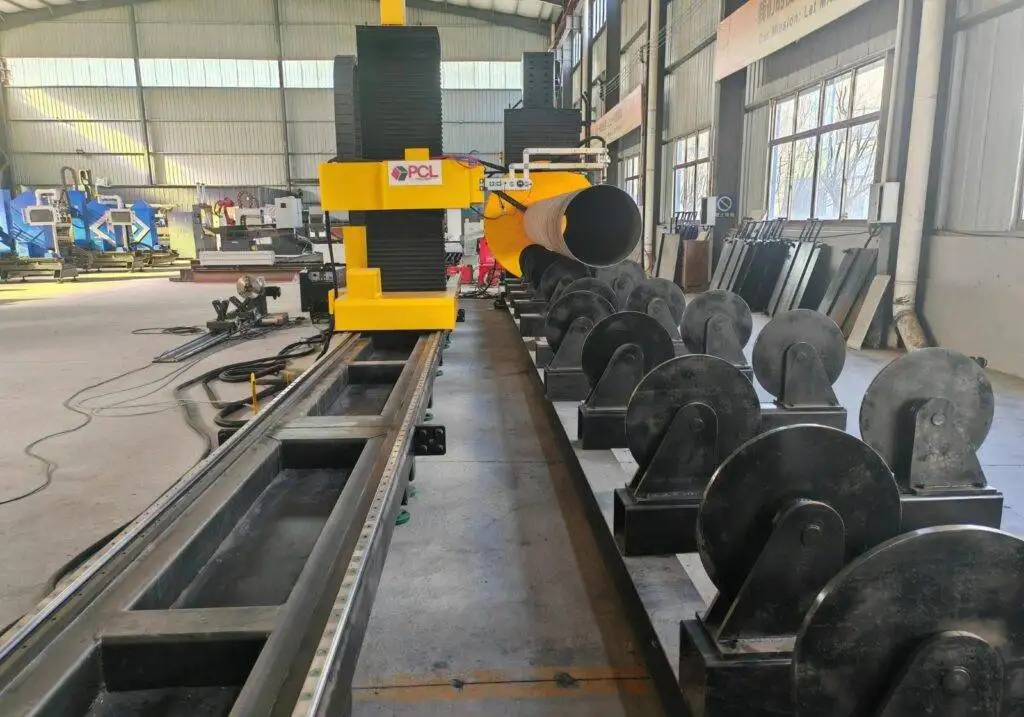
In this article
Advancements in Shipbuilding H-Beam Production
In the demanding environment of maritime engineering, the structural integrity of a vessel relies heavily on the precision of its skeletal framework. The H-beam, a critical component in hull reinforcement and deck support, requires exacting fabrication standards. Modern shipyards are increasingly transitioning toward automated H-beam structural processing lines that utilize high-definition Plasma Cutting systems. These systems are engineered to handle heavy-gauge carbon steel and stainless alloys, ensuring that the primary structural members meet the rigorous classification society standards.
The core objective of an industrial engineer in this sector is the optimization of throughput while minimizing the cost per cut. This involves a calculated approach to material handling, thermal cutting dynamics, and the reduction of scrap. Unlike traditional mechanical methods, plasma cutting provides a non-contact solution that mitigates tool wear and allows for complex geometric profiles to be executed in a single pass.
The Mechanics of Zero-Tailing Technology
Material cost accounts for a substantial portion of shipbuilding overhead. Standard cutting lines often leave a “tail” or “remnant” at the end of a beam because the clamping systems or sensors cannot maintain stability near the edge of the workpiece. Zero-tailing technology addresses this inefficiency through specialized modular conveyor systems and intelligent sensing probes.
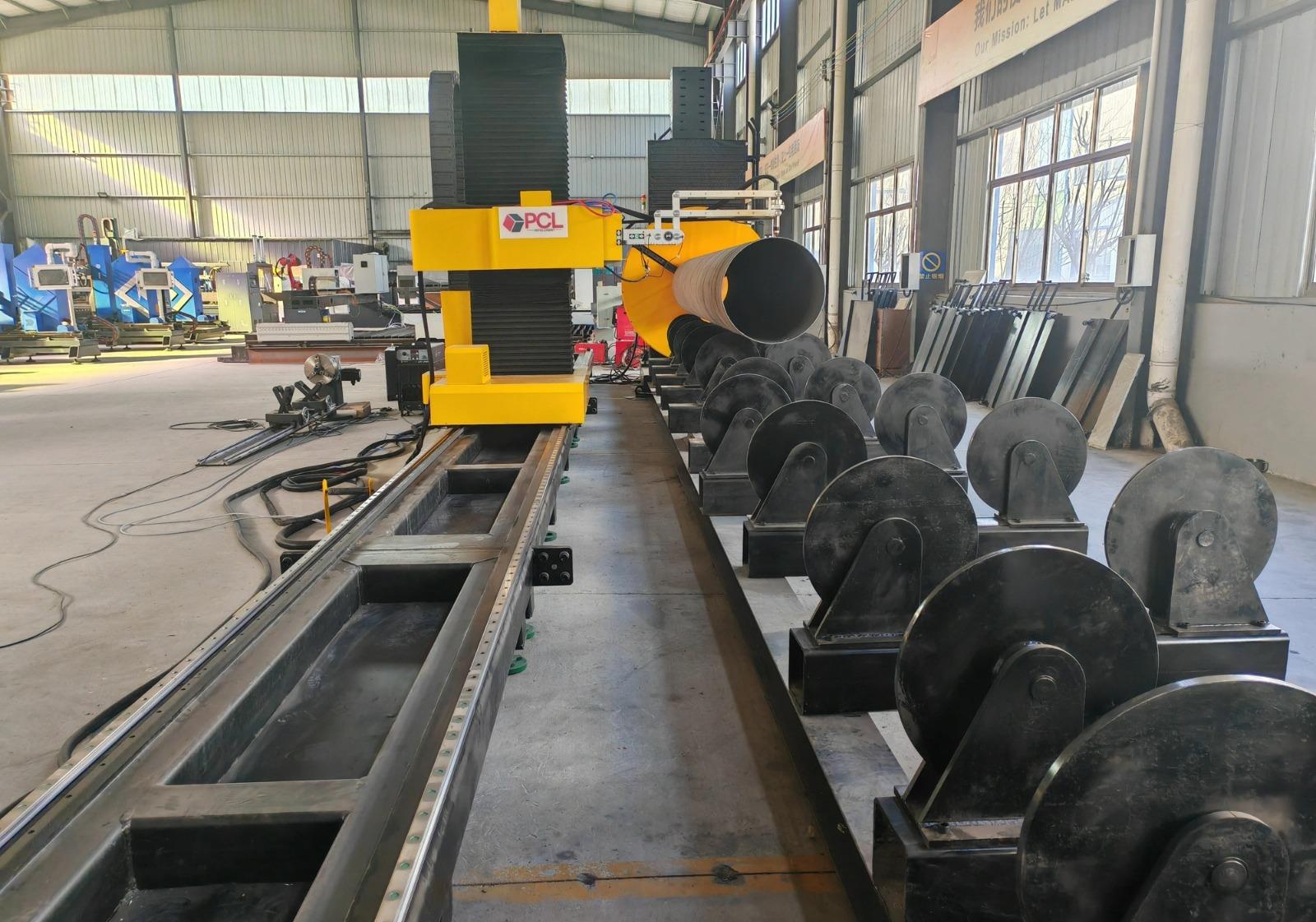
By employing a dual-chuck or multi-point secondary support system, the production line can feed the H-beam through the cutting zone until the very last millimeter of usable material is processed. This capability is facilitated by sophisticated software that recalibrates the torch path in real-time based on the physical end-of-beam detection. For a shipyard processing thousands of tons of steel annually, the elimination of a 200mm to 400mm waste section on every beam translates directly into significant bottom-line recovery and reduced material handling for scrap removal.
Plasma Cutting and Intersection Accuracy
In shipbuilding, H-beams rarely exist as isolated components; they are part of a complex grid where beams intersect at various angles, including oblique and compound joints. Achieving high plasma cutting accuracy is paramount to ensuring that these intersections fit together with zero-gap tolerances. This precision is dictated by the CNC (Computer Numerical Control) system’s ability to manage the plasma arc’s kerf compensation and voltage regulation.
Industrial plasma power sources now feature high-frequency starting and stable arc pressures that minimize the heat-affected zone (HAZ). This is critical for maintaining the metallurgical properties of the H-beam. When cutting web and flange penetrations—such as manholes or pipe passages—the plasma system must maintain a consistent torch height via an automated voltage control (THC). This prevents dross accumulation and ensures that the internal radii of the cuts are smooth, reducing the risk of stress concentrations that could lead to structural failure under the cyclic loading of maritime operations.
Multi-Axis Beveling for Structural Preparation
Beveling is a mandatory requirement in shipbuilding to prepare edges for high-strength joints. An integrated H-Beam Production Line utilizes a 6-axis robotic beveling head that can rotate and tilt around the stationary or slow-moving beam. This allows for the creation of A, V, X, and K-style bevels on both the flanges and the web without removing the beam from the line.
The engineering advantage here lies in the kinematics of the plasma torch. By using a robotic arm with high degrees of freedom, the system can perform “bevel-on-the-fly.” This process involves the plasma head adjusting its angle dynamically to compensate for any slight deviations or twists in the raw H-beam profile. The result is a consistent bevel land and angle across the entire length of the cut, which is essential for the automated assembly processes that follow in the shipyard’s fabrication workflow.
Low Maintenance Requirements of Industrial Plasma Systems
From a maintenance engineering perspective, plasma systems within an H-beam line are designed for high uptime in harsh shipyard environments. Unlike mechanical saws that require constant blade sharpening and replacement, or waterjet systems that demand complex high-pressure pump maintenance, plasma systems rely on consumable electrodes and nozzles. Modern “long-life” technology has extended the duty cycle of these consumables by optimizing the cooling flow around the torch head.
The maintenance protocol for these lines is primarily focused on the extraction system and the torch lead integrity. The absence of high-precision optical components—which are often sensitive to the dust and vibration of a shipyard—makes plasma a robust choice for heavy-duty structural work. Most components are modular, allowing for “plug-and-play” replacement that minimizes mean time to repair (MTTR). This reliability is essential for maintaining the continuous flow of the production line, ensuring that the downstream assembly stages are never starved for material.
Digital Integration and Nesting Efficiency
The efficiency of a zero-tailing plasma line is further enhanced by its integration with CAD/CAM software tailored for naval architecture. The software takes the 3D model of the ship and “unfolds” the H-beam requirements, automatically nesting parts to utilize the maximum length of the raw stock. By communicating directly with the plasma CNC, the software can sequence cuts to maintain the structural rigidity of the beam as it moves through the machine.
This digital thread ensures that every hole, notch, and bevel is accounted for before the steel even enters the shop. The combination of intelligent nesting and zero-tailing hardware means that the shipyard can order exact lengths of steel, reducing inventory carrying costs and simplifying the logistics of the steel yard. The precision of the plasma cut also eliminates the need for manual grinding or “fitting” on the assembly floor, as the components are delivered to the hull block assembly area in a “ready-to-install” state.
Technical Conclusion
The implementation of a plasma-based H-beam production line equipped with zero-tailing capabilities represents a strategic investment for modern shipbuilders. By focusing on the mechanical precision of the plasma arc and the kinematic flexibility of robotic torch movement, yards can achieve a level of intersection accuracy that was previously unattainable with manual methods. The low maintenance overhead and high material utilization rates ensure that the cost of production remains competitive. As maritime structures become more complex, the reliance on these high-precision thermal cutting systems will continue to grow, forming the backbone of efficient, high-quality naval construction.





