Beam Processing Center with Arc Voltage Control for for Construction Machinery
In this article
- Optimizing Construction Machinery Fabrication via Beam Processing Centers
- The Technical Role of Arc Voltage Control (AVC)
- Dynamic Standoff Compensation
- Mitigating Mechanical Collision
- Precision in Intersection and Joint Accuracy
- Plasma Beveling for High-Strength Structural Preparation
- Maintenance Efficiency in H-Beam Processing
- Consumable Longevity and Monitoring
- Slag Management and Dust Extraction
- Operational Integration and ROI
Optimizing Construction Machinery Fabrication via Beam Processing Centers
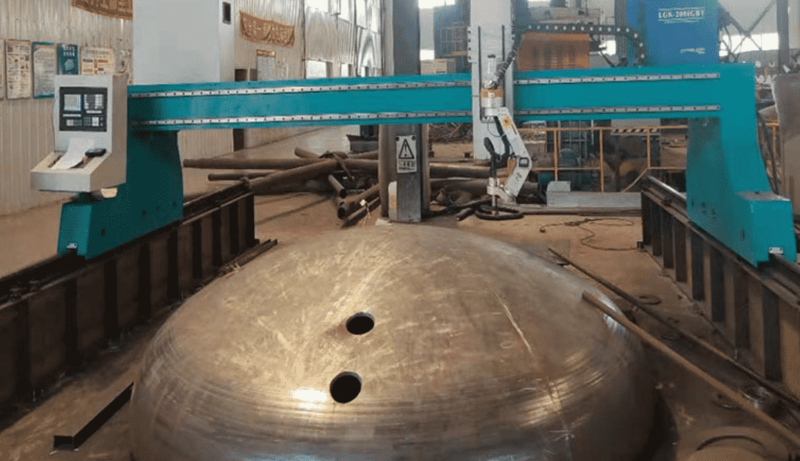
The manufacturing of heavy construction machinery—such as excavators, cranes, and specialized lifting equipment—demands extreme structural integrity and dimensional precision. At the core of these machines lie heavy-duty H-beams, channels, and square tubes that form the chassis and load-bearing structures. A Beam Processing Center equipped with advanced plasma technology has become the industrial standard for achieving the necessary throughput and accuracy. Unlike traditional manual layout and cutting methods, these automated systems integrate multi-axis motion control to handle complex geometries in a single pass.
The transition from manual processing to automated plasma systems is driven by the need for consistency. In the context of heavy equipment, even a 2mm deviation in a beam’s intersection point can lead to significant structural misalignment during final assembly. By utilizing robotic plasma torches or multi-axis gantries, manufacturers can execute intricate cuts that align perfectly with the engineering specifications of the CAD model, ensuring that every component fits the first time.
The Technical Role of Arc Voltage Control (AVC)
In Plasma Cutting operations, the distance between the torch nozzle and the workpiece—known as the standoff distance—is the most critical variable affecting cut quality. Arc Voltage Control (AVC) is a closed-loop feedback mechanism that monitors the electrical potential between the plasma electrode and the material being cut. In structural steel processing, H-beams are rarely perfectly flat; they often possess slight bows, twists, or surface irregularities from the mill.

Dynamic Standoff Compensation
AVC systems function by measuring the voltage of the plasma arc, which is directly proportional to the arc length. As the torch moves across a non-linear H-beam surface, the AVC system detects fluctuations in voltage. If the voltage increases, indicating the torch is too far from the plate, the Z-axis motor immediately lowers the torch to maintain the target voltage. Conversely, if the voltage drops, the torch is raised. This real-time modulation ensures a constant kerf width and prevents dross accumulation or “bottom-rounding” of the cut edge.
Mitigating Mechanical Collision
Beyond cut quality, AVC serves as a protective layer for the hardware. In construction machinery fabrication, heavy beams may shift slightly under thermal stress during the cutting process. Without a responsive AVC, the torch head is at risk of colliding with the workpiece, leading to costly downtime and damage to the plasma consumables or the torch body itself. The high-speed sampling rate of modern AVC units allows for instantaneous height adjustments at travel speeds exceeding 3000mm/min.
Precision in Intersection and Joint Accuracy
Construction machinery relies on complex intersections where multiple structural members converge. Achieving high Plasma Cutting Accuracy at these junctions is vital for load distribution. Automated beam centers utilize 5-axis or 6-axis robotic arms to navigate the flanges and webs of H-beams, allowing for “coping” or “notching” cuts that follow the exact profile of the mating beam.
Interpolation and Path Planning
The intersection accuracy is a product of the synchronization between the longitudinal movement of the beam feeder and the lateral/rotational movement of the plasma head. Advanced CNC algorithms calculate the precise tool path required to compensate for the beam’s radius at the flange-web junction. This ensures that the resulting “fish-mouth” or “bird-beak” cuts provide a tight fit-up, which is essential for the structural rigidity required in high-stress applications like crane booms.
Thermal Management and Kerf Compensation
Plasma cutting generates significant heat, which can lead to localized expansion. Industrial-grade beam processing centers include kerf compensation software that adjusts the cutting path based on the thickness of the material and the amperage of the plasma power source. By maintaining a narrow and consistent heat-affected zone (HAZ), the system preserves the metallurgical properties of the high-strength steel typically used in yellow goods manufacturing.
Plasma Beveling for High-Strength Structural Preparation
Edge preparation is a non-negotiable step in heavy machinery fabrication. For structural components that must endure cyclical loading, simple 90-degree cuts are insufficient. Plasma beveling allows the beam processing center to create V, Y, X, and K-shaped profiles along the edges of the beam flanges or web. These profiles facilitate deep penetration during the subsequent bonding phases, ensuring the joint can handle the design’s rated tonnage.
Automated Beveling Kinematics
The integration of a tilt-and-rotate plasma head allows the system to change the bevel angle on the fly. For example, a beam may require a 45-degree bevel on the top flange but a straight cut on the web. The software manages these transitions seamlessly, adjusting the AVC parameters to account for the increased “apparent thickness” of the material when cutting at an angle. This capability eliminates the need for secondary grinding or manual beveling, which are labor-intensive and prone to human error.
Repeatability in Heavy Plate and Flange Cutting
In the production of excavator arm components, the repeatability of bevel angles is paramount for automated assembly lines. The combination of precision rack-and-pinion drives and high-resolution encoders ensures that every bevel is within a fraction of a degree. This level of consistency allows downstream robotic systems to operate without the need for manual adjustment of the tool path for each individual component.
Maintenance Efficiency in H-Beam Processing
From an industrial engineering perspective, the H-beam Fabrication Efficiency is measured not just by cutting speed, but by system uptime. Plasma-based beam processing centers are designed for high-duty cycles in harsh environments. Unlike other thermal cutting technologies that may be sensitive to dust or ambient light, plasma systems are robust and relatively simple to maintain.
Consumable Longevity and Monitoring
Modern plasma power sources provide digital diagnostics that monitor the wear of the electrode and nozzle. By correlating AVC data with consumable life, the system can alert operators before a failure occurs. This predictive maintenance approach is critical in 24/7 manufacturing environments where an unexpected shutdown of the beam line can stall the entire assembly hall.
Slag Management and Dust Extraction
Effective beam processing requires integrated slag management. As the plasma torch pierces heavy H-beam flanges, molten metal is ejected at high velocities. Modern centers feature specialized extraction beds and downdraft tables that capture particulates at the source. The mechanical design of the beam conveyor system is also optimized to prevent slag buildup on the rollers, which would otherwise compromise the positioning accuracy of the beam over time.
Operational Integration and ROI
The implementation of an AVC-equipped beam processing center represents a significant capital investment that yields high returns through labor reduction and material optimization. By nesting multiple parts within a single beam length, the CNC software minimizes scrap. Furthermore, the elimination of manual layout—whereby workers use chalk and tape measures to mark cutting lines—drastically reduces the “floor-to-floor” time for each structural component.
In the construction machinery sector, where market demand can fluctuate, the flexibility of plasma-based beam centers is a strategic advantage. The ability to switch from processing light-duty channel iron to heavy-duty H-beams with minimal setup time ensures that the production line remains agile. The combination of high-speed cutting, automated beveling, and the precision of arc voltage control creates a streamlined workflow that is essential for modern industrial competitiveness.
Ultimately, the focus on plasma-based precision ensures that the structural backbone of construction machinery is built to withstand the rigors of the field. By prioritizing mechanical accuracy and robust system design, manufacturers can achieve a level of quality that manual processes simply cannot replicate, solidifying their position in a demanding global market.






