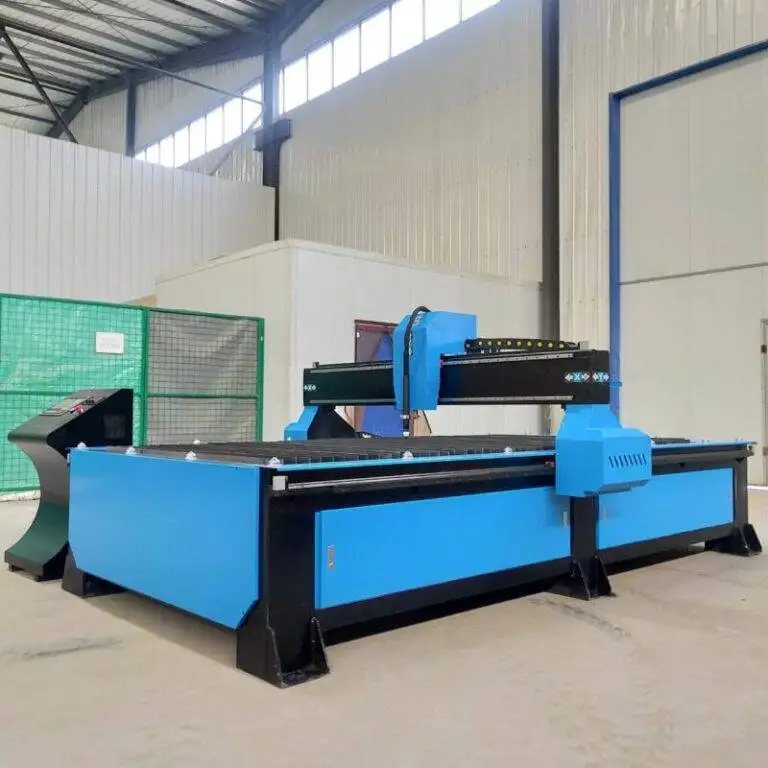
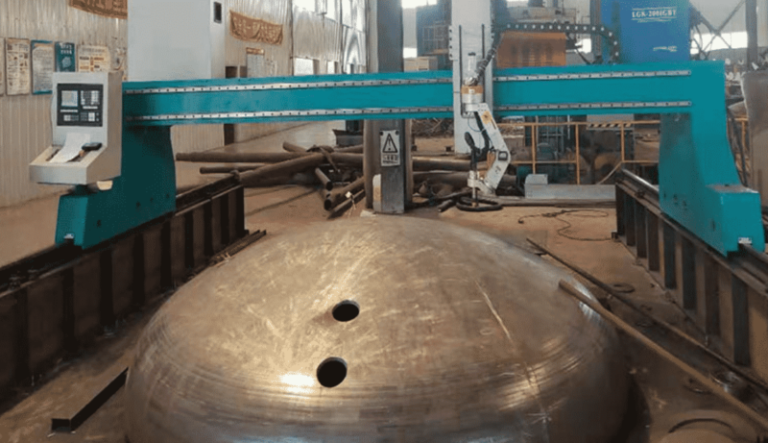
H-Beam Production Line with Arc Voltage Control for Wind Tower fabrication
In this article
Optimizing H-Beam Fabrication with Advanced Plasma Technology
In the heavy fabrication sector, specifically for wind tower structural components, the demand for dimensional integrity and throughput is absolute. The production of H-beams requires a rigorous approach to thermal cutting that balances speed with structural tolerances. High-definition Plasma Cutting has emerged as the primary solution for processing heavy-wall H-sections due to its ability to handle thick carbon steel with minimal heat-affected zones. Unlike lighter manufacturing processes, wind tower components necessitate a robust thermal energy source capable of maintaining consistent piercing and cutting speeds across varied material thicknesses.
The Role of Arc Voltage Control (AVC) in Precision Processing
The core of a modern H-Beam Production Line is the integration of arc voltage control. In plasma systems, the distance between the torch nozzle and the workpiece—often referred to as the standoff distance—is directly proportional to the arc voltage. As the H-beam moves through the cutting station, any slight undulation in the steel flange or web can lead to variations in this distance.
AVC systems function as a real-time feedback loop. The controller measures the voltage of the plasma arc thousands of times per second. If the voltage deviates from the programmed setpoint, the Z-axis lifter motor immediately adjusts the torch height. for Wind Tower fabrication, where beams can be several meters long, this ensures that the plasma jet remains at its optimal focal point. Without AVC, the risk of nozzle collisions or “drossing” increases significantly, leading to poor edge quality and potential rework.
Achieving Superior Intersection Accuracy
Wind tower lattice structures and base reinforcements rely on complex intersections where H-beams meet at specific angles. Achieving intersection accuracy is a matter of both software algorithms and mechanical execution. When an H-beam is being notched or cut to length, the plasma system must account for the radius of the beam’s inner fillet.
Automated CNC plasma lines utilize multi-axis heads to navigate these intersections. The AVC ensures that as the torch transitions from the flat surface of the flange to the curvature of the transition zone, the arc remains stable. This stability is critical for ensuring that the interlocking parts of the wind tower frame fit together with zero-gap tolerances. Precision at this stage eliminates the need for manual grinding or gap-filling, which are common bottlenecks in structural engineering.
High-Performance Beveling for Structural Integrity
For wind tower fabrication, beveling is not an aesthetic choice but a structural necessity. Heavy-duty H-beams require specific edge preparations, such as V-grooves, Y-grooves, or K-cuts, to allow for full-thickness penetration in subsequent assembly stages. A 5-axis plasma beveling head, governed by arc voltage control, allows for the creation of complex bevel angles in a single pass.
The challenge in bevel cutting is the changing path length of the arc as the torch tilts. Advanced plasma controllers automatically calculate the voltage compensation required for angled cuts. By maintaining a constant arc length even at a 45-degree tilt, the system ensures that the bevel face is smooth and the root opening remains consistent along the entire length of the beam. This level of precision is vital for the fatigue resistance required in wind energy structures, which are subjected to constant cyclical loading from wind gusts and turbine vibrations.
Low Maintenance and Industrial Durability
From an industrial engineering perspective, the lifecycle cost of a production line is as important as its initial output. H-beam low maintenance profiles are a significant advantage of plasma-based systems. Unlike other thermal cutting technologies that utilize sensitive optical components or complex gas mixing chambers prone to clogging, modern plasma power surfaces are built for high-duty cycles in dusty, high-vibration environments.
The primary wear items in a plasma system are the consumables—the electrode and the nozzle. Modern AVC systems include “ohmic sensing” and “soft-start” technologies that reduce the wear on these components during the piercing phase. By accurately sensing the material’s surface before the arc is struck, the system avoids “double-arcing” and protects the torch head from molten splatter. This results in longer intervals between consumable changes and higher machine uptime, which is critical for meeting the tight delivery schedules of global wind energy projects.
Eliminating Thermal Distortion Through Controlled Heat Input
One of the frequent challenges in H-beam fabrication is the management of thermal distortion. Excessive heat can cause long beams to “banana” or twist, making them useless for precision tower assembly. High-definition plasma systems mitigate this by maximizing cutting speed. The faster the plasma torch moves, the less heat is conducted into the surrounding base metal.
The AVC plays a secondary role here by ensuring the arc is always concentrated. A “wandering” arc caused by incorrect height settings spreads heat over a wider area, increasing the risk of deformation. By locking the arc into a tight, focused column through precise height management, the production line maintains the geometric straightness of the H-beam, ensuring that the final structure meets the stringent verticality requirements of wind turbine OEMs.
Data Integration and CNC Synchronization
The modern H-beam line is a data-driven environment. The CNC controller synchronizes the movement of the beam conveyors with the plasma head’s trajectory. All parameters, including gas pressures (oxygen, nitrogen, or H35) and arc voltage setpoints, are stored in material libraries. This allows operators to switch between different beam sizes and steel grades with minimal setup time.
In the context of wind tower fabrication, traceability is also essential. Many plasma systems are now equipped with marking capabilities, using the same plasma arc at a lower amperage to etch part numbers and alignment marks directly onto the H-beam. This integration further reduces the need for secondary handling and ensures that every component is accounted for throughout the fabrication lifecycle.
Conclusion of Mechanical Advantages
The implementation of a plasma-based H-beam production line equipped with Arc Voltage Control represents a strategic investment for wind tower manufacturers. The synergy between high-speed thermal cutting and automated height regulation results in a process that is both highly accurate and remarkably robust. By focusing on the mechanical reliability of plasma components and the geometric precision of the 5-axis beveling process, engineers can ensure that the structural backbone of wind energy infrastructure is produced to the highest possible standards of quality and efficiency.