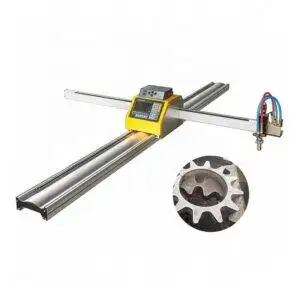
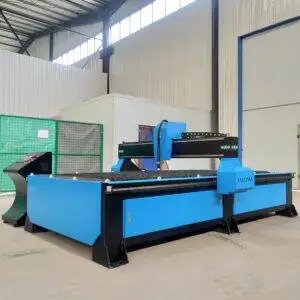
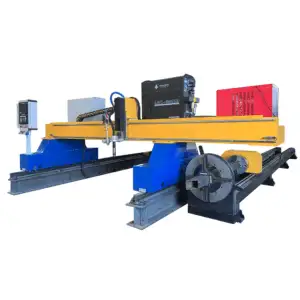
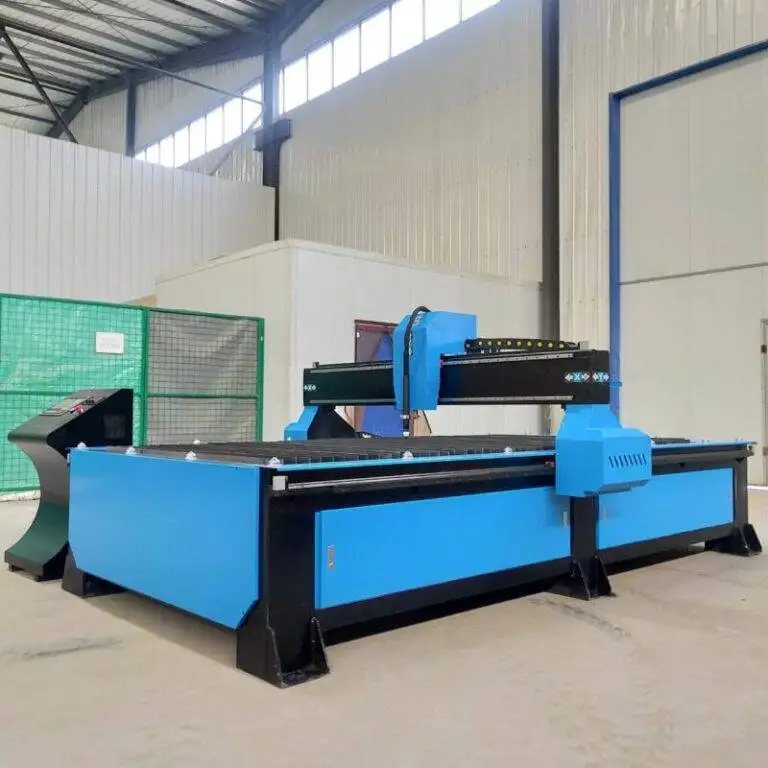
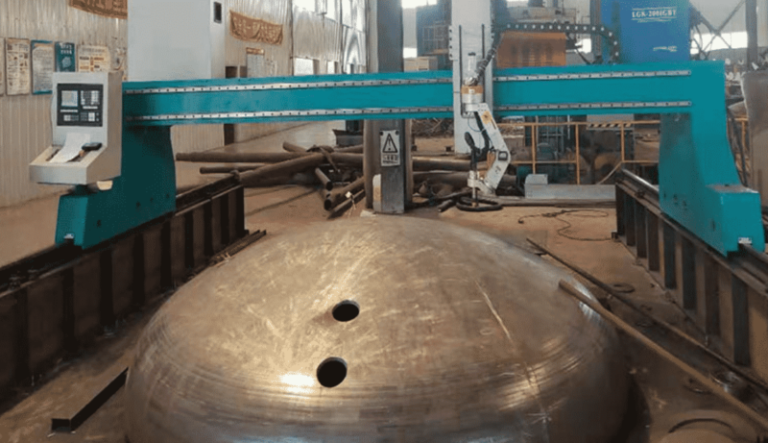
H-Beam Production Line with Arc Voltage Control for Pressure Vessels
In this article
Optimizing H-Beam Fabrication for Pressure Vessel Integration
In the heavy industrial manufacturing sector, specifically regarding pressure vessel skids and support structures, the structural integrity of the H-beam framework is non-negotiable. These vessels often operate under extreme thermal and barometric stress, requiring support skeletons that are manufactured to tight tolerances. The transition from manual layout to automated H-Beam Plasma Cutting has redefined the throughput capabilities of modern shops. Unlike standard structural steel applications, pressure vessel supports require specialized geometry where the beam meets the cylindrical body of the vessel. This necessitates a high degree of intersection accuracy and sophisticated edge preparation.
The Role of Arc Voltage Control in Precision Cutting
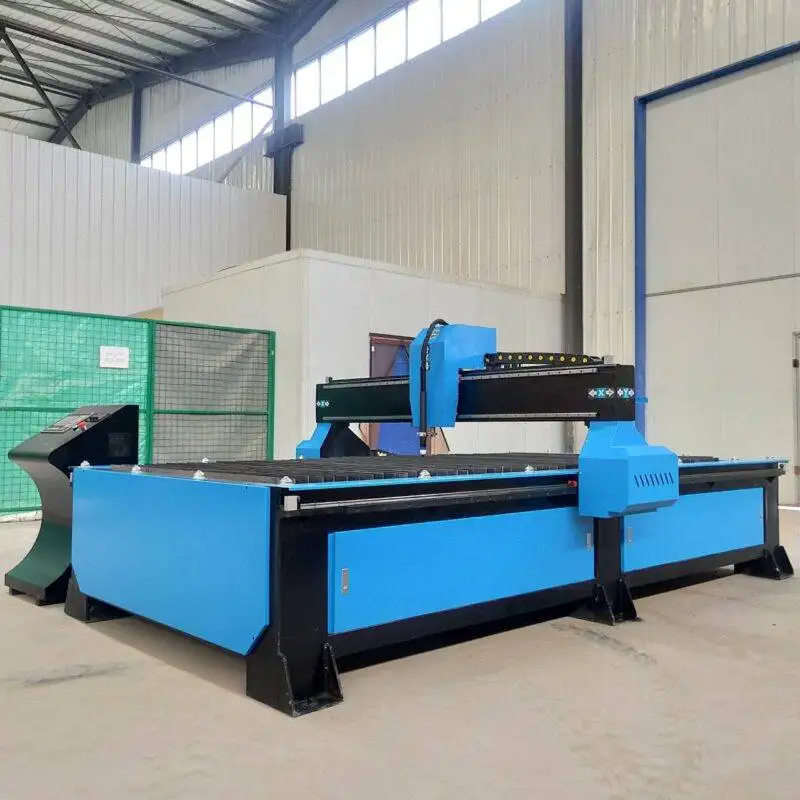
The core of a high-performance plasma production line is the Arc Voltage Control (AVC) system. In H-beam processing, material deviation is a common challenge. Structural beams are rarely perfectly flat or straight; they possess natural cambers, sweeps, and flange warps from the rolling mill. Arc Voltage Control functions as a real-time feedback loop that maintains the distance between the plasma torch tip and the workpiece.
By measuring the voltage of the plasma arc—which is directly proportional to the arc length—the system can command the Z-axis motor to adjust the torch height instantaneously. If the beam flange bows upward, the voltage decreases, signaling the controller to raise the torch. This constant adjustment ensures a stable arc density and consistent kerf width. For pressure vessel manufacturers, this stability is critical because it prevents “dross” or slag buildup on the underside of the cut, which would otherwise require labor-intensive post-processing.
Achieving Superior Intersection Accuracy
Pressure vessels are typically cylindrical, meaning any H-beam used as a saddle or support must be notched with a specific radius to ensure a flush fit. Traditional 2D cutting methods fail to account for the thickness of the beam flanges and the varying angles required for a secure fitment. Automated plasma lines utilize 5-axis or 6-axis robotic heads to execute these complex 3D intersections.
Spatial Geometry and Software Integration
The precision of the Intersection Accuracy depends on the synergy between the CAD/CAM software and the motion controller. The software generates a G-code path that accounts for the vessel’s diameter and the beam’s cross-sectional dimensions. Because the plasma arc is a thermal process, the controller must also compensate for the kerf offset. When the torch moves across the web of the H-beam and transitions to the flanges, the AVC ensures the torch remains at the optimal focal point, preventing “under-cutting” or “blow-outs” at the corners. This geometric precision ensures that the beam sits perfectly against the vessel wall, distributing the load evenly and reducing the stress on the final connection.
Multi-Axis Beveling for Weld Preparation
One of the most significant bottlenecks in pressure vessel fabrication is weld preparation. Thick-walled H-beams require specific bevel profiles—typically V, Y, or K-cuts—to allow for full penetration welds. Manually grinding these bevels on a curved intersection is both time-consuming and prone to human error.
Modern plasma production lines incorporate Beveling Precision by tilting the torch head during the cutting process. The AVC system remains active during beveling, though the voltage-to-distance ratio must be recalculated by the PLC to account for the angular increase in arc length. This capability allows the machine to cut the shape and the bevel in a single pass. for Pressure Vessels, where weld integrity is scrutinized via X-ray or ultrasonic testing, the uniformity of the plasma-cut bevel ensures a consistent root gap and land, significantly increasing the pass rate of NDT (Non-Destructive Testing) inspections.
Mechanical Simplicity and Low Maintenance Requirements
In a heavy fabrication environment, equipment reliability is paramount. H-beam plasma lines are engineered for high duty cycles and harsh conditions, characterized by metallic dust, smoke, and vibration. A primary engineering advantage of plasma-based systems is their H-beam low maintenance profile compared to other thermal cutting technologies.
Robust Consumable Management
The maintenance requirements of a plasma system are primarily centered on consumables: the nozzle, electrode, and swirler. Modern high-definition plasma systems feature “long-wear” technology that optimizes the gas flow (usually O2 or N2) to shield the nozzle from molten metal blowback during the piercing stage. Unlike delicate optical systems, plasma torches are rugged. If a collision occurs due to a material shift, the torch is usually mounted on a magnetic breakaway or a pneumatic sensor, allowing for rapid reset without the need for expensive recalibration.
Optimizing the Production Environment
To maintain low maintenance overhead, integrated fume extraction and slag collection systems are essential. As the H-beam moves through the cutting zone, the plasma arc generates significant particulate matter. Down-draft tables or side-extraction units pull these particles away from the linear rails and rack-and-pinion drives. Protecting the motion system from abrasive dust ensures that the Intersection Accuracy remains consistent over years of operation. Furthermore, the absence of complex mirrors or sensitive beam paths means the system can be maintained by in-house industrial mechanics rather than specialized external technicians.
Economic and Operational Throughput
From an industrial engineering perspective, the integration of AVC and automated beveling into an H-beam line represents a massive shift in Total Cost of Ownership (TCO). By eliminating the need for secondary grinding and manual layout, the “arc-on” time is maximized. In the context of pressure vessel fabrication, where lead times are often measured in months, reducing the structural fabrication phase by even 20% can result in significant liquid savings.
The precision afforded by the Arc Voltage Control also reduces material waste. Nesting software can place cuts closer together because the software trusts the stability of the arc. When dealing with high-yield structural steel used in vessel skids, the reduction in scrap directly impacts the bottom line. The final result is a streamlined production flow where raw H-beams enter one end of the line and emerge as fully prepared, beveled, and accurately notched components ready for immediate assembly.
Conclusion
The engineering shift toward automated H-beam plasma lines with integrated Arc Voltage Control provides a robust solution for the rigorous demands of pressure vessel manufacturing. By prioritizing intersection accuracy and multi-axis beveling, manufacturers can ensure structural integrity while maintaining a low-maintenance, high-throughput environment. The focus remains on the thermal efficiency of the plasma arc and the mechanical reliability of the delivery system, ensuring that every cut meets the stringent tolerances required for high-pressure applications.