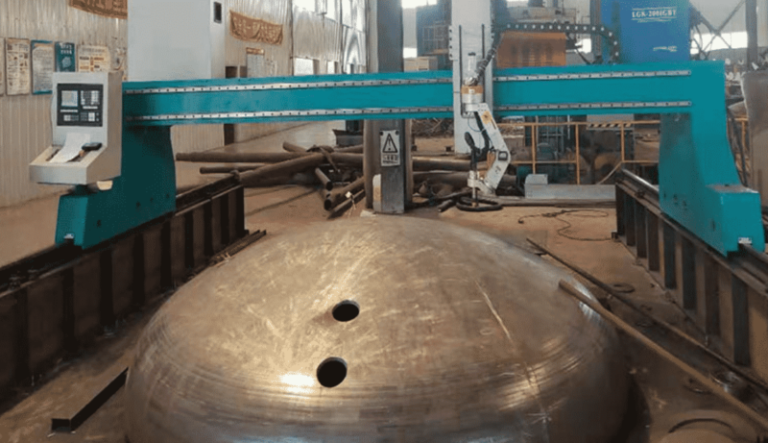
H-Beam Production Line with Arc Voltage Control for LNG Projects
In this article
Optimizing H-Beam Fabrication for LNG Infrastructure
Liquefied Natural Gas (LNG) projects demand structural integrity that exceeds standard commercial construction requirements. The beams utilized in these facilities—often massive H-beams for pipe racks, tank supports, and loading docks—must withstand extreme temperature fluctuations and high-stress loads. The transition toward automated Plasma Cutting Accuracy has become a prerequisite for meeting the stringent tolerances dictated by international engineering standards.
In a production line environment, the efficiency of an H-beam system is measured by its ability to process heavy-gauge steel without the need for secondary manual correction. The primary challenge lies in the inherent irregularities of hot-rolled steel, such as flange warping or web bowing. Addressing these variables requires a system that moves beyond basic CNC pathing and into real-time adaptive sensing.
The Mechanics of Arc Voltage Control in H-Beam Processing
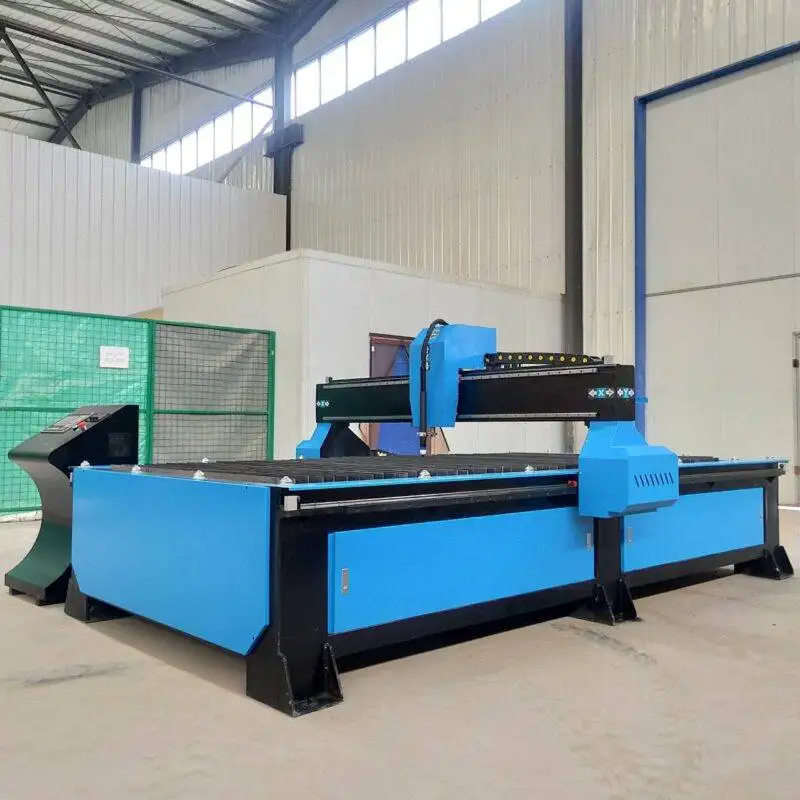
Arc Voltage Control (AVC) serves as the critical feedback loop in modern plasma cutting lines. In the context of H-beam fabrication, the distance between the plasma torch tip and the steel surface (stand-off distance) is directly proportional to the arc voltage. As the torch moves across a flange that may have slight deviations in flatness, the AVC system detects voltage fluctuations and triggers an instantaneous Z-axis correction.
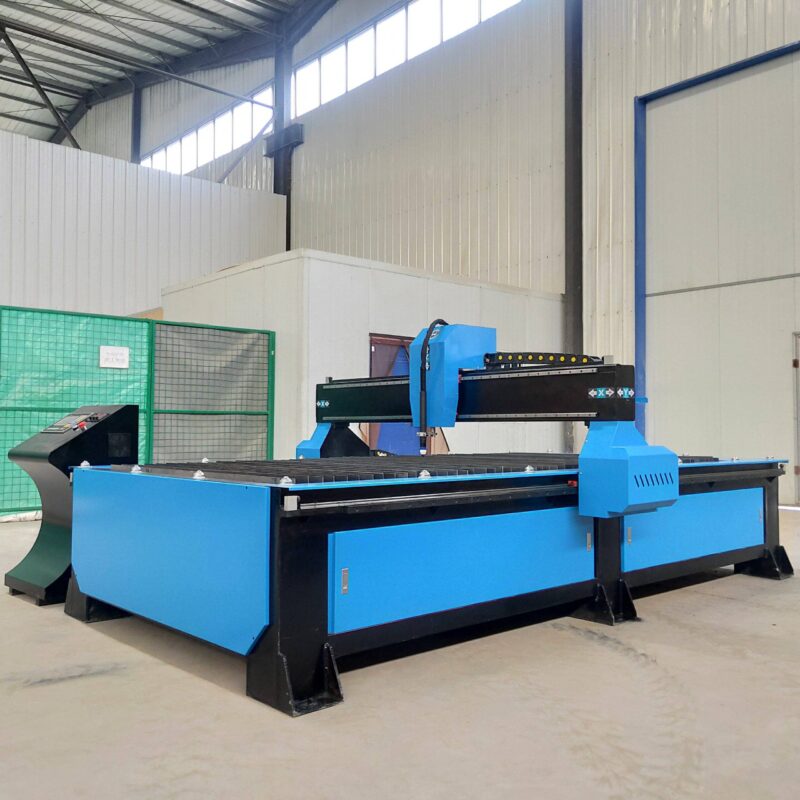
for LNG Projects, where a 1mm deviation can compromise the fit-up of a critical structural node, AVC ensures that the kerf width remains constant. Without this stabilization, the plasma arc would either widen (if the torch is too far), leading to a tapered cut, or risk a collision with the workpiece (if the torch is too close), resulting in costly downtime and consumable damage.
Enhancing H-Beam Intersection Precision
The complexity of LNG structural design often requires H-Beam Intersection cuts where the web of one beam must perfectly match the profile of another. Traditional methods often relied on manual templates and hand-held torches, which introduced human error and jagged edges. Modern plasma lines utilize multi-axis robotic or gantry-based heads that execute complex 3D paths.
By integrating the AVC with five-axis or six-axis movement, the system can maintain a perpendicular or specific angular relationship to the workpiece, even when navigating the radius (root) of the H-beam where the flange meets the web. This intersection accuracy is vital for maintaining the structural calculations of the joint, ensuring that load distribution occurs as intended by the design engineers.
Advanced Beveling for Full Penetration Preparations
In high-pressure or cryogenic environments, structural joints frequently require full-penetration welds. This necessitates precise edge preparation on the H-beams. Structural Beveling via plasma cutting allows for the creation of V, Y, X, and K-cuts in a single pass. Unlike mechanical milling, plasma beveling is significantly faster and can handle the tough scales found on heavy-rolled steel.
The ability of the plasma head to tilt while maintaining a consistent arc voltage allows for bevel angles ranging from 0 to 45 degrees. For LNG pipe racks, where the beams must endure thermal expansion and contraction cycles, these bevels must be uniform across the entire length of the cut to ensure that the subsequent bonding process meets ultrasonic or radiographic inspection standards.
Operational Efficiency and Low Maintenance Design
Industrial engineers focus on the Total Cost of Ownership (TCO) when selecting production equipment. A common misconception is that high-precision plasma systems require excessive upkeep. However, a production line designed for H-beam low maintenance utilizes several engineering strategies to maximize uptime:
- Integrated Fume Extraction: Automated downdraft tables or overhead hoods remove particulate matter that could otherwise settle on precision gear racks and linear guides.
- Robust Consumable Management: Modern plasma power sources provide digital monitoring of electrode and nozzle wear, allowing for scheduled maintenance rather than reactive repairs.
- Sealed Drive Systems: Precision components are shielded from the metallic dust inherent in thermal cutting processes, preventing premature mechanical failure.
- Collision Protection: Magnetic or spring-loaded torch holders disconnect the torch instantly upon physical impact, preventing damage to the expensive 5-axis head.
Material Integrity and Thermal Management
While plasma cutting is a thermal process, the speed at which modern systems operate minimizes the Heat Affected Zone (HAZ). For LNG-grade steels, maintaining the metallurgical properties of the base metal is essential. By optimizing the cutting speed through the CNC interface and maintaining a stable arc via AVC, the heat input is localized, reducing the risk of plate warping or micro-cracking at the cut edge.
This precision eliminates the need for post-cut grinding in many applications, moving the H-beam directly from the cutting station to the assembly stage. This “just-in-time” flow is critical for large-scale LNG projects where logistics and staging areas are often at capacity.
Integration with BIM and Tekla Workflows
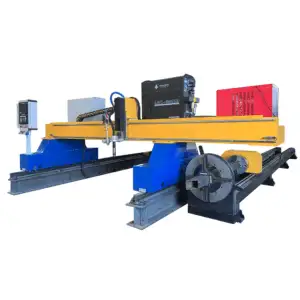
The modern H-Beam Production Line is not an island; it is an extension of the engineering office. CAD/CAM software allows engineers to export direct files (such as DSTV or STEP) from Building Information Modeling (BIM) platforms directly to the plasma line. This digital continuity ensures that the intersection accuracy planned in the 3D model is translated exactly to the physical steel. The plasma system interprets these complex geometries and applies the necessary bevels and cope cuts without manual data entry, further reducing the potential for error.
Summary of Engineering Benefits
The deployment of a plasma-based H-beam production line with integrated Arc Voltage Control provides a measurable competitive advantage for LNG infrastructure contractors. By focusing on the mechanical stabilization of the cutting arc, facilities can achieve higher throughput, superior edge quality for structural bevels, and a significant reduction in long-term maintenance costs. As LNG projects continue to grow in scale and complexity, the reliance on automated precision becomes not just an advantage, but a necessity for meeting international safety and quality benchmarks.