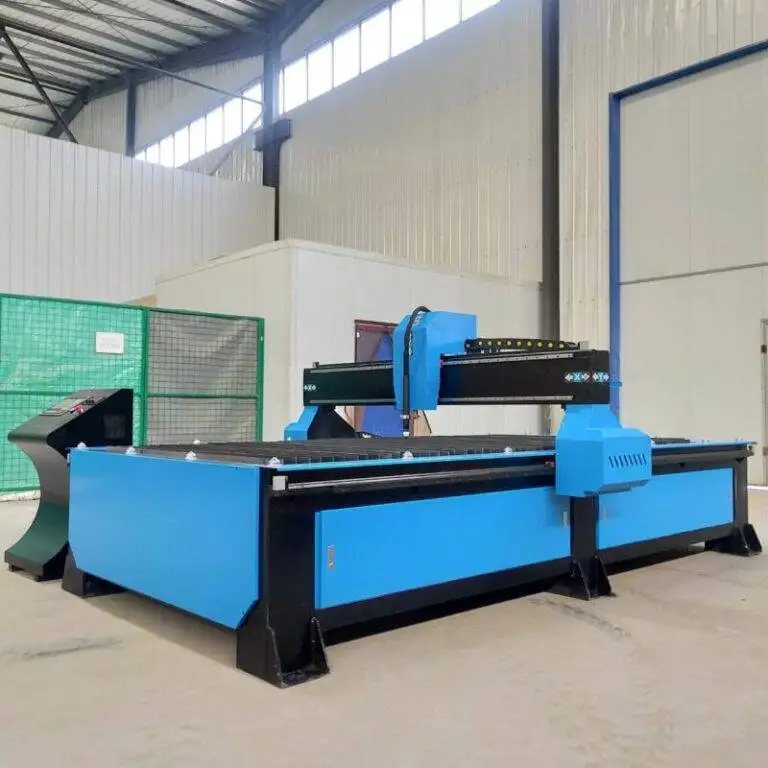
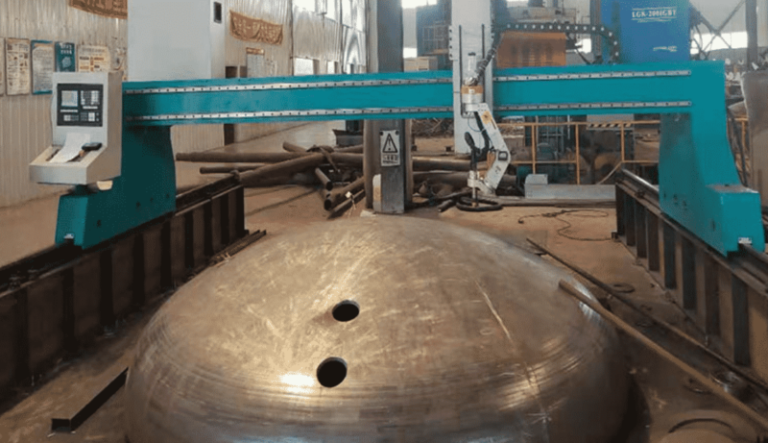
H-Beam Production Line with 5-Axis Beveling for Wind Tower fabrication
In this article
Engineering Foundations of H-Beam Fabrication in Wind Energy
The fabrication of wind tower internal structures and foundation grillages requires high-stiffness H-beams capable of withstanding multi-axial fatigue loading. Industrial engineers tasked with optimizing these production lines must prioritize dimensional stability and joint integrity. The shift toward automated Plasma Cutting technology has become a prerequisite for meeting the rigorous standards of offshore and onshore wind projects. Unlike traditional manual methods, an automated H-beam line utilizes CNC-controlled plasma torches to execute complex profiles on both the flanges and the web simultaneously.
The primary challenge in wind tower H-beam processing lies in the sheer scale of the components and the precision required for subsequent assembly. When dealing with heavy-gauge steel, the thermal management of the cut and the mechanical synchronization of the beam feed system are critical. By implementing a dedicated plasma-based line, manufacturers can achieve a continuous workflow that integrates raw material loading, multi-axis cutting, and unloading, thereby minimizing material handling bottlenecks.
The Mechanics of 5-Axis Beveling Systems
Standard 3-axis cutting systems are limited to vertical cuts, necessitating secondary manual beveling for weld preparation. In contrast, the integration of 5-axis beveling heads allows the plasma torch to tilt and rotate dynamically during the cutting process. This motion is governed by complex kinematic algorithms that calculate the torch’s focal point relative to the H-beam’s flange-web intersections. For wind tower components, this capability is essential for creating V, Y, X, and K-type bevels directly on the production line.
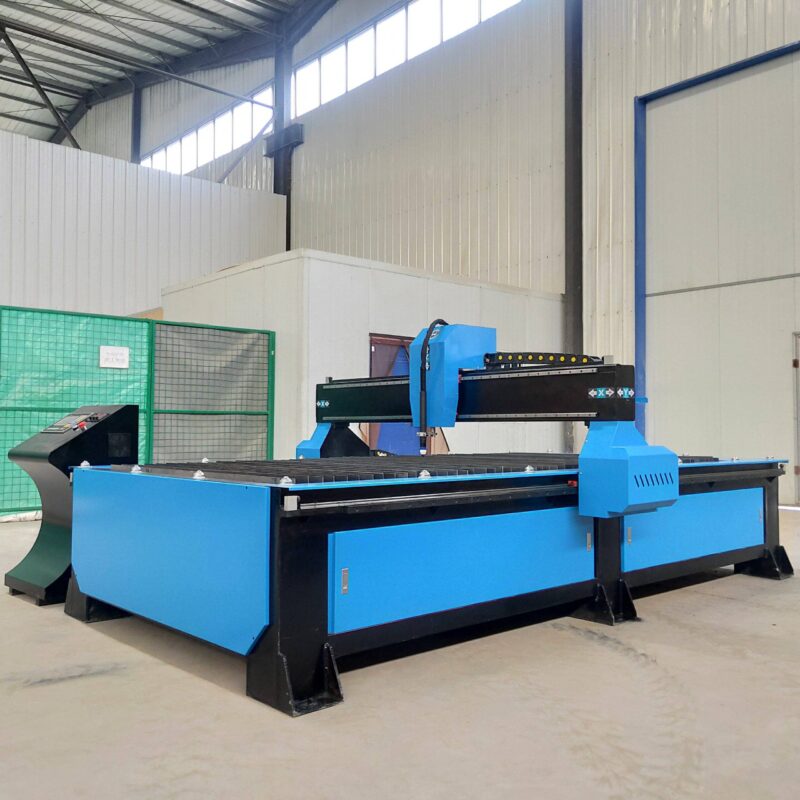
The 5-axis head utilizes two additional rotational axes (often referred to as A and B or C axes) to maintain the optimal standoff distance while the torch is angled. This ensures that the plasma arc remains stable and that the kerf width is compensated for in real-time. From an industrial engineering perspective, this eliminates the need for “bevel-only” workstations, consolidating two distinct manufacturing steps into a single CNC cycle. The resulting bevels are consistent across the entire length of the beam, which is vital for automated welding processes downstream.
Achieving High-Precision Intersection Accuracy
One of the most technically demanding aspects of H-beam fabrication for wind towers is the execution of accurate intersections, such as saddle cuts or fish-mouth profiles where beams meet at varying angles. High-definition plasma systems provide the necessary arc density to maintain tight tolerances at these intersection points. The CNC controller must handle high-speed data processing to synchronize the beam’s longitudinal movement with the torch’s lateral and angular adjustments.
Intersection accuracy is not merely a matter of aesthetic fit; it directly impacts the structural load path of the wind tower platform. Gaps exceeding 1.5mm often require excessive filler material or can lead to weld defects like lack of fusion. By utilizing 5-axis plasma cutting, the production line can achieve tolerances within +/- 0.5mm on complex geometries. This precision is achieved through advanced nesting software that accounts for the beam’s actual dimensions, including any mill-source deviations in flange parallelism or web centering.
Low Maintenance Profiles for Plasma Systems
In the heavy industrial environment of a wind tower fabrication facility, equipment uptime is a primary KPI. Plasma cutting systems are inherently robust and better suited for these conditions compared to more sensitive cutting technologies. The mechanical components of a plasma torch—nozzles, electrodes, and swirl rings—are designed for rapid replacement. A well-designed H-Beam Production Line incorporates quick-change torch bodies that allow operators to perform maintenance in under two minutes, ensuring minimal disruption to the duty cycle.
Furthermore, modern high-definition plasma power sources feature sophisticated self-diagnostic tools. These systems monitor gas pressure, coolant flow, and arc voltage to predict consumable wear before a failure occurs. From a maintenance strategy standpoint, the simplicity of the plasma delivery system—consisting of flexible leads and a centralized gas console—means there are fewer critical alignment points that can be affected by the vibrations and dust common in structural steel shops. This results in a significantly lower Total Cost of Ownership (TCO) over the equipment’s lifecycle.
Optimization of Weld Preparation Geometries
For wind tower structural components, the weld preparation must be tailored to the specific thickness and grade of the steel. 5-axis plasma heads excel at creating variable bevel angles along a single cut path. For instance, a beam might require a 30-degree bevel at the flange edge that transitions into a 45-degree bevel as it nears the web. This level of geometric control is managed through the CAD/CAM interface, where the engineer defines the weld cross-section, and the software generates the toolpath automatically.
This capability also allows for the creation of “blind” bevels and complex notches that facilitate easier assembly in the field. By providing a clean, dross-free surface with a minimal heat-affected zone (HAZ), the plasma process ensures that the metallurgical properties of the H-beam are preserved. Reduced HAZ is particularly important in wind energy applications where the steel’s grain structure must remain intact to handle the cyclical stress of turbine operation.
Streamlining Throughput via Automated Material Handling
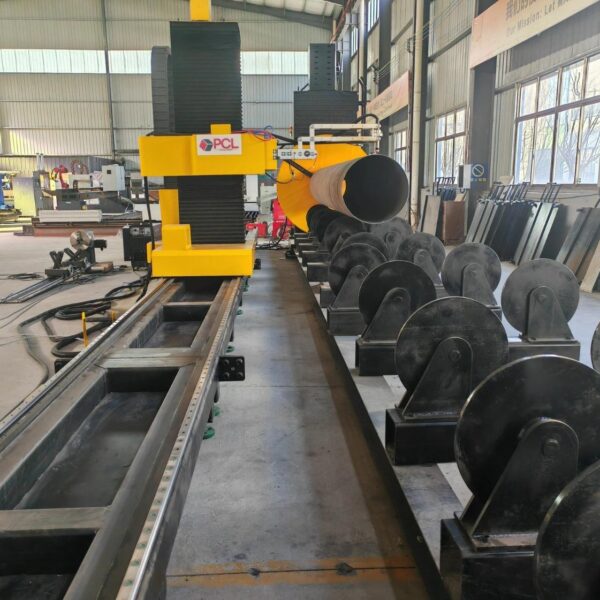
An integrated H-beam production line is more than just a cutting station; it is a material flow system. The line typically starts with an infeed conveyor equipped with laser sensors to detect the leading edge and cross-sectional profile of the beam. As the beam moves through the plasma chamber, it is secured by hydraulic clamps that prevent vibration during high-speed 5-axis maneuvers.
Post-cut, the system automatically marks the beams with part numbers and orientation lines using the plasma torch in a low-amperage marking mode. This integration ensures that the “digital twin” of the part remains connected to the physical component throughout the fabrication process. By automating the outfeed and sorting of finished beams, the industrial engineer can reduce manual labor requirements by up to 60%, allowing the workforce to focus on high-value assembly tasks.
Conclusion: The Strategic Advantage of Plasma in Wind Fabrication
In summary, the deployment of a 5-axis plasma-based H-beam production line offers a strategic advantage for manufacturers within the wind energy sector. The combination of high-precision intersection cutting, versatile beveling capabilities, and a low-maintenance mechanical footprint creates a highly resilient manufacturing environment. By focusing on these core technical strengths, facilities can meet the increasing demand for wind tower components while maintaining the highest levels of structural integrity and operational efficiency. The transition to fully automated plasma processing represents the standard for modern structural steel engineering in renewable energy.