H-Beam Production Line with 5-Axis Beveling for Steel Structure
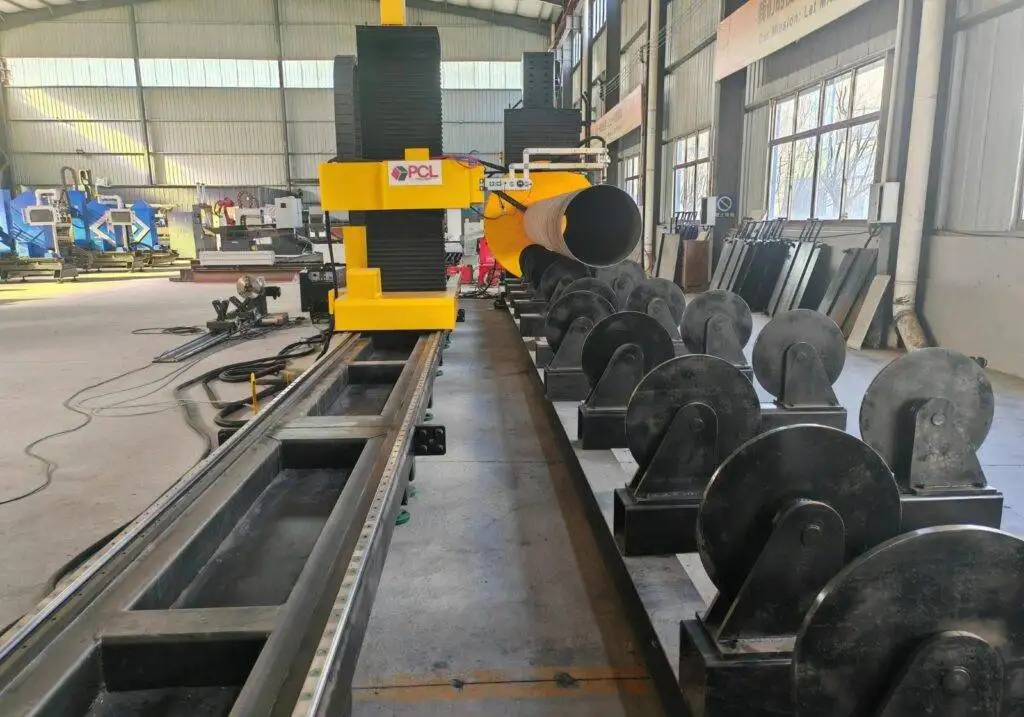
In this article
The Engineering Logic of 5-Axis Plasma Beveling in H-Beam Lines
In the domain of heavy structural steel fabrication, the H-Beam Production Line serves as the backbone of industrial infrastructure. The shift from traditional manual oxy-fuel cutting to automated 5-axis Plasma Cutting has redefined the parameters of throughput and precision. Unlike standard 2D cutting, 5-axis systems introduce rotational and tilt axes (typically referred to as A and B axes), allowing the plasma torch to approach the workpiece at variable angles. This capability is essential for creating complex weld preparations, including V, Y, K, and X-style bevels, directly on the flanges and webs of H-beams without secondary handling.
From an industrial engineering perspective, the implementation of 5-axis plasma technology addresses the three primary constraints of structural fabrication: geometric accuracy, material handling efficiency, and operational uptime. By integrating the beveling process into the primary cutting phase, fabricators eliminate the need for radial drills or manual grinding stations, significantly reducing the “work-in-progress” (WIP) lag time.
Precision Dynamics and Intersection Accuracy
One of the most significant challenges in H-beam processing is maintaining intersection accuracy. Structural joints often involve the intersection of multiple members, requiring the beam ends to be notched or coped with extreme precision to ensure structural integrity and ease of assembly on-site. The 5-axis head utilizes sophisticated CNC algorithms to calculate the kerf compensation in real-time as the torch angle changes. This is critical because the effective width of the plasma arc varies depending on the angle of incidence relative to the material surface.
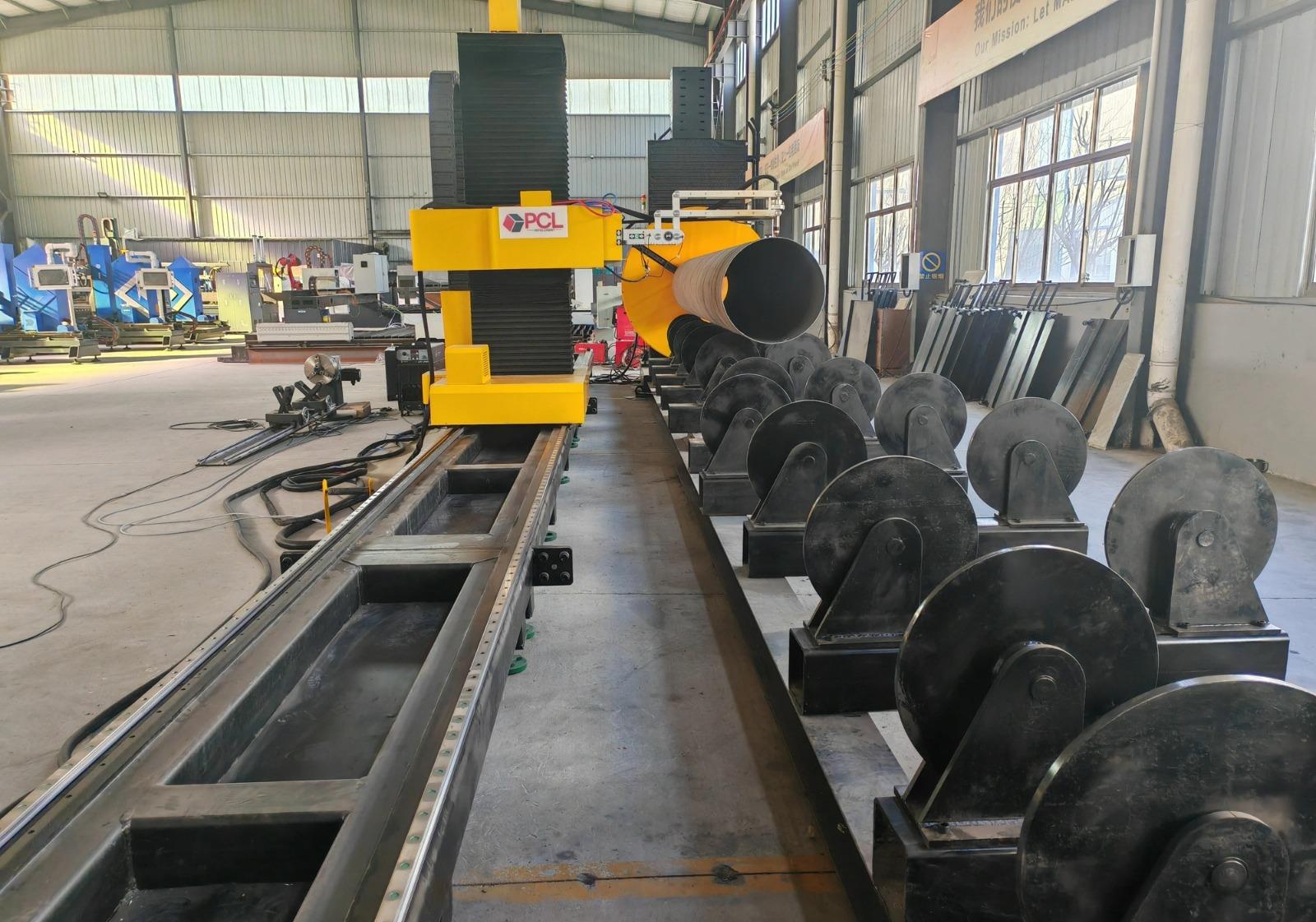
High-definition plasma systems now offer hole-cutting technologies that rival mechanical drilling for bolt-hole quality. When applied to H-beams, the 5-axis motion allows for the compensation of beam deviations. Standard hot-rolled H-beams often exhibit slight “toe-in” or “toe-out” on the flanges or a slight camber across the length. Automated probing systems integrated into the plasma line measure these deviations and adjust the cutting path dynamically. This ensures that the intersection accuracy of notches and bevels remains within sub-millimeter tolerances, regardless of the raw material’s inherent irregularities.
Thermal Management and the Heat Affected Zone (HAZ)
While mechanical precision is vital, the metallurgical impact of the cutting process cannot be ignored. Plasma cutting, characterized by its high energy density, minimizes the Heat Affected Zone (HAZ) compared to oxy-fuel methods. In a 5-axis plasma cutting environment, the speed of the torch movement is optimized to balance clean severance with minimal heat soak. This is particularly important for high-strength structural steels where excessive heat can alter the grain structure and mechanical properties of the flange. By maintaining a narrow HAZ, the subsequent welding processes are more predictable, and the structural integrity of the H-beam is preserved.
System Maintenance and Operational Longevity
In an industrial setting, the reliability of the H-beam production line is directly tied to the maintenance requirements of its core components. Plasma systems are inherently robust and designed for the harsh environments of steel mills and fabrication shops. Unlike more sensitive cutting technologies, plasma torches are resilient against the dust, scale, and vibration typical of heavy steel processing.
The concept of H-beam low maintenance is realized through several engineering features in modern plasma power sources. First, the move toward “quick-change” consumable designs allows operators to replace electrodes and nozzles in seconds, minimizing machine downtime. Second, advanced gas-management systems monitor flow rates and pressures to prevent torch “blowouts” and extend the life of the consumables. By using a combination of oxygen, nitrogen, or H35 (a hydrogen-argon blend) depending on the material thickness, the system optimizes the arc stability, which reduces the buildup of dross and the need for post-cut cleaning.
Mechanical Rigidity and Dust Mitigation
The physical structure of the 5-axis gantry must be engineered for high rigidity. The rapid acceleration and deceleration of the 5-axis head can induce vibrations that negatively impact cut quality. Therefore, heavy-duty H-beam lines utilize precision-ground linear guides and high-torque AC servo motors with absolute encoders. Furthermore, since plasma cutting generates significant particulate matter, integrated downdraft tables or water-injection systems are essential. For H-beam lines, specialized fume extraction systems that follow the torch carriage ensure that the mechanical components are protected from abrasive metallic dust, further contributing to the system’s low maintenance profile.
Workflow Integration and Beveling Efficiency
The efficiency of structural steel beveling is not just about the speed of the torch, but the intelligence of the nesting and programming software. Modern H-beam lines utilize CAD/CAM interfaces that can import 3D models (such as TEKLA or SDS/2 files) and automatically generate the 5-axis toolpaths. This automation eliminates human error in calculating complex bevel angles and cope geometries.
The 5-axis head performs “beveling on the fly,” meaning it can transition from a straight 90-degree cut to a 45-degree bevel without stopping. This continuous motion is vital for maintaining a consistent arc and preventing “pierce-point” defects. For H-beams, this means the web and flanges can be processed in a single continuous operation, ensuring that the geometric relationship between all cut features is perfectly maintained. This spatial consistency is the primary driver of reduced assembly time during the erection phase of the steel structure.
Consumable Life and Cost-Per-Cut Metrics
From a cost-accounting perspective, plasma beveling offers a lower cost-per-foot compared to traditional mechanical edge milling. The primary variables are electricity, gas, and consumables. Engineering advancements in electrode cooling—where coolant is delivered directly to the electrode tip—have doubled the lifespan of consumables in high-duty cycle environments. For an H-beam production line operating on multiple shifts, these incremental gains in consumable life translate into thousands of dollars in annual savings and hundreds of hours in reclaimed production time.
Conclusion: The Strategic Engineering Advantage
The integration of 5-axis plasma technology into H-beam fabrication represents a calculated move toward manufacturing excellence. By prioritizing intersection accuracy and leveraging the rugged, H-beam low maintenance nature of plasma systems, fabricators can achieve a level of throughput that was previously unattainable. The ability to execute complex structural steel beveling in a single pass ensures that the downstream welding and assembly phases are as efficient as possible. As the structural steel industry continues to demand tighter tolerances and faster delivery schedules, the 5-axis plasma-equipped production line stands as the most viable solution for modern engineering challenges.





