Fiber Laser Cutting Machine with 5-Axis Beveling for Shipbuilding
In this article
- Advanced Fiber Laser Integration in Maritime Fabrication
- Technical Advantages of the 5-Axis Bevel Head
- Precision Kinematics and Motion Control
- Elimination of Secondary Grinding Operations
- Consolidated Process: Punch, Mark, and Cut
- Automated Marking and Identification
- High-Precision Punching and Piercing Strategies
- Optimizing Material Utilization and TCO
- Nesting and Kerf Compensation
- Conclusion: The Future of Shipyard Efficiency
Advanced Fiber Laser Integration in Maritime Fabrication
The shipbuilding industry is currently undergoing a significant transition toward high-precision automated workflows. As global competition intensifies, the shift from legacy thermal cutting systems to high-power fiber laser technology has become a cornerstone of modern shipyard optimization. Industrial engineers are increasingly deploying 5-axis fiber laser beveling systems to address the rigorous demands of hull construction and internal structural reinforcement. Unlike traditional methods, the fiber laser provides a concentrated energy source that ensures minimal thermal distortion and superior edge quality.
The core objective of implementing 5-axis technology is the achievement of complex geometries in a single pass. In maritime environments, large-scale plates require specific edge preparations for subsequent assembly. By utilizing a fiber laser with a dynamic 5-axis head, shipyards can execute V, X, Y, and K-shaped bevels with extreme repeatable accuracy. This technical capability eliminates the need for manual edge preparation, significantly reducing the labor hours allocated to each tonnage of steel processed.
Technical Advantages of the 5-Axis Bevel Head
Precision Kinematics and Motion Control
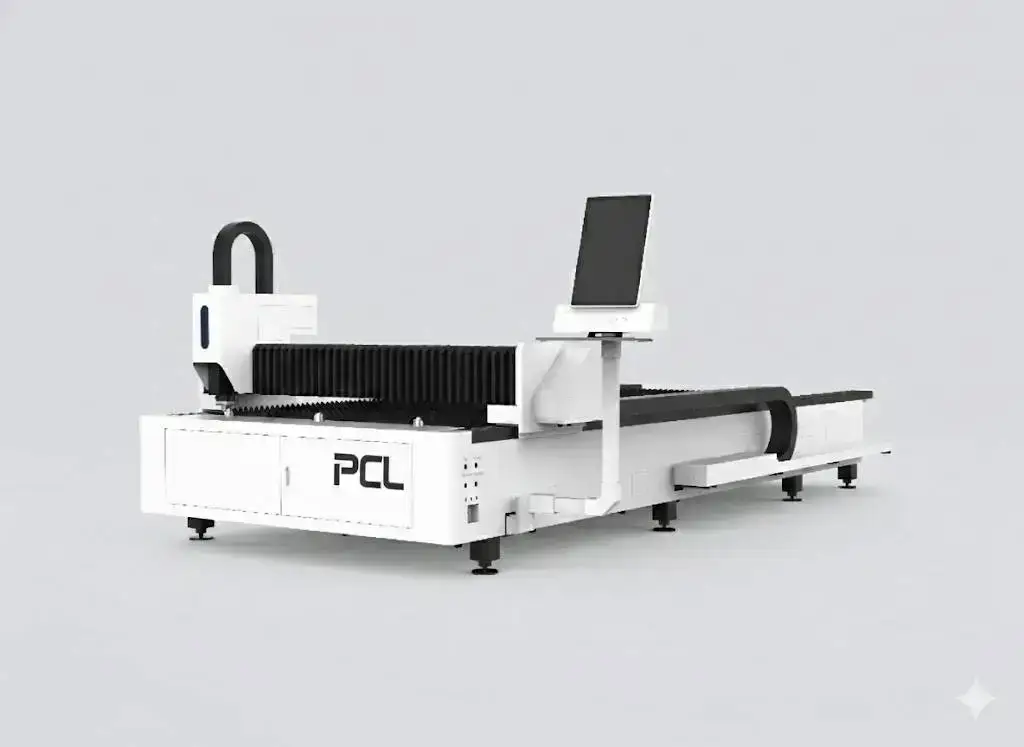
The mechanical architecture of a 5-axis fiber laser system involves three linear axes (X, Y, Z) and two rotational axes (A and B). for Shipbuilding, these machines are often built on large-format gantry systems capable of handling plates exceeding 20 meters in length. The integration of high-precision encoders and direct-drive motors allows the cutting head to tilt up to 45 or 50 degrees while maintaining a constant focal distance from the material surface.
This precision is critical when dealing with high-tensile strength steels commonly used in naval architecture. The CNC controller manages real-time compensation for plate waviness, ensuring that the bevel angle remains consistent across the entire length of the cut. This level of maritime structural fabrication precision ensures that when parts reach the assembly floor, the fit-up is nearly perfect, which is essential for maintaining the structural integrity of the vessel.
Elimination of Secondary Grinding Operations
One of the most significant cost drivers in traditional shipbuilding is the requirement for secondary grinding. Conventional thermal cutting often leaves a thick layer of dross or oxide that must be mechanically removed. Fiber Laser Cutting, however, utilizes high-pressure assist gases—typically oxygen or nitrogen—to produce a clean, dross-free edge. The narrow kerf width and localized heat application result in a negligible heat-affected zone optimization, meaning the metallurgical properties of the steel remain intact near the cut line.
From an industrial engineering perspective, removing the grinding stage from the production line drastically improves the “takt time” of the fabrication shop. It reduces shop floor noise, decreases abrasive consumption, and reallocates human capital toward higher-value assembly tasks rather than tedious surface preparation.
Consolidated Process: Punch, Mark, and Cut
Automated Marking and Identification
Modern 5-axis fiber lasers are not merely cutting tools; they function as integrated fabrication centers. Before the cutting cycle begins, the laser can be programmed to perform high-speed marking. This involves surface-level etching of part numbers, assembly orientations, and bending lines. In the complex “Lego-style” assembly of a ship’s hull, clear and permanent marking is vital for logistical management.
The laser’s ability to switch between high-power cutting and low-power marking in milliseconds allows for seamless transitions. This eliminates the need for separate ink-jet marking stations or manual stamping, ensuring that every component is traceable throughout the ship’s lifecycle.
High-Precision Punching and Piercing Strategies
Traditional hole-making in thick ship plates often required drilling or separate punching machines. Fiber lasers utilize advanced piercing strategies, such as multi-stage or frequency-modulated piercing, to create high-aspect-ratio holes. For shipbuilding applications where thousands of bolt holes or drainage ports are required, the speed of laser piercing is unparalleled. The 5-axis head can also create countersunk holes or beveled apertures directly during the primary cutting sequence, further reducing the need for post-process machining.
Optimizing Material Utilization and TCO
Nesting and Kerf Compensation
Material costs represent a significant portion of a vessel’s total expenditure. Fiber laser systems utilize sophisticated nesting software that accounts for the specific dynamic bevel head kinematics to minimize scrap. Because the laser kerf is significantly narrower than other thermal methods, parts can be nested more tightly. Furthermore, the software calculates the “swing” of the bevel head to ensure that tilted cuts do not interfere with adjacent parts, maximizing the yield of expensive marine-grade alloys.
Power Efficiency and Maintenance
Fiber laser resonators operate at electrical efficiency rates of 30-40%, which is vastly superior to older laser technologies. For a shipyard operating 24/7, this translates to substantial energy savings. Additionally, the solid-state nature of fiber lasers means there are no internal moving parts or mirrors in the beam generation path, reducing the maintenance intervals and increasing the Mean Time Between Failures (MTBF).
Environmental Impact and Safety
By eliminating the need for grinding and reducing the reliance on chemical cleaning for oxide removal, the fiber laser process is inherently cleaner. The high-speed extraction systems integrated into the cutting tables capture fine dust and fumes at the source, contributing to a safer work environment for shipyard personnel. The reduction in noise pollution is also a notable factor in improving the ergonomics of the fabrication facility.
Conclusion: The Future of Shipyard Efficiency
The adoption of 5-axis Fiber Laser Cutting Machines represents a strategic shift in maritime manufacturing. By combining high-speed marking, precision punching, and complex bevel cutting into a single automated operation, shipbuilders can achieve a level of dimensional accuracy that was previously impossible. The elimination of secondary grinding and the reduction of thermal distortion not only lower the total cost of ownership but also improve the structural quality of the final vessel. As industrial engineers continue to refine these processes, the fiber laser will remain the primary tool for driving efficiency and innovation in global ship production.






