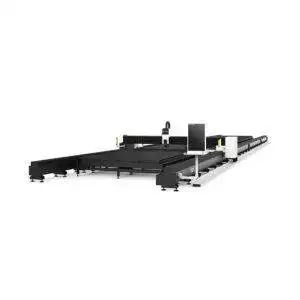
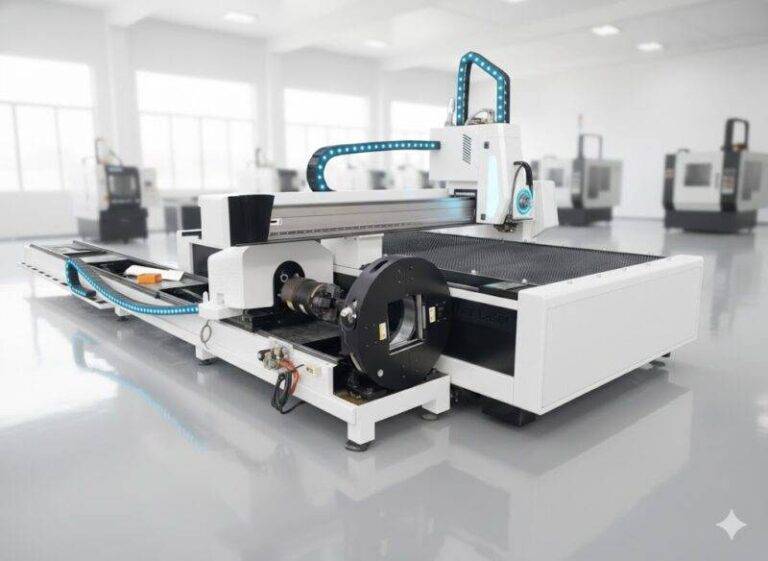
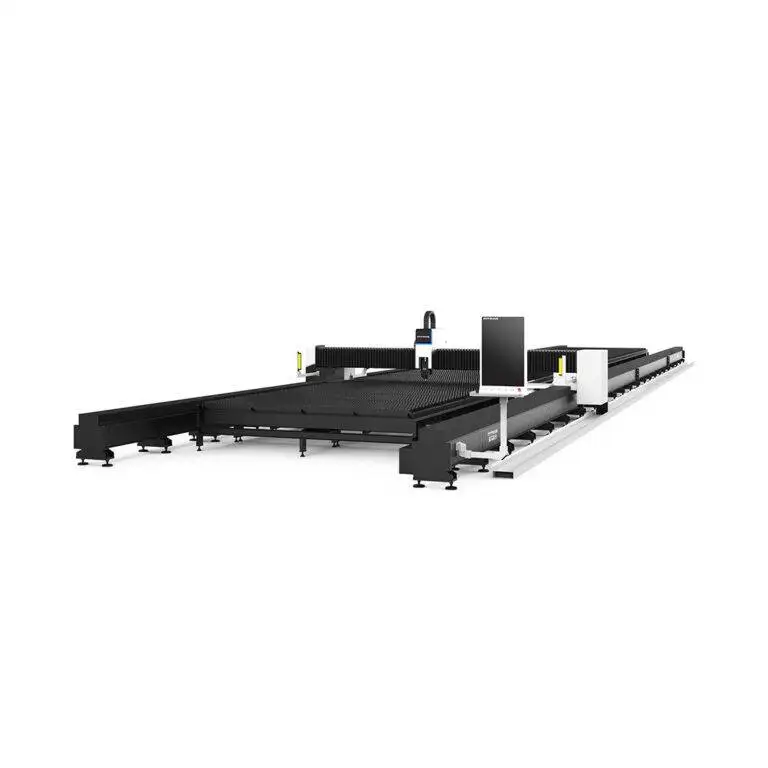
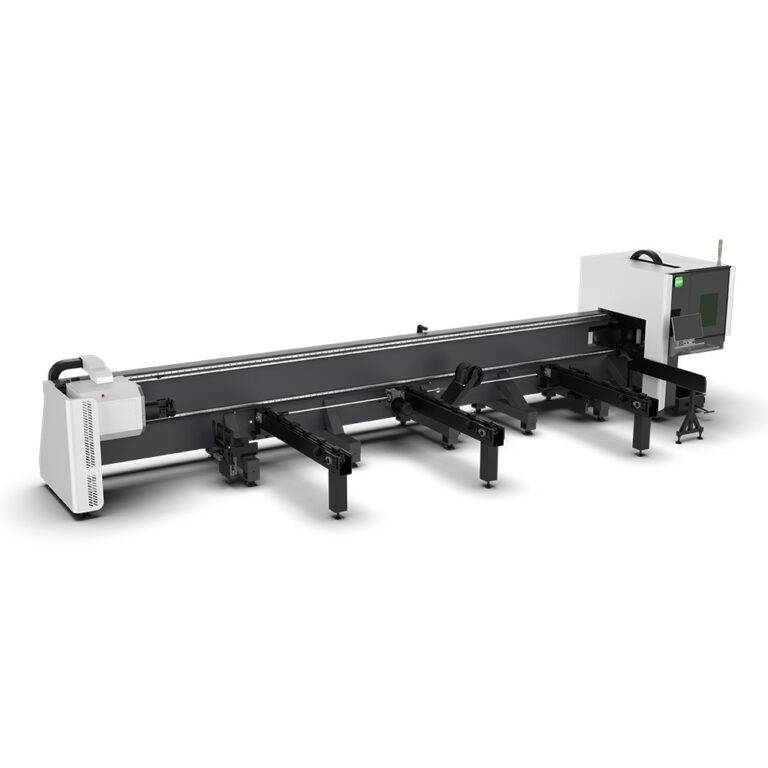
Fiber Laser Cutting Machine with Narrow Gap welding for Bridge Trusses
In this article
- The Engineering Shift in Bridge Truss Fabrication
- High Precision Geometries for Complex Truss Nodes
- The Triple-Action Workflow: Punch, Mark, and Cut
- Eliminating Secondary Processes: The No-Grinding Advantage
- Optimizing for Narrow Gap Welding Preparation
- Impact on Material Properties and Structural Integrity
- Efficiency Metrics and ROI for Industrial Engineers
- Conclusion: The Future of Infrastructure Fabrication
The Engineering Shift in Bridge Truss Fabrication
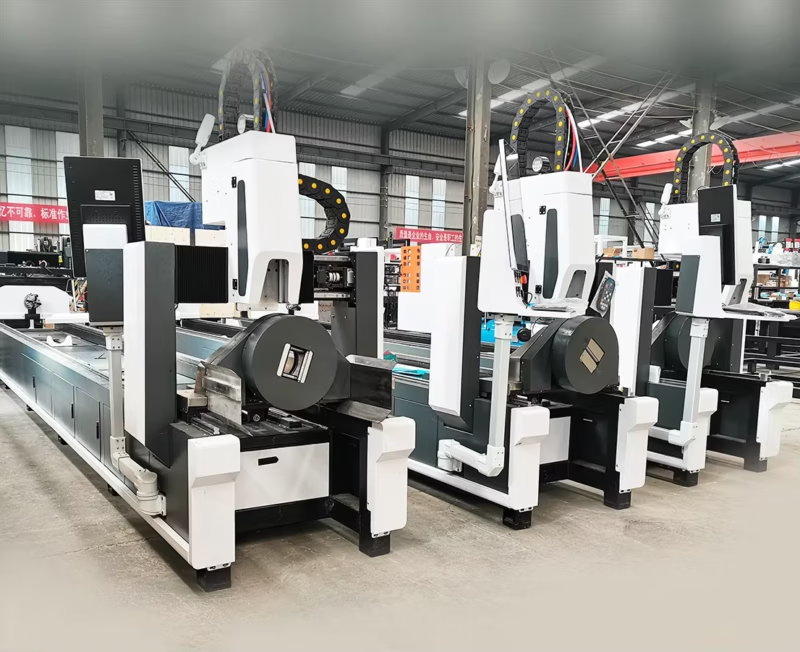
In modern bridge engineering, the structural integrity of truss systems depends heavily on the precision of component fit-up. The shift from conventional thermal cutting to high-power fiber laser technology has redefined the tolerances achievable in heavy steel fabrication. For industrial engineers, the primary objective is to streamline the production line while ensuring that the fiber Laser Cutting process produces parts that are immediately ready for the next stage of assembly. Bridge trusses, characterized by complex intersections and high-strength material requirements, benefit significantly from the narrow kerf and minimal heat input of laser systems.
High Precision Geometries for Complex Truss Nodes
Truss nodes are the critical points where multiple members converge. Achieving a perfect fit-up at these junctions is vital for load distribution. Fiber Laser Cutting Machines equipped with high-wattage resonators (ranging from 12kW to 30kW) allow for the processing of thick carbon steel plates with a dimensional accuracy of ±0.05mm. This level of precision ensures that gusset plates and chords align perfectly, reducing internal stresses that often occur during forced fit-ups in the assembly jig.
The laser’s ability to maintain verticality on thick sections is a result of advanced beam shaping and gas flow dynamics. Unlike other thermal processes, the fiber laser produces a nearly parallel cut edge. This geometric fidelity is essential for the subsequent narrow gap welding process, where tight tolerances are required to maintain a consistent root gap. When the edge is perfectly square, the volume of filler metal required is minimized, leading to faster welding cycles and reduced thermal distortion across the entire truss assembly.
The Triple-Action Workflow: Punch, Mark, and Cut
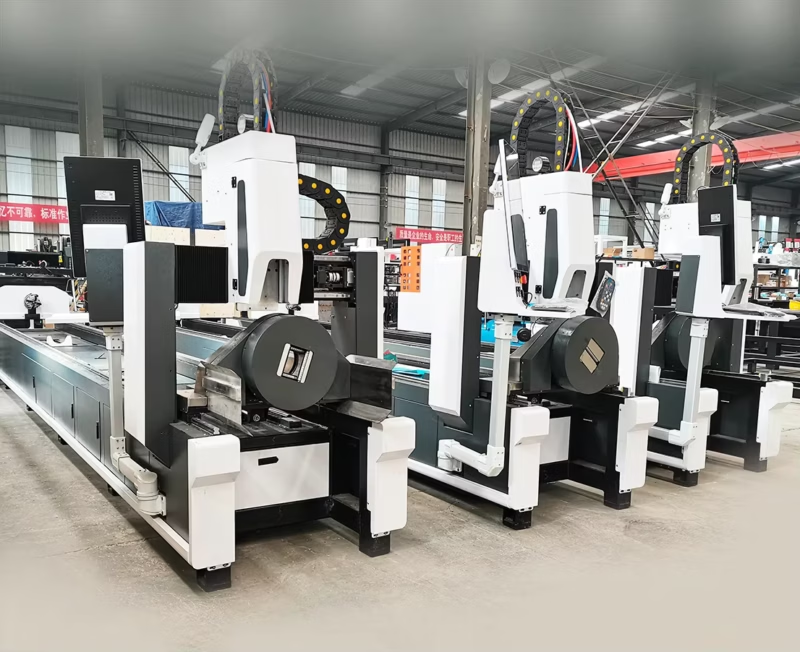
Modern fiber laser systems serve as multi-functional workstations. In bridge truss fabrication, part traceability and assembly marking are just as important as the cut itself. The industrial engineer can program the laser to perform three distinct operations in a single nesting cycle:
1. Precision Punching and Hole Cutting
Bolt holes in bridge components must be perfectly cylindrical to ensure proper bolt bearing. The fiber laser’s high power density allows it to cut holes with a diameter-to-thickness ratio that was previously impossible. By laser-cutting these holes rather than drilling them, manufacturers save significant time. The high-speed piercing technology ensures that the hole entry and exit points are clean, meeting the stringent requirements of structural codes without secondary reaming.
2. Automated Part Marking
Traceability is a legal requirement in infrastructure projects. The fiber laser can etch heat numbers, part IDs, and assembly orientation lines directly onto the steel surface. Because this is done by the same head that performs the cutting, there is no risk of misalignment. These markings remain visible through the assembly process, ensuring that every chord and vertical member is placed exactly according to the engineering drawings.
3. Final Precision Cutting
The final perimeter cut is executed at high speeds. The narrow kerf of the fiber laser (often less than 0.5mm) maximizes material utilization through tight nesting. This efficiency is a core KPI for industrial engineers looking to reduce scrap rates in high-cost structural steels.
Eliminating Secondary Processes: The No-Grinding Advantage
One of the most significant bottlenecks in traditional bridge fabrication is the requirement for secondary grinding. Conventional thermal cutting methods often leave behind heavy dross, oxidized layers, and a significant Heat Affected Zone (HAZ). Fiber laser cutting changes this paradigm. The high-intensity beam creates a clean, oxide-free edge when used with appropriate assist gases like nitrogen or high-pressure oxygen.
The resulting edge quality typically meets or exceeds ISO 9013 Grade 2 standards. For the industrial engineer, this means the “cut-to-weld” time is drastically reduced. Components can move directly from the laser bed to the welding station. By eliminating the grinding stage, the facility reduces labor costs, eliminates the dust and noise associated with manual surface preparation, and ensures that the metallurgical integrity of the edge is preserved. The minimal HAZ prevents the localized hardening of the steel, which is critical for the fatigue life of bridge trusses subjected to cyclic loading.
Optimizing for Narrow Gap Welding Preparation
The adoption of bridge truss fabrication using fiber lasers is deeply intertwined with the requirements of narrow gap welding. Traditional wide-groove preparations require massive amounts of weld metal, which increases the risk of distortion and residual stress. Narrow gap welding, however, utilizes a very tight groove angle or even a square butt joint in some applications.
To succeed with a narrow gap approach, the joint preparation must be flawless. Even a slight deviation in the edge angle or a burr can cause lack of fusion or slag inclusions. Fiber laser cutting provides the consistency required for these automated welding processes. Because the laser-cut edge is so smooth and the dimensions are so reliable, the robotic welding systems can follow a programmed path without the need for extensive real-time seam tracking or gap compensation. This synergy between the laser cutting and the welding process is the key to achieving high-throughput, high-quality bridge components.
Impact on Material Properties and Structural Integrity
Bridge steels are specifically engineered for toughness and weldability. Excessive heat during the cutting process can alter the microstructure of the steel, leading to brittleness. Fiber lasers concentrate energy into an extremely small spot, resulting in a very high cooling rate. This limits the duration the material stays at critical temperatures, effectively narrowing the HAZ. Industrial engineers favor this method because it ensures the base metal retains its engineered properties right up to the fusion line. This is a critical factor in passing non-destructive testing (NDT), such as ultrasonic or radiographic inspections, which are mandatory for bridge-class welds.
Efficiency Metrics and ROI for Industrial Engineers
From an operational standpoint, the transition to high precision steel cutting via fiber lasers is justified by the Total Cost of Ownership (TCO) and throughput metrics. While the initial capital expenditure for a high-power laser is significant, the ROI is realized through:
Increased Feed Rates
Fiber lasers can cut 20mm structural steel at speeds multiple times faster than legacy systems, directly increasing the tons-per-hour output of the fabrication shop.
Lower Energy Consumption
Fiber laser resonators are highly efficient, converting a higher percentage of electrical power into light compared to CO2 systems, leading to lower utility costs per part.
Reduced Consumable Costs
With no electrodes to replace and long-life nozzles, the maintenance interval for fiber lasers is extended, reducing downtime in a 24/7 production environment.
Conclusion: The Future of Infrastructure Fabrication
The integration of fiber laser cutting machines into the production of bridge trusses represents a significant leap in manufacturing technology. By focusing on precision, eliminating secondary grinding, and perfectly preparing edges for narrow gap welding, industrial engineers can produce safer, more durable infrastructure at a lower cost. The ability to punch, mark, and cut in a single operation not only boosts efficiency but also ensures a level of accuracy that is required for the complex geometries of modern bridge design. As global demand for infrastructure grows, the reliance on high-precision laser technology will become the standard for all heavy structural fabrication.