Beam Processing Center with Arc Voltage Control for for Pressure Vessels
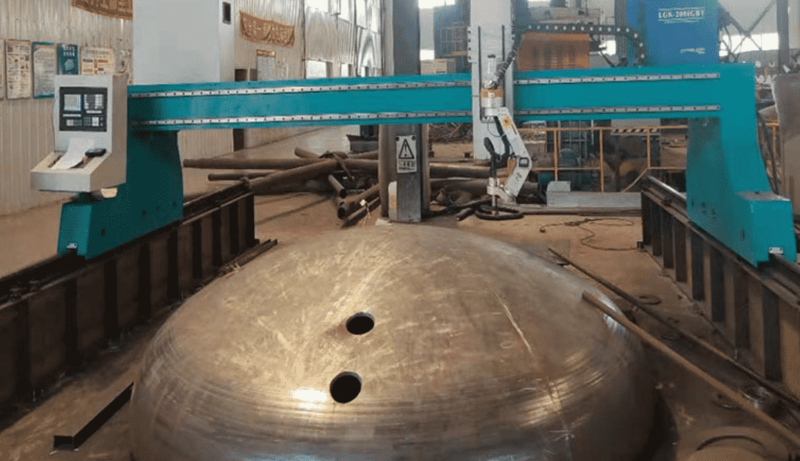
In this article
Technical Integration of Arc Voltage Control in Beam Processing
In the heavy industrial sector, particularly within the manufacturing of pressure vessels and their associated support structures, the precision of structural steel preparation is a critical determinant of assembly speed and structural integrity. A Beam Processing Center designed for these environments must manage high-density materials, such as heavy-wall H-beams and I-sections, which serve as the primary framing for vessel skids and saddles. The integration of Arc Voltage Control (AVC) represents a fundamental shift from static height sensing to dynamic feedback loops, allowing for real-time adjustments during the Plasma Cutting process.
AVC functions by measuring the electrical potential between the plasma torch electrode and the workpiece. As the distance between the torch and the beam surface changes—due to material warping, beam camber, or minor structural inconsistencies—the voltage fluctuates. The control system interprets these fluctuations and adjusts the Z-axis height instantaneously to maintain a constant standoff distance. For pressure vessel components, where structural H-beams often exhibit mill tolerances that exceed standard machining allowances, AVC ensures that the plasma arc remains stable, preventing dross accumulation and ensuring a uniform kerf width.
Optimization of Intersection Accuracy for Complex Geometries
Pressure vessel construction frequently requires the intersection of structural H-beams with cylindrical tank bodies or other curvilinear surfaces. Achieving high intersection accuracy is essential to minimize gap widths during fit-up, which directly impacts the volume of weld metal required and the potential for thermal distortion. Plasma-based beam processing centers utilize multi-axis robotic or CNC gantries to execute complex 3D paths that traditional sawing or drilling cannot replicate.

When cutting saddle notches or pipe-to-beam intersections, the plasma torch must maintain a perpendicular or specific angular orientation relative to a surface that is constantly changing in elevation. Without AVC, a fixed-height torch would either dive into the material or move too far away, leading to arc extinction or excessive beveling on the cut face. By stabilizing the arc height, the system ensures that the programmed tool path aligns perfectly with the physical beam profile. This precision eliminates the need for manual grinding or “buttering” of joints, significantly reducing the labor hours allocated to the fit-up phase of production.
H-Beam Processing and Low Maintenance Requirements
From an industrial engineering perspective, the transition to plasma-based beam processing is often driven by the need for H-beam low maintenance cycles compared to mechanical alternatives. Mechanical processing, such as high-speed drilling or milling, involves high-frequency tool wear, spindle heat management, and the constant management of metal chips and coolant. In contrast, plasma cutting is a non-contact process that experiences no mechanical resistance from the workpiece.
The maintenance profile of a plasma beam center is primarily centered on consumables—electrodes, nozzles, and shields—which are modular and can be replaced in minutes. Because there are no high-torque spindles or heavy-duty drill bits subjected to breakage, the uptime of the system is substantially higher. Furthermore, the absence of cutting fluids simplifies the workspace and prevents the contamination of the steel surface, which is a vital consideration for Pressure Vessels where surface purity is required for non-destructive testing (NDT) and coating adhesion. Modern power supplies also feature self-diagnostic tools that monitor gas pressure and coolant flow within the torch head, providing predictive alerts before a component failure occurs.
Automated Beveling for High-Pressure Weld Preparation
The final stage of structural preparation for pressure vessel components involves beveling. Pressure vessels operate under extreme internal forces, necessitating full-penetration welds on many structural supports and attachments. A plasma beam processing center equipped with a 5-axis tilt-rotator head allows for the simultaneous cutting and beveling of beam flanges and webs. This capability is critical for creating V, Y, or K-type weld preparations.
The precision of the bevel angle is maintained through the synergy between the CNC software and the AVC. As the torch tilts to achieve a 30 or 45-degree angle, the effective arc voltage changes. Advanced systems compensate for this geometric shift, ensuring that the land thickness and bevel face remain consistent throughout the length of the cut. This level of repeatability is unattainable through manual plasma cutting and far exceeds the speed of mechanical bevellers. By producing a weld-ready edge directly off the machine, the facility bypasses secondary processing stations, streamlining the internal logistics of the shop floor.
Thermal Management and Material Integrity
A common concern in thermal cutting is the Heat Affected Zone (HAZ). In pressure vessel applications, maintaining the metallurgical properties of the base metal is non-negotiable. Modern high-definition plasma systems, when paired with precise AVC, minimize the heat input by maintaining the optimal cutting speed and arc density. By moving faster and more accurately than manual operations, the beam processing center limits the duration of thermal exposure.
This controlled heat input ensures that the edges of the H-beam do not become overly brittle, which is essential for components that will be subjected to cyclic loading or cryogenic temperatures. The resulting edge quality typically meets or exceeds ISO 9013 Grade 3 or 4 standards, providing a smooth surface that facilitates easier ultrasonic or radiographic inspection of the final welds.
Conclusion: Throughput and Operational Efficiency
The implementation of a Beam Processing Center with Arc Voltage Control provides a measurable increase in throughput for pressure vessel manufacturers. By focusing on the mechanical advantages of plasma cutting, facilities can achieve superior intersection accuracy and precise beveling while benefiting from the low maintenance requirements of non-contact processing. The reduction in manual rework and the elimination of secondary handling for weld preparation create a leaner manufacturing flow. As the industry moves toward higher levels of automation, the role of dynamic sensing technologies like AVC becomes the benchmark for quality assurance in structural steel fabrication.





