Beam Processing Center with Arc Voltage Control for for Pressure Vessels
In this article
Optimizing Pressure Vessel Fabrication via Beam Processing Centers
In the heavy industrial sector, specifically within pressure vessel and heat exchanger manufacturing, structural integrity depends on the precision of raw material preparation. A Beam Processing Center utilizes automated plasma technology to execute complex geometries on H-beams, channels, and heavy-walled sections. Unlike traditional manual layouts, these centers integrate Arc Voltage Control (AVC) to manage the relationship between the plasma torch and the workpiece surface. For engineers, the priority is minimizing the Heat Affected Zone (HAZ) while maximizing intersection accuracy to ensure that subsequent assembly stages meet stringent ASME or ISO standards.
The Mechanics of Arc Voltage Control in Plasma Systems
The core of high-performance Plasma Cutting lies in the ability to maintain a constant standoff distance. In a Beam Processing Center, the AVC system monitors the electrical potential between the electrode and the plate. As the material surface fluctuates due to thermal warping or mill scale irregularities, the plasma cutting system adjusts the Z-axis in real-time. This prevents torch crashes and maintains a consistent kerf width, which is vital for the intersection accuracy required when fitting structural supports to cylindrical vessel shells.
Maintaining the correct arc voltage directly influences the angularity of the cut. For pressure vessel manufacturers, a deviation of even one degree in the cut angle can lead to excessive gap-up during fit-up, requiring costly rework. By implementing high-frequency AVC sampling, the processing center compensates for the inherent irregularities of heavy structural steel, ensuring that the plasma arc remains stable throughout the entire duty cycle.
Enhancing Intersection Accuracy for Complex Geometries
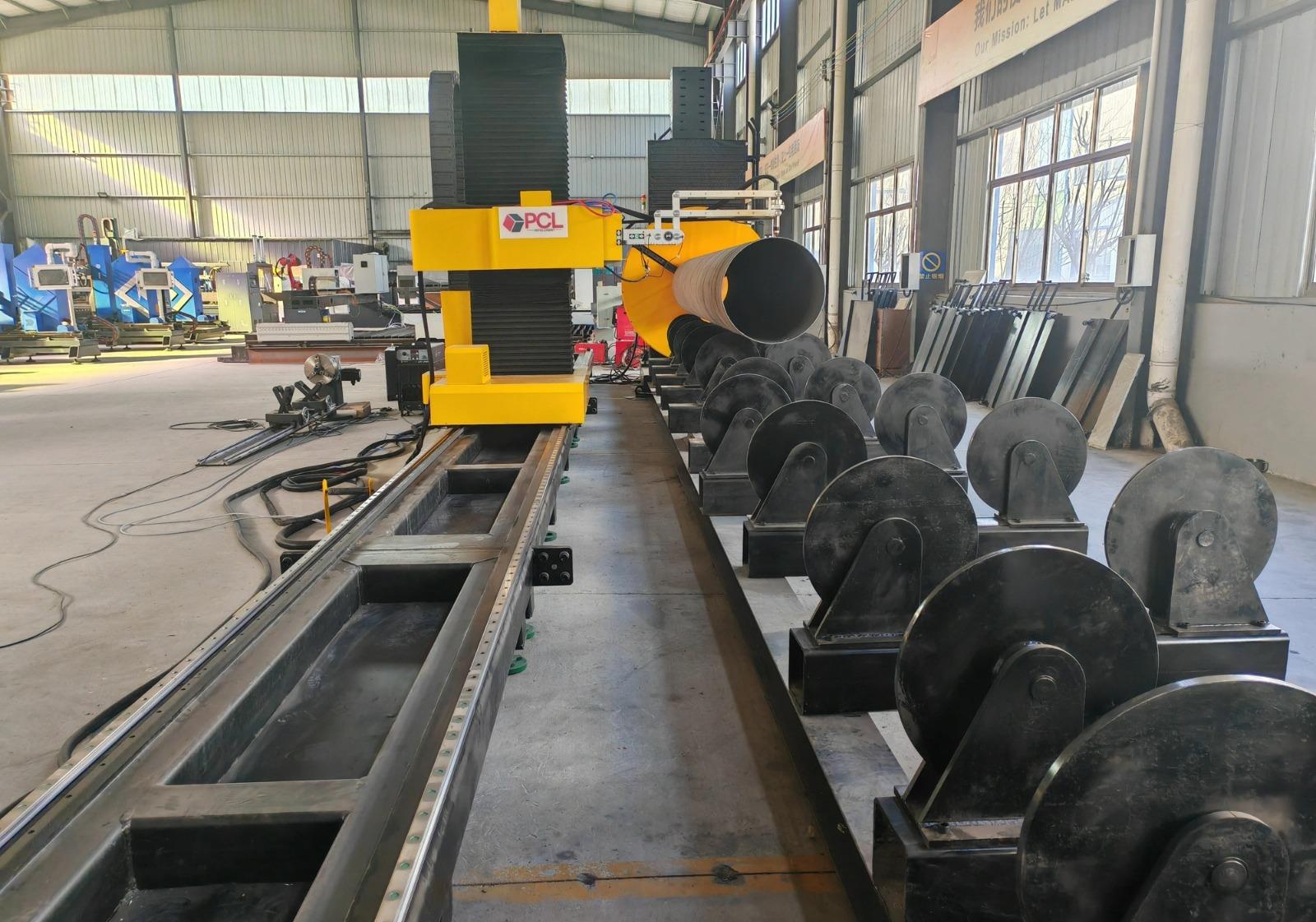
Pressure vessel fabrication often requires H-beams to be notched, coped, or intersected with rounded surfaces. Achieving high intersection accuracy in these scenarios requires a multi-axis CNC interface that translates 3D CAD models into precise torch trajectories. The plasma cutting head must navigate the flange and web of an H-beam while adjusting for the arc voltage variations that occur at the transition points.
Precision in these intersections reduces the reliance on manual grinding. When a beam is processed with a high-definition plasma system, the resulting edges are ready for immediate fit-up. This is particularly critical for saddle supports and reinforcing pads where the contact surface must conform to the vessel’s curvature. The integration of automated beam processing ensures that the geometric tolerances remain within +/- 0.5mm, a threshold necessary for high-pressure applications.
H-Beam Structural Integrity and Low Maintenance Design
Industrial engineers favor H-beam based machine frames for Beam Processing Centers due to their high strength-to-weight ratio and resistance to torsional stress. A low maintenance profile is achieved by using heavy-duty H-beam skeletons that dissipate the vibrations generated during high-speed plasma movement. This mechanical stability ensures that the plasma cutting head does not suffer from harmonic oscillations, which would otherwise degrade the cut quality.
Furthermore, the maintenance requirements for these systems are streamlined through the use of modular plasma components and robust guide rails. Unlike older mechanical saws or punch systems, a plasma-based center has fewer moving parts in direct contact with the workpiece. The H-beam low maintenance architecture allows for easier access to the slag collection systems and the torch lead assemblies, reducing MTTR (Mean Time To Repair) and increasing the overall equipment effectiveness (OEE) of the fabrication facility.
Advanced Beveling for Weld Preparation
One of the most significant advantages of a modern Beam Processing Center is the ability to perform plasma beveling in a single pass. for Pressure Vessels, weld joints must often be prepared with V, Y, or K-type bevels to ensure full root penetration. By utilizing a 5-axis or 6-axis robotic arm or a specialized tilting head, the plasma cutting system can create these profiles directly on the beam or plate edge.
The Arc Voltage Control is especially critical during beveling. As the torch tilts, the distance between the nozzle and the metal changes relative to the vertical axis. The AVC must dynamically calculate the voltage offset to keep the torch at the optimal height along the slanted path. This capability allows for high-precision beveling that meets the rigorous volumetric inspection requirements of non-destructive testing (NDT) typically applied to pressure-bearing components.
Consumable Management and Operational Efficiency
From an operational perspective, the efficiency of a Beam Processing Center is measured by the longevity of its consumables and the speed of its throughput. Modern plasma systems utilize “LongLife” oxygen and air technologies that synchronize with the Arc Voltage Control to minimize electrode wear during pierce cycles. By optimizing the pierce height and the transition to cut height, the system protects the plasma nozzle from molten metal blowback.
For a facility specializing in pressure vessels, this translates to fewer stops for consumable changes and more consistent intersection accuracy across long production runs. The synergy between the H-beam structural frame and the digital control system results in a machine that can handle 24/7 operation with minimal intervention. The reduction in secondary finishing processes, such as edge cleaning and manual beveling, significantly lowers the total cost per foot of processed material.
Conclusion: The Engineer’s Choice for Heavy Fabrication
Selecting a Beam Processing Center with integrated Arc Voltage Control is a strategic decision for any pressure vessel manufacturer. The focus on plasma cutting technology provides the versatility needed for complex intersection accuracy and high-quality beveling. By prioritizing a low maintenance H-beam design, engineers ensure long-term reliability and precision, ultimately driving higher safety standards and lower production costs in the demanding field of industrial pressure vessel fabrication.





