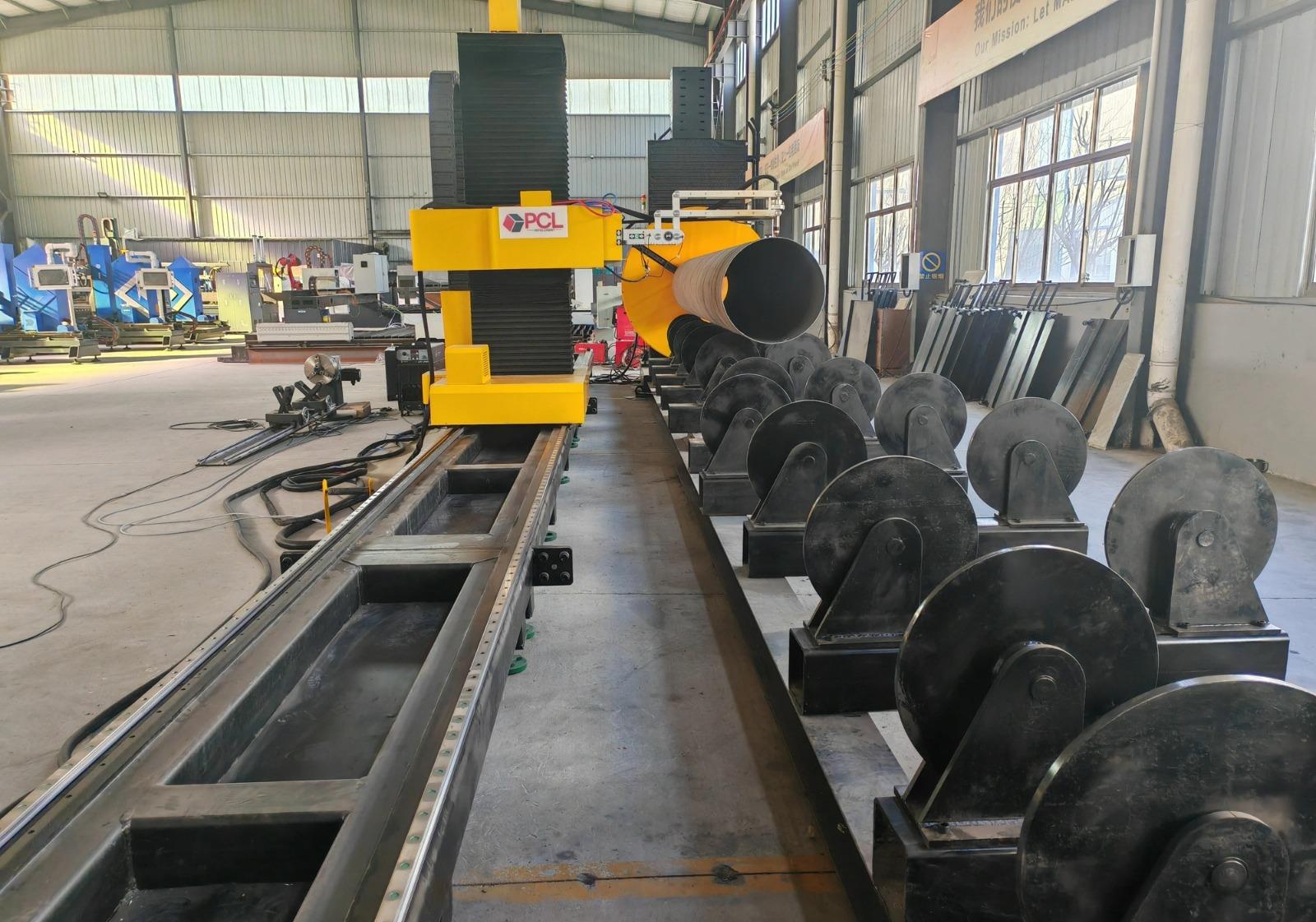
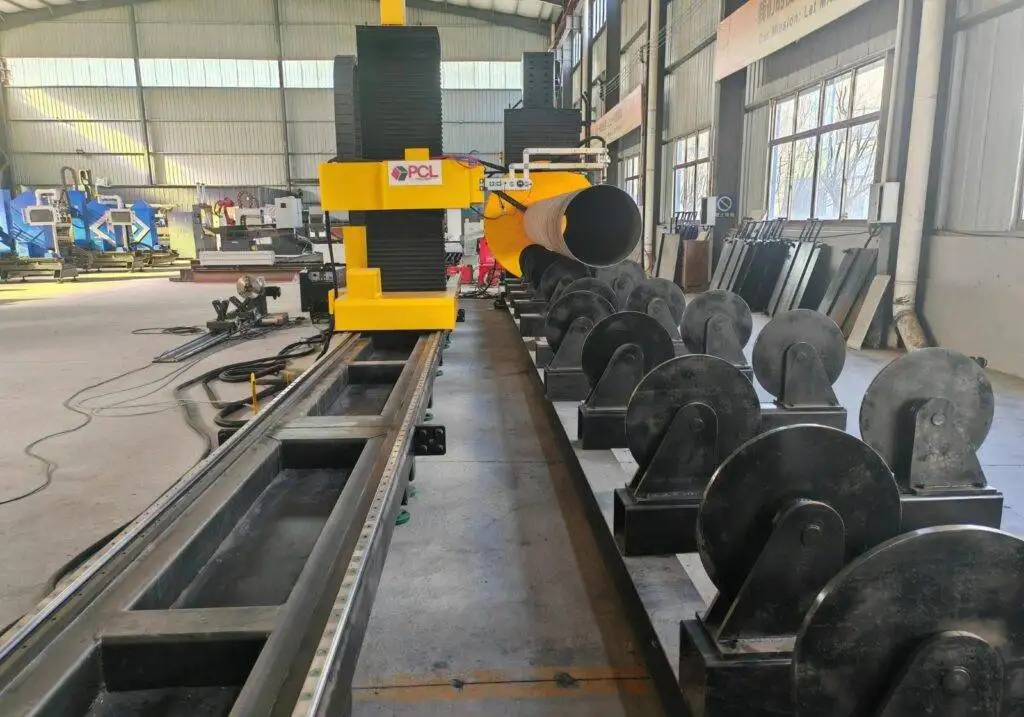
Beam Processing Center with Arc Voltage Control for for Oil & Gas Tanks
In this article
Structural Engineering Requirements for Oil and Gas Tank Fabrication
The fabrication of large-scale storage tanks and pressure vessels for the oil and gas industry demands rigorous adherence to geometric tolerances and structural reliability. In these environments, the structural framework—primarily composed of H-beams, channels, and heavy plate—serves as the backbone for containment integrity. An industrial engineer must prioritize equipment that handles high-duty cycles while maintaining the precision required for complex geometries.
A Beam Processing Center utilizing plasma technology stands as the primary solution for these requirements. Unlike general-purpose cutting tools, a specialized center for oil and gas applications must account for material irregularities common in heavy structural steel. The primary challenge lies in the intersection of structural members and the tank shell, where fit-up accuracy directly dictates the success of subsequent automated or manual assembly processes.
Arc Voltage Control (AVC) Mechanics in High-Precision Plasma Cutting
Arc voltage control is the fundamental technology that enables plasma torches to maintain a constant standoff distance from the workpiece. In the context of beam processing, material deviation is a constant factor. H-beams often exhibit web-to-flange misalignment, camber, or slight twisting. Without a dynamic height control system, the torch would either collide with the material or move too far away, resulting in kerf widening and dross accumulation.
The AVC system operates by measuring the electrical potential between the plasma electrode and the steel beam. As the distance between the nozzle and the metal changes, the voltage fluctuates. The processing center’s CNC interprets these voltage changes in real-time, adjusting the Z-axis drive to compensate. This ensures that the plasma arc remains at its optimal focal point, providing a consistent cut width and angle across the entire profile of the beam. For oil and gas tanks, where structural supports must match the curvature of the tank wall, this consistency is non-negotiable for safety and longevity.
Achieving Intersection Accuracy in Complex Geometric Fit-ups
One of the most critical phases in tank construction is the creation of intersections where structural beams meet the cylindrical or spherical surfaces of the tank. Traditional methods often require manual layout and significant post-cut grinding. A plasma-based beam processing center equipped with multi-axis rotation capabilities eliminates these inefficiencies.
Intersection accuracy is achieved through the synchronization of the plasma head’s 3D movement and the AVC’s real-time height adjustments. When cutting a saddle or a miter on an H-beam to fit a curved tank wall, the CNC calculates the changing intersection points. The plasma arc must penetrate varying thicknesses of steel as it moves across the flange and web. The precision of these cuts ensures that the gap between the beam and the tank shell is minimized, meeting the strict tolerances required by API 650 or other relevant industrial standards. High intersection accuracy translates to reduced material waste and a significant decrease in the man-hours required for fit-up.
Engineering for Low Maintenance: The H-Beam Advantage
From a maintenance perspective, the choice of plasma technology for H-beam processing offers distinct advantages over alternative thermal cutting methods. The heavy-duty environment of a structural steel shop involves dust, metal filings, and significant vibrations. Plasma systems are inherently robust, featuring fewer sensitive optical components that might fail under harsh conditions.
Low maintenance is achieved through the use of high-durability rails and rack-and-pinion drive systems designed to handle the mass of heavy H-beams. In these centers, the plasma cutting torch is the only consumable-intensive component. Modern plasma power sources have optimized the gas flow and arc starting sequences to extend the life of electrodes and nozzles. Furthermore, because plasma does not require the same level of environmental cleanliness as more sensitive technologies, the overall uptime of the processing center is substantially higher. This reliability is vital for oil and gas projects operating on tight contractual timelines where equipment downtime can result in massive liquidated damages.
Advanced Beveling and Weld Preparation Standards
For oil and gas tanks, the strength of the structural connection is paramount. This necessitates precise beveling of the beam ends and holes to facilitate full-penetration welds. A beam processing center with a robotic or multi-axis plasma head can perform V, Y, X, and K-style bevels in a single pass.
The integration of beveling for welding within the cutting cycle allows for the creation of precise land thicknesses and root gaps. When the plasma torch executes a bevel, the AVC must remain active to prevent the torch from diving into the material as the angle changes. This complex coordination ensures that the bevel angle remains consistent even as the torch travels across the undulating surface of an H-beam flange. By automating the beveling process, the engineer ensures that the joint geometry is identical every time, which is a prerequisite for achieving the high-quality radiographic results required in pressure vessel environments.
Kinematic Precision and Material Handling Efficiency
Efficient beam processing is not just about the cut itself, but also the movement of the material through the machine. Industrial engineers focus on the kinematic chain of the system—from the longitudinal feeding of the beam to the rotation of the plasma head. In a high-throughput center, the material handling system must sync perfectly with the cutting head to avoid cumulative errors.
The use of H-beam structural steel allows for the implementation of robust conveyor systems and hydraulic clamping. These systems must hold the beam rigidly to prevent displacement during high-speed plasma traverses. By combining rigid material clamping with the flexible, high-speed movement of a plasma torch, the processing center can achieve feed rates that significantly outperform manual methods while maintaining a level of repeatability that human operators cannot match.
Optimizing Throughput and Reducing Post-Processing
The ultimate goal of implementing a Beam Processing Center with Arc Voltage Control is the reduction of total production time. By achieving high intersection accuracy and providing ready-to-weld bevels, the system removes the bottleneck of secondary operations. In the oil and gas sector, where steel volumes are immense, even a five percent increase in processing efficiency can lead to significant cost savings.
In conclusion, the focus on plasma cutting technology within these centers provides a rugged, high-precision solution for the demands of tank fabrication. The synergy between Arc Voltage Control, multi-axis beveling, and heavy-duty mechanical design ensures that structural H-beams are processed with the accuracy required for high-stakes energy infrastructure. The resulting components allow for faster assembly, superior weld quality, and a lower total cost of ownership for the fabrication facility.