Optimizing Structural Steel Fabrication with Zero-Tailing Plasma Systems
In the domain of structural steel engineering, the drive toward lean manufacturing necessitates the elimination of every possible waste stream. Conventional Plasma Cutting Machines often leave a significant “tail” or remnant at the end of a profile—typically 150mm to 300mm of unusable material—due to the mechanical limitations of the gripping and feeding systems. The introduction of Zero-tailing technology represents a paradigm shift in how H-beams, channels, and angles are processed. By employing a dual-chuck or specialized pass-through feeding mechanism, the plasma torch can execute cuts across the entire length of the raw material, effectively reducing scrap to nearly zero and maximizing the yield per ton of steel.
Mechanical Precision and Intersection Accuracy
The structural integrity of a steel frame relies heavily on the fit-up of its components. When processing H-beams or large box sections, intersection accuracy is the primary metric of quality. Plasma cutting machines equipped with 5-axis or 6-axis robotic manipulators allow for complex 3D geometries that traditional sawing and drilling lines cannot achieve. This includes the precise cutting of cope joints, rat holes, and complex saddle cuts where one beam intersects another at an oblique angle.
Industrial engineers prioritize the “bolt-hole quality” of modern high-definition plasma systems. By modulating the gas flow and current intensity during the circular interpolation of a hole, the system compensates for the natural taper of the plasma arc. This results in holes with minimal deviation between the top and bottom diameters, ensuring that high-strength bolts can be inserted without secondary reaming. This level of precision is critical for maintaining the load-bearing calculations specified in the original engineering designs.
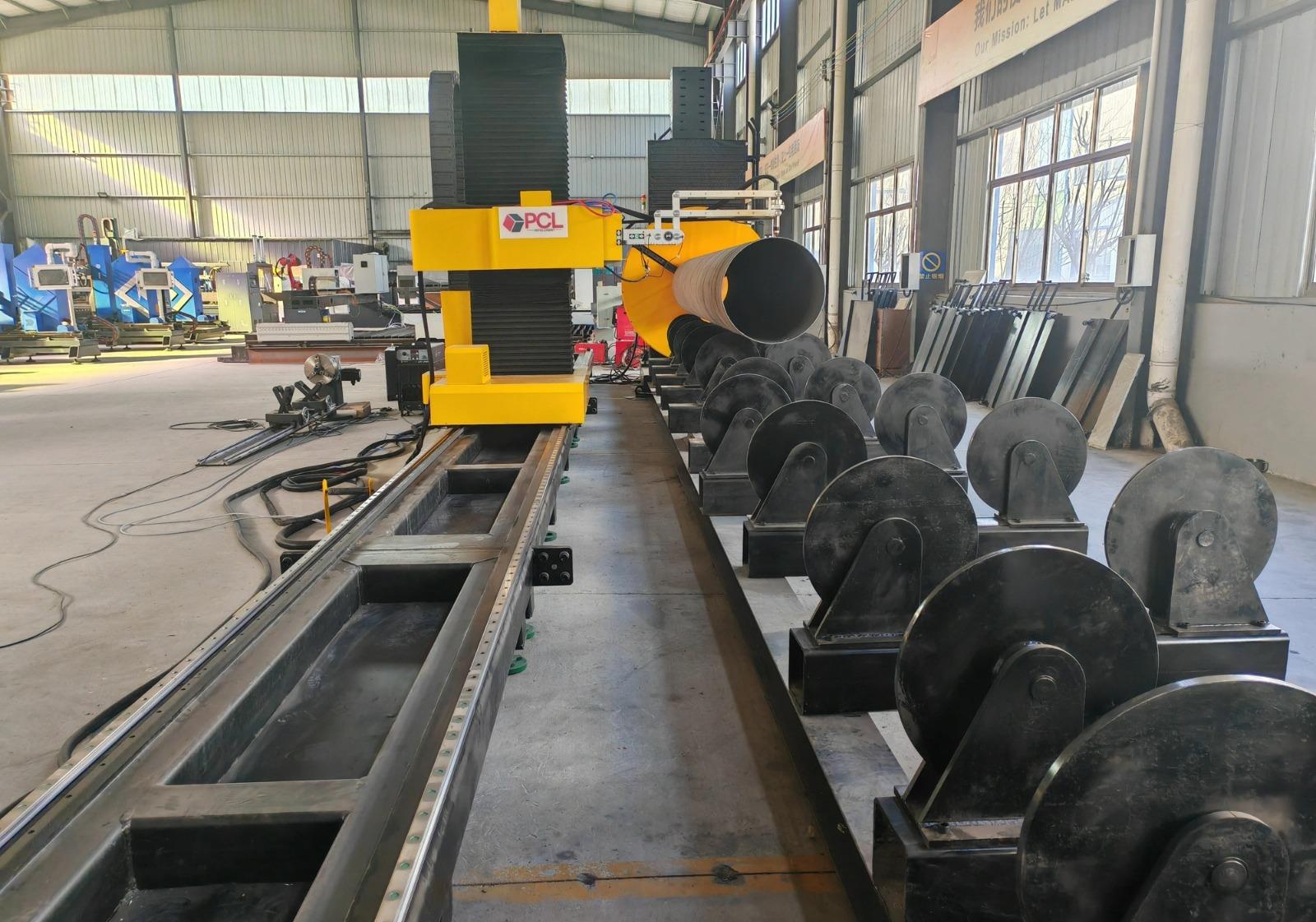
Zero-Tailing: Engineering the Feed Mechanism
The engineering behind Zero-tailing technology involves a sophisticated coordination between the longitudinal feed conveyor and the plasma gantry. In standard machines, the material is held by a single carriage that cannot enter the cutting envelope. Zero-tailing systems utilize a secondary clamping unit or a “pusher” system that maintains control of the workpiece even as the trailing edge passes through the cutting zone.
From an operational cost perspective, the ROI of this technology is calculated by the reduction in “drop” or “remnant” weight. In a facility processing 500 tons of H-beams per month, a 2% increase in material utilization via the elimination of tails results in 10 tons of saved material. At current market rates for structural steel, the technology pays for itself through material savings alone, independent of the labor savings associated with reduced manual scrap handling.
H-Beam Processing and Low Maintenance Requirements
For heavy-duty structural steel environments, the durability of the cutting medium is paramount. Plasma cutting is inherently suited for the rugged conditions of a steel mill or a fabrication shop. Unlike other thermal cutting methods that require high-purity environments or are sensitive to surface contaminants, plasma systems thrive in heavy-duty H-beam lines. The low maintenance profile of plasma torches is a result of their robust mechanical design.
The consumables—nozzles, electrodes, and swirl rings—are designed for rapid replacement, often featuring “quick-change” torch heads that minimize downtime. Furthermore, the modern plasma power supply is engineered to handle the voltage fluctuations common in large industrial zones. In a 24/7 production cycle, the mean time between failures (MTBF) for a high-definition plasma system is significantly higher than that of more delicate optical systems, making it the preferred choice for engineers focused on uptime and reliability.
Automated Beveling for High-Strength Connections
Welding preparation is one of the most labor-intensive stages of structural steel assembly. Manual grinding of bevels on thick-walled H-beams is not only slow but also introduces human error. Plasma cutting machines with integrated beveling capabilities can execute V, Y, K, and X-profile cuts in a single pass. This is achieved through real-time adjustment of the torch angle while the system follows the profile of the flange or web.
The engineering advantage here is twofold: consistency and speed. A plasma-cut bevel provides a uniform root face and a precise angle, which are essential for achieving full penetration welds in moment connections. By automating this process, the industrial engineer ensures that the weld volume is minimized—only the necessary amount of filler metal is used—while the structural integrity of the joint is guaranteed by the accuracy of the prep.
Thermal Management and Heat Affected Zone (HAZ)
A common concern in structural engineering is the Heat Affected Zone (HAZ) created by thermal cutting. High-definition plasma systems mitigate this through high cutting speeds and concentrated energy density. By moving the arc rapidly across the steel, the total heat input is localized. This prevents warping or twisting of the H-beam, which is especially important for long-span members where straightness tolerances are tight (often within 1mm over 10 meters).
The cooling systems in modern plasma units utilize specialized liquid coolants that circulate through the torch head, ensuring that the electrode remains at a stable temperature. This thermal management extends the life of the consumables and maintains a stable arc voltage, which is the key to achieving the intersection accuracy required for complex architectural steelwork.
Integrating CAD/CAM for End-to-End Efficiency
The final component of a high-efficiency plasma line is the software integration. Advanced nesting algorithms specifically designed for structural profiles allow the machine to “nest” different parts within a single beam, accounting for the kerf width of the plasma arc. When combined with Zero-tailing hardware, the software can plan cuts right to the very edge of the material.
This digital thread—from the structural engineer’s 3D model to the CNC code of the plasma cutter—eliminates manual layout errors. The machine reads the DSTV or STEP files, identifies the necessary bolt holes and bevels, and executes the sequence with minimal operator intervention. This “lights-out” capability in structural steel fabrication is only possible when the mechanical reliability of the plasma system is matched by the intelligence of the control software.
Conclusion: The Engineer’s Choice for Structural Steel
Zero-tailing plasma cutting machines represent the pinnacle of efficiency for the structural steel industry. By focusing on intersection accuracy, the systems ensure that large-scale assemblies fit together perfectly on the job site, reducing field labor costs. The low maintenance nature of the equipment ensures that production schedules are met without the interruptions common to more fragile technologies. Ultimately, for the industrial engineer tasked with maximizing throughput and minimizing waste, the transition to automated, zero-tailing plasma processing is a strategic necessity in a competitive global market.
-


LT240S tube laser cutting machine
-
LT120S tube laser cutting machine
-
Sale

Tank Fillet Welding Machine
Original price was: $1,000.00.$900.00Current price is: $900.00. -
Sale

MAK100 tube laser cutting machine
Original price was: $5,500.00.$5,000.00Current price is: $5,000.00. -

portable plasma air cutting machine
$1,200.00 -

2in1 fiber laser cutting machine
-

Air cooling Laser welding machine
-

HF h beam laser cutting machine
-

LT240 laser cutting machine
-

Laser welding machine
-


Cobot Welding Station
-

Gantry welding robot solution
-

Tracked Wheeled AGV Welding robot
-

LFH6020 Fiber laser cutting machine
-
LFP6020
-

robotic welidng machine
Advanced Fiber Laser Tube Processing Technology
Our CNC Fiber Laser Tube Cutting systems revolutionize metal fabrication by integrating high-precision cutting, punching, and profiling into a single automated workflow. Designed for versatility, this technology handles a wide array of profiles including Round, Square, Rectangular, and Oval tubes, as well as complex L-shaped and U-shaped channels.
- Precision Punching: High-speed hole punching with micron-level accuracy, eliminating the need for mechanical drilling or die-stamping.
- Complex Profiling: Advanced 3D pathing allows for intricate interlocking joints and specialized notch cuts, ideal for structural frames.
- High Material Efficiency: Intelligent nesting software minimizes scrap, reducing raw material costs across large production runs.
- Clean Finish: Delivers oxide-free, burr-free edges that require zero secondary grinding before welding.

Seamlessly processing multiple profiles with consistent precision.
Global Delivery & Logistics



From our high-tech manufacturing facility directly to your global site. PCL WeldCut ensures secure packaging, professional handling, and reliable international logistics to safeguard your equipment throughout the entire journey.