Pipe Profile Cutting Machine with 3D Vision positioning for Wind Tower fabrication
In this article
Industrial Precision in Wind Tower Tank Fillet Welding
In the specialized sector of wind tower fabrication, the structural integrity of the base and flange connections is paramount. These components, often categorized under heavy-plate tank fillet welding, require a level of consistency that manual operation rarely sustains over long-duration shifts. The transition toward mechanized solutions is driven by the necessity for uniform weld profiles and the elimination of human fatigue factors in challenging field environments. Unlike traditional stationary setups, the move toward mobile, mechanized carriages allows for greater flexibility in the assembly of large-diameter sections.
The engineering challenge lies in maintaining a constant torch angle and travel speed across the circumference of the tower section. Discrepancies in fit-up or minor deviations in plate curvature can lead to inconsistent penetration and slag inclusions. To mitigate these risks, industrial engineers are increasingly deploying advanced mechanized systems that combine heavy-duty motion control with sophisticated sensing capabilities.
3D Vision Positioning for Weld Seam Accuracy
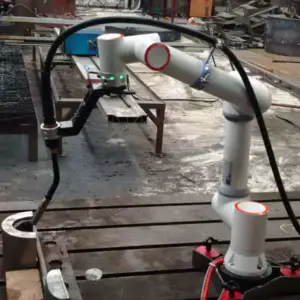
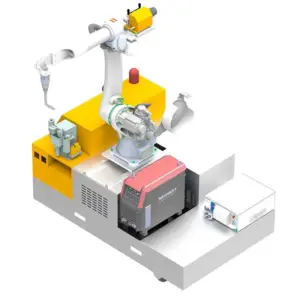
The core of modern mechanized welding systems is the integration of 3D vision positioning. This technology moves beyond simple tactile sensors or basic optical trackers. By projecting a multi-point light pattern or utilizing stereoscopic imaging, the system generates a high-resolution topographic map of the weld joint in real-time. This data is critical for fillet welds where the intersection between the vertical shell and the horizontal flange may not be a perfect 90-degree angle due to thermal distortion or manufacturing tolerances.
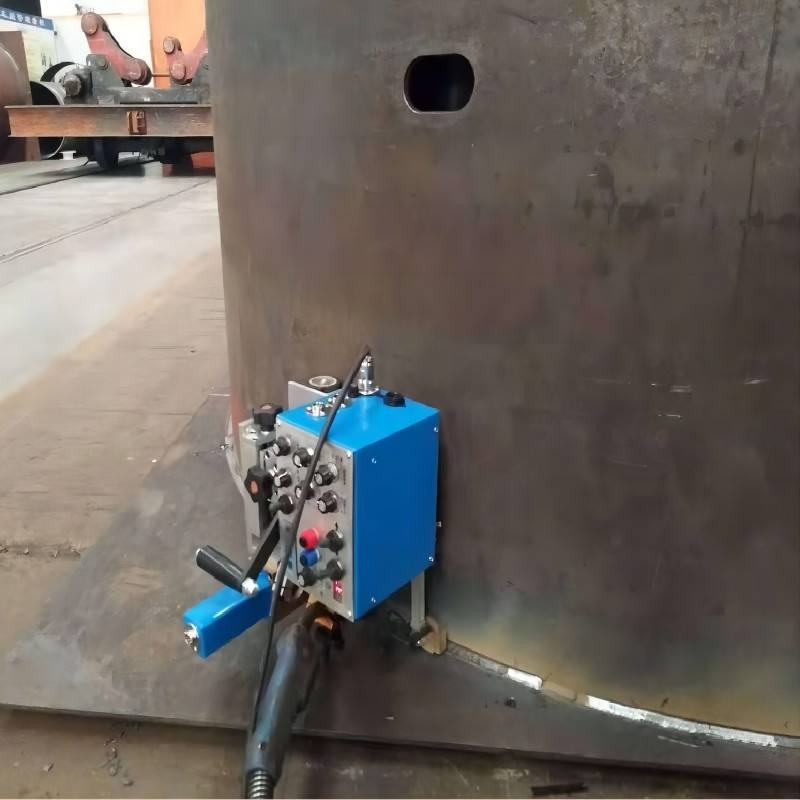
The vision system identifies the root of the fillet and calculates the volume of the joint gap. This information is processed by an onboard controller that adjusts the wire feed speed and torch oscillation parameters on the fly. From an industrial engineering perspective, this closed-loop feedback mechanism ensures that the weld bead remains centered within the joint, regardless of the crawler’s slight deviations in travel. This capability is particularly vital for multi-pass welding, where the vision system must recognize the profile of the previous layer to ensure proper fusion and tie-in.
Mechanical Stability via Magnetic Crawler Technology
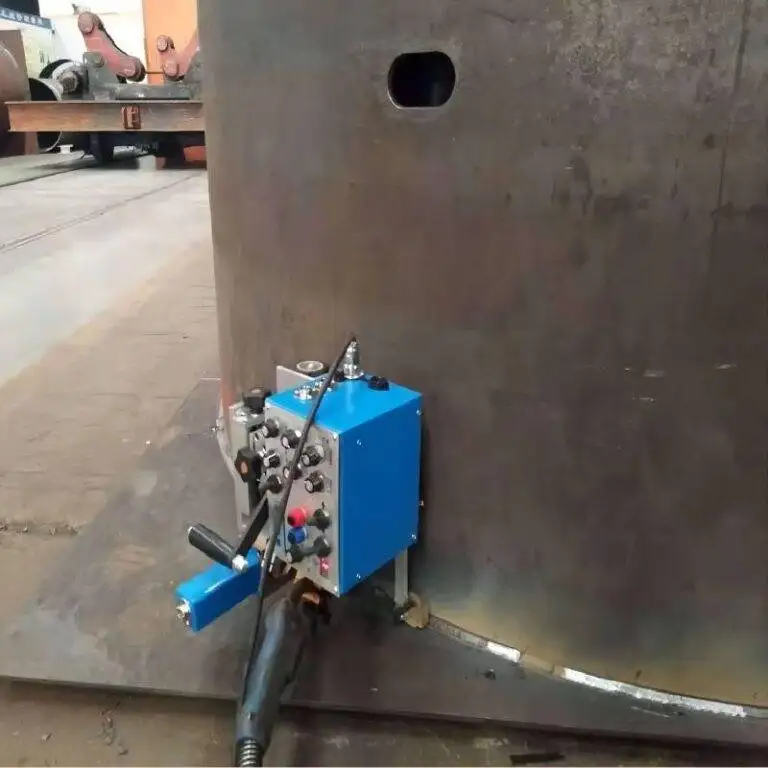
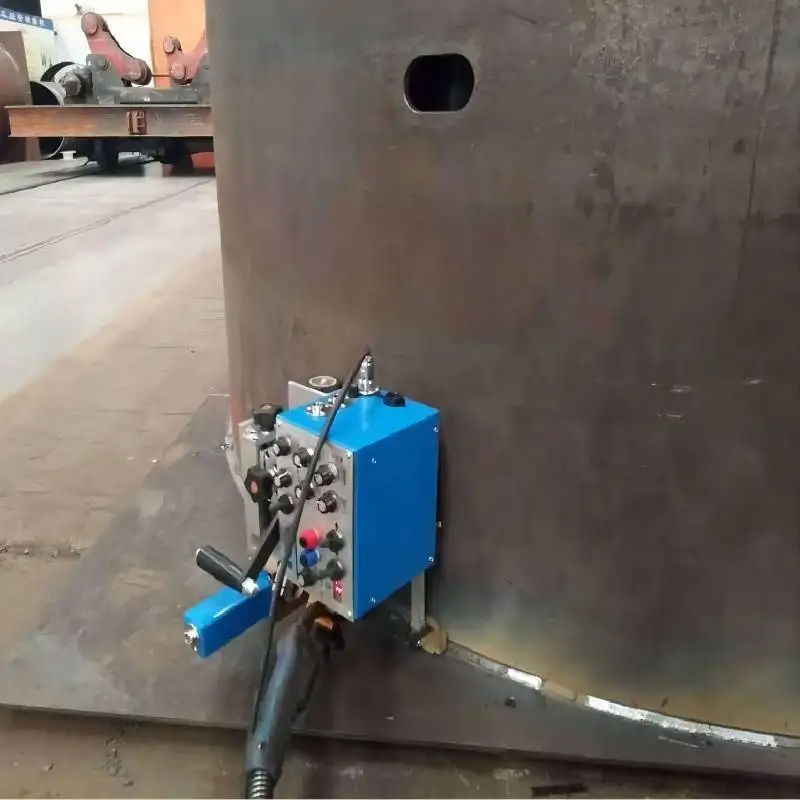
Field construction of wind towers presents significant environmental challenges, including wind loads and uneven terrain. Standard wheeled carriages often suffer from slippage or vibration, which directly impacts the quality of the weld deposit. The implementation of a magnetic crawler provides the necessary traction and stability required for vertical and overhead welding positions. These crawlers utilize high-intensity permanent magnets or switchable magnetic flux units to adhere to the steel substrate with significant force.
The magnetic attraction ensures that the torch remains at a constant standoff distance from the workpiece. In wind tower fabrication, where the steel thickness can exceed 50mm, the weight of the welding lead and the wire spool can create substantial drag. The magnetic crawler’s high-torque drive system overcomes this resistance, providing a steady, pulse-free movement. This mechanical rigidity is the foundation upon which the 3D vision system operates; without physical stability, the software’s corrective algorithms would be overwhelmed by mechanical jitter.
Optimizing Field Construction Stability
Stability in field construction is not merely about the crawler’s grip but also about the system’s resilience to external variables. Wind tower sections are often welded in yards where ambient conditions fluctuate. The combination of magnetic adhesion and 3D vision allows for a “set and forget” workflow that reduces the number of personnel required in the immediate weld zone. This increases safety and allows skilled operators to oversee multiple machines simultaneously.
Furthermore, the crawler systems are designed with a low center of gravity to prevent tipping on curved surfaces. The tracks or wheels are often coated in specialized compounds that maximize friction while preventing damage to the base metal. By maintaining a constant velocity, the system ensures that the heat-affected zone (HAZ) remains within the specified metallurgical limits, preserving the fatigue resistance of the wind tower base.
Throughput and Economic Efficiency in Wind Tower Fabrication
From a lean manufacturing standpoint, the primary metric for wind tower fabrication is the deposition rate per hour versus the defect rate. Manual fillet welding on large tanks is notoriously slow, often requiring extensive grinding and rework. Mechanized crawlers equipped with vision guidance can operate at higher current and voltage settings because they maintain a perfect arc length that a human hand cannot replicate over several meters of continuous welding.
The reduction in rework alone justifies the capital expenditure for these systems. When a 3D vision system detects a gap that exceeds the allowable tolerance, it can pause the operation or alert the supervisor, preventing the completion of a non-conforming weld. This proactive quality control is essential for the 25-year service life expected of modern wind turbine structures. By digitizing the welding path, the system also provides a comprehensive data log for every centimeter of the seam, satisfying the stringent documentation requirements of offshore and onshore energy standards.
Conclusion: The Future of Mechanized Assembly
The synergy between 3D vision positioning and magnetic crawler mechanics represents a significant leap forward in heavy-duty tank fillet welding. By removing the inconsistencies of manual labor and replacing them with high-fidelity sensing and robust mechanical movement, wind tower manufacturers can meet the increasing global demand for renewable energy infrastructure. The focus remains on physical stability and algorithmic precision, ensuring that the welds holding these massive structures together are as resilient as the engineering designs intend. As diameters increase and tolerances tighten, these mechanized systems will transition from a luxury to a baseline requirement for competitive industrial fabrication.