Optimizing Bridge Truss Fabrication via H-Beam Production Lines
In the domain of heavy structural engineering, the production of bridge trusses demands a level of precision that traditional manual layout methods cannot achieve. The transition to an automated H-Beam Production Line integrated with robotic Plasma Cutting represents a fundamental shift in throughput and structural integrity. For bridge components, where torsional loads and tension are constant variables, the accuracy of the intersection points between chords and verticals is paramount. This analysis focuses on the technical deployment of plasma technology and the software-driven workflows that eliminate the bottlenecks of manual measurement and cutting.
The Role of Plasma Cutting in Heavy Section Processing
Plasma cutting remains the industry standard for H-beam processing in bridge construction due to its ability to penetrate thick-walled structural steel with high thermal efficiency. Unlike mechanical sawing or oxy-fuel, plasma provides a balance of speed and edge quality that is necessary for large-scale truss members. The process utilizes a constricted electric arc that ionizes pressurized gas, creating a high-velocity beam of plasma. This allows for the rapid removal of molten metal, resulting in a narrow kerf and a manageable heat-affected zone (HAZ).
In a production line environment, the plasma torch is typically mounted on a multi-axis robotic arm. This configuration allows the torch to navigate the complex geometry of an H-beam, including the interior faces of the flanges and the central web. for Bridge Trusses, which often feature non-orthogonal intersections and complex miter cuts, the maneuverability of a 6-axis or 7-axis robotic system is essential for maintaining the geometric tolerances required by international building codes.
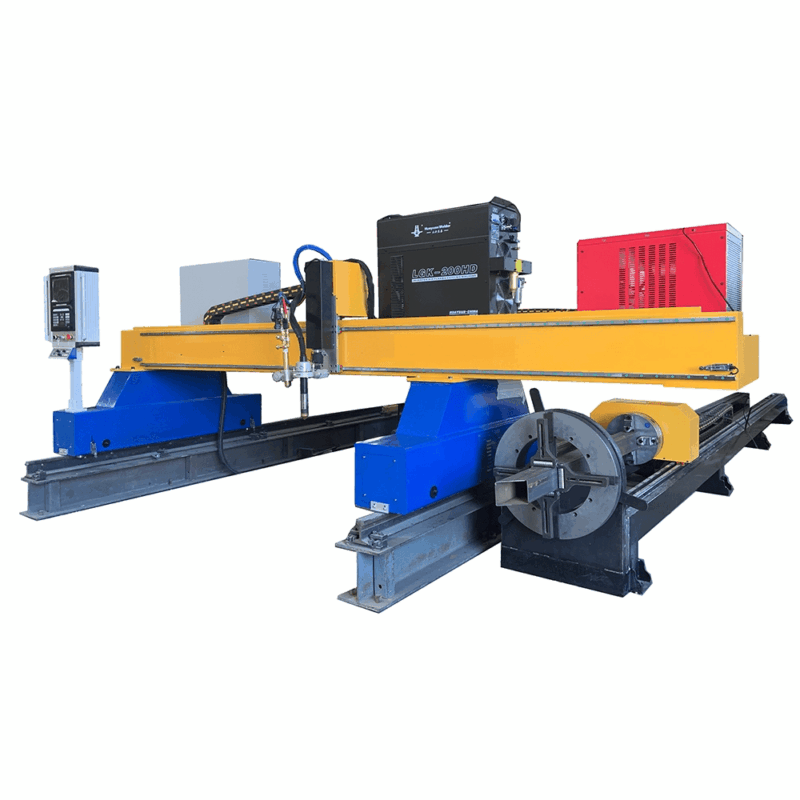
Achieving Superior Intersection Accuracy
One of the primary challenges in bridge truss assembly is the “fit-up.” If a diagonal member is cut even a few millimeters out of spec, the resulting gap requires excessive filler material or can lead to structural misalignment. Robotic Plasma Cutting systems solve this through high-resolution encoders and real-time sensing technology. Before the cut commences, the system often employs laser or touch-probing to detect the actual dimensions of the beam, accounting for any mill tolerances or slight deformations in the steel.
By mapping the physical beam against the digital twin, the controller adjusts the cutting path in real-time. This ensures that the intersection points—where the web and flanges meet—are processed with surgical precision. The accuracy of these intersections is vital for load distribution across the truss, ensuring that every bolt hole and mating surface aligns perfectly during site erection. This level of precision virtually eliminates the need for on-site “re-work,” which is a significant cost driver in bridge projects.
Offline Programming (OLP) and Digital Integration
The efficiency of a modern H-beam line is not just found in the hardware, but in the software that drives it. Offline Programming allows engineers to generate cutting paths and G-code in a virtual environment while the production line is still processing the previous batch. This eliminates “machine idle time,” a critical KPI for industrial engineers. By importing 3D models directly from structural software like Tekla Structures or SDS/2, the OLP system converts complex bridge geometries into robotic kinematics.
The OLP software simulates the entire cutting sequence, providing a comprehensive collision detection check. This ensures that the plasma torch head can reach deep into the “H” profile without striking the flanges. Furthermore, OLP enables the optimization of the cutting sequence to manage heat distribution, preventing the warping of long-span truss members. The digital workflow ensures that the transition from the drafting room to the shop floor is seamless, with zero manual data entry errors.
Advanced Beveling for Structural Integrity
Bridge trusses are subject to dynamic loading, necessitating high-quality weld preparations. Plasma cutting systems integrated into H-beam lines are capable of performing complex beveling in a single pass. Whether the specification calls for a V-bevel, Y-bevel, or K-bevel, the robotic arm tilts the plasma torch to the precise angle required. This is particularly important for thick-flange H-beams where a square edge is insufficient for full-penetration joints.
The ability to bevel the web and the flanges simultaneously allows for a superior transition between structural members. Modern plasma power sources provide stable arc characteristics even at steep angles, ensuring that the beveled surface finish is smooth and free of excessive dross. This high-quality edge preparation ensures that the subsequent assembly stages are efficient, as the components fit together with the tight tolerances necessary for automated or manual welding processes without requiring secondary grinding.
Low Maintenance Requirements and Operational Longevity
From an industrial engineering perspective, the total cost of ownership (TCO) of a production line is heavily influenced by maintenance intervals. Modern plasma systems are engineered for high duty cycles with low maintenance requirements. Unlike mechanical cutting tools that suffer from blade wear and require frequent lubrication, plasma systems have fewer moving parts in the cutting head. The primary consumables—nozzles, electrodes, and swirl rings—are designed for quick replacement, often taking less than two minutes to swap.
Furthermore, the integration of robust dust extraction and filtration systems in the production line protects the robotic components and the plasma power source from the conductive metallic dust generated during the process. The absence of heavy mechanical forces during the cutting process also reduces the wear and tear on the gantry and rail systems, ensuring that the production line maintains its calibration and accuracy over years of heavy-duty operation. This reliability is crucial for bridge projects that operate on tight, liquidated-damage-prone schedules.
Economic Impact and Throughput Optimization
The implementation of an H-beam production line for bridge trusses drastically alters the labor-to-output ratio. By automating the layout, cutting, and beveling processes, a single operator can oversee a station that would otherwise require a team of layout specialists and manual cutters. The reduction in material handling is also a significant factor; beams are moved via automated conveyors through the plasma station, ensuring a continuous flow of material.
In summary, the synergy between robotic plasma cutting and offline programming provides a competitive edge in bridge truss fabrication. By focusing on intersection accuracy and reducing the need for secondary processing through precise beveling, manufacturers can achieve a higher level of structural reliability. The low maintenance nature of the plasma system ensures that the line remains operational during peak demand, providing a consistent, high-quality output that meets the rigorous standards of modern infrastructure engineering.
-


LT240S tube laser cutting machine
-
LT120S tube laser cutting machine
-
Sale

Tank Fillet Welding Machine
Original price was: $1,000.00.$900.00Current price is: $900.00. -
Sale

MAK100 tube laser cutting machine
Original price was: $5,500.00.$5,000.00Current price is: $5,000.00. -

portable plasma air cutting machine
$1,200.00 -

2in1 fiber laser cutting machine
-

Air cooling Laser welding machine
-

HF h beam laser cutting machine
-

LT240 laser cutting machine
-

Laser welding machine
-


Cobot Welding Station
-

Gantry welding robot solution
-

Tracked Wheeled AGV Welding robot
-

LFH6020 Fiber laser cutting machine
-
LFP6020
-

robotic welidng machine
Advanced Fiber Laser Tube Processing Technology
Our CNC Fiber Laser Tube Cutting systems revolutionize metal fabrication by integrating high-precision cutting, punching, and profiling into a single automated workflow. Designed for versatility, this technology handles a wide array of profiles including Round, Square, Rectangular, and Oval tubes, as well as complex L-shaped and U-shaped channels.
- Precision Punching: High-speed hole punching with micron-level accuracy, eliminating the need for mechanical drilling or die-stamping.
- Complex Profiling: Advanced 3D pathing allows for intricate interlocking joints and specialized notch cuts, ideal for structural frames.
- High Material Efficiency: Intelligent nesting software minimizes scrap, reducing raw material costs across large production runs.
- Clean Finish: Delivers oxide-free, burr-free edges that require zero secondary grinding before welding.

Seamlessly processing multiple profiles with consistent precision.
Global Delivery & Logistics



From our high-tech manufacturing facility directly to your global site. PCL WeldCut ensures secure packaging, professional handling, and reliable international logistics to safeguard your equipment throughout the entire journey.