Optimizing H-Beam Fabrication for Wind Energy Infrastructure
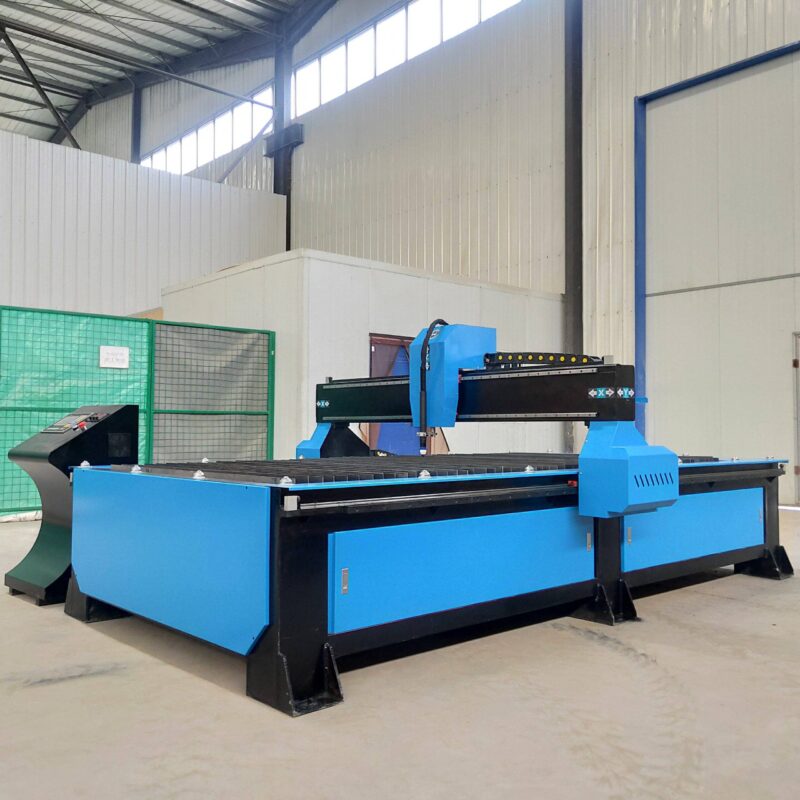
In the current landscape of renewable energy manufacturing, the production of H-beams for wind tower foundations and internal structural supports demands a rigorous adherence to geometric tolerances and metallurgical integrity. Unlike standard construction-grade steelwork, wind tower components are subjected to extreme cyclical loading and environmental stress. The transition to narrow gap welding as a primary joining method has necessitated a fundamental shift in how raw steel is prepared. Central to this efficiency is the Plasma Cutting station, a critical node in the H-Beam Production Line that dictates the success of subsequent automated welding stages.
The industrial engineering objective is clear: maximize the duty cycle of the production line while minimizing the secondary processing of H-beam webs and flanges. By utilizing high-definition plasma systems, manufacturers achieve a level of CNC intersection precision that allows for the seamless fit-up required for narrow gap processes. This eliminates the need for manual grinding and re-work, directly impacting the bottom line and structural reliability of the tower.
Plasma Cutting and Intersection Accuracy
The structural performance of an H-beam is largely dependent on the precision of the interface between the web and the flange. In a high-speed production line, plasma cutting systems equipped with advanced motion control are utilized to profile the components. Intersection accuracy refers to the system’s ability to maintain a consistent kerf width and perpendicularity across varying thicknesses of heavy plate.
When preparing H-beams for wind towers, the intersection points where cross-bracing or internal platforms connect must be exact. Any deviation in the cut path leads to gaps that narrow gap welding systems cannot adequately bridge without risking burn-through or lack of fusion. High-definition plasma units use pressurized oxygen or nitrogen as plasma gases to constrict the arc, resulting in a narrower kerf and a significantly reduced heat-affected zone (HAZ). This precision ensures that when the H-beam components move to the assembly jig, the alignment is nearly perfect, allowing for a standardized welding parameter set across the entire length of the beam.
Advanced Beveling for Narrow Gap Groove Preparation
Narrow gap welding is characterized by its reduced groove angle, typically ranging between 1 and 5 degrees, which drastically reduces the volume of weld metal required. However, this process is highly sensitive to groove geometry. The plasma cutting stage must therefore execute complex bevels with extreme repeatability.
Modern H-beam lines incorporate 5-axis or 6-axis plasma robotic heads that can perform narrow gap groove preparation in a single pass. These systems can transition from a straight cut to a V, Y, or K-bevel dynamically. The ability of the plasma arc to maintain stability at varied angles is paramount. Engineers specify plasma for this task because it handles the heavy wall thicknesses typical of wind tower H-beams (often exceeding 40mm) with much higher travel speeds than oxy-fuel.
The beveling accuracy provided by plasma cutting ensures that the root face is consistent. In narrow gap applications, a consistent root face prevents the accumulation of residual stress and ensures uniform penetration. By integrating the beveling process directly into the H-beam cutting line, the workflow remains linear, avoiding the bottlenecks associated with moving heavy beams to separate bevelling stations.
Thermal Distortion Management
A significant challenge in H-beam fabrication is the management of thermal distortion. The concentrated energy of a high-definition plasma arc allows for faster cutting speeds, which in turn reduces the total heat input into the workpiece. By minimizing the time the heat is applied to the steel, the plasma process limits the warping of the flanges. This dimensional stability is vital for wind tower components that must maintain strict verticality and concentricity over long spans.
Low Maintenance and Operational Uptime
From an industrial engineering perspective, the total cost of ownership (TCO) and the Mean Time Between Failures (MTBF) are the primary metrics for equipment selection. Plasma cutting systems are inherently robust and designed for the harsh environments of heavy steel fabrication. Unlike other high-precision methods that may require climate-controlled environments or are highly sensitive to dust and vibration, plasma systems thrive in the heavy-duty atmosphere of an H-beam shop.
Automated beveling systems using plasma technology have evolved to include self-calibrating torches and wear-part monitoring. The maintenance requirements are largely centered on consumable replacement (electrodes, nozzles, and shields), which can be performed in minutes by the operator without specialized technical support. This “low maintenance” profile is a strategic advantage in wind tower production, where 24/7 operation is often required to meet project deadlines.
The absence of complex optical paths or sensitive alignment mechanisms means that the plasma station remains the most reliable link in the production chain. Modern power supplies are now modular, allowing for rapid swapping of components if a fault occurs, ensuring that the H-beam line experiences minimal unscheduled downtime.
Integrating Plasma Cutting into the Automated Workflow
The synergy between the plasma cutting station and the narrow gap welding station is the hallmark of a high-efficiency H-beam line. The digital twin of the H-beam, generated in the CAD/CAM phase, dictates the plasma cut paths. This data ensures that the intersection accuracy is maintained across thousands of iterations.
Furthermore, the plasma system’s ability to mark the steel with layout lines or part numbers during the cutting process facilitates easier assembly downstream. For wind towers, where traceability is often a regulatory requirement, the integration of plasma arc stability with digital tracking ensures that every H-beam produced meets the engineering specifications of the project.
By focusing on the high-speed execution of bevels and the rigorous maintenance of geometric tolerances, the plasma cutting stage provides the foundation for the narrow gap welding process to operate at peak efficiency. This reduces the number of welding passes required, lowers the consumption of expensive shielding gases and filler wires, and ultimately produces a structural component that can withstand the rigors of wind energy generation.
Conclusion: Engineering the Future of Heavy Fabrication
The optimization of H-beam production lines for Wind Tower fabrication necessitates a shift toward technologies that balance precision with industrial durability. Plasma cutting stands out as the optimal choice for preparing steel for narrow gap welding due to its superior intersection accuracy and versatile beveling capabilities. By implementing high-definition plasma systems, industrial engineers can ensure a high-throughput environment where maintenance is predictable and downtime is minimized.
As wind towers grow in scale and complexity, the reliance on precise edge preparation will only increase. The integration of plasma cutting technology ensures that H-beam manufacturers can meet these challenges head-on, delivering structural integrity and cost-efficiency in a highly competitive global market. The focus remains on a streamlined, automated process where every cut contributes to the ultimate goal of a reliable, long-lasting energy infrastructure.
-


LT240S tube laser cutting machine
-
LT120S tube laser cutting machine
-
Sale

Tank Fillet Welding Machine
Original price was: $1,000.00.$900.00Current price is: $900.00. -
Sale

MAK100 tube laser cutting machine
Original price was: $5,500.00.$5,000.00Current price is: $5,000.00. -

portable plasma air cutting machine
$1,200.00 -

2in1 fiber laser cutting machine
-

Air cooling Laser welding machine
-

HF h beam laser cutting machine
-

LT240 laser cutting machine
-

Laser welding machine
-


Cobot Welding Station
-

Gantry welding robot solution
-

Tracked Wheeled AGV Welding robot
-

LFH6020 Fiber laser cutting machine
-
LFP6020
-

robotic welidng machine
Advanced Fiber Laser Tube Processing Technology
Our CNC Fiber Laser Tube Cutting systems revolutionize metal fabrication by integrating high-precision cutting, punching, and profiling into a single automated workflow. Designed for versatility, this technology handles a wide array of profiles including Round, Square, Rectangular, and Oval tubes, as well as complex L-shaped and U-shaped channels.
- Precision Punching: High-speed hole punching with micron-level accuracy, eliminating the need for mechanical drilling or die-stamping.
- Complex Profiling: Advanced 3D pathing allows for intricate interlocking joints and specialized notch cuts, ideal for structural frames.
- High Material Efficiency: Intelligent nesting software minimizes scrap, reducing raw material costs across large production runs.
- Clean Finish: Delivers oxide-free, burr-free edges that require zero secondary grinding before welding.

Seamlessly processing multiple profiles with consistent precision.
Global Delivery & Logistics



From our high-tech manufacturing facility directly to your global site. PCL WeldCut ensures secure packaging, professional handling, and reliable international logistics to safeguard your equipment throughout the entire journey.