Optimization of H-Beam Production Line Through Plasma Cutting Systems
In the domain of heavy steel structure fabrication, the efficiency of an H-beam production line is dictated by the precision of its initial processing stages. As industrial engineers seek to minimize material waste and maximize structural integrity, the role of high-definition plasma cutting has become central. Unlike traditional mechanical methods, plasma systems offer the agility required to handle heavy-gauge web and flange plates while maintaining the tight tolerances necessary for advanced joining techniques. The transition toward narrow gap welding necessitates a level of edge preparation that only modern CNC-controlled plasma units can consistently deliver at scale.
Achieving Superior Intersection Accuracy in Structural Sections
Intersection accuracy refers to the geometric precision of the fit-up between the web and flange components before they enter the welding station. In an H-beam production environment, even a one-millimeter deviation in the straightness or squareness of the cut can lead to significant gaps. These gaps require additional filler metal and increase the risk of thermal distortion. High-definition plasma cutting utilizes narrowed arc densities and sophisticated torch height control (THC) to ensure that the kerf remains consistent across the entire length of the beam.
By implementing plasma cutting accuracy protocols, manufacturers can achieve tolerances within +/- 0.5mm. This precision is vital for narrow gap welding, where the groove geometry is intentionally minimized to reduce the volume of the weld pool. Engineering the cut path involves complex algorithms that compensate for the plasma arc’s natural taper, ensuring that the verticality of the web-to-flange interface is perfectly perpendicular. This reduces the mechanical stresses introduced during the assembly phase and ensures a uniform heat-affected zone (HAZ) once the welding process commences.
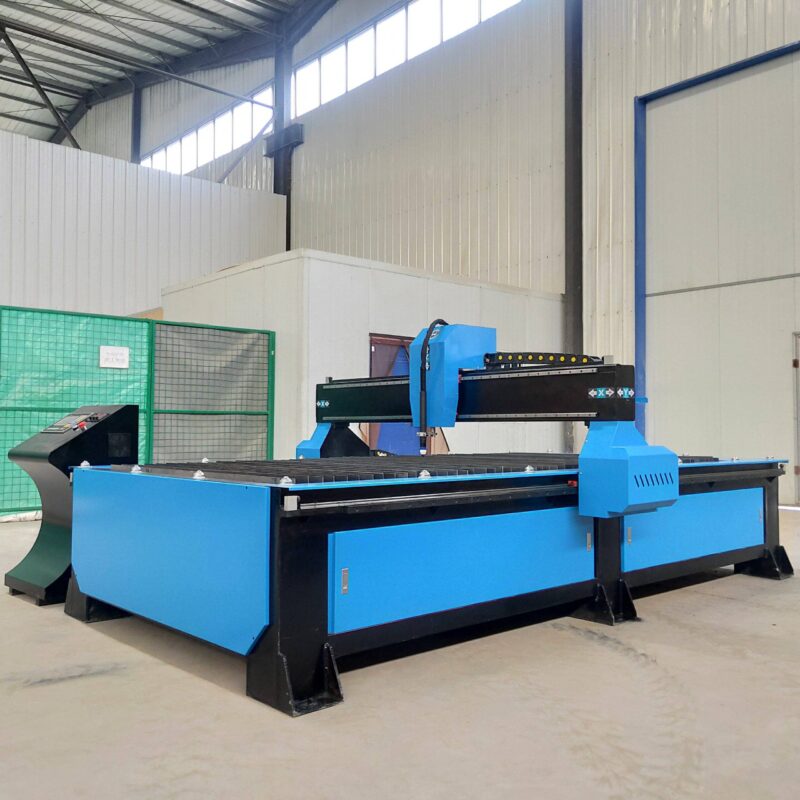
Advanced 3D Beveling for Narrow Gap Welding Preparation
The core advantage of integrating plasma into an H-beam line is the ability to perform complex beveling in a single pass. Narrow gap welding preparation differs from standard V-groove preparations; it often requires deep, steep-angled bevels or U-grooves to allow the welding torch to penetrate the root of thick-walled sections with minimal oscillation. A multi-axis plasma head can rotate and tilt dynamically, creating these geometries without requiring the workpiece to be moved to a secondary station.
From an industrial engineering perspective, the elimination of secondary grinding or edge milling represents a massive reduction in “Non-Value-Added” (NVA) time. The plasma beveling process creates a clean, oxide-free surface when using specific gas mixtures, such as argon-hydrogen or nitrogen-water shield combinations. This chemical cleanliness is essential for preventing porosity in the narrow gap, where the restricted space makes gas shielding more volatile. The ability to program complex 3D beveling sequences directly into the CNC nesting software allows for the automated fabrication of tapered beams and non-standard structural members with zero manual intervention.
Low Maintenance Profiles and System Longevity
A critical metric for any production line is the Mean Time Between Failures (MTBF). High-definition plasma systems have evolved to provide a low maintenance alternative to mechanical shearing or oxy-fuel systems. Modern power sources utilize digital gas control and “soft start” technology, which significantly extends the life of consumables such as electrodes and nozzles. In a high-volume H-beam line, the ability to run multiple shifts with minimal downtime for consumable replacement is a key driver of profitability.
The mechanical simplicity of the plasma gantry contributes to its reliability. Unlike systems that require complex optical alignments, plasma systems rely on robust electrical circuits and high-pressure fluid dynamics. The cooling systems in industrial-grade plasma torches are designed to dissipate heat rapidly, preventing the warping of the torch body during long, continuous cuts on thick-plate flanges. For the plant manager, this translates to lower spare parts inventory and a more predictable maintenance schedule, allowing for better synchronization with the downstream welding and finishing stages.
Thermal Management and Material Integrity
One of the challenges in H-beam fabrication is the management of residual stress. Plasma cutting, while a thermal process, operates at extremely high speeds. This high travel speed limits the duration of heat exposure to the base metal, resulting in a much narrower heat-affected zone compared to oxy-fuel cutting. By controlling the heat input, the metallurgical properties of the high-strength steel used in structural H-beams are preserved. This is particularly important when preparing edges for narrow gap welding, as excessive hardening of the edge can lead to hydrogen-induced cracking in the weld bead.
Engineers utilize water-table cutting or water-muffler technologies to further quench the material during the cut. This not only traps the fine particulates produced during the plasma process but also maintains a stable temperature across the plate, preventing the “bowing” effect often seen in long structural members. Maintaining the flatness of the flange is a prerequisite for the automated tracking systems used in narrow gap welding heads.
Enhancing Throughput via Integrated CNC Nesting
The integration of the plasma unit into the broader H-beam production line is facilitated by advanced PLCs and nesting software. This software calculates the optimal layout of web and flange components to minimize scrap. Furthermore, it allows for the automatic marking of layout lines, part numbers, and weld symbols using the same plasma torch at a lower amperage. This multi-functionality eliminates the need for manual layout crews, further streamlining the workflow from raw plate to finished beam.
Conclusion on Process Synergy
The synergy between high-precision plasma cutting and narrow gap welding represents the pinnacle of modern structural steel engineering. By focusing on intersection accuracy and the versatility of 3D beveling, manufacturers can produce H-beams that meet the most stringent seismic and load-bearing requirements. The low maintenance requirements of the plasma hardware ensure that the production line remains a consistent link in the supply chain, providing the high-speed output necessary for large-scale infrastructure projects. As the industry moves toward more complex architectural designs, the flexibility and precision of the plasma-enabled H-beam line will remain an indispensable asset.
-


LT240S tube laser cutting machine
-
LT120S tube laser cutting machine
-
Sale

Tank Fillet Welding Machine
Original price was: $1,000.00.$900.00Current price is: $900.00. -
Sale

MAK100 tube laser cutting machine
Original price was: $5,500.00.$5,000.00Current price is: $5,000.00. -

portable plasma air cutting machine
$1,200.00 -

2in1 fiber laser cutting machine
-

Air cooling Laser welding machine
-

HF h beam laser cutting machine
-

LT240 laser cutting machine
-

Laser welding machine
-


Cobot Welding Station
-

Gantry welding robot solution
-

Tracked Wheeled AGV Welding robot
-

LFH6020 Fiber laser cutting machine
-
LFP6020
-

robotic welidng machine
Advanced Fiber Laser Tube Processing Technology
Our CNC Fiber Laser Tube Cutting systems revolutionize metal fabrication by integrating high-precision cutting, punching, and profiling into a single automated workflow. Designed for versatility, this technology handles a wide array of profiles including Round, Square, Rectangular, and Oval tubes, as well as complex L-shaped and U-shaped channels.
- Precision Punching: High-speed hole punching with micron-level accuracy, eliminating the need for mechanical drilling or die-stamping.
- Complex Profiling: Advanced 3D pathing allows for intricate interlocking joints and specialized notch cuts, ideal for structural frames.
- High Material Efficiency: Intelligent nesting software minimizes scrap, reducing raw material costs across large production runs.
- Clean Finish: Delivers oxide-free, burr-free edges that require zero secondary grinding before welding.

Seamlessly processing multiple profiles with consistent precision.
Global Delivery & Logistics



From our high-tech manufacturing facility directly to your global site. PCL WeldCut ensures secure packaging, professional handling, and reliable international logistics to safeguard your equipment throughout the entire journey.