Optimizing H-Beam Production for Shipbuilding Environments
In the context of modern naval architecture, the structural integrity of a vessel relies heavily on the efficiency of its primary longitudinal and transverse reinforcements. The H-Beam Production Line has evolved from basic assembly to a highly integrated sequence where thermal cutting precision dictates the success of subsequent joining processes. For shipyards, the shift toward Narrow Gap welding (NGW) necessitates a level of edge preparation that exceeds conventional mechanical shearing or standard oxy-fuel capabilities.
Industrial engineering principles suggest that the bottleneck in structural steel fabrication often resides in the fit-up stage. By utilizing high-definition plasma systems, engineers can eliminate many of the secondary grinding and correction processes that plague traditional lines. The objective is to achieve a weld-ready state immediately following the cutting cycle, thereby reducing the total cycle time per linear meter of beam production.
The Critical Role of Plasma Cutting in Narrow Gap Preparation
Narrow Gap welding is characterized by its reduced groove angle, typically ranging from 1 to 20 degrees, which significantly lowers the volume of weld metal required and minimizes the heat input into the base material. However, the viability of NGW is entirely dependent on the quality of the Plasma Cutting process. If the edge preparation lacks uniformity or if the bevel angle fluctuates along the length of the H-beam, the risk of lack-of-fusion defects increases exponentially.
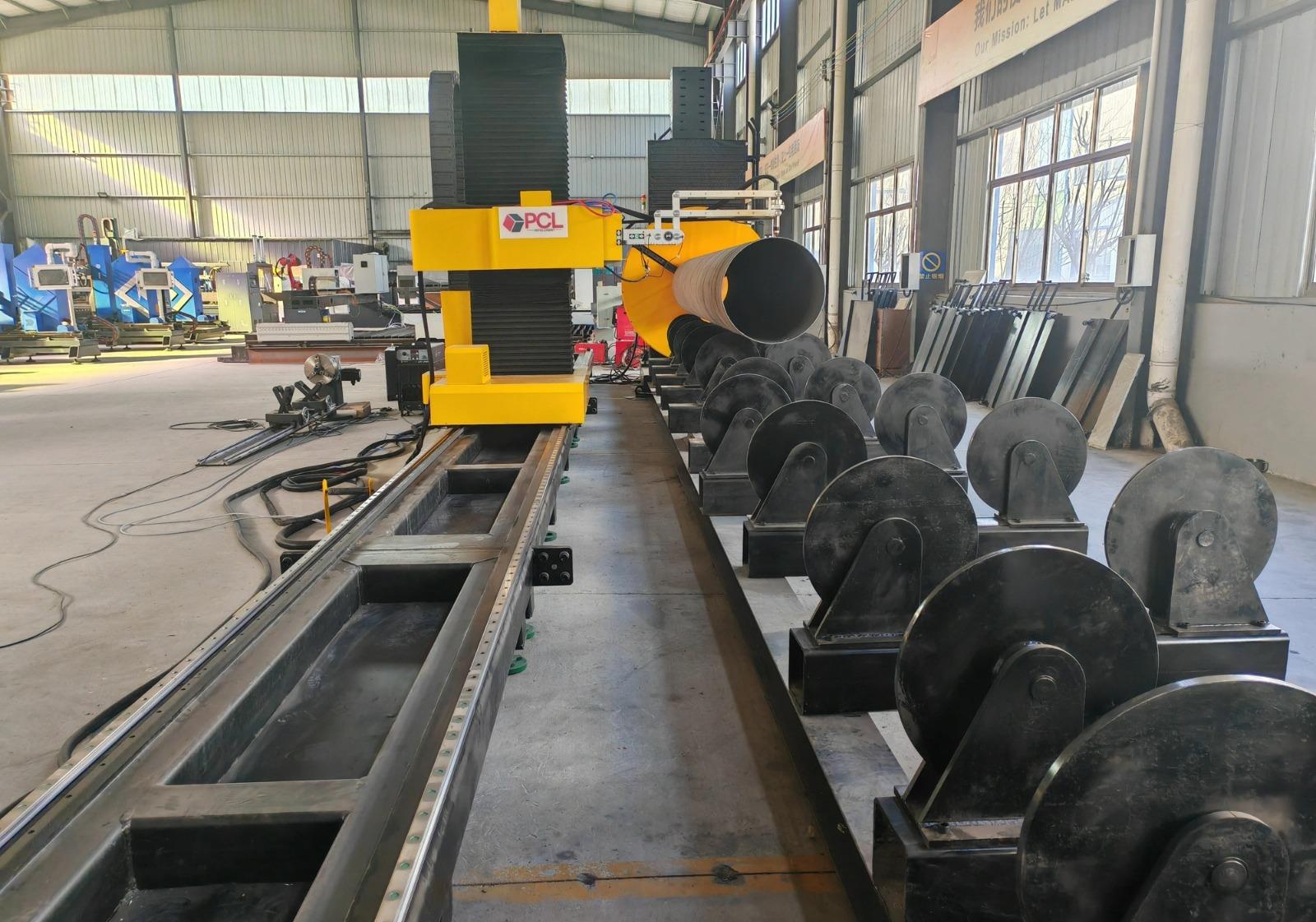
Plasma systems offer a stable ionized gas arc that provides a concentrated heat source, resulting in a narrow heat-affected zone (HAZ). This is vital for shipbuilding steels, where maintaining the grain structure of the parent metal is a regulatory requirement. The ability of plasma to maintain consistent kerf widths across varying plate thicknesses ensures that the Narrow Gap parameters remain within the tight tolerances required by automated welding tractors.
Achieving High Intersection Accuracy in Complex Geometries
One of the most significant challenges in H-beam fabrication for maritime applications is the intersection where the web meets the flange. In a heavy-duty production environment, Intersection accuracy is the primary metric for assessing the quality of a cut. Discrepancies at these junctions can lead to structural weaknesses and increased stress concentrations.
Advanced CNC plasma stations utilize sophisticated motion control algorithms to compensate for torch lead and lag during high-speed direction changes. This ensures that the web-to-flange interface is perfectly perpendicular or angled according to the vessel’s specific hull curvature. By maintaining a tolerance of +/- 0.5mm or better, the production line facilitates a seamless fit-up, which is a prerequisite for the high-current density utilized in Narrow Gap applications.
Multi-Axis Beveling for Dynamic Weld Profiles
Shipbuilding often requires complex bevel profiles—V, Y, X, and K cuts—to accommodate different loading stresses and penetration requirements. Plasma cutting units equipped with five-axis or six-axis robotic heads allow for the simultaneous execution of these profiles. Unlike mechanical milling, plasma beveling can handle the hardened surface of high-tensile shipyard steel without tool wear or significant slowdowns.
The automation of beveling within the H-beam line removes the need for manual edge preparation. This is particularly important for Narrow Gap welding, where the groove geometry must be mirrored perfectly on both the web and the flange. The synchronization between the cutting head and the beam transport system allows for “on-the-fly” bevel adjustments, which is critical when fabricating beams with variable cross-sections or tapered profiles common in bow and stern sections.
Low Maintenance Requirements and System Reliability
From an operational expenditure (OPEX) perspective, H-beam low maintenance characteristics are essential for 24/7 shipyard operations. Plasma systems are inherently robust compared to other thermal cutting technologies. The absence of complex optical paths or sensitive beam delivery components makes them ideal for the dusty, high-vibration environment of a heavy fabrication shop.
Modern plasma power sources are designed with modular components, allowing for rapid diagnostics and replacement. The primary maintenance tasks are limited to consumable changes—nozzles, electrodes, and swirl rings—which can be performed by the operator without specialized technical support. This high uptime is a key driver for the overall equipment effectiveness (OEE) of the H-beam production line, ensuring that the welding stations are never starved for prepared material.
Thermal Stability and Material Integrity
Industrial engineers must account for the thermal expansion of long-form H-beams during the cutting process. Plasma systems mitigate this through high-speed travel rates and water-injection or water-muffled cutting options. By controlling the temperature gradient across the beam, the system prevents “bowing” or “twisting,” which would otherwise ruin the intersection accuracy required for subsequent Narrow Gap welding stages.
Furthermore, the metallurgical impact of the plasma arc is well-documented and manageable. The dross-free cutting capabilities of high-definition systems mean that the edges do not require post-process cleaning. This direct-to-weld capability is a cornerstone of lean manufacturing within the shipbuilding sector, effectively removing non-value-added steps from the production flow.
Integrating Data-Driven Quality Control
The digitalization of the H-beam line allows for real-time monitoring of cutting parameters. Sensors can track gas flow, arc voltage, and feed rates, ensuring that every centimeter of the bevel meets the engineering specification. This data is critical for the traceability requirements of classification societies like DNV or ABS. By logging the precision of the plasma cut, shipyards can provide documented evidence of the fit-up quality prior to the Narrow Gap welding process, reducing the likelihood of costly non-destructive testing (NDT) failures.
Conclusion: Maximizing Throughput and Structural Quality
The integration of high-precision plasma cutting into the H-beam production line represents a strategic investment for shipyards aiming to master Narrow Gap welding techniques. By prioritizing intersection accuracy and utilizing the flexibility of multi-axis beveling, manufacturers can produce structural components that meet the rigorous demands of the maritime industry. The combination of low maintenance requirements and high-speed execution ensures that the production line remains competitive, delivering superior structural integrity with optimized material usage and reduced labor overhead.
-


LT240S tube laser cutting machine
-
LT120S tube laser cutting machine
-
Sale

Tank Fillet Welding Machine
Original price was: $1,000.00.$900.00Current price is: $900.00. -
Sale

MAK100 tube laser cutting machine
Original price was: $5,500.00.$5,000.00Current price is: $5,000.00. -

portable plasma air cutting machine
$1,200.00 -

2in1 fiber laser cutting machine
-

Air cooling Laser welding machine
-

HF h beam laser cutting machine
-

LT240 laser cutting machine
-

Laser welding machine
-


Cobot Welding Station
-

Gantry welding robot solution
-

Tracked Wheeled AGV Welding robot
-

LFH6020 Fiber laser cutting machine
-
LFP6020
-

robotic welidng machine
Advanced Fiber Laser Tube Processing Technology
Our CNC Fiber Laser Tube Cutting systems revolutionize metal fabrication by integrating high-precision cutting, punching, and profiling into a single automated workflow. Designed for versatility, this technology handles a wide array of profiles including Round, Square, Rectangular, and Oval tubes, as well as complex L-shaped and U-shaped channels.
- Precision Punching: High-speed hole punching with micron-level accuracy, eliminating the need for mechanical drilling or die-stamping.
- Complex Profiling: Advanced 3D pathing allows for intricate interlocking joints and specialized notch cuts, ideal for structural frames.
- High Material Efficiency: Intelligent nesting software minimizes scrap, reducing raw material costs across large production runs.
- Clean Finish: Delivers oxide-free, burr-free edges that require zero secondary grinding before welding.

Seamlessly processing multiple profiles with consistent precision.
Global Delivery & Logistics



From our high-tech manufacturing facility directly to your global site. PCL WeldCut ensures secure packaging, professional handling, and reliable international logistics to safeguard your equipment throughout the entire journey.