Precision Plasma Cutting in H-Beam Fabrication for Energy Infrastructure
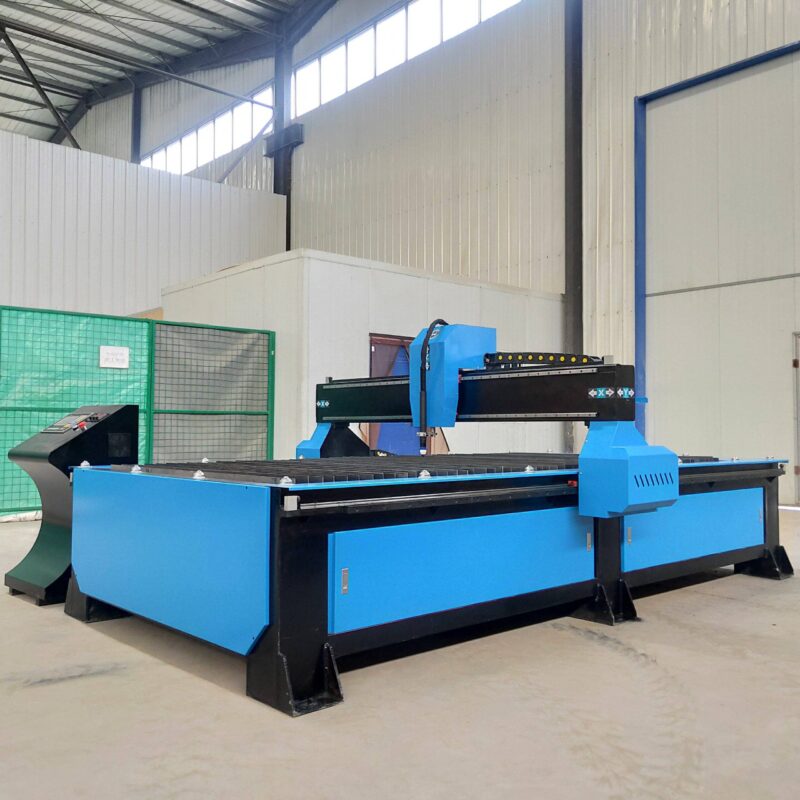
In the heavy-duty sector of Oil & Gas storage tank fabrication, the structural integrity of the H-beam foundation and support framework is non-negotiable. These structures must withstand immense hydrostatic pressure and environmental stressors. The production line efficiency begins not at the assembly stage, but at the initial thermal cutting station. Implementing high-definition plasma cutting technology is the primary driver for achieving the narrow gap welding preparation required for these high-specification projects. Unlike traditional mechanical methods, plasma systems integrated into CNC-driven H-beam lines offer the geometric versatility needed to manage thick-walled sections with zero-tolerance for error.
Achieving Critical Intersection Accuracy
The complexity of H-beam processing for tank foundations lies in the intersection points where longitudinal beams meet radial supports. These intersections require intricate “cope” cuts or “rat holes” that allow for continuous welding passes and proper drainage. Plasma cutting systems utilize 5-axis or 6-axis robotic heads to navigate the web and flange transitions with extreme intersection cutting accuracy. This precision ensures that the fit-up gap is consistent across the entire profile.
From an industrial engineering perspective, the reduction in manual grinding time is the most significant KPI. When the plasma torch maintains a constant standoff distance via advanced torch height control (THC), the resulting kerf is clean and perpendicular. In Oil & Gas applications, where beams may exceed 500mm in depth, even a one-degree deviation in the cut face can lead to significant volume increases in the weld joint, ballooning the cost of consumables and labor. High-definition plasma compensates for the natural arc taper, ensuring the intersection surfaces are perfectly matched for the next stage of production.
Advanced Beveling for Narrow Gap Welding Success
The transition toward narrow gap welding (NGW) in tank fabrication is motivated by the need to reduce the total weld metal volume and decrease the heat-affected zone (HAZ). However, NGW is notoriously sensitive to groove geometry. The plasma cutting station must deliver a highly specific plasma arc beveling profile—often a deep V or J-groove with a tight root face.
Modern plasma power sources, utilizing oxygen or nitrogen-water injection, produce a dross-free edge that requires no secondary machining. By programming the CNC to perform multi-pass beveling on the flanges, the production line can prepare H-beams for narrow gap submerged arc or gas metal arc processes in a single handling cycle. The precision of the bevel angle, typically maintained within +/- 0.5 degrees, allows the automated welding tractors to maintain a stable arc within the narrow groove, preventing sidewall lack-of-fusion defects that are common when using manual cutting methods.
H-Beam Line Low Maintenance and Operational Availability
For high-volume production facilities, equipment uptime is the benchmark of profitability. High-definition plasma systems are engineered for the H-beam structural integrity demands of 24/7 operations. Unlike other thermal processes that require frequent calibration or fragile optical components, plasma systems are robust. The primary maintenance requirements are confined to the torch consumables—nozzles, electrodes, and swirl rings.
Current “long-life” oxygen cutting technologies have extended the duty cycle of these consumables by optimizing the starting and stopping sequences of the arc. This prevents the “blow-out” of the electrode during the heavy piercing required for thick H-beam webs. Furthermore, the integration of automated dust extraction and slag collection systems within the plasma cell minimizes the accumulation of conductive metallic dust, which is the leading cause of electrical failure in industrial environments. By prioritizing a plasma-centric cutting station, engineers can ensure a lower Mean Time To Repair (MTTR) and a higher Mean Time Between Failures (MTBF) compared to complex mechanical milling units.
Material Utilization and Thermal Distortion Control
Thermal management is a critical factor when cutting structural steel for Oil & Gas Tanks. Large H-beams are susceptible to longitudinal camber and web buckling if the heat input is not strictly controlled. Plasma cutting, characterized by its high energy density and fast travel speeds, minimizes the total heat input into the workpiece. This results in a narrower HAZ compared to oxy-fuel cutting, preserving the metallurgical properties of the high-strength low-alloy (HSLA) steels often used in these structures.
The CNC nesting software associated with the plasma line further optimizes material utilization. By accurately calculating the kerf width for specific material thicknesses, the software can nest cope cuts and bolt holes with minimal scrap. This is particularly vital when working with expensive, certified materials required by American Petroleum Institute (API) standards. The ability to perform bolt-hole cutting and beveling in a single setup eliminates the cumulative tolerances that occur when moving beams between multiple workstations.
Integration with Downstream Narrow Gap Welding Stations
The synergy between the cutting station and the narrow gap welding station is the backbone of the automated H-beam line. The digital twin of the H-beam, generated during the plasma cutting phase, provides the precise coordinates for the welding heads. Because the plasma-cut edges are consistent, the welding parameters can be standardized. There is no need for the welding operator to “bridge” irregular gaps caused by poor cutting.
This streamlined workflow is essential for the construction of large-scale oil storage tanks where hundreds of beams must be joined with radiographic quality welds. The reliability of the plasma-prepared joint ensures that ultrasonic testing (UT) and radiographic testing (RT) pass rates remain near 100%, avoiding the prohibitive costs of weld gouging and repair. In the context of a global energy market where timelines are compressed, the speed and accuracy of plasma-based preparation are the primary levers for maintaining a competitive advantage.
Conclusion: The Engineering Rationale for Plasma-Driven Lines
Strategic investment in a plasma-cutting-focused H-Beam Production Line provides a multifaceted return on investment. Through the lens of an industrial engineer, the benefits are clear: superior intersection accuracy leads to faster assembly; precise beveling enables the cost-saving potential of narrow gap welding; and the low-maintenance nature of the hardware ensures consistent throughput. For the Oil & Gas sector, where the structural failure of a tank foundation is not an option, the precision of the initial cut is the ultimate safeguard of quality. By eliminating manual intervention and maximizing the capabilities of high-definition plasma, fabricators can achieve the rigorous standards required for modern energy infrastructure.
-


LT240S tube laser cutting machine
-
LT120S tube laser cutting machine
-
Sale

Tank Fillet Welding Machine
Original price was: $1,000.00.$900.00Current price is: $900.00. -
Sale

MAK100 tube laser cutting machine
Original price was: $5,500.00.$5,000.00Current price is: $5,000.00. -

portable plasma air cutting machine
$1,200.00 -

2in1 fiber laser cutting machine
-

Air cooling Laser welding machine
-

HF h beam laser cutting machine
-

LT240 laser cutting machine
-

Laser welding machine
-


Cobot Welding Station
-

Gantry welding robot solution
-

Tracked Wheeled AGV Welding robot
-

LFH6020 Fiber laser cutting machine
-
LFP6020
-

robotic welidng machine
Advanced Fiber Laser Tube Processing Technology
Our CNC Fiber Laser Tube Cutting systems revolutionize metal fabrication by integrating high-precision cutting, punching, and profiling into a single automated workflow. Designed for versatility, this technology handles a wide array of profiles including Round, Square, Rectangular, and Oval tubes, as well as complex L-shaped and U-shaped channels.
- Precision Punching: High-speed hole punching with micron-level accuracy, eliminating the need for mechanical drilling or die-stamping.
- Complex Profiling: Advanced 3D pathing allows for intricate interlocking joints and specialized notch cuts, ideal for structural frames.
- High Material Efficiency: Intelligent nesting software minimizes scrap, reducing raw material costs across large production runs.
- Clean Finish: Delivers oxide-free, burr-free edges that require zero secondary grinding before welding.

Seamlessly processing multiple profiles with consistent precision.
Global Delivery & Logistics



From our high-tech manufacturing facility directly to your global site. PCL WeldCut ensures secure packaging, professional handling, and reliable international logistics to safeguard your equipment throughout the entire journey.