Technical Integration of Plasma Cutting in Heavy H-Beam Fabrication
In the manufacture of construction machinery, the structural integrity of H-beams is paramount. These components often serve as the chassis or boom structures for heavy-duty equipment where static and dynamic loads are extreme. From an industrial engineering perspective, the transition toward high-efficiency production lines necessitates a shift in how raw materials are processed. The foundation of this process is not the welding itself, but the preparation of the steel through plasma cutting technology.
The choice of plasma over other thermal cutting methods in the construction machinery sector is driven by material thickness and metallurgical requirements. While many industries seek thin-gauge precision, heavy machinery requires the processing of plates ranging from 20mm to over 80mm. In this thickness range, plasma provides the optimal balance of speed, edge quality, and cost-per-meter. The integration of high-definition plasma systems into a continuous H-beam line ensures that the subsequent narrow gap welding processes are fed with components that meet rigorous geometric tolerances.
Achieving Critical Intersection Accuracy
One of the most significant challenges in H-beam production for heavy equipment is the intersection accuracy of the web and flange components. Unlike standard structural steel used in civil engineering, construction machinery components often feature complex geometries where internal stiffeners or cross-members intersect the main H-beam structure. If the cuts are not perfectly orthogonal or if the dimensions deviate by more than a millimeter, the assembly process faces immediate bottlenecks.
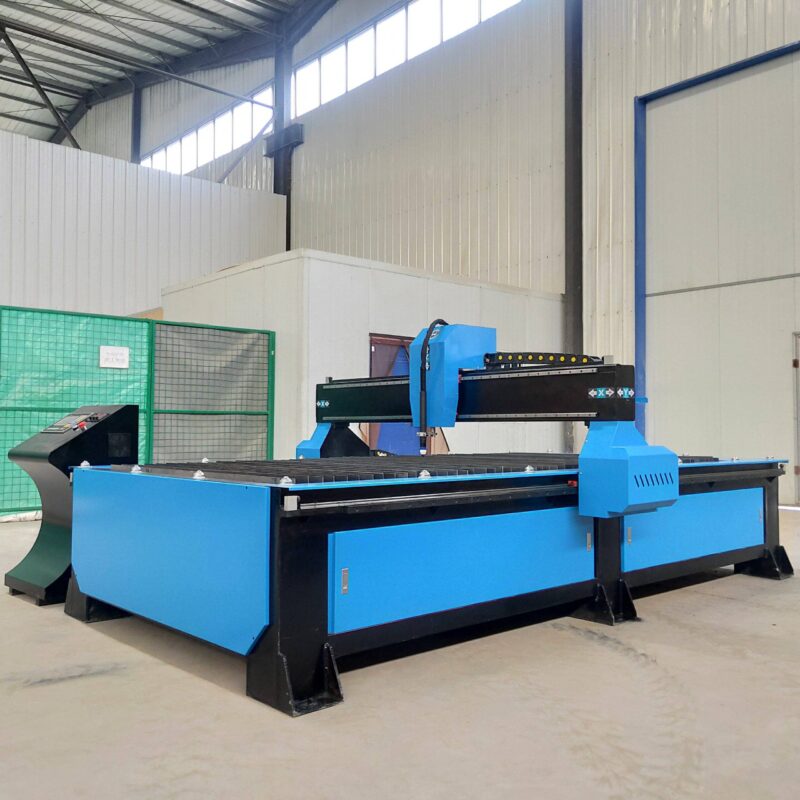
Modern CNC plasma systems utilize advanced torch height control and real-time feedback loops to maintain a consistent arc voltage. This precision ensures that the kerf width remains uniform throughout the cut length. When fabricating the web of an H-beam, the plasma system must execute long, straight cuts with zero taper. Any deviation in the edge angle creates a gap that the narrow gap welding process cannot bridge efficiently. By achieving high intersection accuracy during the primary cutting stage, manufacturers eliminate the need for secondary grinding or manual rework, directly increasing the overall equipment effectiveness (OEE) of the production line.
Beveling Strategies for Narrow Gap Welding Preparation
The efficiency of a narrow gap welding system is entirely dependent on the quality of the joint preparation. Narrow gap welding is preferred for heavy H-beams because it significantly reduces the volume of weld metal required, thereby minimizing the heat-affected zone (HAZ) and reducing thermal distortion. However, this process requires a highly specific groove geometry, typically a deep V or J-groove with a very tight included angle.
Beveling efficiency is where the plasma system proves its worth. Multi-axis plasma torch heads allow for the creation of complex bevels (V, Y, K, and X cuts) in a single pass. In a heavy H-beam line, the flanges are often beveled to allow for full-penetration welds into the web. Using a robotic plasma unit, the system can transition from a straight cut to a 30-degree bevel seamlessly. This precision in edge profiling ensures that the narrow gap welding torch can maintain a consistent distance from the side walls of the groove, preventing lack-of-fusion defects that are common in poorly prepared joints.
Mitigating Thermal Distortion in Thick Plate Cutting
A primary concern for industrial engineers is the management of heat during the cutting process. Although plasma is a thermal process, high-definition systems concentrate the energy into a very narrow column of ionized gas. This concentration allows for faster travel speeds, which reduces the total heat input into the plate. In H-beam production, maintaining the flatness of the web is critical. If the plasma cutting process introduces excessive heat, the web may “oil-can” or bow, making it impossible to align with the flanges during the assembly stage. Engineers must calibrate nesting patterns and cutting sequences to allow for heat dissipation, ensuring the finished beam remains within the straightness tolerances required for machinery assembly.
Low Maintenance Architecture and Operational Reliability
In a continuous H-beam production environment, downtime is the enemy of profitability. One of the logistical advantages of modern plasma systems is their H-beam low maintenance profile compared to mechanical shearing or older oxy-fuel systems. The mechanical components of a plasma gantry—the rails, drives, and motors—are designed for high duty cycles in dusty, industrial environments.
The primary maintenance requirement for plasma cutting involves the consumables: nozzles, electrodes, and swirl rings. Advanced power supplies now feature “long-life” technology that modulates the ramp-up and ramp-down of gas and current, significantly extending the lifespan of these parts. Furthermore, integrated diagnostics allow maintenance teams to predict consumable failure before it affects cut quality. For a construction machinery manufacturer, this means the H-beam line can run multiple shifts with only scheduled, short-duration stops for torch maintenance. The absence of complex optics or sensitive beam-delivery components further simplifies the spare parts inventory and reduces the specialized training required for the maintenance staff.
The Symbiosis of Preparation and Assembly
The final output of an H-beam line is only as good as the sum of its parts. By focusing on the precision of the plasma cutting stage, the manufacturer sets the stage for a successful narrow gap welding operation. Narrow gap welding relies on a consistent “land” and a precise root opening. If the plasma-cut bevel is inconsistent, the automated welding system may require constant operator intervention to adjust parameters, defeating the purpose of an automated line.
Therefore, the industrial engineer must view the plasma cutter not just as a tool for separation, but as a precision machining center. The integration of narrow gap welding into the production flow necessitates a “right-first-time” approach to cutting. By leveraging the intersection accuracy of the plasma torch, the assembly station can utilize hydraulic clamping to bring the web and flanges together with zero clearance, providing the perfect foundation for high-penetration, low-volume welding. This synergy results in H-beams that possess the superior fatigue resistance and structural load-bearing capacity required for the next generation of construction machinery.
Conclusion: Scaling Production Through Precision
For facilities specializing in heavy-duty H-beams, the strategic focus must remain on the front-end of the production line. While the welding process provides the final strength, it is the plasma cutting system that dictates the throughput, accuracy, and labor costs of the entire operation. By optimizing intersection accuracy, mastering complex beveling, and maintaining a robust, low-maintenance hardware environment, manufacturers can ensure their H-Beam Production Lines meet the grueling demands of the construction machinery industry without sacrificing quality or margin.
-


LT240S tube laser cutting machine
-
LT120S tube laser cutting machine
-
Sale

Tank Fillet Welding Machine
Original price was: $1,000.00.$900.00Current price is: $900.00. -
Sale

MAK100 tube laser cutting machine
Original price was: $5,500.00.$5,000.00Current price is: $5,000.00. -

portable plasma air cutting machine
$1,200.00 -

2in1 fiber laser cutting machine
-

Air cooling Laser welding machine
-

HF h beam laser cutting machine
-

LT240 laser cutting machine
-

Laser welding machine
-


Cobot Welding Station
-

Gantry welding robot solution
-

Tracked Wheeled AGV Welding robot
-

LFH6020 Fiber laser cutting machine
-
LFP6020
-

robotic welidng machine
Advanced Fiber Laser Tube Processing Technology
Our CNC Fiber Laser Tube Cutting systems revolutionize metal fabrication by integrating high-precision cutting, punching, and profiling into a single automated workflow. Designed for versatility, this technology handles a wide array of profiles including Round, Square, Rectangular, and Oval tubes, as well as complex L-shaped and U-shaped channels.
- Precision Punching: High-speed hole punching with micron-level accuracy, eliminating the need for mechanical drilling or die-stamping.
- Complex Profiling: Advanced 3D pathing allows for intricate interlocking joints and specialized notch cuts, ideal for structural frames.
- High Material Efficiency: Intelligent nesting software minimizes scrap, reducing raw material costs across large production runs.
- Clean Finish: Delivers oxide-free, burr-free edges that require zero secondary grinding before welding.

Seamlessly processing multiple profiles with consistent precision.
Global Delivery & Logistics



From our high-tech manufacturing facility directly to your global site. PCL WeldCut ensures secure packaging, professional handling, and reliable international logistics to safeguard your equipment throughout the entire journey.