Optimizing H-Beam Fabrication via Plasma Arc Voltage Control
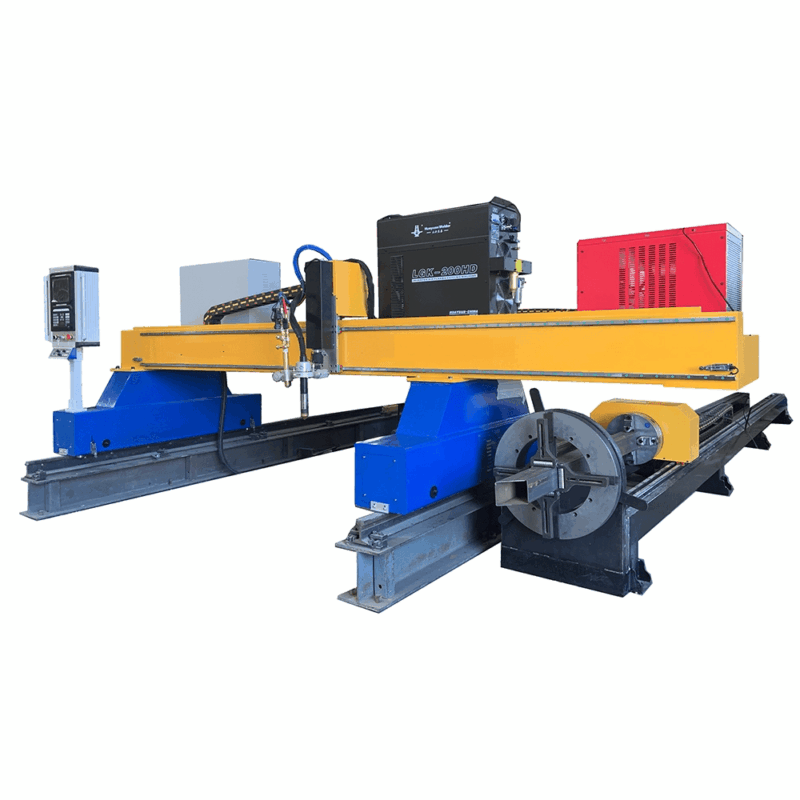
In the domain of heavy structural steel fabrication, the efficiency of an H-Beam Production Line is dictated by the precision of its primary cutting phase. Unlike plate processing, H-beams present complex three-dimensional challenges, including flange-to-web transitions and inherent mill tolerances. The implementation of Arc Voltage Control (AVC) has emerged as the definitive standard for managing these variables. By maintaining a constant distance between the plasma torch and the workpiece, AVC ensures that the thermal energy remains concentrated and consistent, regardless of the beam’s physical irregularities. This engineering approach eliminates the risks of dross accumulation and kerf inconsistency, which are common when dealing with uneven structural sections.
The Mechanics of Arc Voltage Control in 3D Environments
AVC operates on a closed-loop feedback principle. As the plasma torch moves across the H-beam, the system continuously monitors the electrical voltage of the arc. This voltage is directly proportional to the distance between the electrode and the metal surface. When the system detects a deviation—often caused by a warped flange or a slight twist in the beam—it triggers a high-speed Z-axis motor to adjust the torch height instantaneously.
For an industrial engineer, the value of AVC lies in its ability to negate mechanical variations without manual intervention. In an automated line, this leads to a significant reduction in setup time and scrap rates. The precision of the Z-axis response is critical when navigating the internal corners of an H-beam, where the torch must transition between the flange and the web without losing arc stability or gouging the base material.
Intersection Accuracy and Geometric Precision
One of the most demanding tasks in structural fabrication is the creation of complex intersections for bolted or welded joints. Intersection Accuracy refers to the system’s ability to execute precise cope cuts, blocks, and bolt holes that align perfectly during field assembly. Plasma Cutting systems equipped with multi-axis robotic arms utilize advanced path-planning algorithms to maintain the correct torch angle relative to the beam’s profile.
Managing Thermal Distortion and Path Deviation
During the cutting process, the localized heat input can cause minor material expansion. Advanced plasma lines compensate for this through synchronized motion control. By integrating the AVC data with the CNC trajectory, the machine ensures that the cut path remains true to the CAD model. This is particularly vital for seismic-rated structures where the fit-up of beams must meet stringent tolerance levels, often within +/- 1mm over the entire profile.
Achieving Precise Beveling for Joint Preparation
Structural integrity hinges on the quality of the joint preparation. Beveling Precision is a core requirement for H-beams that will be subjected to high-stress loads. Plasma systems allow for programmable bevel angles—typically ranging from 0 to 45 degrees—allowing for V, Y, and K-type preparations.
The advantage of using plasma for beveling over traditional mechanical milling is the speed and flexibility. With a multi-axis head, the system can perform a “single-pass” beveling operation. The AVC ensures that even during a beveled cut, where the distance to the plate changes across the width of the cut, the arc remains stabilized. This results in a smooth, slag-free surface that requires minimal grinding before the next stage of fabrication.
H-Beam Low Maintenance Engineering
Operational uptime is the primary KPI for any industrial production line. Modern plasma systems are designed with H-beam low maintenance requirements as a priority. Unlike mechanical saws or older thermal systems, modern plasma torches feature rapid-change consumables and robust shielding that protects the internal components from spatter and metallic dust.
Heavy-Duty Component Design
To withstand the vibration and environmental hazards of a steel mill, the motion gantry and rail systems are typically engineered with hardened linear guides and high-torque rack-and-pinion drives. The elimination of complex mechanical linkages in favor of direct-drive Z-axis actuators (integrated with the AVC) reduces the number of wear parts. Furthermore, the use of pressurized air filtration and specialized cooling systems ensures that the power source operates at a 100% duty cycle, even in high-ambient-temperature environments.
Consumable Life and Cost Control
Maintenance is also optimized through software-driven gas management. By precisely controlling the flow of oxygen, nitrogen, or shop air during the start and end of a cut, the system minimizes electrode wear. The AVC plays a role here as well; by preventing “torch crashes” against the workpiece, it protects the shield cap and nozzle from physical damage, extending the life of consumables by up to 30% compared to non-regulated systems.
Workflow Integration and Throughput Efficiency
Integrating a plasma cutting line with AVC into a broader H-beam production facility transforms the workflow from a series of disjointed tasks into a continuous flow. The ability to perform cutting, marking, and beveling on a single station reduces material handling—a significant cost driver in structural steel.
From an industrial engineering perspective, the reduction in secondary operations is the most compelling argument for high-end plasma systems. When intersection accuracy is achieved at the primary cutting stage, the time required for manual fitting and remedial grinding is virtually eliminated. This throughput efficiency allows fabricators to take on larger projects with shorter lead times, providing a significant competitive advantage in the global construction market.
Conclusion: The Technical Standard for Structural Steel
The synthesis of Arc Voltage Control and high-definition plasma technology has redefined the capabilities of H-beam production lines. By focusing on the mechanics of intersection accuracy and the durability of low-maintenance hardware, manufacturers can achieve a level of precision that was previously unattainable. As structural designs become more complex and tolerances tighter, the reliance on automated height control and multi-axis plasma cutting will only increase. For the industrial engineer, the focus remains clear: maximize uptime, minimize waste, and ensure that every cut meets the rigorous standards of modern structural engineering.
-


LT240S tube laser cutting machine
-
LT120S tube laser cutting machine
-
Sale

Tank Fillet Welding Machine
Original price was: $1,000.00.$900.00Current price is: $900.00. -
Sale

MAK100 tube laser cutting machine
Original price was: $5,500.00.$5,000.00Current price is: $5,000.00. -

portable plasma air cutting machine
$1,200.00 -

2in1 fiber laser cutting machine
-

Air cooling Laser welding machine
-

HF h beam laser cutting machine
-

LT240 laser cutting machine
-

Laser welding machine
-


Cobot Welding Station
-

Gantry welding robot solution
-

Tracked Wheeled AGV Welding robot
-

LFH6020 Fiber laser cutting machine
-
LFP6020
-

robotic welidng machine
Advanced Fiber Laser Tube Processing Technology
Our CNC Fiber Laser Tube Cutting systems revolutionize metal fabrication by integrating high-precision cutting, punching, and profiling into a single automated workflow. Designed for versatility, this technology handles a wide array of profiles including Round, Square, Rectangular, and Oval tubes, as well as complex L-shaped and U-shaped channels.
- Precision Punching: High-speed hole punching with micron-level accuracy, eliminating the need for mechanical drilling or die-stamping.
- Complex Profiling: Advanced 3D pathing allows for intricate interlocking joints and specialized notch cuts, ideal for structural frames.
- High Material Efficiency: Intelligent nesting software minimizes scrap, reducing raw material costs across large production runs.
- Clean Finish: Delivers oxide-free, burr-free edges that require zero secondary grinding before welding.

Seamlessly processing multiple profiles with consistent precision.
Global Delivery & Logistics



From our high-tech manufacturing facility directly to your global site. PCL WeldCut ensures secure packaging, professional handling, and reliable international logistics to safeguard your equipment throughout the entire journey.