Optimization of H-Beam Fabrication via Plasma Arc Voltage Control
In the construction of heavy-duty oil and gas tanks, the structural framework—specifically the H-beam support grillage and radial rafters—demands exceptional geometric accuracy. The transition from manual layout to automated Plasma Cutting has redefined the throughput capabilities of modern production lines. At the core of this evolution is the implementation of Arc Voltage Control (AVC). This technology functions as a closed-loop feedback mechanism that maintains a constant distance between the plasma torch tip and the workpiece, regardless of material warping or deviations in the H-beam surface profile.
For industrial engineers, the primary objective is to eliminate the variables that lead to rework. In the context of tank fabrication, where H-beams often exceed twelve meters in length, even a minor deviation in the web or flange flatness can compromise the cut quality. AVC systems monitor the electrical potential of the arc; as the distance between the torch and the steel fluctuates, the voltage changes. The controller instantaneously adjusts the Z-axis lifter to maintain the programmed standoff distance. This precision is vital for maintaining a consistent kerf width and minimizing the heat-affected zone (HAZ), which is critical for maintaining the metallurgical properties required in high-pressure environments.
Enhancing Intersection Accuracy in Complex Structural Frameworks
The intersection points where H-beams meet tank shells or other structural members are the most common failure points if fit-up is imprecise. Achieving intersection accuracy requires the seamless integration of multi-axis kinematics and real-time sensing. When cutting cope holes, notches, or circular penetrations through the web of an H-beam, the plasma system must account for the radius of the inner flange-to-web transition.
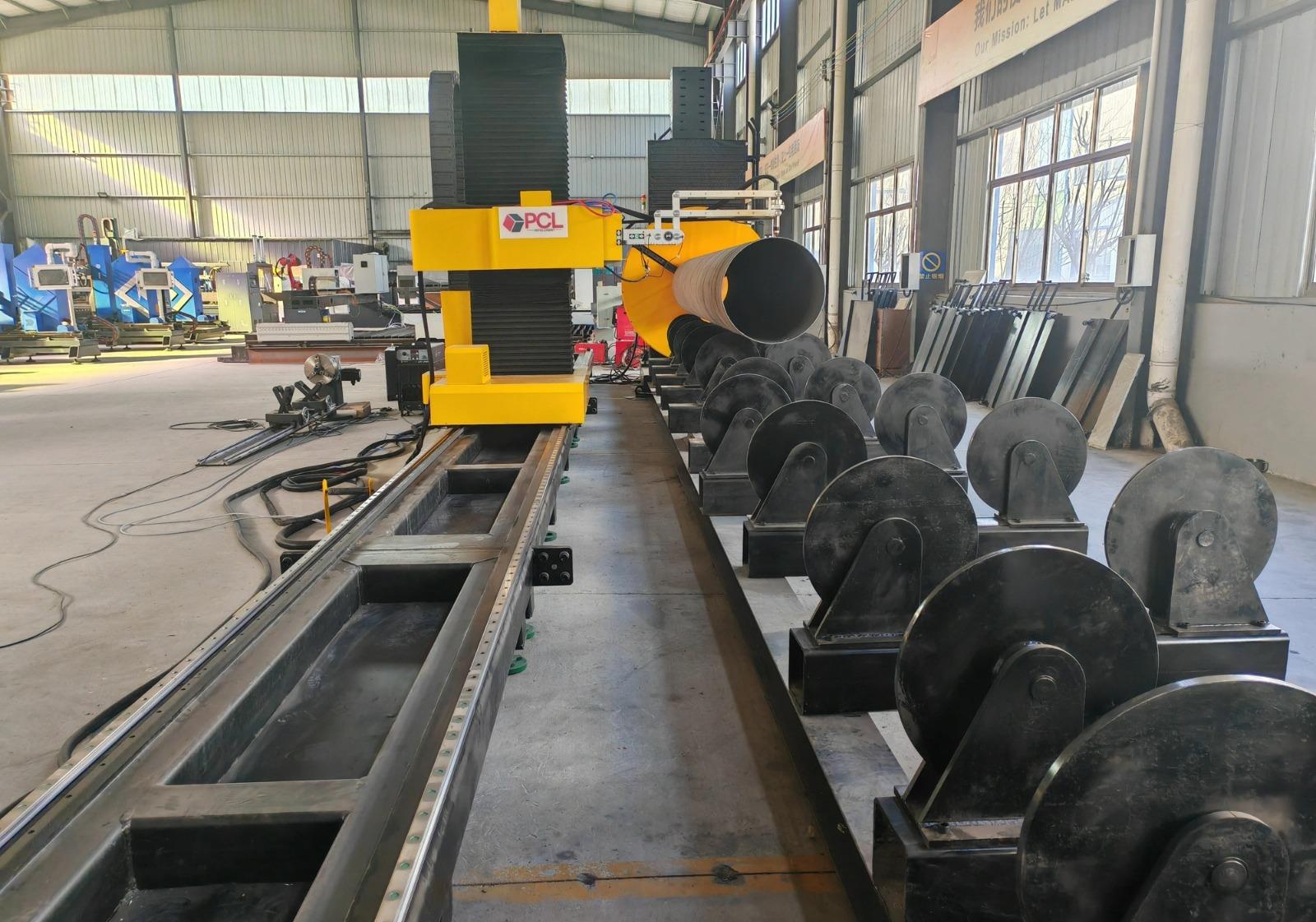
High-definition plasma systems, when paired with sophisticated nesting software, allow for the calculation of complex 3D paths. However, the physical reality of structural steel involves rolling tolerances. AVC ensures that as the torch traverses from the flat surface of the web toward the curved transition zone, the arc remains stable. This prevents the “rounding” of corners and ensures that the mating surfaces require zero manual grinding before assembly. For oil and gas tanks, where structural stability is non-negotiable, the ability to produce tight-tolerance intersections directly translates to higher load-bearing capacities and reduced stress concentrations at the joints.
The Mechanical Advantage: Low Maintenance Operations
Operational uptime is a key metric in heavy industrial environments. One of the significant advantages of plasma-based H-beam lines is the H-beam low maintenance profile compared to traditional mechanical cutting or drilling methods. Mechanical saws and drills suffer from tool wear, requiring frequent replacement of blades and bits, which introduces downtime and variability in cut quality. Plasma cutting, being a non-contact thermal process, eliminates the mechanical stresses placed on the machine gantry.
The maintenance lifecycle of a modern plasma station is centered around consumables—nozzles, electrodes, and swirl rings. These components are designed for rapid exchange, often taking less than two minutes to replace. Furthermore, the absence of high-torque mechanical forces means that the alignment of the H-beam transport conveyors and the cutting gantry remains stable over longer periods. For oil and gas projects located in remote regions or operating under tight commissions, the reliability of a thermal cutting system reduces the need for specialized on-site mechanical repair teams, ensuring that the production line meets daily linear footage targets consistently.
Automated Beveling for High-Integrity Weld Preparation
The integrity of oil and gas storage tanks depends heavily on the quality of the welds connecting the support beams. Standard square cuts are rarely sufficient for the thick-walled sections used in these applications. Beveling is a mandatory requirement to facilitate full-penetration welds. Integrating a 5-axis or 6-axis robotic plasma head into the H-beam line allows for the execution of V, Y, X, and K-shaped bevels in a single pass.
The challenge with beveling H-beams is the varying thickness and the angle of approach. As the torch tilts to create a bevel, the effective thickness of the material increases, and the distance from the torch to the material becomes harder to manage manually. Here, AVC is indispensable. It compensates for the change in arc length caused by the tilt angle, ensuring that the bevel face remains uniform across the entire length of the cut. This uniformity is crucial for automated welding systems that follow the plasma cutting stage; if the bevel angle or depth fluctuates, the weld bead will be inconsistent, potentially leading to ultrasonic testing (UT) failures.
Technical Integration of Material Handling and Thermal Cutting
An efficient H-Beam Production Line for tank components must treat material handling and cutting as a singular synchronized process. The use of laser-based cross-section measurement systems at the entry point of the line allows the plasma controller to “know” the exact dimensions of the specific beam being processed. This data is fed into the AVC logic, allowing for predictive height adjustments.
In the oil and gas industry, where materials such as carbon steel (ASTM A36 or A572) are standard, the plasma system must also manage dross accumulation. High-speed plasma gas flow, synchronized with the movement of the gantry, ensures that the slag is blown clear of the bottom flange. This “clean cut” capability is a result of optimized feed rates and precise arc voltage settings. When the dross is minimized, the post-cutting cleanup is reduced to a light brush, further streamlining the workflow from the fabrication shop to the field erection site.
Strategic Impact on Project Timelines and Safety
The cumulative effect of high intersection accuracy, reduced maintenance, and automated beveling is a significant compression of project timelines. In the tank farm sector, delays in structural skeletons can stall the entire project. By utilizing plasma technology with robust AVC, engineers can guarantee a “first-time-right” approach to fabrication. This precision also has a direct correlation with safety. Accurately cut components fit together without the need for forced alignment using heavy machinery, reducing the risk of accidents during the fit-up phase on-site.
Furthermore, the data logging capabilities of modern plasma controllers allow for 100% traceability of the cutting parameters for every beam processed. This documentation is often a requirement for quality assurance in the oil and gas industry, providing proof that the thermal cutting process stayed within the specified parameters to avoid excessive hardening of the edges or other metallurgical defects. The result is a robust, efficient, and highly predictable production environment tailored for the most demanding structural challenges.
Summary of Engineering Benefits
The deployment of Arc Voltage Control in H-beam plasma lines represents a critical move toward total process control. By prioritizing the stability of the plasma arc, manufacturers can achieve the complex geometries required for oil and gas tanks while maintaining a lean maintenance schedule. The synergy between high-definition thermal cutting and intelligent Z-axis management ensures that every H-beam produced meets the highest standards of accuracy and structural reliability.
-


LT240S tube laser cutting machine
-
LT120S tube laser cutting machine
-
Sale

Tank Fillet Welding Machine
Original price was: $1,000.00.$900.00Current price is: $900.00. -
Sale

MAK100 tube laser cutting machine
Original price was: $5,500.00.$5,000.00Current price is: $5,000.00. -

portable plasma air cutting machine
$1,200.00 -

2in1 fiber laser cutting machine
-

Air cooling Laser welding machine
-

HF h beam laser cutting machine
-

LT240 laser cutting machine
-

Laser welding machine
-


Cobot Welding Station
-

Gantry welding robot solution
-

Tracked Wheeled AGV Welding robot
-

LFH6020 Fiber laser cutting machine
-
LFP6020
-

robotic welidng machine
Advanced Fiber Laser Tube Processing Technology
Our CNC Fiber Laser Tube Cutting systems revolutionize metal fabrication by integrating high-precision cutting, punching, and profiling into a single automated workflow. Designed for versatility, this technology handles a wide array of profiles including Round, Square, Rectangular, and Oval tubes, as well as complex L-shaped and U-shaped channels.
- Precision Punching: High-speed hole punching with micron-level accuracy, eliminating the need for mechanical drilling or die-stamping.
- Complex Profiling: Advanced 3D pathing allows for intricate interlocking joints and specialized notch cuts, ideal for structural frames.
- High Material Efficiency: Intelligent nesting software minimizes scrap, reducing raw material costs across large production runs.
- Clean Finish: Delivers oxide-free, burr-free edges that require zero secondary grinding before welding.

Seamlessly processing multiple profiles with consistent precision.
Global Delivery & Logistics



From our high-tech manufacturing facility directly to your global site. PCL WeldCut ensures secure packaging, professional handling, and reliable international logistics to safeguard your equipment throughout the entire journey.