Optimizing H-Beam Production Line Throughput via 5-Axis Plasma Kinematics
In the fabrication of construction machinery, structural integrity relies on the geometric precision of the load-bearing skeleton. The H-beam production line has evolved from simple linear cutting to sophisticated multi-axis processing centers. For heavy equipment like excavators, cranes, and chassis frames, the transition to 5-axis plasma technology addresses the critical need for complex bevel profiles and high-tolerance intersections. Unlike traditional methods that require manual layout and torching, automated plasma systems integrate CNC precision directly into the material flow, ensuring that every flange and web cut meets stringent engineering specifications.
High-Definition Plasma and Intersection Accuracy
The primary challenge in H-beam processing for Construction Machinery is the management of intersection accuracy. When beams meet at non-orthogonal angles or require complex saddle cuts to wrap around other structural members, the fit-up tolerance becomes a bottleneck. 5-axis plasma systems utilize advanced algorithms to compensate for the plasma arc’s natural taper, ensuring that the cut face remains perpendicular or at the precise bevel angle required across the entire thickness of the steel.
Kinematic Precision in Torch Manipulation
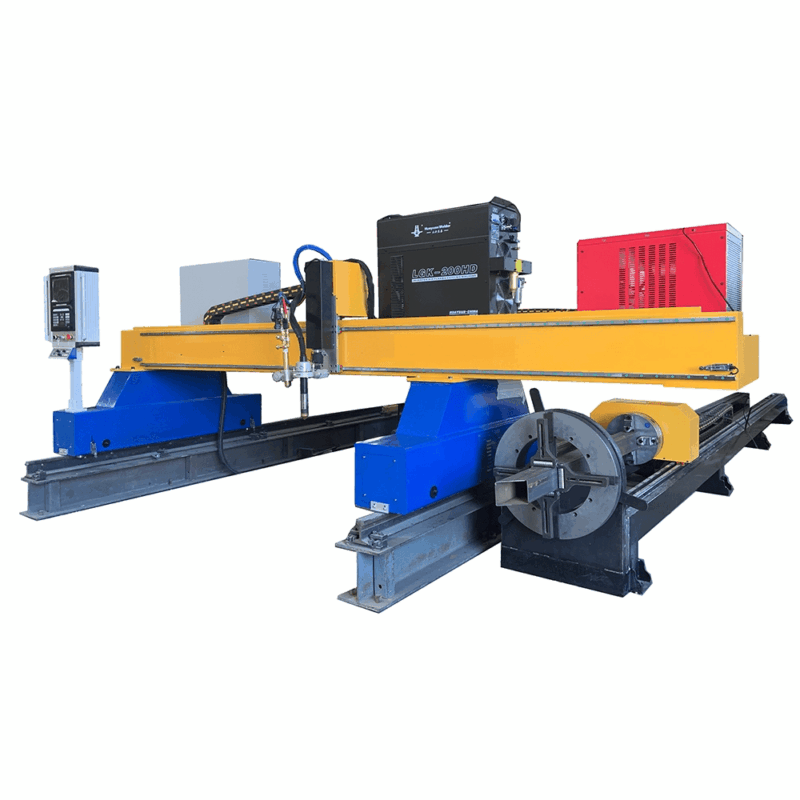
A 5-axis head provides three linear axes (X, Y, Z) and two rotational axes (A, B). This articulation allows the plasma torch to maintain an optimal standoff distance while tilting to create V, Y, X, and K bevels. In a high-volume production environment, the CNC controller calculates real-time compensation for the kerf width, which varies depending on the cutting speed and gas pressure. By maintaining a tight tolerance on the intersection points, engineers can ensure that the structural load distribution across the H-beam remains consistent with the FEA (Finite Element Analysis) models used during the design phase.
Advancements in 5-Axis Beveling for Heavy Structures
Construction machinery components often feature thick-walled H-beams that require deep beveling for full-penetration structural joints. 5-axis beveling technology allows for the simultaneous cutting and chamfering of beam ends and web holes. This eliminates the need for secondary processing stations, reducing the total “part-to-part” cycle time.
Kerf and Angle Compensation Strategies
Modern plasma power sources, integrated with 5-axis motion control, utilize specialized software to manage “arc tilt” errors. As the torch tilts to achieve a 45-degree bevel, the plasma stream tends to lag behind the torch head. Advanced motion planners anticipate this lag, adjusting the feed rate and rotational velocity to ensure the bevel angle remains constant throughout the cut, even when navigating tight radii or corners. This level of control is essential for the heavy-duty frames found in mining and earth-moving equipment.
Mechanical Reliability and H-Beam Low Maintenance
From an industrial engineering perspective, the uptime of a production line is as important as its precision. Plasma systems are favored in heavy structural environments due to their H-beam low maintenance profile. Unlike mechanical shearing or drilling, Plasma Cutting is a non-contact process, which significantly reduces the stress on the machine’s gantry and drive systems.
Durability of Plasma Consumables and Components
The maintenance schedule for a plasma-based H-beam line is predictable and manageable. The primary wear items are limited to the nozzle, electrode, and shield cap. Modern high-definition systems feature “quick-change” torch designs that minimize downtime during consumable replacement. Furthermore, the absence of complex optical paths or delicate vibration-sensitive components makes plasma systems inherently robust against the dust, heat, and vibration typical of heavy fabrication shops.
System Longevity in Harsh Environments
To ensure long-term operational efficiency, H-beam lines are equipped with heavy-duty rack-and-pinion drives and localized dust extraction. The mechanical simplicity of a plasma torch—essentially a copper housing for ionized gas—means there are fewer failure points compared to mechanical cutting tools that suffer from tool wear, breakage, and the need for constant lubrication. This reliability ensures that the production line can maintain a high duty cycle, often operating across multiple shifts without significant degradation in cut quality.
Data-Driven Production and SEO Integration
Integrating a 5-axis plasma system into the H-beam workflow allows for seamless data flow from CAD/CAM software to the shop floor. Standard file formats like DSTV or STEP are processed by nesting engines that optimize material utilization, reducing scrap rates in the fabrication of large-scale construction machinery components.
Thermal Management and HAZ Considerations
While plasma is a thermal cutting process, modern high-speed plasma systems limit the Heat Affected Zone (HAZ) by concentrating the arc energy into a narrow column. In the context of H-beams for construction machinery, minimizing the HAZ is vital for maintaining the metallurgical properties of high-strength low-alloy (HSLA) steels. By optimizing the cutting speed and gas flow through the 5-axis head, the system achieves a clean, dross-free edge that requires no additional grinding before the beam is moved to the next stage of the assembly process.
Conclusion: Engineering the Future of Heavy Fabrication
The deployment of a 5-axis plasma beveling system within an H-beam production line represents a strategic investment in accuracy and operational stability. By focusing on the mechanics of the cut—ensuring high intersection accuracy while capitalizing on the low maintenance requirements of plasma hardware—manufacturers can significantly increase their throughput. For the construction machinery industry, where equipment must withstand extreme fatigue and loading, the precision of the plasma-cut bevel is the foundation of structural integrity.
-


LT240S tube laser cutting machine
-
LT120S tube laser cutting machine
-
Sale

Tank Fillet Welding Machine
Original price was: $1,000.00.$900.00Current price is: $900.00. -
Sale

MAK100 tube laser cutting machine
Original price was: $5,500.00.$5,000.00Current price is: $5,000.00. -

portable plasma air cutting machine
$1,200.00 -

2in1 fiber laser cutting machine
-

Air cooling Laser welding machine
-

HF h beam laser cutting machine
-

LT240 laser cutting machine
-

Laser welding machine
-


Cobot Welding Station
-

Gantry welding robot solution
-

Tracked Wheeled AGV Welding robot
-

LFH6020 Fiber laser cutting machine
-
LFP6020
-

robotic welidng machine
Advanced Fiber Laser Tube Processing Technology
Our CNC Fiber Laser Tube Cutting systems revolutionize metal fabrication by integrating high-precision cutting, punching, and profiling into a single automated workflow. Designed for versatility, this technology handles a wide array of profiles including Round, Square, Rectangular, and Oval tubes, as well as complex L-shaped and U-shaped channels.
- Precision Punching: High-speed hole punching with micron-level accuracy, eliminating the need for mechanical drilling or die-stamping.
- Complex Profiling: Advanced 3D pathing allows for intricate interlocking joints and specialized notch cuts, ideal for structural frames.
- High Material Efficiency: Intelligent nesting software minimizes scrap, reducing raw material costs across large production runs.
- Clean Finish: Delivers oxide-free, burr-free edges that require zero secondary grinding before welding.

Seamlessly processing multiple profiles with consistent precision.
Global Delivery & Logistics



From our high-tech manufacturing facility directly to your global site. PCL WeldCut ensures secure packaging, professional handling, and reliable international logistics to safeguard your equipment throughout the entire journey.