Field Engineering Report: Implementation of Water-Cooled Collaborative Arc Welding Systems
Project Overview: Illinois Fabrication Facility
This report details the operational deployment and performance evaluation of a water-cooled Collaborative Arc Welding System within a high-output aerospace and chemical processing component facility located in Rockford, Illinois. The primary objective was to transition critical-path components from manual GTAW (Gas Tungsten Arc Welding) to a semi-autonomous environment. Unlike traditional fixed-cell robots, the integration of Automated Welding through collaborative platforms allows for a smaller footprint and rapid repositioning—essential for the diverse product mix handled at this site.
The Midwestern industrial environment presents unique challenges, specifically high ambient humidity during summer months and significant temperature fluctuations within the shop floor. These variables directly impact gas shielding integrity and thermal dissipation. Our focus remained on the high-precision requirements of Titanium welding, where thermal management is not merely a preference but a metallurgical necessity to prevent interstitial contamination.
1. Technical Configuration: The Collaborative Arc Welding System
The system deployed utilizes a 6-axis collaborative arm integrated with a high-capacity water-cooling circuit. In traditional Automated Welding, air-cooled torches often suffice for carbon steel; however, when dealing with the high-duty cycles required for complex geometries, air cooling fails to maintain the dimensional stability of the contact tip. For Titanium welding, any fluctuation in the torch’s internal temperature can lead to erratic arc characteristics and premature consumable failure.
1.1 Water-Cooling Integration
We integrated a closed-loop chiller capable of maintaining a constant 18°C coolant temperature. This is critical for the Collaborative Arc Welding System because the cobot’s joints are sensitive to conductive heat transfer from the torch. By utilizing a water-cooled neck, we effectively decoupled the thermal load of the 250A arc from the cobot’s sensors, ensuring that positional accuracy (repeatability of ±0.05mm) was maintained over an eight-hour shift.
1.2 End-of-Arm Tooling (EOAT) for Titanium
The torch setup included a custom-engineered trailing shield. In the Illinois workshop, we found that standard shielding was insufficient for the long-seam Titanium welding required on pressure vessels. The Collaborative Arc Welding System was programmed to maintain a lead-lag angle that accommodated the bulk of the trailing shield without triggering “singularity” errors in the arm’s kinematics. This synergy between hardware and software is what separates modern Automated Welding from the rigid systems of the past decade.
2. Synergy Between Automation and Collaboration
A common misconception in the field is that a Collaborative Arc Welding System is simply a slower version of a heavy industrial robot. Our findings in Illinois disprove this. The synergy lies in the “Augmented Operator” model.
2.1 Transitioning to Automated Welding
In this application, Automated Welding does not imply the absence of a welder. Instead, the welder transitions into a “Welding Technician” who manages the Collaborative Arc Welding System. During the field test, we observed that by automating the torch path, we eliminated the “human tremor” and “fatigue-induced arc length variation” that typically plagues manual Titanium welding. The automation handles the consistency of the travel speed (crucial for controlling the Heat Affected Zone), while the technician manages the real-time gas flow adjustments and monitors the weld pool via a high-dynamic-range (HDR) camera.
2.2 Real-World Path Programming
Using the lead-through teaching method, we reduced the setup time for a complex flange-to-pipe weld from four hours (traditional CNC programming) to 15 minutes. This flexibility is the hallmark of the Collaborative Arc Welding System. In an Illinois job shop where batch sizes are often less than 50 units, the ability to pivot the Automated Welding parameters quickly is the only way to maintain a positive ROI.
3. Metallurgical Considerations in Titanium Welding
Titanium’s high reactivity with oxygen, nitrogen, and hydrogen at temperatures above 800°F (427°C) makes it the most difficult material to manage in an Automated Welding environment. Our field report indicates that the primary failure point in many systems is not the weld itself, but the cooling rate.
3.1 Managing the Heat Affected Zone (HAZ)
With the water-cooled Collaborative Arc Welding System, we were able to run higher current densities while maintaining a narrow HAZ. This is paradoxical but true: by moving faster with a stable, high-energy arc—enabled by the precision of Automated Welding—we actually reduced the total heat input into the base material. The water-cooled torch body acted as a secondary heat sink, preventing the “heat soak” that often leads to straw-colored or blue oxidation on the backside of the titanium plate.
3.2 Shielding Gas Logistics
In our Illinois tests, we utilized Grade 5.0 Argon. The Collaborative Arc Welding System was synchronized with a digital flow meter. One “lesson learned” was the impact of the shop’s HVAC system on the shielding envelope. Even with Automated Welding, external drafts can ruin a titanium weld. We had to implement “soft curtains” around the cobot cell to ensure the laminar flow from the oversized gas lens was not disturbed. This is a practical field reality often missed in laboratory white papers.
4. Lessons Learned and Practical Field Adjustments
After 500 hours of operation, several technical adjustments were made to the Collaborative Arc Welding System to optimize the output of Titanium welding components.
4.1 Torch Lead Calibration
Initially, we experienced intermittent arc wandering. The root cause was identified as electromagnetic interference (EMI) from the high-frequency start of the welder affecting the cobot’s communication bus. We resolved this by upgrading to double-shielded control cables and ensuring the Automated Welding power source was grounded to a dedicated copper rod driven into the Illinois limestone substrate beneath the shop floor.
4.2 Consumable Life in Water-Cooled Systems
The use of a water-cooled torch significantly extended the life of the thoriated tungsten electrodes. In manual Titanium welding, the electrode is often changed every 2-3 passes due to accidental dipping or overheating. In the Automated Welding setup, we achieved 50+ passes before needing a regrind. This directly contributes to the system’s “arc-on” time, which jumped from 30% in manual operations to 75% with the Collaborative Arc Welding System.
4.3 Software Sensitivity
We adjusted the “collision detection” sensitivity of the cobot. When Titanium welding, the addition of a heavy trailing shield and water lines increases the inertia of the EOAT. We had to recalibrate the force-torque sensors to prevent “nuisance trips” while still maintaining the safety protocols that define a Collaborative Arc Welding System.
5. Conclusion on System Synergy
The deployment in Illinois proves that the integration of a Collaborative Arc Welding System into a Titanium welding workflow is not just about labor replacement—it is about process capability. The precision of Automated Welding allows for tighter tolerances and thinner gauge titanium to be welded without burn-through or excessive warping.
For senior engineers looking to replicate these results, the priority must be on the “Interface.” The interface between the water-cooling circuit and the torch, the interface between the operator and the cobot, and the interface between the shielding gas and the atmospheric conditions of the workshop. When these are aligned, the Collaborative Arc Welding System becomes an unbeatable tool for high-spec alloy fabrication.
Field Recommendations:
- Always utilize a dedicated chiller for water-cooled torches in Automated Welding to avoid shop-water contaminants.
- Implement real-time data logging for gas flow and travel speed to ensure Titanium welding traceability for aerospace audits.
- Train manual welders on the Collaborative Arc Welding System interface to leverage their existing knowledge of weld pool aesthetics.
Report End.
-


LT240S tube laser cutting machine
-
LT120S tube laser cutting machine
-
Sale

Tank Fillet Welding Machine
Original price was: $1,000.00.$900.00Current price is: $900.00. -
Sale

MAK100 tube laser cutting machine
Original price was: $5,500.00.$5,000.00Current price is: $5,000.00. -

portable plasma air cutting machine
$1,200.00 -

2in1 fiber laser cutting machine
-

Air cooling Laser welding machine
-

HF h beam laser cutting machine
-

LT240 laser cutting machine
-

Laser welding machine
-


Cobot Welding Station
-

Gantry welding robot solution
-

Tracked Wheeled AGV Welding robot
-

LFH6020 Fiber laser cutting machine
-
LFP6020
-

robotic welidng machine
Advanced Fiber Laser Tube Processing Technology
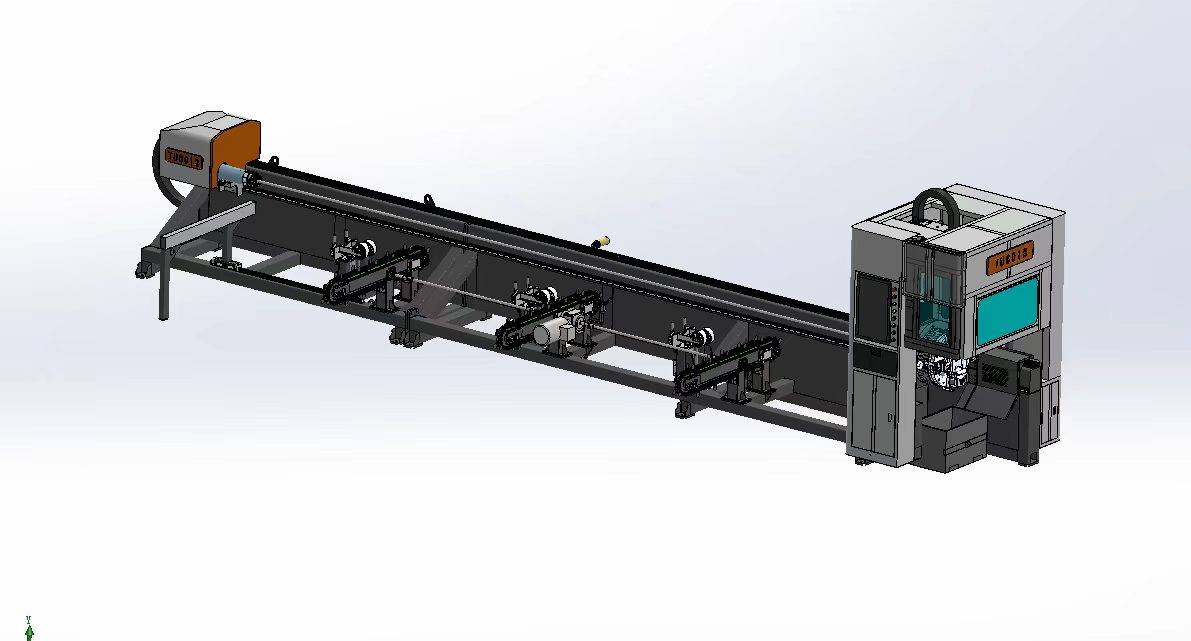
Our CNC Fiber Laser Tube Cutting systems revolutionize metal fabrication by integrating high-precision cutting, punching, and profiling into a single automated workflow. Designed for versatility, this technology handles a wide array of profiles including Round, Square, Rectangular, and Oval tubes, as well as complex L-shaped and U-shaped channels.
- Precision Punching: High-speed hole punching with micron-level accuracy, eliminating the need for mechanical drilling or die-stamping.
- Complex Profiling: Advanced 3D pathing allows for intricate interlocking joints and specialized notch cuts, ideal for structural frames.
- High Material Efficiency: Intelligent nesting software minimizes scrap, reducing raw material costs across large production runs.
- Clean Finish: Delivers oxide-free, burr-free edges that require zero secondary grinding before welding.

Seamlessly processing multiple profiles with consistent precision.
Global Delivery & Logistics



From our high-tech manufacturing facility directly to your global site. PCL WeldCut ensures secure packaging, professional handling, and reliable international logistics to safeguard your equipment throughout the entire journey.