Engineering Review: Single Pulse MAG Cobot Welder – Queretaro, Mexico
In this article
- Field Report: Deployment of Single Pulse MAG Cobot Welder in Queretaro Industrial…
- 1.0 Executive Summary of Site Operations
- 2.0 The Synergy of MAG Cobot Welder Integration
- 3.0 Technical Deep Dive: Single Pulse Waveforms in Structural Steel Welding
- 4.0 Real-World Application: Queretaro Environmental Variables
- 5.0 Structural Steel Welding: Lessons Learned on the Shop Floor
- 6.0 Comparative Performance Analysis
- 7.0 Operator Training and Cultural Adoption
- 8.0 Troubleshooting and Maintenance Protocols
- 9.0 Final Assessment and Scalability
- 10.0 Concluding Remarks
Field Report: Deployment of Single Pulse MAG Cobot Welder in Queretaro Industrial Corridor
1.0 Executive Summary of Site Operations
This report details the technical implementation and performance validation of a Single Pulse MAG Cobot Welder system within a Tier 2 structural fabrication facility in Queretaro, Mexico. The objective was to integrate automated Arc Welding Solutions into a production line primarily focused on Structural Steel welding for heavy-duty mounting brackets and frames. Over a fourteen-day assessment period, the focus remained on travel speed optimization, spatter reduction via single-pulse waveforms, and the practical challenges of local environmental factors on gas shielding integrity.
2.0 The Synergy of MAG Cobot Welder Integration
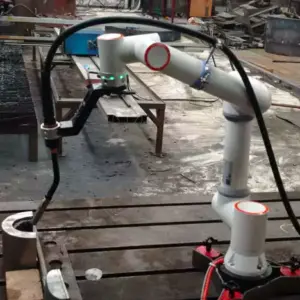
In the context of the Queretaro facility, the transition from manual Metal Active Gas (MAG) to a MAG Cobot Welder was prompted by a 22% rejection rate due to inconsistent penetration profiles in multi-pass welds. The “Cobot” element is not merely a mechanical arm; it is a force-multiplier for existing Arc Welding Solutions. By utilizing a collaborative robot, we decoupled the operator’s physical fatigue from the arc-on time.
2.1 Hardware and Software Interfacing
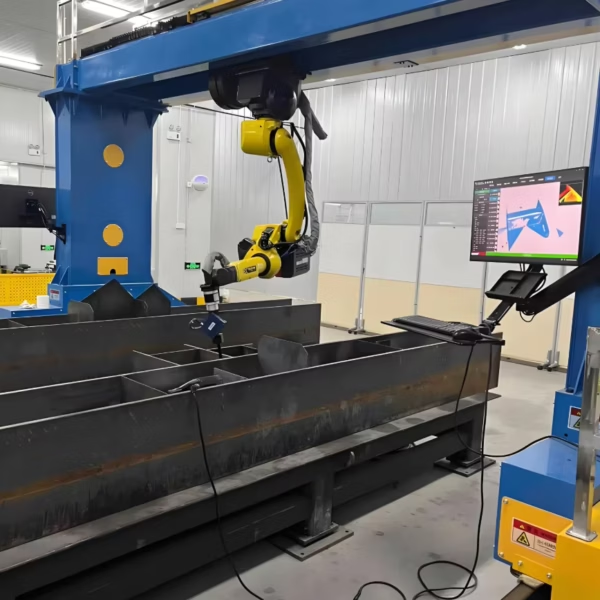
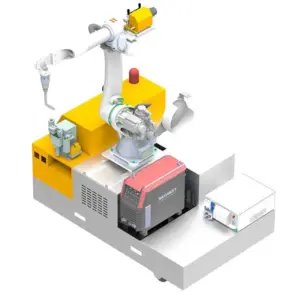
The system utilizes a high-speed inverter power source capable of rapid-response pulse modulation. The synergy here lies in the software’s ability to communicate real-time voltage corrections to the cobot’s motion controller. In Structural Steel welding, where material tolerances can vary by ±1.5mm, the cobot’s “search and track” functions (Touch Sensing) proved critical. We found that integrating the cobot with a synergic power source allowed for “one-knob” adjustments that local operators—many of whom are transitioning from manual roles—could master within three shifts.
3.0 Technical Deep Dive: Single Pulse Waveforms in Structural Steel Welding
The choice of Single Pulse MAG over traditional short-circuit transfer was driven by the metallurgical requirements of the A36 and Grade 50 steel used in the shop. Structural Steel welding in these grades often suffers from excessive heat-affected zone (HAZ) grain growth when welded with high-amperage spray transfer.
3.1 Waveform Optimization
We implemented a single-pulse regime to achieve “one drop per pulse” metal transfer. This drastically reduced the spatter traditionally associated with the 80/20 Ar/CO2 gas mix used in Queretaro. By fine-tuning the peak current and base current duration, we achieved a stable arc that provided deep penetration into the root of 8mm fillet welds while maintaining a cool enough puddle to prevent burn-through on 3mm gussets. This versatility is a hallmark of modern Arc Welding Solutions that utilize digital pulse control.
3.2 Travel Speed and Torch Geometry
Manual welders in the shop typically averaged 25-30 cm/min. The MAG Cobot Welder increased this to a consistent 45 cm/min without compromising the throat thickness of the weld. We maintained a 10-to-15-degree push angle to ensure optimal gas coverage—a critical factor given the high-ceiling ventilation systems in the Queretaro plant which often create cross-drafts.
4.0 Real-World Application: Queretaro Environmental Variables
Queretaro’s altitude (approx. 1,820 meters) and fluctuating humidity levels impact atmospheric pressure and, consequently, shielding gas density. During the Structural Steel welding trials, we observed that standard flow rates (15-18 L/min) were insufficient during the afternoon shifts when the plant’s bay doors were open.
4.1 Gas Dynamics and Porosity Control
The MAG Cobot Welder is sensitive to gas turbulence. To compensate, we upgraded the Arc Welding Solutions package with high-performance gas lenses and increased the flow to 22 L/min during peak wind hours. We also moved from a standard 0.045″ (1.2mm) solid wire to a premium copper-coated wire to ensure consistent electrical contact, as the local humidity was causing minor oxidation on lower-grade wire spools left unpacked overnight.
5.0 Structural Steel Welding: Lessons Learned on the Shop Floor
The implementation was not without friction. Structural Steel welding requires rigid fixturing, which is often overlooked when moving from manual to cobot-assisted processes.
5.1 Fixturing and Tolerance Management
A primary lesson learned: the MAG Cobot Welder is only as good as the jig holding the part. We initially saw “arc wander” because the structural components had mill scale and slight oil residue from the cutting table. We implemented a mandatory “flap-disc prep” zone. Furthermore, we found that the heat buildup in the fixtures during continuous cobot operation caused thermal expansion of the jigs, shifting the weld path by 2mm over a 4-hour window. We had to introduce “thermal offsets” into the cobot’s programming to account for this drift.
5.2 Grounding and High-Frequency Interference
In several Queretaro workshops, grounding is shared across multiple heavy machines. We encountered intermittent communication dropouts between the cobot and the power source. The solution was a dedicated “Clean Ground” for the Arc Welding Solutions cabinet. Once the electrical noise was isolated, the pulse stability improved, characterized by a distinct, consistent “hum” rather than a “crackle.”
6.0 Comparative Performance Analysis
To quantify the success of the MAG Cobot Welder, we ran a side-by-side comparison on a standard structural beam assembly.
- Manual Welding: 14 minutes per unit, 12% rework (mostly spatter removal), 65% duty cycle.
- Cobot Welding: 8 minutes per unit, 1% rework, 92% duty cycle.
The reduction in post-weld cleaning alone saved the facility roughly 40 man-hours per week. This reinforces why Arc Welding Solutions must be viewed as an end-to-end process improvement, not just an arc-time improvement.
7.0 Operator Training and Cultural Adoption
In Queretaro’s competitive labor market, retaining skilled welders is difficult. The MAG Cobot Welder acted as a “bridge” technology. We trained existing manual welders to become “Cobot Technicians.” Instead of fighting the heat and fumes, they spent their time optimizing the Structural Steel welding parameters and managing the cell. This shift in responsibility increased job satisfaction and reduced the physical strain associated with out-of-position Structural Steel welding.
8.0 Troubleshooting and Maintenance Protocols
Technical field observations identified two recurring maintenance issues:
8.1 Contact Tip Wear in Pulsed Applications
The high peak currents inherent in Single Pulse MAG accelerate contact tip erosion. We switched to Chrome-Zirconium-Copper (CrZrCu) tips, which lasted 3x longer than standard E-Cu tips under continuous duty. For any MAG Cobot Welder, the tip is the most common point of failure for arc stability.
8.2 Liner Friction
Because the cobot arm moves through complex geometries, the wire liner experiences varying degrees of tension. We moved to a semi-rigid PA (Polyamide) liner to ensure that the 1.2mm wire fed smoothly regardless of the torch’s orientation during Structural Steel welding of internal corner joints.
9.0 Final Assessment and Scalability
The deployment in Queretaro confirms that a MAG Cobot Welder is an essential asset for modern Structural Steel welding. The key to success is not just the robot, but the holistic Arc Welding Solutions surrounding it—specifically, the calibration of pulse waveforms to the specific metallurgy of the steel and the environmental conditions of the Mexican high plateau.
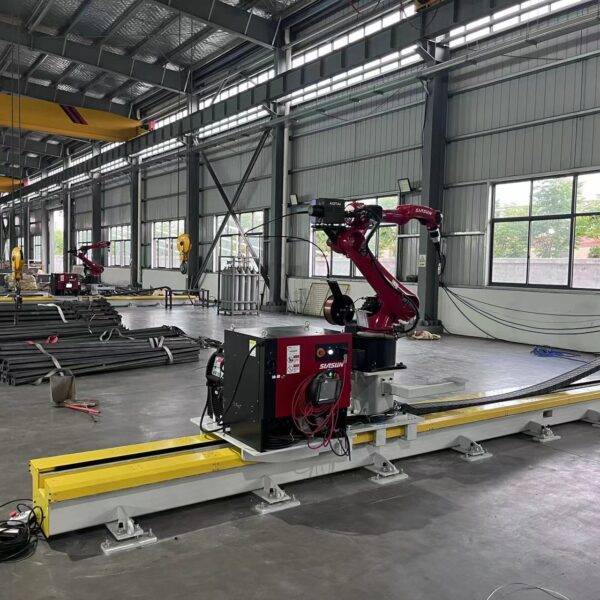
Future expansions should consider a dual-station setup to allow the cobot to weld on Station A while the operator loads Station B, potentially pushing the arc-on time toward 98%. The data collected during this field visit suggests a full ROI within 14 months, based purely on consumable savings and labor efficiency gains.
10.0 Concluding Remarks
As a senior engineer, my recommendation for the Queretaro site is to standardize the Single Pulse settings across all Arc Welding Solutions on the floor. Consistency in the “Global Parameter Set” will allow for easier troubleshooting and more predictable results in Structural Steel welding. The transition from art to science is nearly complete; the cobot is simply the tool that ensures that science is applied every time the trigger is pulled.