Engineering Review: Single Pulse MAG Cobot Welder – Cape Town, South Africa
In this article
- Field Engineering Report: Implementation of Single-Pulse MAG Cobot Welder in Cape Town…
- 1.0 Project Overview and Site Context
- 2.0 Technical Specification: The MAG Cobot Welder
- 3.0 Synergy: Integrating Arc Welding Solutions
- 4.0 Thick Plate Steel Welding: Challenges and Parameters
- 5.0 Field Lessons: The Cape Town Environment
- 6.0 Quality Assurance and Metallurgical Results
- 7.0 Conclusion: The Future of Fabrication in the Western Cape
Field Engineering Report: Implementation of Single-Pulse MAG Cobot Welder in Cape Town Structural Fabrication
1.0 Project Overview and Site Context
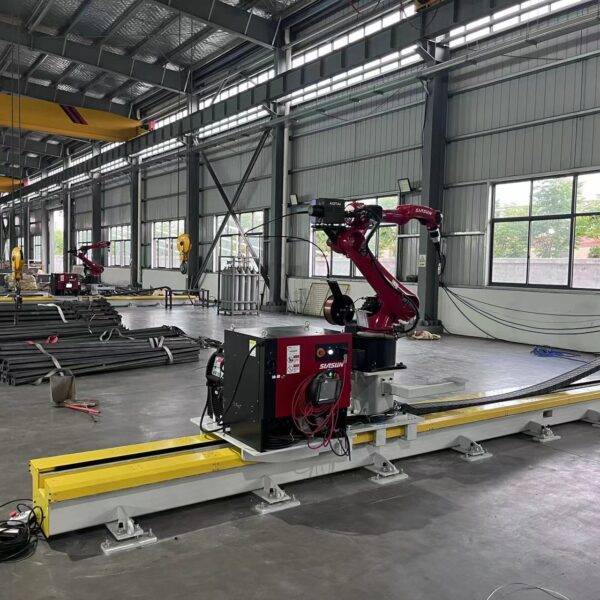
This report details the technical deployment and performance evaluation of a Single-Pulse MAG Cobot Welder system at a heavy engineering facility in Paarden Eiland, Cape Town. The primary objective was the transition from manual Gas Metal Arc Welding (GMAW) to an automated collaborative framework to address high-volume Thick Plate Steel welding requirements for marine-grade structural components.
The Cape Town industrial environment presents unique challenges, specifically high ambient humidity and the “Cape Doctor” seasonal winds, which necessitate stringent shielding gas management. Furthermore, the local industry faces a critical shortage of Category A coded welders capable of maintaining consistent 1G/2G positions over extended shifts. This project sought to bridge that gap by implementing integrated Arc Welding Solutions that combine high-deposition power sources with 6-axis collaborative robotic precision.
2.0 Technical Specification: The MAG Cobot Welder
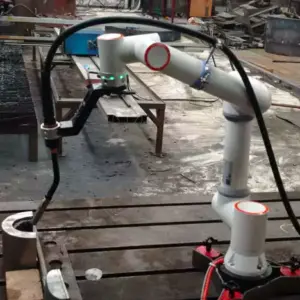
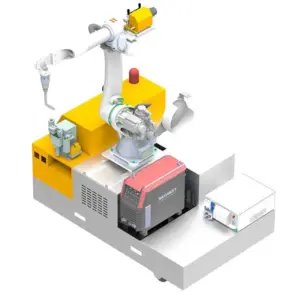
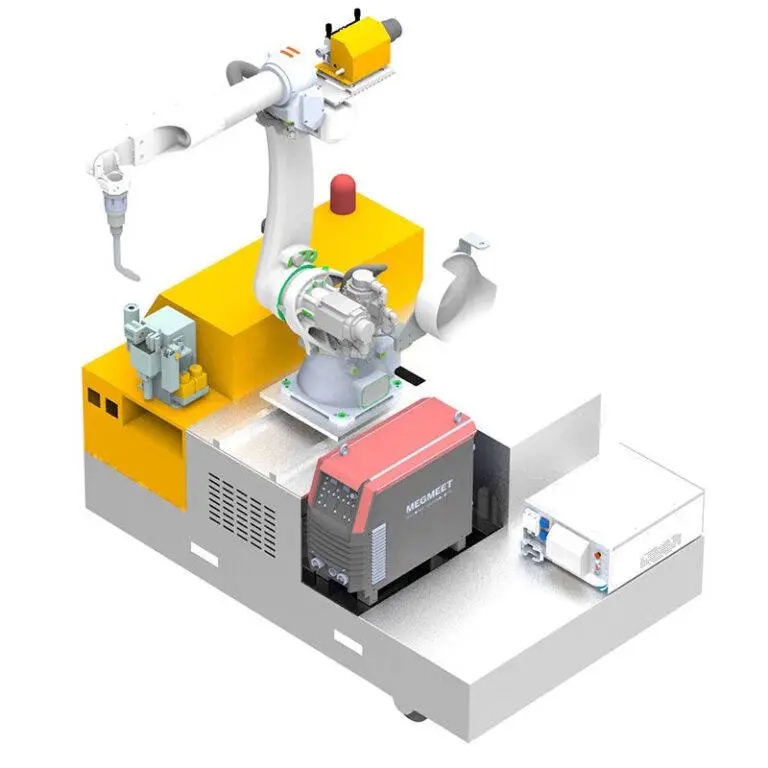
The unit deployed is a 10kg-payload collaborative arm integrated with a 500A inverter-based power source. Unlike traditional industrial robots, this MAG Cobot Welder utilizes hand-guiding lead-through programming, allowing our floor technicians to define weld paths without deep coding knowledge.
2.1 Pulse Waveform Optimization
We utilized a single-pulse regime to manage the heat input on S355JR +AR structural steel. In the context of Thick Plate Steel welding, uncontrolled heat is the enemy of grain structure. The pulse parameters were tuned to a frequency of 120Hz with a peak current of 380A and a background current of 160A. This specific “one drop per pulse” metal transfer mode significantly reduced spatter—a critical factor in reducing post-weld cleanup time in high-capacity Cape Town workshops where labor hours are a premium cost.
3.0 Synergy: Integrating Arc Welding Solutions
The term “Arc Welding Solution” is often used loosely, but in this field application, it refers to the holistic communication protocol between the cobot’s teach pendant and the power source’s digital interface. In Cape Town’s heavy fabrication sector, “plug and play” rarely exists. We had to engineer a custom interface to ensure the cobot could dynamically adjust wire feed speeds (WFS) based on real-time voltage sensing.
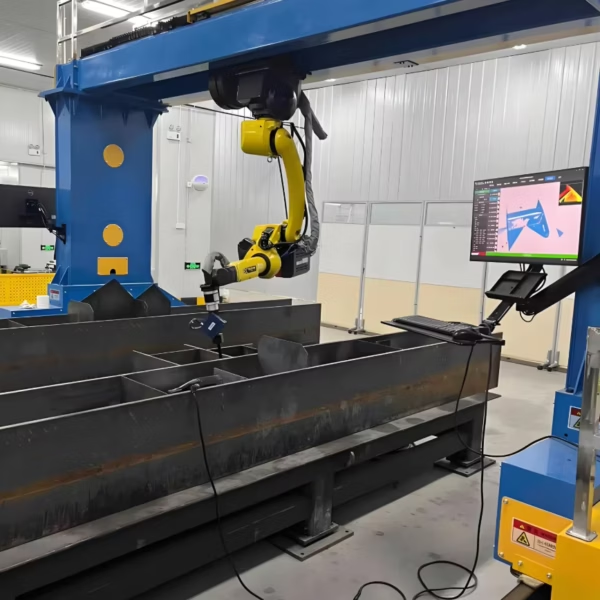
The synergy was most evident during the root pass on 20mm V-groove joins. By utilizing the Arc Welding Solutions software suite, we programmed a “search and find” touch-sensing routine. The cobot uses the welding wire itself to sense the plate edge and gap width, automatically adjusting the center-line of the weld. This level of autonomy ensures that even if the Thick Plate Steel welding prep (plasma cutting or grinding) has a +/- 1.5mm tolerance, the cobot maintains penetration depth.
4.0 Thick Plate Steel Welding: Challenges and Parameters
Welding 25mm to 40mm plate requires multi-pass strategies that would typically fatigue a manual operator, leading to slag inclusions or lack of sidewall fusion. Our approach with the MAG Cobot Welder involved a 3-layer, 7-pass sequence.
4.1 Root and Hot Pass Execution
For the root pass, we moved away from pulse to a modified short-circuit transfer to bridge the 3mm root gap. Once the root was sealed, the Arc Welding Solutions switched the power source to a high-energy pulse mode for the fill passes. This transition is programmed into the cobot’s job tree, ensuring that the interpass temperature remained below 250°C, measured via infrared sensors integrated into the cobot’s tool-end flange.
4.2 Deposition Rates
On Thick Plate Steel welding, we achieved deposition rates of 5.8 kg/hr using a 1.2mm ER70S-6 wire. Compared to the manual average of 3.2 kg/hr (accounting for fatigue and repositioning), the cobot implementation provided an 80% increase in “arc-on” time. In a Cape Town workshop environment, where electricity costs are rising, the efficiency of the inverter-based pulse system compared to old transformer units represents a significant operational saving.
5.0 Field Lessons: The Cape Town Environment
Technical theory often fails in the face of local coastal conditions. During the first week of deployment, we identified three major hurdles that required immediate engineering pivots.
5.1 Atmospheric Moisture and Hydrogen Cracking
Cape Town’s coastal humidity can lead to moisture absorption in the wire spools if left overnight. We observed localized porosity in the Thick Plate Steel welding nodes during UT (Ultrasonic Testing).
Lesson Learned: We mandated the use of heated wire dispensers and transitioned to vacuum-sealed 15kg spools. The Arc Welding Solutions package was updated to include a pre-flow gas purge of 3 seconds to ensure the line was clear of stagnant, moist air.
5.2 Shielding Gas Stability
The “Cape Doctor” wind often creates drafts even inside large fabrication bays. With a MAG Cobot Welder, the arc is fixed, but the gas plume is vulnerable.
Lesson Learned: We moved from a standard conical nozzle to a high-performance gas lens with a 20L/min flow rate of 82% Argon / 18% CO2. We also installed portable welding screens to create a localized micro-environment around the cobot cell.
5.3 Power Stability (Grid Volatility)
Load shedding in South Africa presents a unique risk to robotic welding. A sudden drop in voltage during a heavy Thick Plate Steel welding pass can cause the wire to “freeze” in the weld pool, potentially damaging the cobot’s torque sensors.
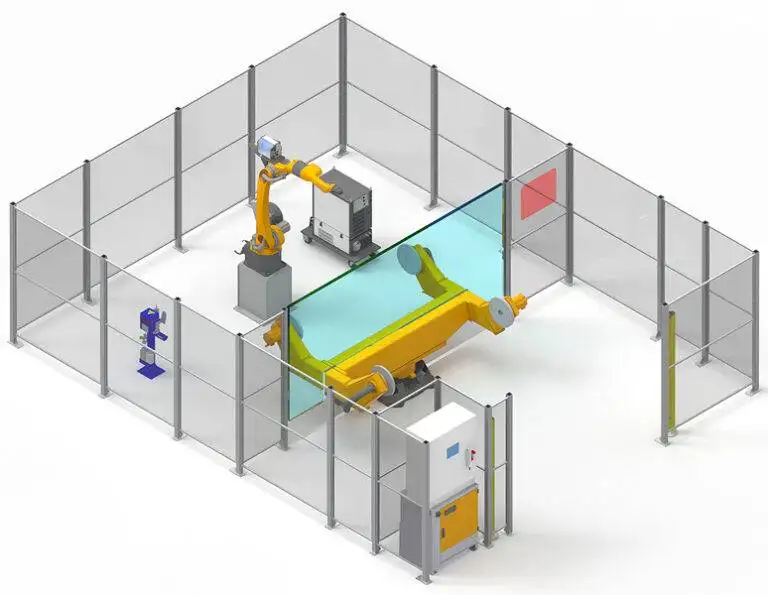
Lesson Learned: We integrated a dedicated industrial UPS for the cobot controller and programmed an “Emergency Stop Path Recovery” routine. If power is lost, the cobot stores its XYZ coordinates and arc parameters, allowing the operator to resume the weld exactly where it left off once power returns, preventing a total part scrap.
6.0 Quality Assurance and Metallurgical Results
The primary KPI for this deployment was the pass rate of X-ray and Ultrasonic Testing on structural T-joints. Manual welding in this facility historically saw a 12% repair rate on thick sections due to start-stop defects.
With the MAG Cobot Welder, the repair rate dropped to less than 2%. The consistency of the Arc Welding Solutions‘ pulse control meant that the Heat Affected Zone (HAZ) was narrower and more uniform. Hardness testing (Vickers) showed a consistent profile across the weldment, indicating that the cobot’s steady travel speed prevented the localized overheating common in manual “weave” techniques on Thick Plate Steel welding.
7.0 Conclusion: The Future of Fabrication in the Western Cape
The deployment of the MAG Cobot Welder in Cape Town demonstrates that high-end Arc Welding Solutions are not just for the automotive industry. In heavy structural Thick Plate Steel welding, the cobot acts as a force multiplier for the existing workforce.
By automating the grueling fill passes of thick sections, we allow our skilled welders to focus on complex fit-ups and final inspections. The synergy between the collaborative hardware and the specialized pulse software provides a robust answer to the environmental and logistical challenges of the South African engineering sector. The data is clear: higher deposition, lower defect rates, and a safer working environment for the technicians on the floor.
Signed:
Senior Welding Engineer
Cape Town Field Office