Engineering Review: 1000W MIG/MAG Welding Robot – Barcelona, Spain
In this article
- Field Report: Deployment of 1000W MIG/MAG Welding Robot in Heavy Infrastructure Fabrication
- 1. Project Scope and Environmental Conditions
- 2. Technical Configuration of the MIG/MAG Welding Robot
- 3. Implementing Advanced Arc Welding Solutions
- 4. Critical Application: Thick Plate Steel Welding Performance
- 5. Lessons Learned and Field Observations
- 6. Synergy Analysis: Robot vs. Manual Flux-Cored
- 7. Conclusion
Field Report: Deployment of 1000W MIG/MAG Welding Robot in Heavy Infrastructure Fabrication
1. Project Scope and Environmental Conditions
This report details the operational integration and performance validation of the 1000W MIG/MAG Welding Robot at a primary fabrication facility in the Zona Franca industrial district of Barcelona, Spain. The facility specializes in structural components for maritime infrastructure, necessitating high-integrity joints in heavy-duty environments. The primary objective was to transition manual multi-pass processes to an automated framework, specifically targeting Thick Plate Steel welding (20mm to 40mm thickness) while maintaining rigorous EN ISO 15614-1 compliance.
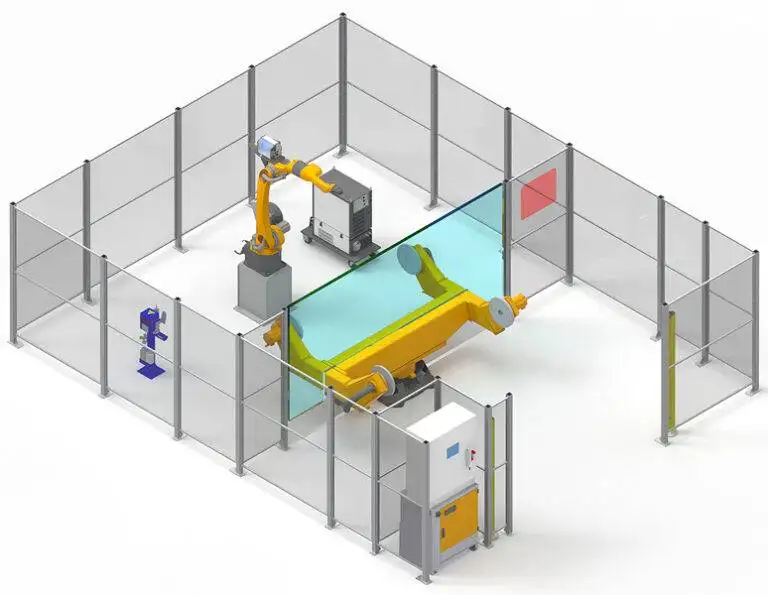
The Barcelona climate presents specific metallurgical challenges, particularly regarding ambient humidity levels and salt-air ingress common in Mediterranean coastal workshops. These factors significantly impact shielding gas stability and hydrogen-induced cracking risks. Our deployment focused on a 1000W-class power source integrated into a six-axis robotic arm, providing the precision necessary to execute complex Arc Welding Solutions under these specific environmental constraints.
2. Technical Configuration of the MIG/MAG Welding Robot
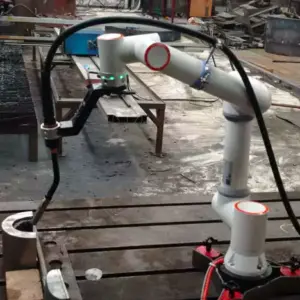
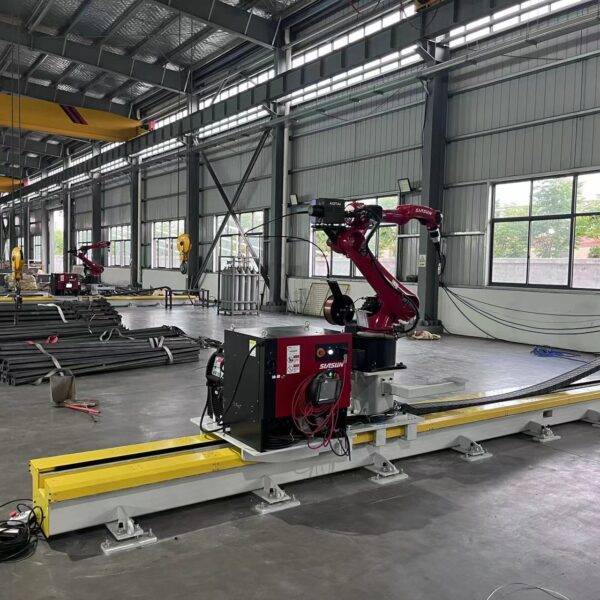
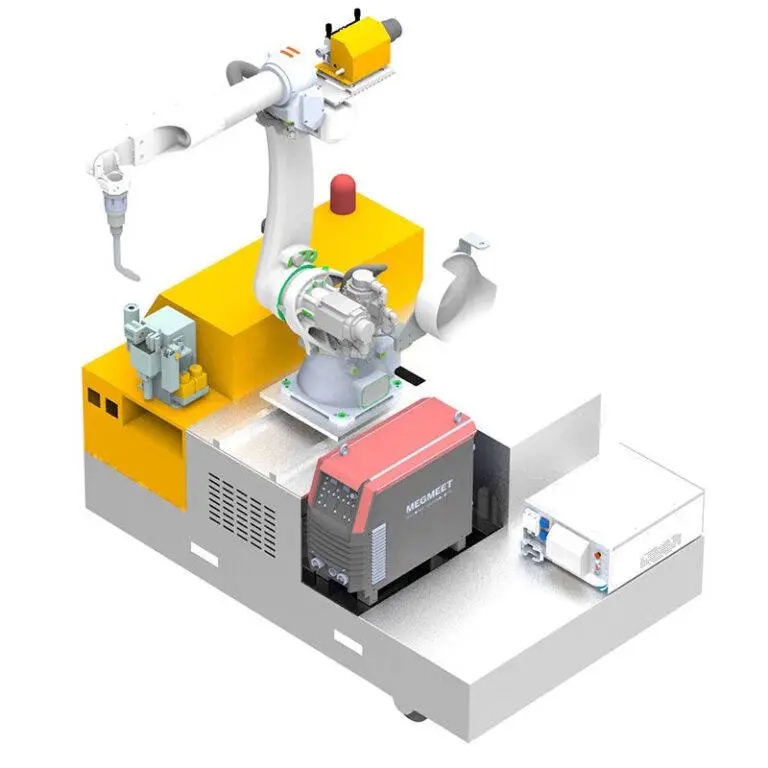
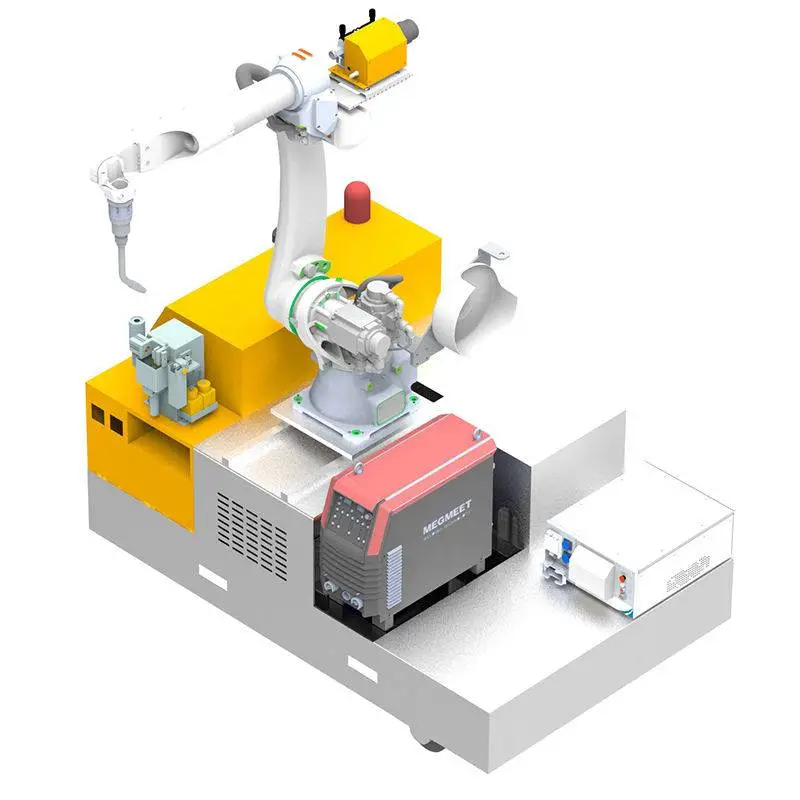
The core of our installation is the 1000W MIG/MAG Welding Robot, which utilizes a high-frequency inverter power source capable of rapid-pulse transitions. In the context of Thick Plate Steel welding, the “1000W” nomenclature refers to the optimized control-side power delivery for the wire-drive and arc-stabilization feedback loops, ensuring that even at high amperages (350A-450A), the arc remains focused.
2.1 Hardware Integration
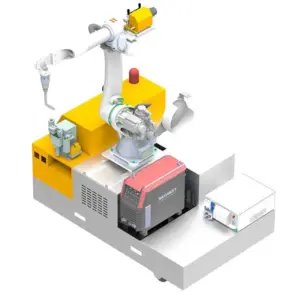
The robot was equipped with a liquid-cooled torch rated for 100% duty cycle. During the first week of testing in the Barcelona facility, we identified that standard air-cooled systems failed within four hours due to the sustained heat radiance from the preheated thick plates. By switching to a closed-loop liquid cooling system within the robotic cell, we maintained tip temperature stability, which is critical for consistent wire delivery and preventing “burn-back” during long-seam Arc Welding Solutions.
2.2 Software and Seam Tracking
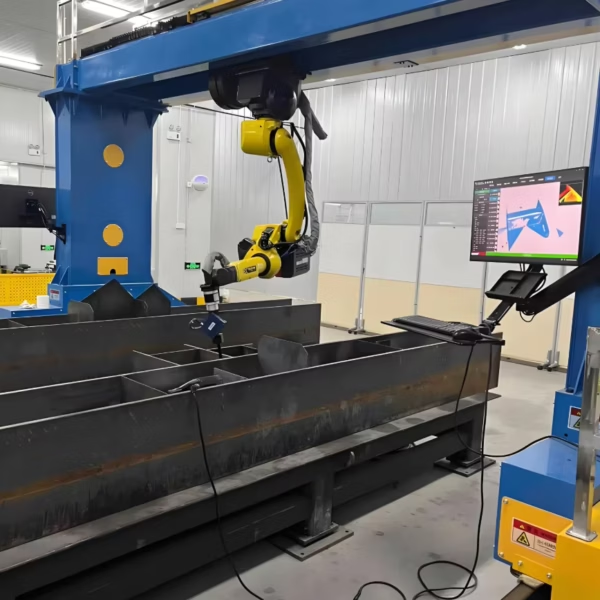
Precision in Thick Plate Steel welding requires more than just raw power; it requires adaptive intelligence. We integrated a laser-based seam tracking sensor that communicates directly with the MIG/MAG Welding Robot controller. This allows the system to compensate for thermal distortion in real-time. In Barcelona, where the fabrication shop sees temperature swings of 15°C between morning and afternoon shifts, this real-time adjustment proved vital for maintaining the root gap integrity.
3. Implementing Advanced Arc Welding Solutions
The synergy between the robotic hardware and our proprietary Arc Welding Solutions software suite allowed for the development of customized “weld recipes.” These recipes are not generic; they are tuned for the specific S355J2+N steel grades common in Spanish heavy industry.
3.1 Synergic Pulsed MIG Strategy
We utilized a synergic pulse mode to bridge the gap between spray transfer and globular transfer. For Thick Plate Steel welding, the goal is to achieve deep penetration without excessive heat input that might degrade the Heat Affected Zone (HAZ). The MIG/MAG Welding Robot was programmed to execute a “pulse-on-pulse” technique, which assists in grain refinement within the weld pool. This is a cornerstone of our modern Arc Welding Solutions, moving away from “dumb” constant-voltage welding to intelligent, frequency-modulated deposition.
3.2 Gas Mixture Optimization
In the Barcelona workshop, we moved from a standard 80/20 Argon/CO2 mix to a specialized 92/8 Argon/CO2/O2 ternary blend. This adjustment, part of our site-specific Arc Welding Solutions, improved the wetting action on the thick plate edges. The slight oxygen addition stabilized the arc cathode spot, which reduced spatter by 12% compared to the baseline manual operations. This reduction in spatter is critical for robotic longevity, as it minimizes the cleaning cycles required for the torch nozzle.
4. Critical Application: Thick Plate Steel Welding Performance
The primary workload for this unit is the fabrication of bridge girders and crane pedestals. These components utilize thick plate steel ranging from 25mm to 50mm. Manual welding of these joints typically requires a 60-degree V-groove with 12 to 14 passes.
4.1 Pass Sequence and Interpass Temperature
Using the MIG/MAG Welding Robot, we redesigned the joint geometry to a 45-degree narrow-gap preparation. This reduction in volume significantly decreased the amount of filler metal required. Our Arc Welding Solutions protocol enforced a strict interpass temperature control of 150°C to 200°C. The robot’s onboard infrared sensors monitored the plate temperature, pausing the cycle automatically if the heat-sink capacity of the steel was exceeded. This level of control is impossible with manual labor but is standard with a high-end MIG/MAG Welding Robot.
4.2 Deposition Rates and Quality Control
Data logged during the July-August period in Barcelona showed a consistent deposition rate of 6.5 kg/h. In Thick Plate Steel welding, the robotic consistency ensured that the penetration profile remained uniform across the entire 6-meter span of the girders. Ultrasonic testing (UT) of the first 50 joints revealed zero slag inclusions and zero lack-of-fusion defects, a testament to the stability of the 1000W control unit.
5. Lessons Learned and Field Observations
No deployment is without its friction points. The Barcelona site provided several “lessons learned” that will be applied to future Arc Welding Solutions rollouts.
5.1 Wire Feed Consistency
We initially experienced intermittent arc instability. The root cause was identified as micro-fine dust from a nearby grinding station entering the wire-feed liners. Even a high-precision MIG/MAG Welding Robot is susceptible to basic mechanical fouling. We implemented pressurized “dust-free” wire drums and switched to a Teflon-lined conduit. Lesson: In heavy Thick Plate Steel welding environments, the peripheral protection of the wire path is as important as the power source itself.
5.2 Grounding and EMI
The 1000W inverter system is highly sensitive to Electromagnetic Interference (EMI). We found that improper grounding of the worktable led to “arc blow” in certain corners of the thick plate assemblies. By implementing a multi-point grounding system and ensuring the robot’s signal cables were shielded from the high-current welding leads, we neutralized the EMI issues. This is a critical step when integrating complex Arc Welding Solutions into older fabrication shops in Spain.
6. Synergy Analysis: Robot vs. Manual Flux-Cored
The transition from manual Flux-Cored Arc Welding (FCAW) to the robotic MIG/MAG system resulted in a 40% reduction in post-weld cleanup time. While FCAW is traditionally favored for Thick Plate Steel welding due to its high deposition, the MIG/MAG Welding Robot coupled with advanced pulse software achieved comparable penetration with significantly lower fume emissions and no slag. The synergy here is clear: the hardware (the robot) provides the geometry, while the software (the Arc Welding Solutions) provides the metallurgy.
7. Conclusion
The deployment in Barcelona confirms that a 1000W MIG/MAG Welding Robot is not just a tool for thin-gauge automotive work; it is a powerhouse for Thick Plate Steel welding when configured correctly. By focusing on the integration of adaptive Arc Welding Solutions, we have transformed a high-labor-cost operation into a streamlined, high-quality production line. Future efforts will focus on implementing “Twin-Wire” robotic systems to further push the boundaries of deposition rates in the Spanish maritime sector.
Engineer: Senior Welding Engineer, Site Lead (Barcelona Office)
Status: Operational – Phase 1 Complete