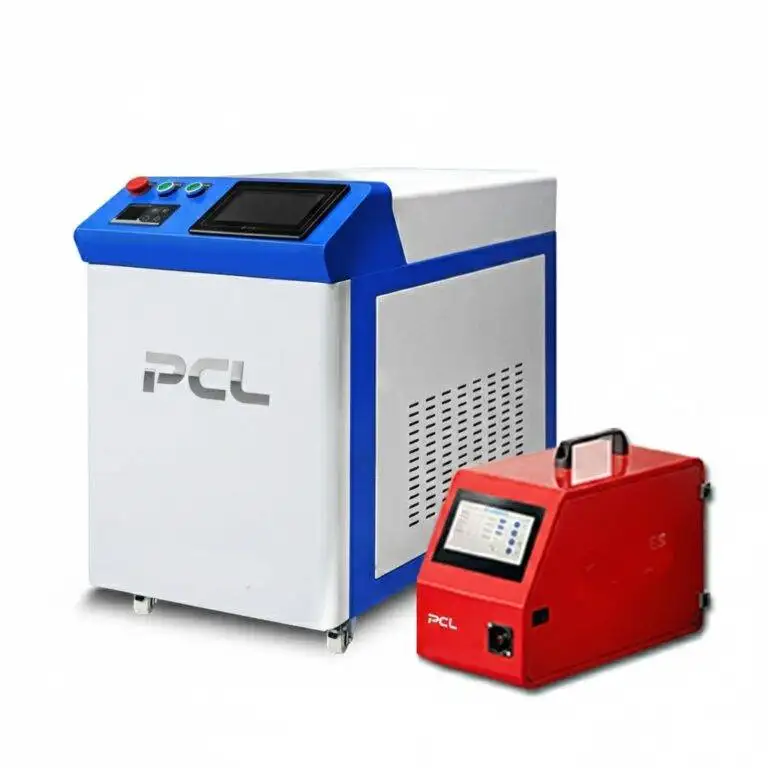
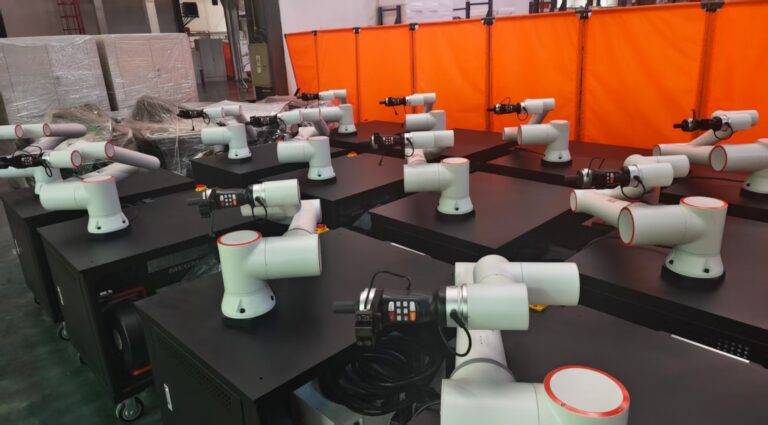
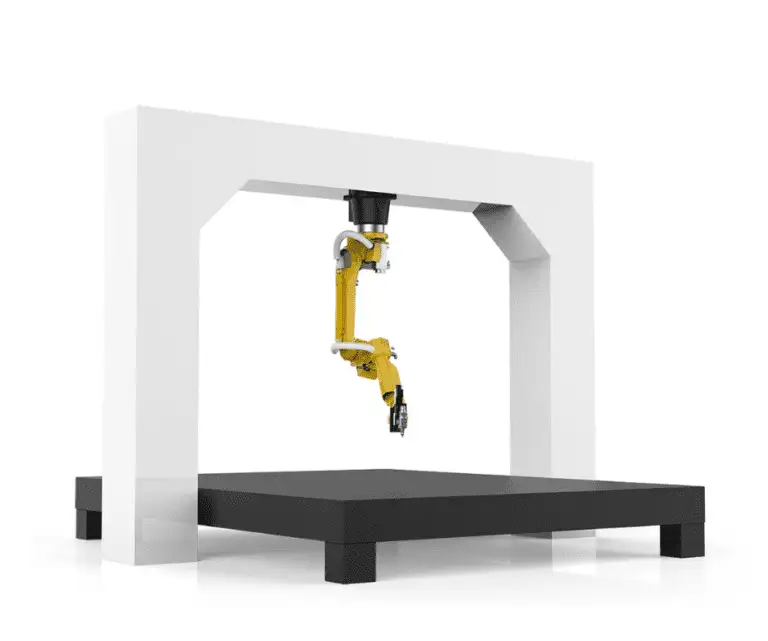
Engineering Review: 1000W Laser Welding Cobot – Manchester, UK
In this article
- Field Engineering Report: Integration of 1000W Laser Welding Cobot in Structural Steel…
- 1.0 Introduction and Site Overview
- 2.0 Technical Configuration: The Synergy of Laser Technology and Robotics
- 3.0 Practical Application in Structural Steel Welding
- 4.0 Operational Lessons Learned from the Shop Floor
- 5.0 Safety and Compliance in the UK Context
- 6.0 Synergy Analysis: Why Manchester, Why Now?
- 7.0 Conclusion and Future Outlook
Field Engineering Report: Integration of 1000W Laser Welding Cobot in Structural Steel Fabrication
1.0 Introduction and Site Overview
This report details the technical deployment and operational evaluation of a 1000W Laser Welding Cobot system at a medium-scale structural steel fabrication facility in Manchester, UK. The facility primarily handles S275 and S355 structural grades, producing architectural frameworks and secondary steelwork. The primary objective of this deployment was to transition high-repetition fillet welds from manual Metal Active Gas (MAG) welding to an automated solution leveraging advanced Laser Technology.
Manchester’s industrial landscape is currently facing a significant shortage of coded welders. The implementation of a Laser Welding Cobot is not merely an upgrade in equipment but a strategic shift to maintain throughput in a high-mix, low-volume (HMLV) environment. This report focuses on the practical synergies discovered during the commissioning phase and the specific metallurgical outcomes when applied to Structural Steel welding.
2.0 Technical Configuration: The Synergy of Laser Technology and Robotics
The system comprises a 1000W continuous wave (CW) fiber laser source integrated with a 6-axis collaborative robot arm. In the context of Structural Steel welding, the 1000W power bracket is the “sweet spot” for material thicknesses ranging from 2mm to 5mm, which constitutes approximately 60% of the site’s secondary steelwork output.
2.1 Laser Technology Parameters
The Laser Technology employed utilizes a 1070nm wavelength fiber source. Unlike traditional arc welding, which relies on a broad heat input, the laser provides a high-intensity energy density. For the Manchester site, we configured the beam with a “wobble” function. This oscillation of the laser head (up to 5mm width) is critical for structural applications where joint fit-up may not be aerospace-grade. By oscillating the beam, the Laser Welding Cobot can bridge gaps that would otherwise result in underfill or burn-through.
2.2 Cobot Integration and Pathing
The “Cobot” element of the Laser Welding Cobot allows for hand-guiding teaching. In a busy Manchester workshop, floor space is at a premium. Unlike traditional industrial robots requiring massive safety cells, the cobot operates with a smaller footprint, integrated with laser-safe hardshell screening. The synergy here is clear: the Laser Technology provides the speed (up to 4x faster than MAG), while the cobot provides the repeatability that manual operators struggle to maintain over an eight-hour shift.
3.0 Practical Application in Structural Steel Welding
Structural Steel welding in the UK must adhere to BS EN ISO 15609-4. During the field tests, we focused on 6mm lap joints and 4mm fillet welds on S355JR plate. One of the most significant observations was the Heat Affected Zone (HAZ) reduction.
3.1 Metallurgical Observations
In traditional MAG welding, the wide HAZ often leads to distortion in thinner structural sections, requiring post-weld straightening. With the Laser Welding Cobot, the concentrated energy delivery resulted in a HAZ approximately 70% smaller than previous MAG benchmarks. This is a direct result of the Laser Technology’s ability to achieve deep penetration with minimal total heat input. For the Manchester facility, this eliminated the need for secondary cold-working to correct plate warping.
3.2 The Challenge of Surface Contaminants
Manchester’s humid environment and the storage conditions of raw structural steel mean that surface oxidation (light rust) and mill scale are persistent issues. Laser Technology is notoriously sensitive to surface chemistry. We found that while the 1000W beam could penetrate light mill scale, consistent Structural Steel welding quality required a quick abrasive clean of the joint line. Lessons learned: Do not assume the laser will “burn through” heavy contaminants; prep is still king.
4.0 Operational Lessons Learned from the Shop Floor
The transition to a Laser Welding Cobot involves a steep learning curve regarding fit-up tolerances. In manual Structural Steel welding, a 1mm gap is easily filled by a welder’s manipulation of the torch. With Laser Technology, a 1mm gap represents a significant percentage of the beam diameter.
4.1 Fit-up and Jigging
The most important lesson learned during this Manchester deployment was that the ROI of a Laser Welding Cobot is tied directly to the quality of the upstream process (sawing and prepping). We had to recalibrate the CNC saw to ensure tighter tolerances. Once the fit-up was standardized to under 0.5mm, the Laser Welding Cobot performance surpassed all expectations, producing aesthetic, “stack-of-dimes” welds with zero spatter.
4.2 Wire Feed Integration
While the laser can autogenously weld, Structural Steel welding typically requires filler wire for reinforcement. We integrated a synchronized cold wire feeder using 0.8mm G3Si1 wire. The synchronization between the cobot’s travel speed and the wire feed rate is the “secret sauce.” If the wire feed is too slow, the laser undercuts the toe; if too fast, it creates a bulbous bead that defeats the purpose of the precision Laser Technology.
5.0 Safety and Compliance in the UK Context
Operating a Class 4 laser in an open Manchester workshop is a non-starter. We implemented a localized “Laser Zone” with interlocked doors. The Laser Welding Cobot is equipped with a laser-state monitoring system that cuts power if the reflection levels (back-reflection) spike, which can happen when welding highly reflective galvanized coatings often used in UK structural work.
We also addressed the specific fume profile. Laser fumes from Structural Steel welding are finer than MAG fumes. We installed a high-vacuum extraction system at the source (the nozzle), which is essential for HSE compliance in the UK. The “personal note” here for other engineers: do not skimp on the extraction; the particulate matter from laser-ablated mill scale is exceptionally fine and pervasive.
6.0 Synergy Analysis: Why Manchester, Why Now?
The synergy between a Laser Welding Cobot and modern Laser Technology is the answer to the “Manchester Problem”—the need for high-quality output without a massive increase in overhead or specialized labor costs. By using the cobot, we allow a semi-skilled operator to produce welds that meet BS EN ISO standards, previously only achievable by Grade A manual welders.
The Laser Technology provides a level of “cleanliness” in the weld that reduces post-processing. In structural steel, where grinding off spatter can account for 20% of labor time, the Laser Welding Cobot effectively pays for itself by eliminating the need for 4.5-inch grinders on the shop floor.
7.0 Conclusion and Future Outlook
The 1000W Laser Welding Cobot has proven to be a transformative tool for Structural Steel welding in this Manchester-based field study. The initial skepticism of the veteran shop floor staff was mitigated once they saw the speed and lack of distortion in the finished assemblies.
Summary of Key Metrics:
- Speed: 3.5x increase compared to manual MAG on 4mm fillet welds.
- Post-Processing: 90% reduction in spatter removal and straightening labor.
- Consumables: Lower gas consumption (Pure Argon/Argon-CO2 blends) compared to high-flow MAG requirements.
Moving forward, the site plans to expand the use of Laser Technology to include thicker plate sections (up to 8mm) using a 2000W source, following the success of this 1000W deployment. The Laser Welding Cobot is no longer a “future” technology; for Manchester’s structural fabricators, it is a present-day necessity for staying competitive in a tightening global market.
Report Prepared By:
Senior Welding Engineer
Manchester Field Office