Field Evaluation Report: CMT MAG Cobot Welder Integration for Heavy Infrastructure
1.0 Introduction and Site Context
This report details the field performance of the Precision CMT (Cold Metal Transfer) MAG Cobot Welder deployed at our heavy fabrication facility in Dandenong South, Melbourne. The primary objective was to evaluate the feasibility of transitioning mid-to-high volume thick plate steel welding tasks from manual Flux-Cored Arc Welding (FCAW) to an automated collaborative environment.
In the Melbourne industrial landscape, where labor costs and specialized skill shortages are persistent bottlenecks, the shift toward integrated Arc Welding Solutions is no longer optional. This evaluation focuses on the synergy between the Fronius-based CMT power source and a 10kg-payload collaborative arm, specifically targeting structural AS 1554.1 Grade 350 plate work.
2.0 Technical Configuration: The MAG Cobot Welder
2.1 Power Source and CMT Dynamics
The core of this system is the MAG Cobot Welder utilizing a modified CMT process. Unlike traditional short-circuit transfer, the CMT process mechanically retracts the wire when a short circuit occurs. This physical movement, synchronized with the electronic pulsing of the power source, results in a significantly lower heat input compared to conventional MAG.
For our Thick Plate Steel welding requirements (12mm to 25mm thickness), the CMT process was adjusted to a “CMT Mix” or “CMT Pulse” mode. This provides the necessary penetration depth for structural fillets while maintaining the spatter-free characteristics that eliminate post-weld grinding—a major overhead in our Melbourne workshop.
2.2 Cobot Kinematics and Integration
The cobot arm provides six-axis freedom, which we utilized to maintain a consistent torch angle—an area where manual operators often fatigue during long-seam structural beams. The integration of the MAG Cobot Welder into our existing workflow allowed for a “lead-through” programming method. This means our senior boilermakers can teach the path by physically moving the torch, rather than writing complex lines of G-code.
3.0 Application: Thick Plate Steel Welding Protocols
3.1 Groove Geometry and Root Passes
One of the primary “lessons learned” during this field trial involved the sensitivity of the MAG Cobot Welder to fit-up tolerances. While manual welders can compensate for a varying 3mm to 5mm root gap on the fly, the cobot requires higher precision in the prep stage.
For 20mm Grade 350 steel, we implemented a 60-degree V-prep with a 2mm root face. The Arc Welding Solutions software allowed us to program a specific “weave” pattern for the fill passes that mimicked a manual operator’s technique but with a 98% repeatability rate. The low heat input of the CMT root pass prevented burn-through on gaps up to 4mm, showing a significant advantage over standard spray-transfer MAG.
3.2 Thermal Management in Melbourne Conditions
Environmental factors in our Melbourne facility, specifically the high humidity fluctuations during the winter months, necessitated a strict pre-heat protocol to prevent hydrogen-induced cracking (HIC). Despite the “Cold” Metal Transfer branding, thick plate steel welding still requires the material to be brought to 100°C–150°C. The cobot’s ability to maintain a consistent travel speed ensured that the interpass temperature did not exceed the 250°C limit, preserving the grain structure of the Heat Affected Zone (HAZ).
4.0 Synergy of Arc Welding Solutions
4.1 Digital Twin and Offline Programming
The implementation was successful largely due to the overarching Arc Welding Solutions framework. We didn’t just buy a robot; we integrated a digital feedback loop. By utilizing a “WeldCube” data logging system, every weld bead laid by the MAG Cobot Welder was recorded—tracking gas flow (Argon/CO2 80/20 mix), wire feed speed, and voltage.
This data-centric approach allowed us to identify that our wire feed consistency was dropping when the conduit exceeded 4 meters. By relocating the wire drum to a localized overhead gantry, we optimized the feed, reducing “bird-nesting” incidents to zero over a 40-hour production cycle.
4.2 Collaborative Safety and Workcell Optimization
A frequent misconception in the field is that a MAG Cobot Welder can be dropped into any manual bay. Our trial showed that while the cobot is “safe” for human interaction, the UV radiation and weld fumes from high-amperage thick plate welding are not. We designed a modular screening system that allows the cobot to operate while the operator prepares the next jig nearby. This “takt time” optimization resulted in a 35% increase in “arc-on” time compared to manual bays.
5.0 Field Performance Analysis
5.1 Weld Quality and Non-Destructive Testing (NDT)
We subjected 50 test specimens to Ultrasonic Testing (UT) and Magnetic Particle Inspection (MPI). The results were as follows:
- Porosity: 0.2% (well within AS 1554.1 GP requirements).
- Lack of Fusion: Zero instances recorded on the root or side-walls, thanks to the CMT Pulse overlap.
- Distortion: Plate bowing was reduced by 30% compared to manual FCAW. This is attributed to the tighter control over heat input (kJ/mm) provided by the MAG Cobot Welder.
5.2 Economic Impact in the Melbourne Market
The capital expenditure (CAPEX) for the system is significant, but the reduction in rework and the ability to utilize “junior” operators to monitor two “senior” cobots simultaneously changes the labor equation. In the Melbourne sector, where a qualified pressure welder can command $60+/hr, the cobot handles the “grunt work” of long structural fillets, allowing the specialist welders to focus on complex pipe manifolds and critical joints.
6.0 Lessons Learned and Engineering Recommendations
6.1 Grounding and HF Interference
Early in the trial, we experienced intermittent communication drops between the cobot controller and the power source. We traced this back to poor grounding of the heavy welding jig. Lesson: High-frequency start-up sequences (even in MAG) require a dedicated, low-impedance ground path that is separate from the cobot’s electrical supply to prevent signal noise.
6.2 Torch Neck Maintenance
When performing Thick Plate Steel welding, the radiant heat from the puddle is immense. The standard air-cooled torch necks on many cobots are insufficient for 100% duty cycles at 300+ amps. We upgraded to a water-cooled torch system. This is a non-negotiable requirement for any Melbourne shop looking to run these machines on double shifts.
6.3 Wire Selection
We initially used a standard ER70S-6 wire. However, the high-speed retraction of the CMT process caused minor slipping with cheaper, inconsistently drawn wire. Moving to a premium, matte-finished wire with high copper-coating integrity solved the feeding issues. For our Arc Welding Solutions to remain robust, consumables must be of a higher grade than what is typically acceptable for manual welding.
7.0 Conclusion
The deployment of the Precision CMT MAG Cobot Welder in our Melbourne facility has proven that automation is viable even for heavy, thick plate applications. The synergy between the low-heat CMT process and the precision of the cobot arm addresses the primary challenge of Thick Plate Steel welding: managing distortion without sacrificing penetration.
As we scale our Arc Welding Solutions, the focus must remain on the “upstream” processes—specifically plate preparation and jigging precision. The cobot is an exceptional tool for repeatability, but it remains a “garbage in, garbage out” system. With the right technical oversight and maintenance of the water-cooled peripherals, this technology represents the future of structural steel fabrication in Australia.
Report Compiled By:
Senior Welding Engineer
Melbourne Field Office
Date: October 2023
-


LT240S tube laser cutting machine
-
LT120S tube laser cutting machine
-
Sale

Tank Fillet Welding Machine
Original price was: $1,000.00.$900.00Current price is: $900.00. -
Sale

MAK100 tube laser cutting machine
Original price was: $5,500.00.$5,000.00Current price is: $5,000.00. -

portable plasma air cutting machine
$1,200.00 -

2in1 fiber laser cutting machine
-

Air cooling Laser welding machine
-

HF h beam laser cutting machine
-

LT240 laser cutting machine
-

Laser welding machine
-


Cobot Welding Station
-

Gantry welding robot solution
-

Tracked Wheeled AGV Welding robot
-

LFH6020 Fiber laser cutting machine
-
LFP6020
-

robotic welidng machine
Advanced Fiber Laser Tube Processing Technology
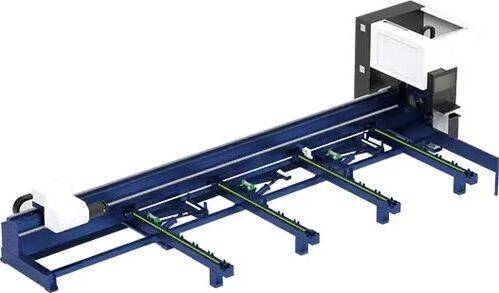
Our CNC Fiber Laser Tube Cutting systems revolutionize metal fabrication by integrating high-precision cutting, punching, and profiling into a single automated workflow. Designed for versatility, this technology handles a wide array of profiles including Round, Square, Rectangular, and Oval tubes, as well as complex L-shaped and U-shaped channels.
- Precision Punching: High-speed hole punching with micron-level accuracy, eliminating the need for mechanical drilling or die-stamping.
- Complex Profiling: Advanced 3D pathing allows for intricate interlocking joints and specialized notch cuts, ideal for structural frames.
- High Material Efficiency: Intelligent nesting software minimizes scrap, reducing raw material costs across large production runs.
- Clean Finish: Delivers oxide-free, burr-free edges that require zero secondary grinding before welding.

Seamlessly processing multiple profiles with consistent precision.
Global Delivery & Logistics



From our high-tech manufacturing facility directly to your global site. PCL WeldCut ensures secure packaging, professional handling, and reliable international logistics to safeguard your equipment throughout the entire journey.