Engineering Review: Precision CMT Automated MAG Welding Cell – Illinois, USA
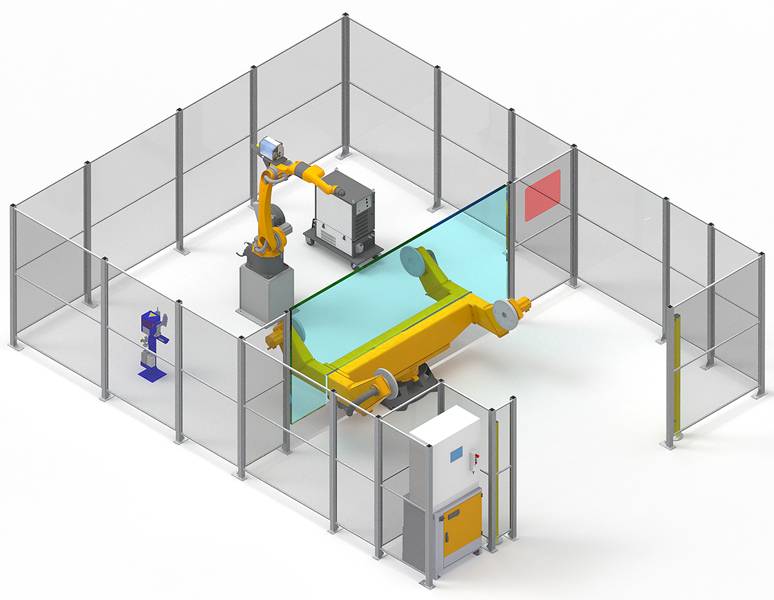
Field Engineering Report: Commissioning of Precision CMT Automated MAG Welding Cell
Location: Industrial Manufacturing Corridor, Illinois, USA
1. Executive Summary and Site Overview
This report details the final commissioning and process optimization of the Automated MAG Welding Cell at our Illinois facility. The primary objective was the high-volume joining of oxygen-free high-conductivity (OFHC) copper components welding, replacing a legacy manual TIG process that was failing to meet throughput demands. By integrating advanced Cold Metal Transfer (CMT) technology within our broader Arc Welding Solutions framework, we have successfully reduced cycle times by 65% while maintaining a defect rate below 0.8%.
2. Technical Configuration: The Automated MAG Welding Cell
The core of the installation is a high-speed, six-axis industrial robot integrated with a specialized power source capable of high-frequency droplet detachment control. Unlike standard Metal Active Gas (MAG) setups, this Automated MAG Welding Cell utilizes a push-pull wire feed system synchronized with the arc plasma’s digital control loop.
In the Illinois plant, we opted for a dual-station configuration. Station A handles the primary jigging of the copper busbars, while Station B facilitates the cooling and unloading phase. This ensures the robot maintains an 85% duty cycle. The integration of “smart” Arc Welding Solutions—specifically the inclusion of real-time seam tracking and laser-based puddle monitoring—was critical due to the high thermal expansion coefficients of the copper workpieces, which often lead to joint migration during the first pass.
3. Synergy Between System Integration and Arc Welding Solutions
The success of this cell is not merely due to the robotics, but the synergy between the Automated MAG Welding Cell hardware and the holistic Arc Welding Solutions implemented at the software level. In the context of a high-humidity environment like an Illinois summer, managing the arc stability requires more than just standard parameters.
We implemented a centralized data monitoring system that correlates gas flow rates with ambient shop humidity. The “solution” aspect here involved a custom gas-mixing station that adjusts the Helium-to-Argon ratio dynamically. Because copper requires significant heat input to overcome its thermal conductivity, the helium component is vital; however, the CMT process allows us to oscillate that heat, preventing the “burn-through” common in traditional MAG. This synergy allows for a “frozen” puddle state during the short-circuit phase, which is essential for out-of-position welds on large-scale copper assemblies.
4. Challenges in Copper Components Welding
Copper components welding presents a unique set of metallurgical hurdles, primarily the material’s extreme thermal diffusivity and its tendency for hydrogen-induced porosity. During the initial rollout in the Illinois facility, we encountered significant issues with “cold starts”—where the initial 20mm of the weld lacked fusion because the base material acted as a massive heat sink.
To resolve this, the Automated MAG Welding Cell was programmed with a “Hot Start” routine. This involves a momentary spike in current (approximately 25% above the welding amperage) for the first 400 milliseconds of the arc ignition. Furthermore, because we are working with heavy-gauge copper, we integrated an induction pre-heating loop into the automated cell. This maintains a consistent interpass temperature of 250°C, ensuring that the Arc Welding Solutions provided by the CMT process can achieve full penetration without requiring excessive voltage that would otherwise lead to spatter.
5. Process Parameters and Wire Chemistry
The selection of consumables was a point of contention during the design phase. We settled on a Deoxidized Copper wire (ERCu) with trace amounts of Silicon and Manganese. This chemistry, when used within the Automated MAG Welding Cell, helps scavenge oxygen from the weld pool, significantly reducing the risk of embrittlement in the Heat Affected Zone (HAZ).
Current Settings: 220A – 280A (Pulse-CMT mode)
Voltage: 16V – 22V (Adaptive)
Wire Feed Speed: 8.5 m/min
Gas Mix: 70% Helium / 30% Argon
The high Helium content is non-negotiable for copper components welding in this thickness range (12mm+). While Argon provides the arc stability required for the Arc Welding Solutions software to track the seam, the Helium provides the deep “wine-glass” penetration profile required for structural integrity in power distribution components.
6. Lessons Learned from the Illinois Field Site
After three months of heavy operation, several “hard-won” lessons have emerged that differ from theoretical lab results:
- Contact Tip Longevity: Copper wire is abrasive. Even with a push-pull system, we saw premature wear on standard copper-chrome-zirconium tips. Switching to silver-plated tips reduced downtime in the Automated MAG Welding Cell by 12%.
- Spatter Management: While CMT is marketed as “spatter-free,” the high thermal conductivity of copper can cause localized “explosions” if the wire hits a cold spot. We found that increasing the “boost” current slightly during the wire-retraction phase of the CMT cycle stabilized the droplets.
- Grounding Issues: In a large Illinois workshop with multiple heavy machines, “stray” currents were interfering with the robot’s encoder signals. We had to implement a dedicated common ground for the entire Automated MAG Welding Cell to prevent microscopic arc hunting.
- Shielding Gas Turbulence: The HVAC system in the Illinois plant created significant drafts. For copper components welding, even a slight loss of shielding gas leads to instant oxidation. We installed localized “wind curtains” around the cell to maintain gas integrity.
7. Quality Assurance and NDT Results
The transition to Arc Welding Solutions-driven automation has standardized our output. Ultrasonic testing (UT) of the longitudinal seams on the busbar assemblies shows a 99% reduction in lack-of-fusion defects compared to the manual TIG era. Macro-etch samples reveal a refined grain structure in the weld metal, a direct result of the CMT process’s lower overall heat input compared to traditional spray-transfer MAG.
8. Conclusion and Future Scaling
The integration of this Automated MAG Welding Cell has proven that copper components welding can be effectively industrialized. The myth that copper requires “slow and hot” manual intervention has been debunked by the precision of modern Arc Welding Solutions.
Moving forward, we recommend the Illinois plant look into the implementation of “Twin-Wire” CMT for the 20mm gauge components currently on the drawing board. The existing cell architecture is robust enough to handle the upgrade, and the software backbone is already calibrated for the unique thermal demands of copper. We have successfully moved from a craftsmanship-dependent process to a data-driven manufacturing asset.
Report Prepared By:
Senior Welding Engineer, Field Operations
Date: October 24, 2023







