Field Report: Optimization of Automated MAG Welding Cell for Structural Steel Fabrication
1. Introduction and Site Context
This report summarizes the commissioning and performance evaluation of the Precision CMT (Cold Metal Transfer) Automated MAG Welding Cell at our primary fabrication facility in Dubai, UAE. The objective was to transition high-volume structural steel welding from semi-automatic manual processes to a fully integrated robotic solution. In the heavy industrial landscape of Dubai, where ambient temperatures regularly exceed 40°C and production schedules are dictated by rapid infrastructure expansion, the reliability of Arc Welding Solutions is the primary driver of project profitability.
The deployment focused on the fabrication of heavy-duty structural rafters and braced frames. The transition to an automated cell was necessitated by the need for consistent penetration profiles and reduced post-weld rework, which had become a bottleneck in manual operations due to welder fatigue in the Gulf climate.
2. Technical Specification of the Automated MAG Welding Cell
The core of the installation is a 6-axis robotic manipulator integrated with a high-speed CMT power source. Unlike conventional spray-transfer MAG, the CMT process allows for a “cold” metal transfer by mechanically retracting the wire when a short circuit is detected. This synergy between the automated MAG welding cell and the wire-feed control system is critical for the thin-to-thick structural steel welding transitions encountered in this project.
2.1 Power Source and Control Interface
We utilized a digitalized power source capable of 100% duty cycle at 400A. This is essential for the Dubai environment. Many standard arc welding solutions fail to account for the derating of electronic components in high-ambient-temperature workshops. The cell’s cooling unit was upgraded to a high-capacity refrigerant-based system to ensure that the torch neck temperature remained stable during continuous 6-meter longitudinal runs on S355JR structural sections.
2.2 Gas Shielding and Consumables
For the MAG process, we standardized an 82% Argon / 18% CO2 shielding gas mixture. While 100% CO2 is cheaper, the automated MAG welding cell requires the arc stability provided by Argon to maintain the high travel speeds (up to 80 cm/min) required to meet our KPIs. We observed that the high humidity in the coastal Dubai area required specialized atmospheric control in the wire storage room to prevent hydrogen-induced cracking in the structural steel welding joints.
3. Synergy: Arc Welding Solutions and Automation
A common mistake in the field is viewing the robot as a standalone tool. The success of this installation relied on the “Solution” aspect—integrating the power source, the torch cleaning station, and the programmable logic controller (PLC). In our arc welding solutions framework, the synergy is achieved through real-time data feedback.
During the initial phase, we faced arc-outages due to mill scale on the structural steel. The automated MAG welding cell was recalibrated to include a “touch-sense” routine and an “arc-sense” tracking system. This allows the robot to adjust its path in real-time if the structural fit-up deviates by more than 1.5mm. In the context of structural steel welding, where large-scale beams often have inherent rolling tolerances, this adaptive capability is what separates a successful automated cell from a failed investment.
4. Structural Steel Welding: Application and Performance Data
The primary workload for the cell involves fillet welds (6mm to 12mm leg length) on heavy plate girders. By utilizing the CMT mode within the automated MAG welding cell, we achieved a 30% reduction in heat input compared to traditional pulse-MAG. This is vital for maintaining the dimensional tolerance of the structural members.
4.1 Metallurgical Observations
Cross-sectional macro-etching of the weld samples showed a refined grain structure in the Heat Affected Zone (HAZ). The precision of these arc welding solutions meant that we could maintain a consistent cooling rate (t8/5 time), which is crucial for preventing martensite formation in the higher-strength grades of structural steel welding used in Dubai’s high-rise core structures.
4.2 Deposition Rates and Efficiency
We recorded a consistent deposition rate of 5.8 kg/hr per shift. In comparison, our manual welders were averaging 2.1 kg/hr when accounting for breaks and positioning time. The automated MAG welding cell does not suffer from the “late-afternoon slump” common in the UAE summer months, providing a predictable output that allows the planning department to schedule downstream NDT (Non-Destructive Testing) with 95% accuracy.
5. Lessons Learned from the Dubai Field Site
As a senior engineer, the following “hard-won” lessons should be applied to all future deployments of arc welding solutions in the region:
5.1 The “Heat Sink” Effect of Ambient Temperature
In Dubai, the base metal often sits at an ambient temperature of 45-50°C before the arc is even struck. This alters the cooling curve of the structural steel welding. We had to adjust our WPS (Welding Procedure Specification) to lower the pre-heat requirements, as the ambient conditions were providing a natural pre-heat. Failure to do this initially led to a grain growth issue in the HAZ of several test coupons.
5.2 Spatter Management and Nozzle Longevity
Even with CMT, some spatter is inevitable. In an automated MAG welding cell, spatter buildup in the gas nozzle disrupts the laminar flow of shielding gas, leading to porosity. We implemented a mandatory “re-reaming” cycle every three joints. This minor increase in cycle time saved approximately 14 hours of rework per week. For structural steel welding, where radiographic testing is stringent, ensuring gas coverage is more important than raw travel speed.
5.3 Power Grid Fluctuations
The industrial zones in Dubai can experience voltage dips during peak AC load hours (noon to 4 PM). These dips can cause the automated MAG welding cell to throw “arc-error” codes. We installed a dedicated industrial voltage stabilizer for the cell. This is a non-negotiable component of arc welding solutions in the region if you want to avoid intermittent CPU resets and corrupted weld logs.
6. Integration of Quality Control (NDT)
The consistency of the automated MAG welding cell has allowed us to move from 100% Visual Testing (VT) to a statistical sampling method, as the standard deviation of weld throat thickness has dropped to near zero. For structural steel welding, this reduces the time the beam spends in the quality bay. The data logging feature of the CMT system provides a digital twin of every weld, recording current, voltage, and wire feed speed at 0.1s intervals. This is now our primary “birth certificate” for every structural component leaving the factory.
7. Conclusion
The deployment of the CMT-integrated automated MAG welding cell in Dubai has proven that the synergy between high-end hardware and localized arc welding solutions can overcome environmental challenges. The structural steel welding produced is of a higher caliber than manual alternatives, with a significantly lower cost-per-meter. The key to success was not just the robotics, but the technical adjustments made to account for the UAE’s specific climatic and power conditions. Future phases will look into multi-pass heavy-section welding using the same automated framework.
Report End.
Senior Welding Engineer, Dubai Site Office.
-


LT240S tube laser cutting machine
-
LT120S tube laser cutting machine
-
Sale

Tank Fillet Welding Machine
Original price was: $1,000.00.$900.00Current price is: $900.00. -
Sale

MAK100 tube laser cutting machine
Original price was: $5,500.00.$5,000.00Current price is: $5,000.00. -

portable plasma air cutting machine
$1,200.00 -

2in1 fiber laser cutting machine
-

Air cooling Laser welding machine
-

HF h beam laser cutting machine
-

LT240 laser cutting machine
-

Laser welding machine
-


Cobot Welding Station
-

Gantry welding robot solution
-

Tracked Wheeled AGV Welding robot
-

LFH6020 Fiber laser cutting machine
-
LFP6020
-

robotic welidng machine
Advanced Fiber Laser Tube Processing Technology
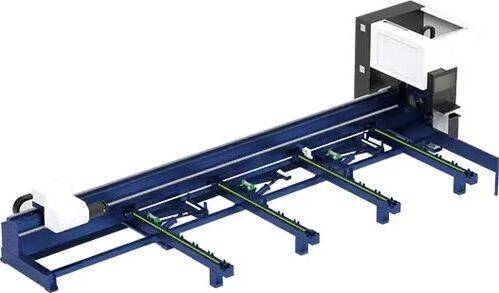
Our CNC Fiber Laser Tube Cutting systems revolutionize metal fabrication by integrating high-precision cutting, punching, and profiling into a single automated workflow. Designed for versatility, this technology handles a wide array of profiles including Round, Square, Rectangular, and Oval tubes, as well as complex L-shaped and U-shaped channels.
- Precision Punching: High-speed hole punching with micron-level accuracy, eliminating the need for mechanical drilling or die-stamping.
- Complex Profiling: Advanced 3D pathing allows for intricate interlocking joints and specialized notch cuts, ideal for structural frames.
- High Material Efficiency: Intelligent nesting software minimizes scrap, reducing raw material costs across large production runs.
- Clean Finish: Delivers oxide-free, burr-free edges that require zero secondary grinding before welding.

Seamlessly processing multiple profiles with consistent precision.
Global Delivery & Logistics



From our high-tech manufacturing facility directly to your global site. PCL WeldCut ensures secure packaging, professional handling, and reliable international logistics to safeguard your equipment throughout the entire journey.