Field Engineering Report: Deployment of Intelligent Arc Control Fiber Laser Cobot
Location: Aïn Sebaâ Industrial District, Casablanca, Morocco
Project Overview and Site Context
This report details the operational integration and performance metrics of the 2kW Fiber Laser Cobot system deployed at our Casablanca facility. The primary objective was to transition from manual GTAW (Gas Tungsten Arc Welding) to automated laser processes for high-conductivity Copper Components welding. Casablanca’s industrial environment presents specific challenges, including high ambient humidity from the Atlantic coast and periodic fluctuations in the local power grid, necessitating a robust cooling and stabilization strategy for the laser source.
The implementation of Laser Technology in this region is not merely an upgrade in speed; it is a tactical response to the scarcity of Class-A manual welders capable of handling the high thermal dissipation rates of copper. By utilizing a Fiber Laser Cobot, we have successfully decoupled the process quality from operator fatigue, achieving a consistency in penetration depth that was previously unattainable.
Synergy: Fiber Laser Cobot and Advanced Laser Technology
The Evolution of the 1070nm Wavelength
The core of our success in Casablanca lies in the specific synergy between the Fiber Laser Cobot and the underlying Laser Technology. Traditional CO2 lasers struggled with copper due to the material’s high reflectivity at the 10.6μm wavelength. The 1070nm wavelength provided by our fiber source is much more readily absorbed by non-ferrous metals, though it still faces a significant reflectivity hurdle at the initial liquidus transition.
The “Intelligent” aspect of the arc control refers to the cobot’s ability to modulate the laser power in real-time based on the molten pool’s feedback. In Casablanca, we programmed the system to utilize a high-frequency “wobble” parameter. By oscillating the beam in a circular or figure-eight pattern at frequencies between 150Hz and 300Hz, the Fiber Laser Cobot effectively broadens the weld pool. This reduces the cooling rate and allows gases to escape, which is critical for preventing porosity in copper grades like C11000.
Collaborative Automation in Restricted Workcells
Unlike traditional industrial robots that require massive safety gating, the Fiber Laser Cobot was integrated into the Casablanca workshop’s existing floor plan with minimal footprint. The cobot’s force-sensing capabilities allow it to work alongside technicians who handle the jigging and fit-up of Copper Components. This “man-in-the-loop” synergy ensures that the complex geometry of electrical busbars and heat exchangers is managed by human eyes, while the precision of the Laser Technology handles the high-energy delivery required for the actual join.
Technical Focus: Copper Components Welding Challenges
Overcoming Thermal Dissipation
Copper is a notorious heat sink. When welding Copper Components, the heat is pulled away from the weld zone so rapidly that traditional methods often result in “cold starts” or lack of fusion. The Fiber Laser Cobot addresses this through high power density. We are concentrating 2000 watts into a 50-100 micron spot size. This creates an instantaneous keyhole, bypassing the thermal conductivity of the surrounding material.
Managing Reflectivity and Back-Reflection
In our Casablanca field tests, the primary risk to the Laser Technology was back-reflection. Copper reflects over 90% of infrared light at room temperature. To protect the fiber source, we implemented an “Intelligent Arc Control” sequence where the laser starts at a 15-degree angle to the workpiece. The cobot’s software manages this lead angle dynamically. Once the “keyhole” is established and the absorption rate spikes, the Intelligent Arc Control adjusts the power downward to prevent burn-through, maintaining a stable equilibrium that protects the optical isolators in the fiber delivery system.
Porosity and Surface Preparation
A specific lesson learned in the Casablanca climate: surface oxides are aggressive. The proximity to the ocean means Copper Components develop a thin layer of copper oxide (Cu2O) faster than in inland facilities. Our protocol now mandates a mechanical deoxidization within two hours of welding. The Fiber Laser Cobot is then able to use a secondary “cleaning” pulse—a lower energy pre-pass—to vaporize any remaining hydrocarbons, ensuring the structural integrity of the weld nugget.
Field Observations: The Casablanca Environment
Humidity and Chiller Performance
One technical hurdle encountered was the dew point within the workshop. High humidity can lead to condensation on the protective windows of the laser head. We had to upgrade the nitrogen gas drying system to ensure that the shielding gas was not introducing moisture into the Intelligent Arc Control loop. Furthermore, we adjusted the chiller settings to maintain the Fiber Laser Cobot’s internal temperature just above the ambient dew point to prevent “sweating” on the internal optics.
Power Grid Stability
Casablanca’s industrial zones can experience voltage sags. Laser Technology is sensitive to these fluctuations. We installed a dedicated UPS (Uninterruptible Power Supply) and voltage regulator for the Fiber Laser Cobot. Without clean power, the Intelligent Arc Control would lose its sampling frequency, leading to “stuttering” in the weld bead which is catastrophic when working on high-value Copper Components.
Lessons Learned and Operational Guidance
1. The “Wobble” is Non-Negotiable
For Copper Components welding, a static beam is insufficient. We found that a circular wobble pattern with a 1.2mm diameter at 220Hz provided the best balance between penetration and surface finish. This movement mimics the “weaving” technique of a master TIG welder but at a speed that prevents the copper’s thermal conductivity from quenching the melt pool prematurely.
2. Shielding Gas Chemistry
Initially, we used pure Argon. However, switching to a Nitrogen-Helium mix in the Casablanca facility provided a significant boost in travel speed. The Helium assists in heat transfer into the joint, while the Nitrogen helps stabilize the arc plasma. This synergy with the Fiber Laser Cobot’s delivery head resulted in a 20% increase in throughput on the busbar production line.
3. Maintenance of Optical Consumables
The high-energy density required for copper causes more “spatter” than steel. We learned that the protective cover slides must be inspected every 4 hours of arc-on time. In the Casablanca environment, dust particles can bake onto the lens, causing thermal lensing and shifting the focal point. We implemented a pressurized “air knife” system on the cobot head to deflect particulates away from the optics.
4. Operator Training Shift
The transition to Fiber Laser Cobot technology requires a shift in mindset. Our Casablanca staff were trained not on how to “hold the torch,” but on how to program the Intelligent Arc Control parameters. Understanding the relationship between peak power, pulse frequency, and travel speed is now the core competency. The cobot handles the pathing precision; the engineer handles the physics.
Final Assessment
The deployment of the Fiber Laser Cobot in Casablanca has proven that Laser Technology is no longer confined to clean-room environments or high-volume automotive plants. By specifically tuning the Intelligent Arc Control to meet the challenges of Copper Components welding, we have achieved a 300% increase in production speed over manual methods. The key to success was not just the hardware, but the adaptation of the process to the local environmental variables—humidity, power stability, and material oxidation. This site now serves as the benchmark for our North African operations in high-conductivity metal joining.
Report End.
Senior Welding Engineer, Field Operations Division.
-
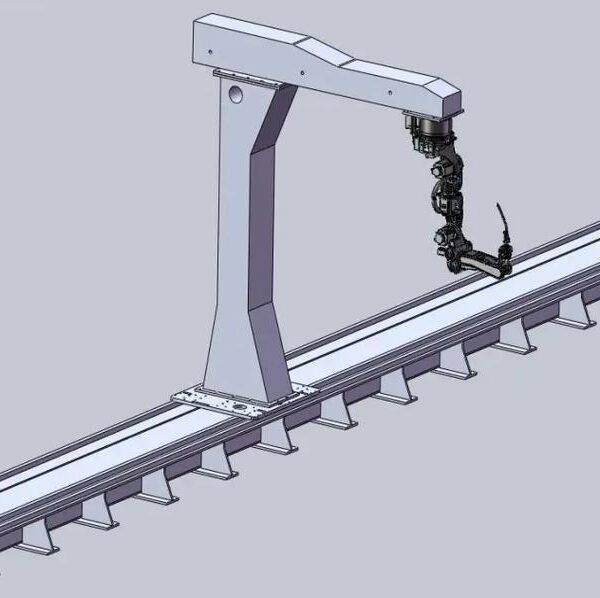

Cantilever Welding Robot solution
-
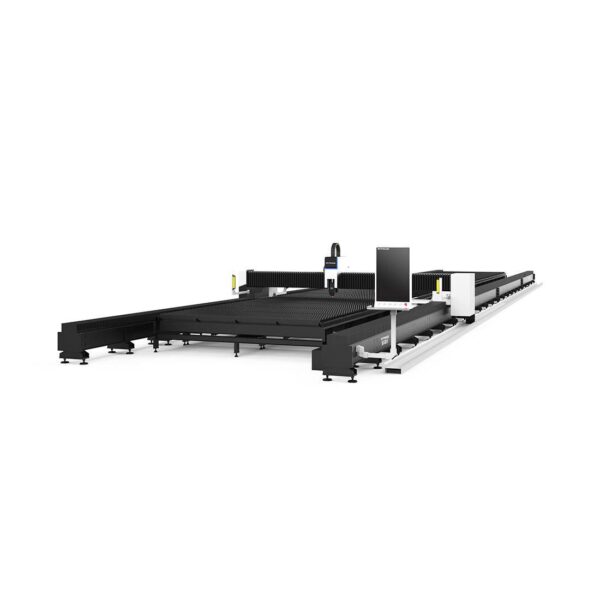

GF laser cutting machine
-
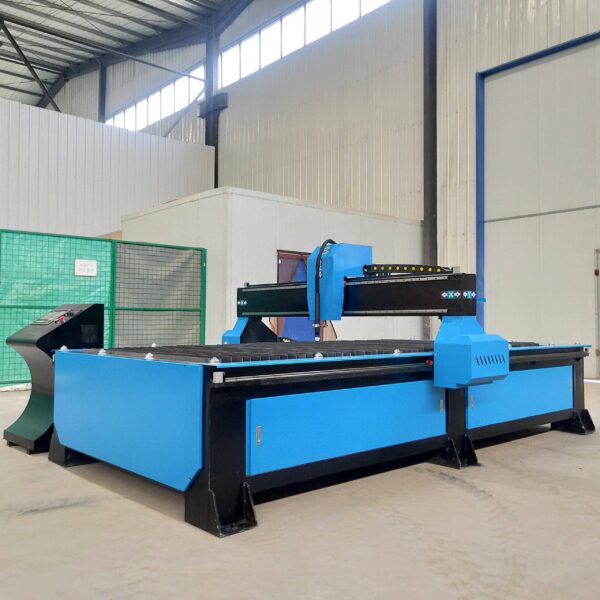
P3015 plasma cutting machine
-

LFP3015 Fiber Laser Cutter
-
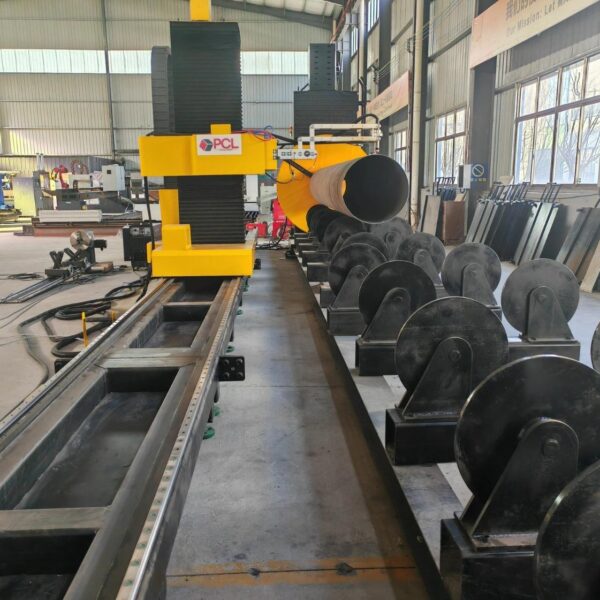
pipe plasma cutting machine
-
LFH 4020 Fiber Laser Cutting Machine
-
LFP4020
-
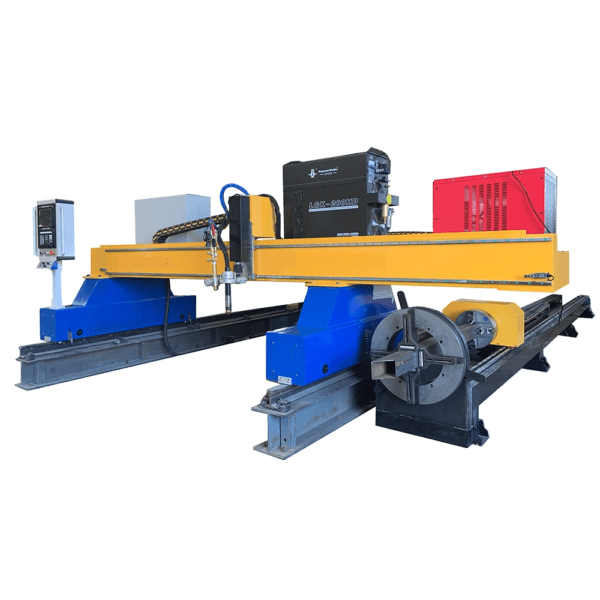
gantry plasma air cutting machine
-
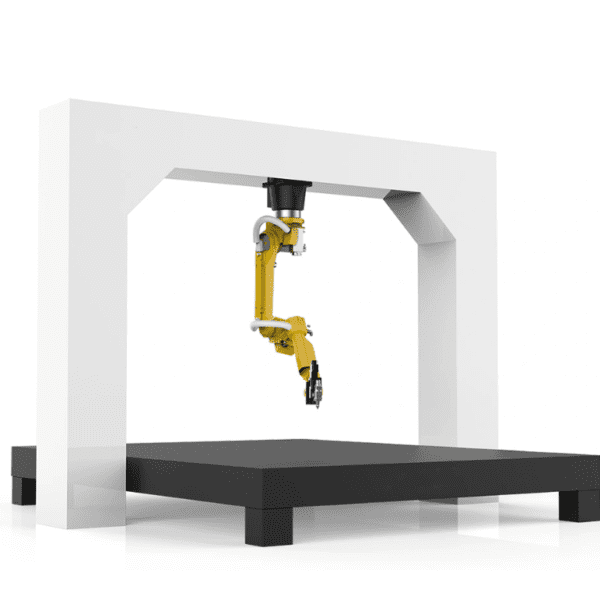
3D robot cutting machine
-
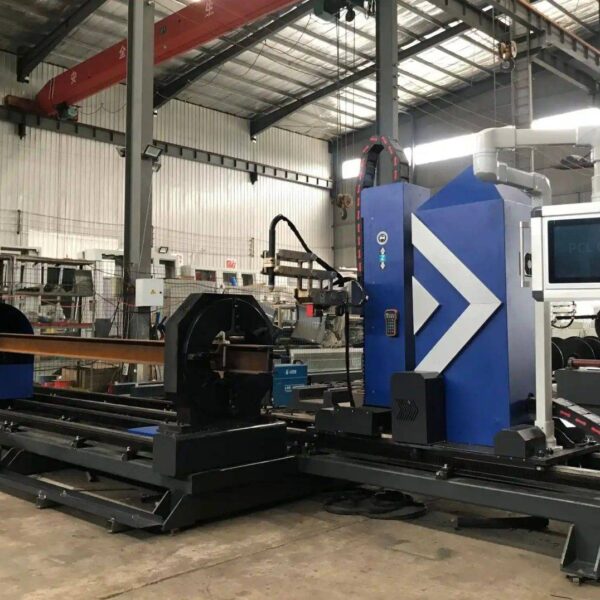
8 axis plasma cutting machine
-
5 axis plasma cutting machine
-

LT360 tube laser cutting machine
-
robot welding workstation
-
SF6060 fiber laser cutting machine
Advanced Fiber Laser Tube Processing Technology
Our CNC Fiber Laser Tube Cutting systems revolutionize metal fabrication by integrating high-precision cutting, punching, and profiling into a single automated workflow. Designed for versatility, this technology handles a wide array of profiles including Round, Square, Rectangular, and Oval tubes, as well as complex L-shaped and U-shaped channels.
- Precision Punching: High-speed hole punching with micron-level accuracy, eliminating the need for mechanical drilling or die-stamping.
- Complex Profiling: Advanced 3D pathing allows for intricate interlocking joints and specialized notch cuts, ideal for structural frames.
- High Material Efficiency: Intelligent nesting software minimizes scrap, reducing raw material costs across large production runs.
- Clean Finish: Delivers oxide-free, burr-free edges that require zero secondary grinding before welding.

Seamlessly processing multiple profiles with consistent precision.
Global Delivery & Logistics



From our high-tech manufacturing facility directly to your global site. PCL WeldCut ensures secure packaging, professional handling, and reliable international logistics to safeguard your equipment throughout the entire journey.