Field Engineering Report: Implementation of High-Speed MAG Collaborative Arc Welding Systems
Project Location: Dubai Industrial City (DIC), UAE
Date: October 2023
1. Introduction and Environmental Context
This report outlines the deployment and optimization of the Collaborative Arc Welding System within a high-pressure vessel fabrication facility in Dubai, UAE. The objective was to integrate Automated Welding protocols to handle a 400% increase in throughput requirements for desalination plant components.
Operating in the UAE presents unique atmospheric challenges. During the commissioning phase, ambient temperatures in the workshop fluctuated between 38°C and 46°C, with humidity levels peaking at 85%. These factors significantly impact the duty cycle of power sources and the stability of shielding gases. My primary focus was ensuring that the transition from manual MAG (Metal Active Gas) to an automated collaborative framework did not compromise the mechanical integrity of the joints, particularly when transitioning between carbon steel structural frames and specialized Titanium welding for corrosion-resistant heat exchanger interfaces.
2. The Synergy of Collaborative Arc Welding Systems and Automated Welding
In a traditional “hard automation” setup, the welding cell is caged, requiring a massive footprint and rigid programming. In the constrained floor space of our Dubai workshop, this was not feasible. We opted for a Collaborative Arc Welding System because it allows our Grade A welders to work alongside the machine, handling fit-ups while the cobot executes long-seam high-speed MAG passes.
The synergy here is found in the “Human-in-the-loop” Automated Welding philosophy. By using lead-through programming, our senior technicians can “teach” the cobot a complex path in minutes. This is critical for the varied geometry of the pressure vessels we produce. The Automated Welding component ensures that the travel speed remains constant at 800mm/min—a rate no manual welder can maintain consistently over an 8-hour shift in the Dubai heat—while the collaborative sensors ensure the machine stops instantly if a technician enters the immediate work zone to adjust a gas line or inspect a bead.
3. Technical Specifications: High-Speed MAG Optimization
For the structural MAG components, we utilized a ternary gas mix (Ar/CO2/O2). The high-speed parameters were tuned as follows:
- Wire Feed Speed (WFS): 12.5 m/min
- Voltage: 28.5V (Pulse-on-Pulse mode)
- Travel Speed: 750-900 mm/min
- Wire: ER70S-6 (1.2mm diameter)
The challenge with high-speed Automated Welding in a collaborative environment is spatter management. Excessive spatter can foul the cobot’s optical sensors and the torch nozzle, leading to arc instability. We implemented a high-frequency pulsed-arc schedule which minimized spatter and ensured a stable spray transfer even at high travel speeds. This was vital for the multi-pass groove welds on the 20mm thick vessel shells.
4. Integrating Titanium Welding into the Collaborative Workflow
The project required the attachment of Grade 2 Titanium cooling fins and nozzles. Titanium welding is notoriously sensitive to atmospheric contamination. Any exposure to oxygen, nitrogen, or hydrogen at temperatures above 427°C leads to embrittlement.
In the Dubai facility, the high humidity introduced a constant risk of hydrogen porosity. To mitigate this, we utilized the Collaborative Arc Welding System to automate the TIG (GTAW) cladding process for these Titanium components. While the primary system was set up for MAG, the modularity of the cobot allowed for a quick torch swap.
Lessons Learned in Titanium Application:
1. Trailing Shield Integration: We designed a custom 3D-printed trailing shield that mounts directly to the collaborative arm. The cobot’s precise speed control ensured that the trailing shield remained over the weld pool long enough for the metal to cool below the critical 400°C threshold.
2. Gas Quality: We had to install point-of-use desiccant dryers. The standard industrial Argon supply in the region occasionally showed moisture spikes during high-humidity days, which is catastrophic for Titanium welding.
3. The “Silver” Standard: By using the Automated Welding precision of the cobot, we achieved a consistent silver-to-straw color on the Ti beads, indicating zero contamination. Manual attempts in the same environment often resulted in blue or purple hues due to inconsistent travel speeds and gas coverage.
5. Operational Synergy and Dubai-Specific Challenges
The true value of the Collaborative Arc Welding System in this UAE context was the reduction in operator fatigue. Welding in a 40-degree workshop requires frequent breaks. By delegating the “hot work” (the actual arc time) to the Automated Welding system, the human operators moved into a supervisory and quality control role.
However, we encountered an unexpected issue with the cobot’s joint encoders. The fine desert dust in the DIC area is highly abrasive. Despite the IP-rated protection, we observed a slight “drift” in the tool center point (TCP) after three weeks of double-shift operation.
Corrective Action: We implemented a daily “Home Position” calibration check. The welder uses a fixed point on the jig to verify the cobot’s accuracy before the shift starts. Since implementing this 5-minute check, we have had zero rework due to path deviation.
6. Thermal Management and Heat Affected Zone (HAZ) Control
One of the critical engineering takeaways from this field report is the management of interpass temperatures. In the Dubai climate, base metals rarely cool down to the 20°C ambient temperatures seen in European or North American shops. They often sit at 45°C-50°C before the arc even strikes.
When performing high-speed MAG Automated Welding, the heat input is localized but intense. To prevent Grain Growth in the HAZ, we programmed the Collaborative Arc Welding System to alternate between different sections of the vessel (skip welding). The software logic was set to monitor the interpass temperature via an integrated infrared pyrometer. If the base metal exceeded 250°C, the Automated Welding sequence would pause, and the cobot would move to a different quadrant to continue work, optimizing the cooling cycle without stopping production.
7. Conclusion and Recommendations
The deployment of the Collaborative Arc Welding System in Dubai has proven that the synergy between human expertise and Automated Welding is the only viable path for high-output fabrication in extreme environments. We have successfully reduced our welding cycle time by 65% while maintaining the stringent quality standards required for Titanium welding.
Key Recommendations for future UAE deployments:
- Climate Control: While the cobots are collaborative, the power sources and gas mixers must be housed in a semi-conditioned space or provided with dedicated forced-air cooling to prevent thermal shutdown.
- Advanced Shielding: For Titanium welding, always use high-purity (99.999%) Argon and implement secondary gas sensing at the nozzle to detect oxygen ingress immediately.
- Maintenance: A rigorous cleaning schedule for the arm joints is mandatory to combat the ingress of desert sand and metallic dust.
This field report confirms that high-speed MAG processes, when controlled via a collaborative framework, offer the precision of automation with the flexibility required for the complex, high-stakes energy projects currently defining the Dubai industrial landscape.
Report Prepared By:
Senior Welding Engineer
Infrastructure & Energy Division, UAE
-
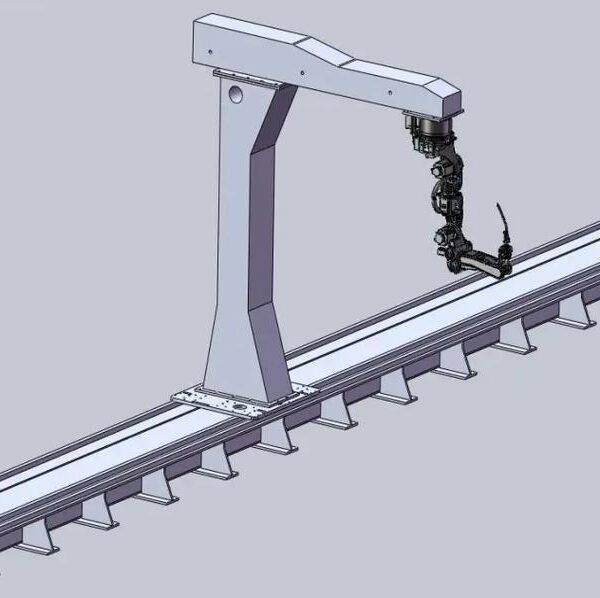

Cantilever Welding Robot solution
-
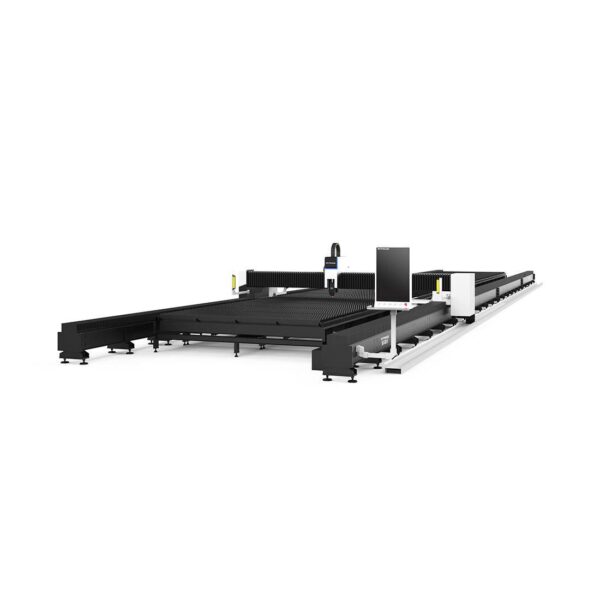

GF laser cutting machine
-
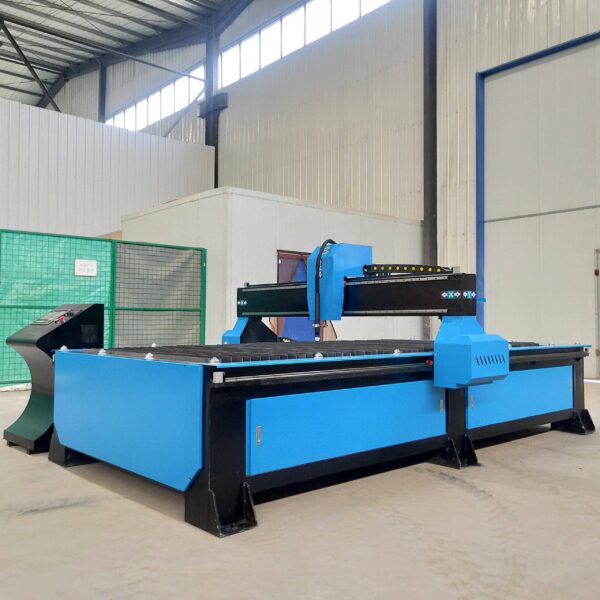
P3015 plasma cutting machine
-

LFP3015 Fiber Laser Cutter
-
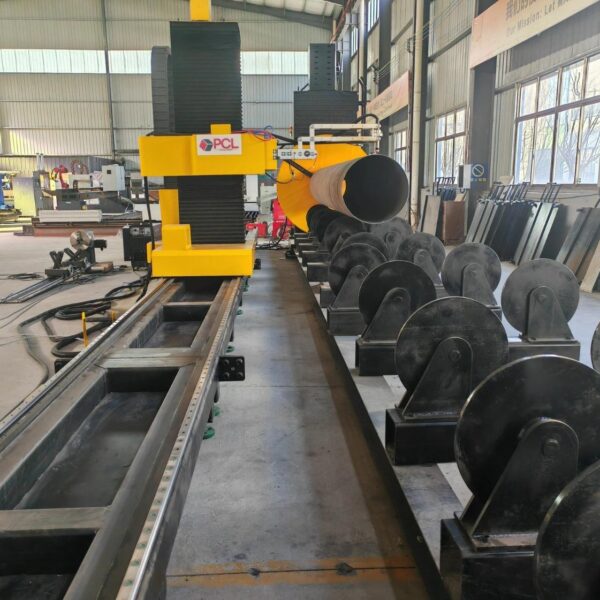
pipe plasma cutting machine
-
LFH 4020 Fiber Laser Cutting Machine
-
LFP4020
-
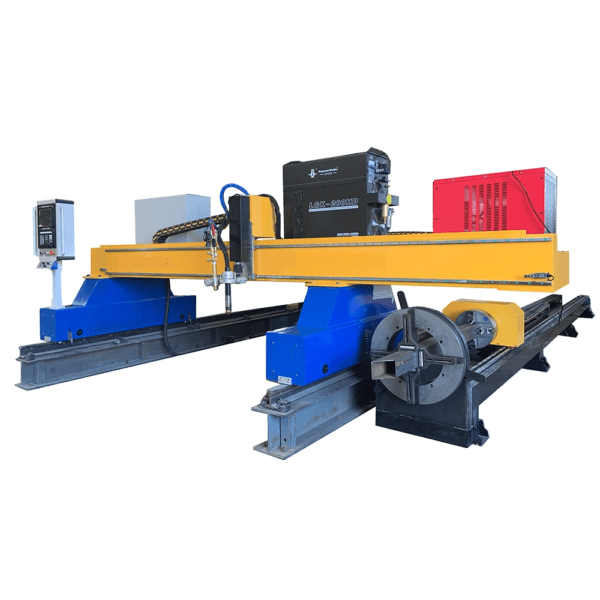
gantry plasma air cutting machine
-
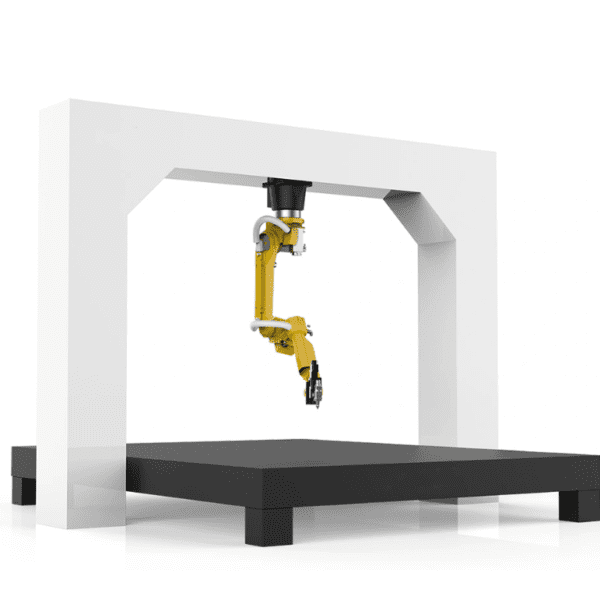
3D robot cutting machine
-
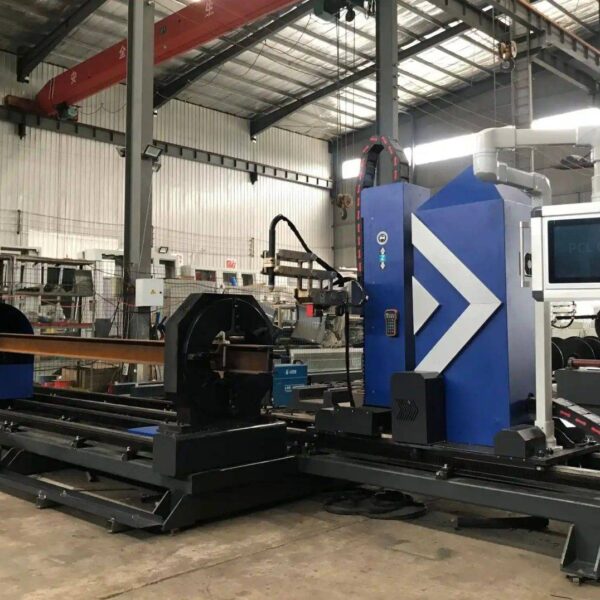
8 axis plasma cutting machine
-
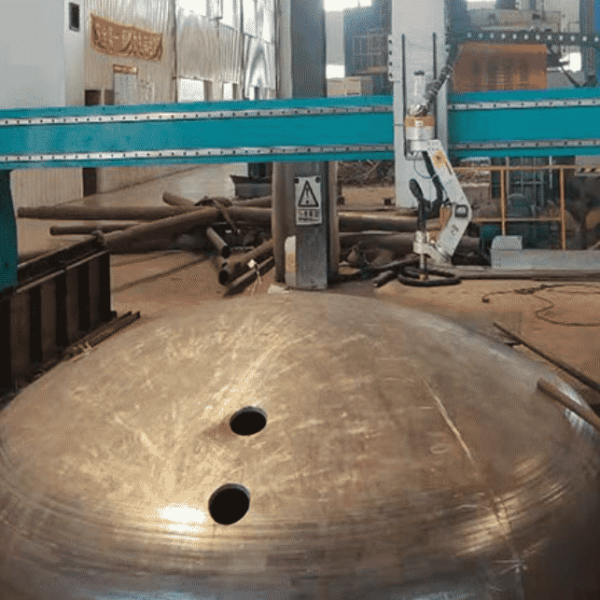
5 axis plasma cutting machine
-

LT360 tube laser cutting machine
-
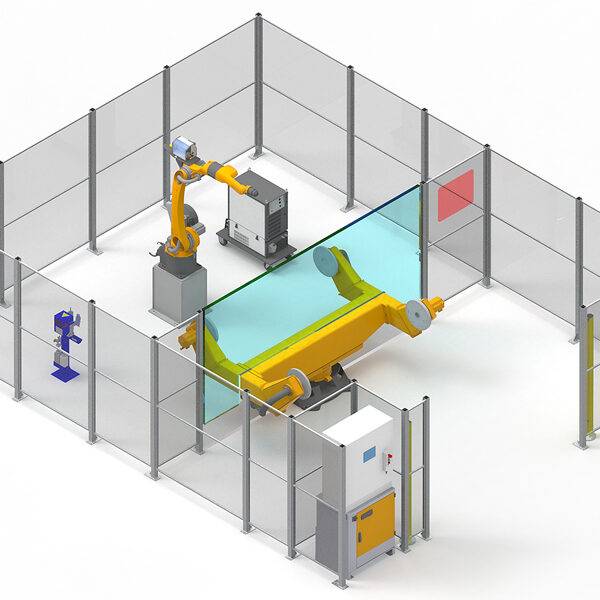
robot welding workstation
-
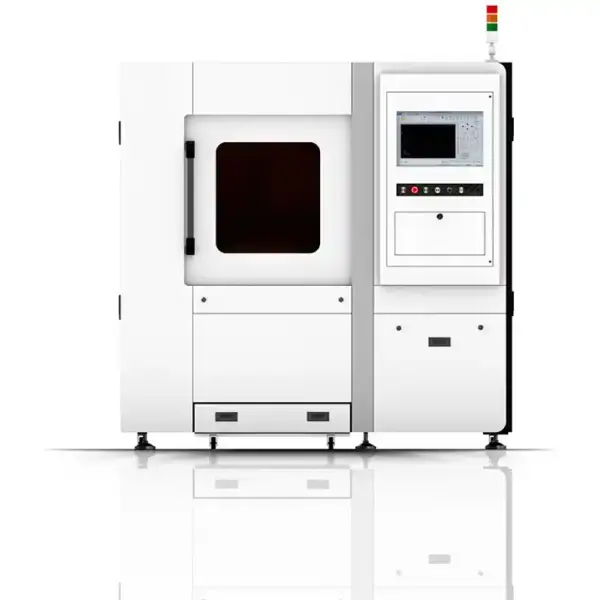
SF6060 fiber laser cutting machine
Advanced Fiber Laser Tube Processing Technology
Our CNC Fiber Laser Tube Cutting systems revolutionize metal fabrication by integrating high-precision cutting, punching, and profiling into a single automated workflow. Designed for versatility, this technology handles a wide array of profiles including Round, Square, Rectangular, and Oval tubes, as well as complex L-shaped and U-shaped channels.
- Precision Punching: High-speed hole punching with micron-level accuracy, eliminating the need for mechanical drilling or die-stamping.
- Complex Profiling: Advanced 3D pathing allows for intricate interlocking joints and specialized notch cuts, ideal for structural frames.
- High Material Efficiency: Intelligent nesting software minimizes scrap, reducing raw material costs across large production runs.
- Clean Finish: Delivers oxide-free, burr-free edges that require zero secondary grinding before welding.

Seamlessly processing multiple profiles with consistent precision.
Global Delivery & Logistics



From our high-tech manufacturing facility directly to your global site. PCL WeldCut ensures secure packaging, professional handling, and reliable international logistics to safeguard your equipment throughout the entire journey.