Engineering Review: Double Pulse Automated MAG Welding Cell – Johannesburg, South Africa
In this article
- Field Engineering Report: Implementation of Double Pulse Automated MAG Welding Cell
- Project Overview: Site Commissioning in Johannesburg
- The Technical Infrastructure: Automated MAG Welding Cell Specifics
- Integrating Arc Welding Solutions into the Local Grid
- Sheet Metal Fabrication Welding: Overcoming Distortion
- Practical Application and Synergy on the Shop Floor
- Lessons Learned: The Johannesburg Field Notes
- Performance Metrics and ROI
- Technical Summary for Future Deployments
Field Engineering Report: Implementation of Double Pulse Automated MAG Welding Cell
Project Overview: Site Commissioning in Johannesburg
This report details the technical commissioning and performance evaluation of the newly installed Double Pulse Automated MAG Welding Cell at our primary fabrication facility in Johannesburg, South Africa. As the local industry shifts toward higher precision requirements for export-grade components, the transition from manual processes to integrated Arc Welding Solutions has become a technical necessity rather than a luxury. The objective was to streamline Sheet Metal Fabrication welding for 3mm to 6mm 3CR12 stainless steel and mild steel assemblies, ensuring repeatable penetration profiles and aesthetic bead finishes without the thermal distortion typical of high-heat input manual MAG.
The Technical Infrastructure: Automated MAG Welding Cell Specifics
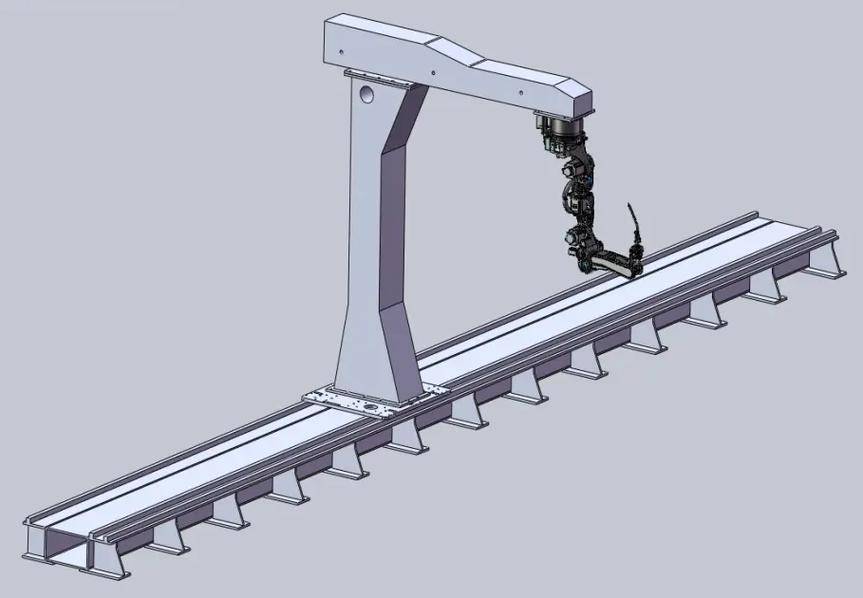
The core of the installation is a 6-axis robotic manipulator integrated with a high-speed digital power source capable of complex waveform modulation. In the Johannesburg context, “Automated MAG Welding Cell” refers to more than just the robot; it encompasses the synchronized rotary positioner, the automated torch cleaning station, and the environmental extraction systems designed for high-duty cycle operations.
Waveform Dynamics: Double Pulse Logic
We opted for a Double Pulse (Pulse-on-Pulse) regime. This involves the modulation of the wire feed speed and current between two distinct levels. During the commissioning phase, we encountered significant challenges with arc stability due to the local ambient conditions—specifically the high altitude and dry winter air of the Gauteng plateau, which affects gas ionization and cooling rates. By fine-tuning the base current and the pulse frequency (typically set between 0.5Hz and 3.0Hz), we achieved a “stacked dime” appearance usually reserved for TIG welding, but at the travel speeds inherent to an Automated MAG Welding Cell.
Integrating Arc Welding Solutions into the Local Grid
One cannot discuss industrial automation in South Africa without addressing the volatility of the power supply. Our Arc Welding Solutions had to be bolstered by high-capacity voltage stabilizers and surge protection to prevent logic errors in the PLC during grid fluctuations.
Power Source Synergy
The synergy between the Automated MAG Welding Cell and our chosen Arc Welding Solutions lies in the communication protocol. We utilized a Profinet interface to allow the power source to provide real-time feedback to the robot controller. If the voltage drops below a specific threshold (a common occurrence in Johannesburg’s industrial zones), the system automatically adjusts the travel speed or triggers a controlled ramp-down to prevent cold-lapping or porosity. This level of integration ensures that the Sheet Metal Fabrication welding remains consistent despite external infrastructural inconsistencies.
Sheet Metal Fabrication Welding: Overcoming Distortion
Sheet metal, particularly the 3CR12 alloy frequently used in local mining and structural applications, is notoriously sensitive to heat-induced warping. Manual welding often results in extensive post-weld straightening. By implementing an Automated MAG Welding Cell, we constrained the heat-affected zone (HAZ) through precise torch angles and optimized travel speeds.
Fixture Design and Heat Sinking
A critical lesson learned during the first week of operation was that standard clamping was insufficient for high-speed automated processes. We redesigned the jigs to include copper heat-sink inserts. In Sheet Metal Fabrication welding, the goal is to extract heat as rapidly as possible from the trailing edge of the weld pool. The robotic precision allowed us to maintain a constant 1.5mm arc length, which, when coupled with the double pulse waveform, reduced the total heat input by approximately 22% compared to the previous manual GMAW process.
Practical Application and Synergy on the Shop Floor
In the Johannesburg workshop, the synergy between the Automated MAG Welding Cell and our customized Arc Welding Solutions was most evident during the production of 500-liter storage tanks. The process required long, continuous fillet welds that are physically taxing for manual operators to perform consistently.
Optimizing the Gas Mix
We moved away from the standard 80/20 Argon/CO2 mix to a more refined 98/2 Argon/Oxygen mix for the stainless components. This change, while seemingly minor, significantly improved the fluid dynamics of the weld pool. The Arc Welding Solutions software allowed us to map the surface tension characteristics, ensuring that the Double Pulse function could effectively “shake” the puddle to release entrapped gasses—a vital requirement for meeting the stringent X-ray quality standards required by our clients in the petrochemical sector.
Lessons Learned: The Johannesburg Field Notes
1. Dust Mitigation in the Control Cabinet
The industrial environment in Johannesburg is particularly dusty. We found that the standard fan filters on the Automated MAG Welding Cell were clogging every 48 hours, leading to overheating of the servo drives. We have since retrofitted the cabinets with positive-pressure cooling systems. For any future Sheet Metal Fabrication welding setups in this region, IP65-rated enclosures for the power source logic boards are non-negotiable.
2. Wire Feeding Consistency
We initially experienced intermittent “bird-nesting” at the drive rolls. Technical analysis revealed that the high-intensity Double Pulse cycle puts more mechanical stress on the wire than standard spray transfer. We switched to a four-roll drive system and replaced the standard liners with low-friction Teflon variants. This adjustment is essential when the Arc Welding Solutions are pushed to their maximum duty cycle.
3. The “Human-in-the-Loop” Factor
Automation does not replace the welder; it redefines their role. Our local staff had to be trained in “weld tracking” and “sensor calibration” rather than just “hand-eye coordination.” The most successful operators were those who understood the relationship between the contact-to-work distance (CTWD) and the final bead profile. The Automated MAG Welding Cell is only as good as the parameters programmed by the technician.
Performance Metrics and ROI
After three months of operation, the data indicates a 40% reduction in consumable waste and a 60% increase in throughput for our primary Sheet Metal Fabrication welding line. More importantly, the reject rate due to distortion or lack of fusion has dropped from 8% to under 0.5%. The integration of these Arc Welding Solutions has allowed the facility to bid on international contracts that were previously out of reach due to quality consistency concerns.
Technical Summary for Future Deployments
For future rollouts of an Automated MAG Welding Cell in the South African market, the following hardware/software stack is recommended:
- Power Source: Minimum 400A at 100% duty cycle with high-speed digital pulse control.
- Gas Delivery: Mass flow controllers integrated into the robotic arm to prevent surges during arc-start.
- Sensors: Through-arc seam tracking is essential for Sheet Metal Fabrication welding where part fit-up may vary by +/- 1.0mm.
- Grid Protection: Dedicated UPS for the robot controller and a voltage regulator for the welding power source.
The successful deployment in Johannesburg proves that while the environment presents unique challenges, the combination of advanced Arc Welding Solutions and robust automation hardware creates a manufacturing capability that is globally competitive. The key is not just the equipment, but the deliberate calibration of that equipment to the specific metallurgical and environmental conditions of the site.
Final Engineering Approval
The system is cleared for 24/7 production. Periodic maintenance of the torch neck and contact tips should remain on a 20-hour cycle to ensure the integrity of the Double Pulse frequency is not compromised by copper-to-wire friction changes.
Signed,
Senior Welding Engineer, Johannesburg Site Operations







