Field Report: Deployment of Air-Cooled Collaborative Arc Welding Systems in Singapore’s Precision Engineering Sector
1.0 Introduction and Contextual Background
In the current industrial landscape of Singapore, particularly within the Tuas and Jurong industrial estates, the push toward high-mix, low-volume (HMLV) production has rendered traditional fixed automation obsolete for many SMEs. As a senior engineer overseeing the transition from manual operations, this report evaluates the field performance of the Air-cooled Collaborative Arc Welding System. The primary objective was to integrate Automated Welding into a workflow previously dominated by manual TIG and MIG stations, specifically targeting Thin Metal Sheet welding (0.8mm to 2.5mm) where thermal distortion and aesthetic finish are critical.
The Singaporean context adds a unique layer of environmental complexity. High ambient humidity (often exceeding 80%) and temperatures ranging from 30°C to 34°C inside non-climate-controlled workshops create specific challenges for welding equipment. This report details why the air-cooled collaborative approach was selected over water-cooled alternatives and how it has redefined our production throughput.
2.0 The Synergy: Collaborative Arc Welding System and Automated Welding
The distinction between a standard industrial robot and a Collaborative Arc Welding System is fundamental to our operational success. In a standard automated welding setup, the robot is a “black box” requiring specialized PLC programmers and heavy safety gating. In contrast, the collaborative system allows our skilled manual welders to become “process controllers.”
2.1 Democratizing Automated Welding
By utilizing a Collaborative Arc Welding System, we have successfully bridged the gap between manual dexterity and Automated Welding precision. The “lead-through” programming capability allows a welder to physically move the torch to the start, intermediate, and end points of a seam. This is not merely a convenience; in a Singaporean workshop where floor space is at a premium, the ability to operate without bulky safety cages—relying instead on power and force limiting (PFL) sensors—is the only way to achieve Automated Welding in legacy layouts.
2.2 Integration Logistics
During the field test, we integrated a 6-axis cobot with a high-speed inverter power source. The communication via EtherCAT ensured that the arc characteristics (voltage, wire feed speed) were synchronized with the robot’s travel speed down to the millisecond. This level of integration is what transforms a “robot arm” into a true “Collaborative Arc Welding System.”
3.0 Technical Deep Dive: Thin Metal Sheet Welding
The most significant hurdle in our production line was Thin Metal Sheet welding. Specifically, we were dealing with Grade 304 Stainless Steel and AL5052 Aluminum sheets. Manual welding these materials often resulted in a 15% rework rate due to warping or “burn-through.”
3.1 Heat Input Control
In Thin Metal Sheet welding, the margin for error regarding heat input is razor-thin. If the torch dwells for even 0.2 seconds too long, the localized heat exceeds the melting point of the substrate, causing a blowout. The Collaborative Arc Welding System excels here because of its constant velocity. Unlike a human hand, which has micro-tremors and inconsistent travel speed, the automated system maintains a precise 450mm/min travel speed with a consistent 2mm standoff distance (CTWD).
3.2 Pulsed Arc Parameters
To further optimize Thin Metal Sheet welding, we implemented a “Short-Circuit” pulsed arc mode. By syncing the pulse frequency with the cobot’s movement, we achieved a “stack of dimes” aesthetic on 1.2mm sheets without the need for back-purging in some non-critical mild steel applications. This significantly reduced gas consumption and post-weld grinding time—a major bottleneck in our Singapore facility.
4.0 Why Air-Cooled? The Singapore Environmental Factor
A frequent point of contention in welding engineering is the choice between air-cooled and water-cooled torches. For this deployment, we opted for an air-cooled Collaborative Arc Welding System.
4.1 Humidity and Condensation
In Singapore’s tropical climate, water-cooled systems often suffer from “sweating” or condensation on the power cables and internal torch components. This moisture can lead to porosity in the weld pool and, more critically, can compromise the high-frequency insulation of the torch. An air-cooled system, while having a lower duty cycle (typically 60% at max amperage), is far more robust in our environment. Given that Thin Metal Sheet welding rarely requires exceeding 150 Amps, the air-cooled torch never reached its thermal limit.
4.2 Maintenance and Reliability
Water-cooled systems require chillers, deionized water, and constant monitoring for leaks. In a busy Tuas workshop, a leaking coolant line is a slip hazard and a potential contaminant for the weld. By utilizing air-cooled technology, we simplified the Automated Welding cell, reducing the footprint and the Mean Time To Repair (MTTR).
5.0 Field Implementation: Lessons Learned
The transition to a Collaborative Arc Welding System was not without its “teething” issues. Several lessons were learned during the first 500 hours of operation.
5.1 The Importance of Jigs and Fixturing
The biggest mistake made in early Automated Welding attempts was underestimating fixture tolerance. A human welder can compensate for a 1mm gap in a thin sheet seam. A robot cannot. We had to redesign our jigs to ensure that Thin Metal Sheet welding joints were held with a zero-gap tolerance. This shift from “loose fit” to “precision fit” was the single largest cultural change for our floor staff.
5.2 TCP (Tool Center Point) Calibration
In a Collaborative Arc Welding System, the torch is often bumped by operators during the “lead-through” teaching phase. We learned that daily TCP calibration is non-negotiable. A deviation of just 0.5mm is enough to miss the root of a fillet weld on a 1mm sheet, leading to a lack of fusion.
5.3 Gas Coverage in High-Airflow Environments
Many Singaporean workshops use large “industrial fans” to keep workers cool. This airflow can disrupt the shielding gas, leading to porosity. When moving to Automated Welding, we had to install localized transparent screens around the cobot cell to ensure the 15-20 CFH of Argon/CO2 mix remained undisturbed during the Thin Metal Sheet welding process.
6.0 Quantitative Results and ROI
After six months of operation, the data yields the following insights:
- Rework Reduction: Thin sheet distortion rework dropped from 14% to 2.2%.
- Cycle Time: A typical enclosure box that took 12 minutes to manual-weld now takes 4.5 minutes via the Collaborative Arc Welding System.
- Consumable Efficiency: 20% reduction in shielding gas waste due to optimized “gas pre-flow” and “post-flow” settings in the Automated Welding program.
7.0 Conclusion
The deployment of the Air-cooled Collaborative Arc Welding System has proven to be the most viable path for automating Thin Metal Sheet welding in the Singaporean context. By focusing on the synergy between the operator’s process knowledge and the robot’s repeatability, we have achieved a level of Automated Welding that was previously thought to be the domain of high-budget automotive plants.
For future deployments, the focus must remain on rigid fixturing and climate-specific hardware choices. The air-cooled torch is the correct choice for our humidity, provided the duty cycle is matched to the thin-gauge requirements. As we scale, the integration of AI-driven vision systems for real-time seam tracking will be the next logical step in our engineering roadmap.
Report Prepared By:
Senior Welding Engineer, SG Division
Ref: AW-CB-2024-TR09
-


LT240S tube laser cutting machine
-
LT120S tube laser cutting machine
-
Sale

Tank Fillet Welding Machine
Original price was: $1,000.00.$900.00Current price is: $900.00. -
Sale

MAK100 tube laser cutting machine
Original price was: $5,500.00.$5,000.00Current price is: $5,000.00. -

portable plasma air cutting machine
$1,200.00 -

2in1 fiber laser cutting machine
-

Air cooling Laser welding machine
-

HF h beam laser cutting machine
-

LT240 laser cutting machine
-

Laser welding machine
-


Cobot Welding Station
-

Gantry welding robot solution
-

Tracked Wheeled AGV Welding robot
-

LFH6020 Fiber laser cutting machine
-
LFP6020
-

robotic welidng machine
Advanced Fiber Laser Tube Processing Technology
Our CNC Fiber Laser Tube Cutting systems revolutionize metal fabrication by integrating high-precision cutting, punching, and profiling into a single automated workflow. Designed for versatility, this technology handles a wide array of profiles including Round, Square, Rectangular, and Oval tubes, as well as complex L-shaped and U-shaped channels.
- Precision Punching: High-speed hole punching with micron-level accuracy, eliminating the need for mechanical drilling or die-stamping.
- Complex Profiling: Advanced 3D pathing allows for intricate interlocking joints and specialized notch cuts, ideal for structural frames.
- High Material Efficiency: Intelligent nesting software minimizes scrap, reducing raw material costs across large production runs.
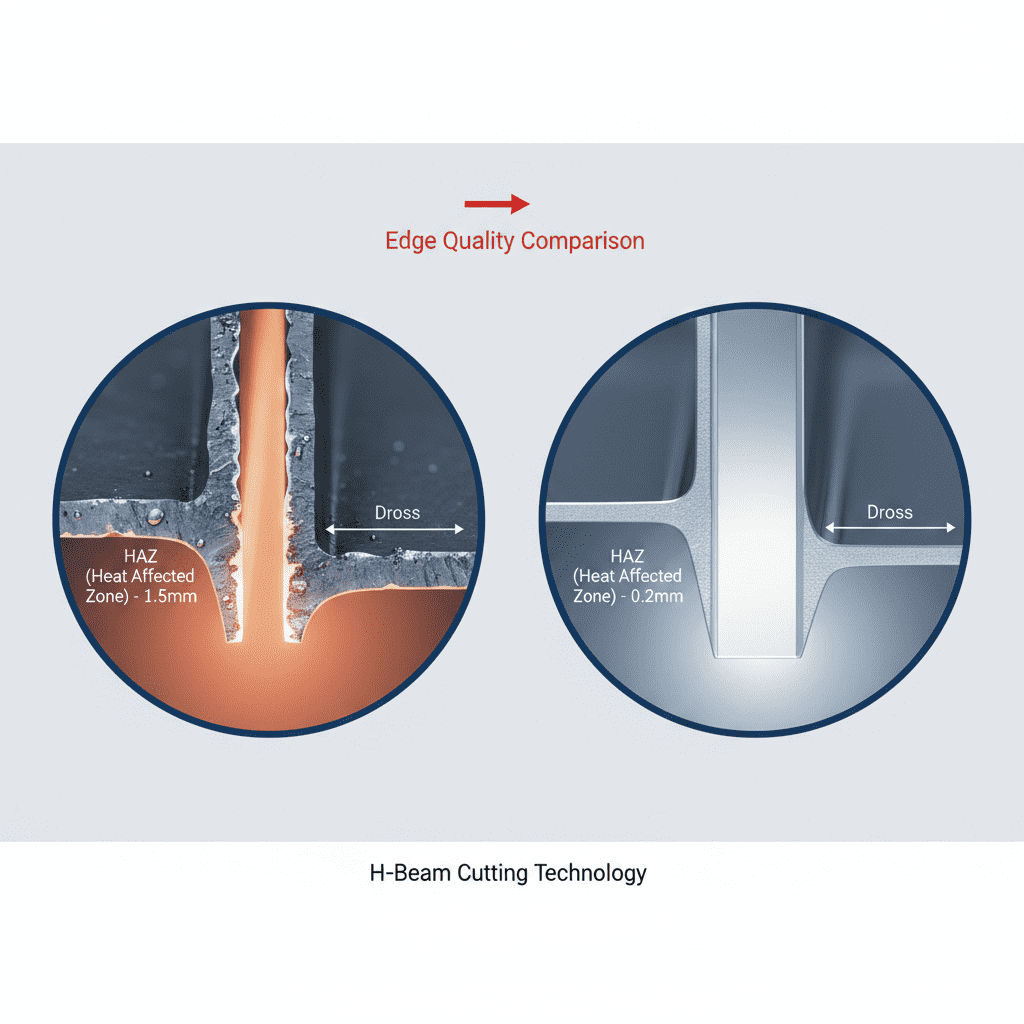
- Clean Finish: Delivers oxide-free, burr-free edges that require zero secondary grinding before welding.

Seamlessly processing multiple profiles with consistent precision.
Global Delivery & Logistics



From our high-tech manufacturing facility directly to your global site. PCL WeldCut ensures secure packaging, professional handling, and reliable international logistics to safeguard your equipment throughout the entire journey.