Field Engineering Report: Implementation of 2000W Industrial Laser Welder
Site Location: 6th of October City, Industrial Zone, Cairo, Egypt
The following report details the technical deployment and performance evaluation of a 2000W Industrial Laser Welder within a high-output manufacturing facility in Cairo. The primary objective was to transition from conventional Gas Tungsten Arc Welding (GTAW) to advanced Laser Technology for the assembly of structural frames and specialized Galvanized Pipe welding applications. The environmental conditions in Cairo—specifically high ambient temperatures (reaching 42°C) and significant particulate matter—provided a rigorous testing ground for the hardware’s resilience and duty cycle.
Technical Specification and Synergy of Laser Technology
The core of the system is a continuous wave (CW) fiber laser source. The synergy between the Industrial Laser Welder and modern Laser Technology is most evident in the power density management. Unlike traditional arc welding, where the energy is spread over a wider area, the 2000W laser concentrates energy into a spot size of approximately 150μm to 200μm. This creates a “keyhole” effect that allows for deep penetration with minimal heat input.
The Cooling Challenge in Cairo
In the Cairo climate, the synergy between the power source and the dual-circuit water chiller is the most critical technical bottleneck. Laser Technology is highly sensitive to thermal fluctuations. We observed that at ambient temperatures exceeding 38°C, the chiller’s ability to maintain the laser source at the optimal 25°C was taxed. We had to implement a dedicated HVAC micro-climate for the power source to ensure the Industrial Laser Welder maintained a 100% duty cycle. Lessons learned here indicate that for Middle Eastern deployments, the chiller capacity should be oversized by at least 30% compared to European specifications.
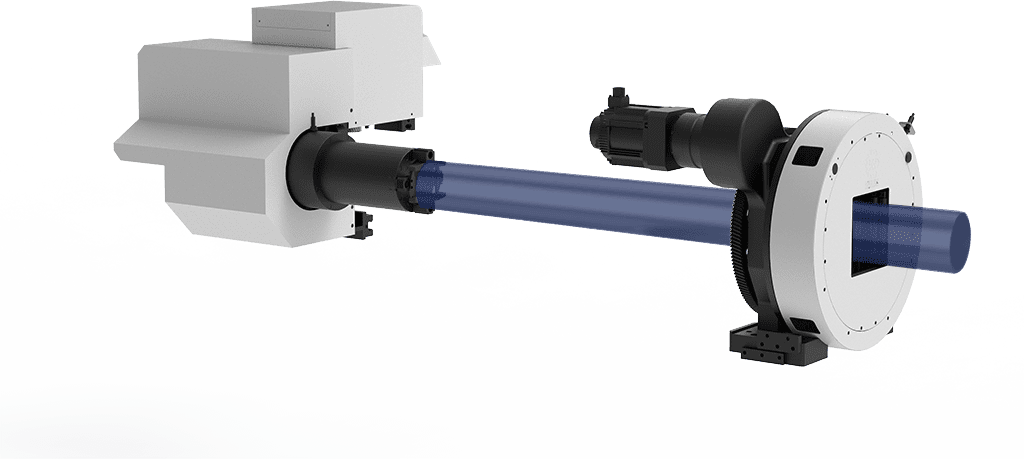
Advanced Application: Galvanized Pipe Welding
The most significant portion of this field test involved Galvanized Pipe welding. Historically, welding galvanized steel is a nightmare for engineers due to the zinc coating. Zinc sublimates at roughly 907°C, while steel melts at approximately 1500°C. In traditional welding, the trapped zinc vapor creates massive porosity and explosive spatter.
Overcoming Zinc Sublimation with Laser Technology
By utilizing the Industrial Laser Welder, we employed a “wobble” function. This Laser Technology allows the beam to oscillate in various patterns (circles, lines, eights) at frequencies up to 300Hz. When performing Galvanized Pipe welding, we utilized a 3mm circle wobble at a 150Hz frequency. This technique keeps the weld pool fluid for a fraction of a second longer, allowing the high-pressure zinc vapor to escape before the pool solidifies. The result is a silver-bright weld bead with zero internal porosity, a feat nearly impossible with high-speed MIG or TIG without stripping the zinc coating first.
Parameters for 2.5mm Wall Thickness Galvanized Pipe
- Power: 1800W
- Wobble Width: 2.5mm
- Wobble Frequency: 160Hz
- Shielding Gas: Nitrogen at 15L/min
- Feed Speed: 1.2m/min
Integration of Industrial Laser Welder into Local Workflow
The transition to an Industrial Laser Welder in a Cairo workshop requires more than just hardware; it requires a shift in metallurgical understanding. The local workforce is highly skilled in stick and TIG welding, but Laser Technology demands a focus on fit-up precision. Because the laser beam is so narrow, a gap of even 0.5mm can lead to burn-through on a Galvanized Pipe welding task.
Gap Management and Wire Feeding
To mitigate the strict fit-up requirements common in Egyptian structural steel, we integrated an automatic wire feeder with the 2000W unit. The synergy here is vital: the Industrial Laser Welder uses the wire not just as filler, but as a bridge to compensate for imperfect pipe cuts. We found that 0.8mm ER70S-6 wire paired with the laser’s high energy density resulted in a structural joint that exceeded the tensile strength of the base galvanized pipe.
Environmental and Maintenance Lessons
Cairo’s industrial zones are notoriously dusty. This is the primary enemy of Laser Technology. During the first week, we noticed a drop in penetration depth. Upon inspection, the protective lens (the final optic) had accumulated fine silica dust, which caused “thermal lensing”—the dust absorbs the laser energy, heats up, and distorts the beam focus.
Lessons Learned: Optical Hygiene
1. Positive Pressure: We modified the welding head to include a constant nitrogen purge even when the laser was not firing. This kept dust from settling on the lens during downtime.
2. Lens Replacement Schedule: In the Cairo environment, the protective lens must be inspected every 4 hours of active trigger time.
3. Gas Purity: We encountered issues with local Nitrogen purity. Low-purity gas caused oxidation during Galvanized Pipe welding, turning the weld black. We switched to 99.999% high-purity Nitrogen, which restored the “clean” finish expected of Laser Technology.
Economic Impact on Egyptian Manufacturing
The use of a 2000W Industrial Laser Welder significantly reduces the post-weld processing time. In Galvanized Pipe welding, traditional methods require grinding off the spatter and reapplying cold-galvanizing spray. Because the laser produces almost zero spatter and has an extremely narrow Heat Affected Zone (HAZ), the zinc coating remains intact within 1.5mm of the weld bead. This preserves the anti-corrosive properties of the pipe and eliminates the need for secondary grinding, which is a major labor cost in the 6th of October City workshops.
Throughput Analysis
Comparing 100 meters of Galvanized Pipe welding:
– TIG: 14 hours (including prep and cleaning).
– 2000W Industrial Laser Welder: 2.5 hours.
The Laser Technology provides a nearly 6x increase in throughput, making the higher initial capital expenditure (CAPEX) justifiable within approximately 8 months of operation under local labor rates and high-volume demand.
Safety and Training Protocols
A senior engineer’s primary concern with an Industrial Laser Welder is the Class 4 radiation hazard. In many Cairo shops, open-bay welding is the norm. This is unacceptable for Laser Technology. We mandated the construction of a light-tight enclosure using certified laser-safety curtains (OD6+ rating for 1070nm).
Operator Transition
The “Lessons Learned” regarding the human element are crucial. Older welders initially distrusted the Laser Technology, fearing it wouldn’t hold the weight of structural galvanized pipes. After performing a series of “destructive bend tests” on Galvanized Pipe welding samples where the pipe failed before the weld, the technical skepticism was resolved. Training focused on the “hand-eye-speed” coordination, as the laser moves much faster than a traditional torch.
Conclusion: The Future of Laser Technology in Cairo
The deployment of the 2000W Industrial Laser Welder has proven that even in harsh environmental conditions, Laser Technology can outperform traditional methods. The specific success in Galvanized Pipe welding—achieving high-speed, clean, and structurally sound joints—sets a new benchmark for local manufacturing. As long as optical hygiene is maintained and the cooling systems are calibrated for the Egyptian heat, the industrial laser is the most significant upgrade a modern Cairo workshop can implement. The synergy of power, precision, and speed provided by this system ensures a competitive edge in both local and export markets.
-


LT240S tube laser cutting machine
-
LT120S tube laser cutting machine
-
Sale

Tank Fillet Welding Machine
Original price was: $1,000.00.$900.00Current price is: $900.00. -
Sale

MAK100 tube laser cutting machine
Original price was: $5,500.00.$5,000.00Current price is: $5,000.00. -

portable plasma air cutting machine
$1,200.00 -

2in1 fiber laser cutting machine
-

Air cooling Laser welding machine
-

HF h beam laser cutting machine
-

LT240 laser cutting machine
-

Laser welding machine
-


Cobot Welding Station
-

Gantry welding robot solution
-

Tracked Wheeled AGV Welding robot
-

LFH6020 Fiber laser cutting machine
-
LFP6020
-

robotic welidng machine
Advanced Fiber Laser Tube Processing Technology
Our CNC Fiber Laser Tube Cutting systems revolutionize metal fabrication by integrating high-precision cutting, punching, and profiling into a single automated workflow. Designed for versatility, this technology handles a wide array of profiles including Round, Square, Rectangular, and Oval tubes, as well as complex L-shaped and U-shaped channels.
- Precision Punching: High-speed hole punching with micron-level accuracy, eliminating the need for mechanical drilling or die-stamping.
- Complex Profiling: Advanced 3D pathing allows for intricate interlocking joints and specialized notch cuts, ideal for structural frames.
- High Material Efficiency: Intelligent nesting software minimizes scrap, reducing raw material costs across large production runs.
- Clean Finish: Delivers oxide-free, burr-free edges that require zero secondary grinding before welding.

Seamlessly processing multiple profiles with consistent precision.
Global Delivery & Logistics



From our high-tech manufacturing facility directly to your global site. PCL WeldCut ensures secure packaging, professional handling, and reliable international logistics to safeguard your equipment throughout the entire journey.