Engineering Review: 1500W Robotic Arm Welder – Georgia, USA
In this article
- Field Engineering Report: Integration of 1500W Robotic Arm Welder in Georgia Industrial…
- Project Overview and Site Context
- Technical Specifications and System Synergy
- Deep Dive: Practical Tool Steel Welding Challenges
- Operational Synergy in the Georgia Workshop
- Lessons Learned and Technical Field Notes
- Conclusion and Future Outlook
Field Engineering Report: Integration of 1500W Robotic Arm Welder in Georgia Industrial Sector
Project Overview and Site Context
This report summarizes the technical deployment and optimization of a 1500W fiber laser Robotic Arm Welder at a Tier-1 automotive tooling facility in Gainesville, Georgia. The facility primarily services injection molding operations, requiring frequent, high-precision repair and fabrication of complex dies. Historically, these components were handled via manual TIG (Tungsten Inert Gas) welding, which introduced significant thermal stress and inconsistent penetration depths. The shift toward Industrial Automation was necessitated by a shrinking pool of specialized manual welders and an increasing demand for tighter tolerances in Tool Steel welding.
The Georgia site presented specific environmental challenges, including high ambient humidity and fluctuating power grid stability typical of the region’s industrial corridors. To mitigate this, the 1500W system was integrated with a dedicated climate-controlled enclosure and a dual-stage voltage regulator to ensure the fiber laser source maintained a stable beam profile during extended duty cycles.
Technical Specifications and System Synergy
The Robotic Arm Welder Configuration
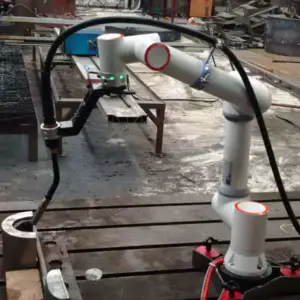
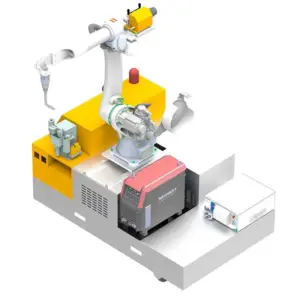
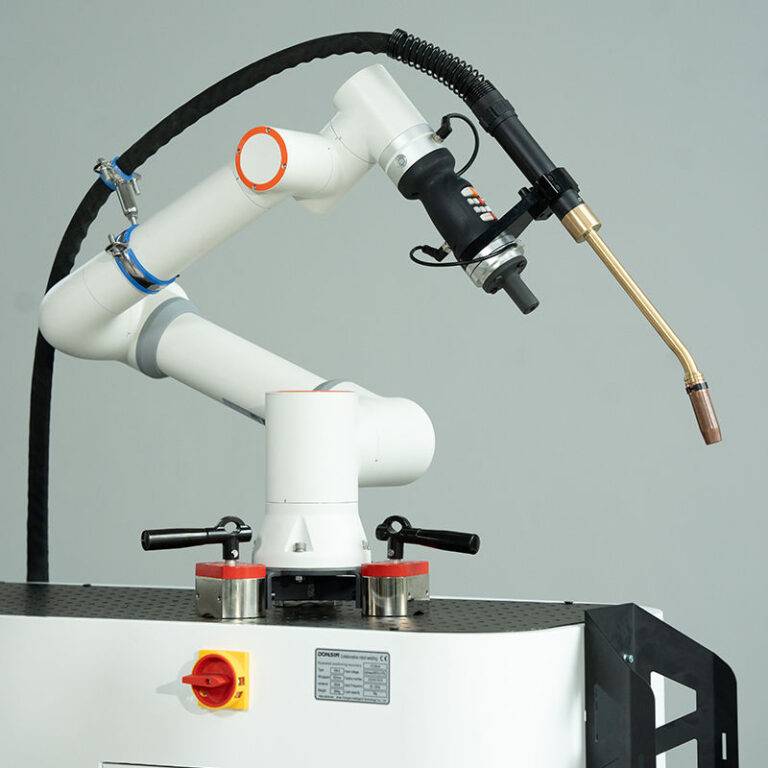
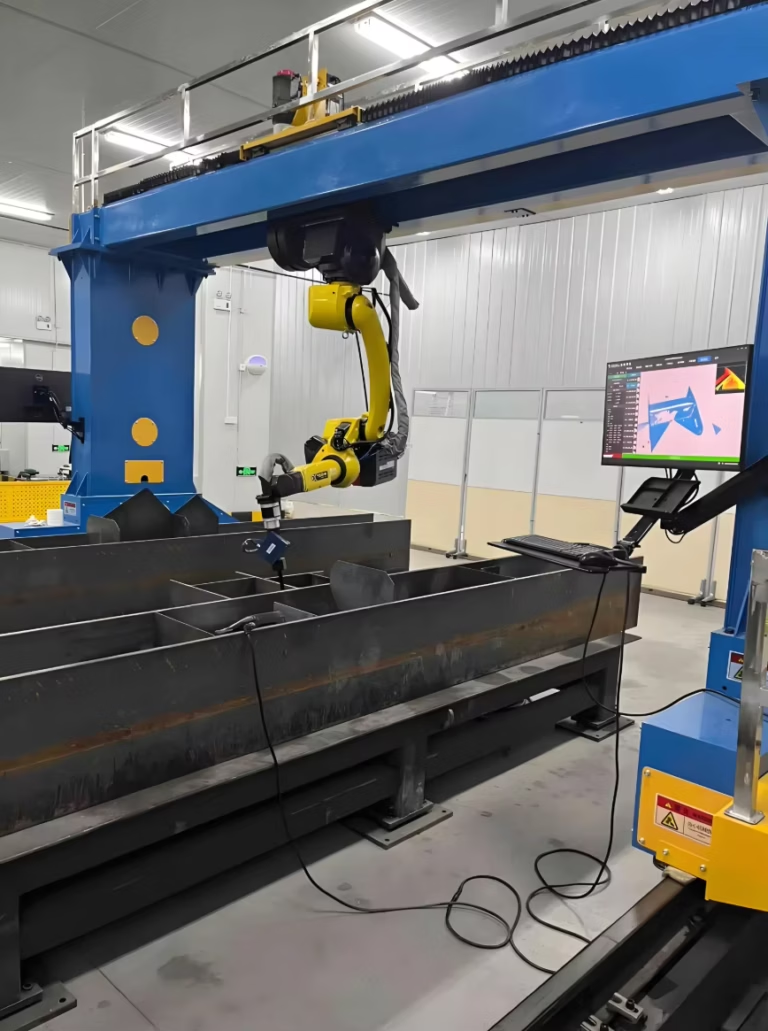
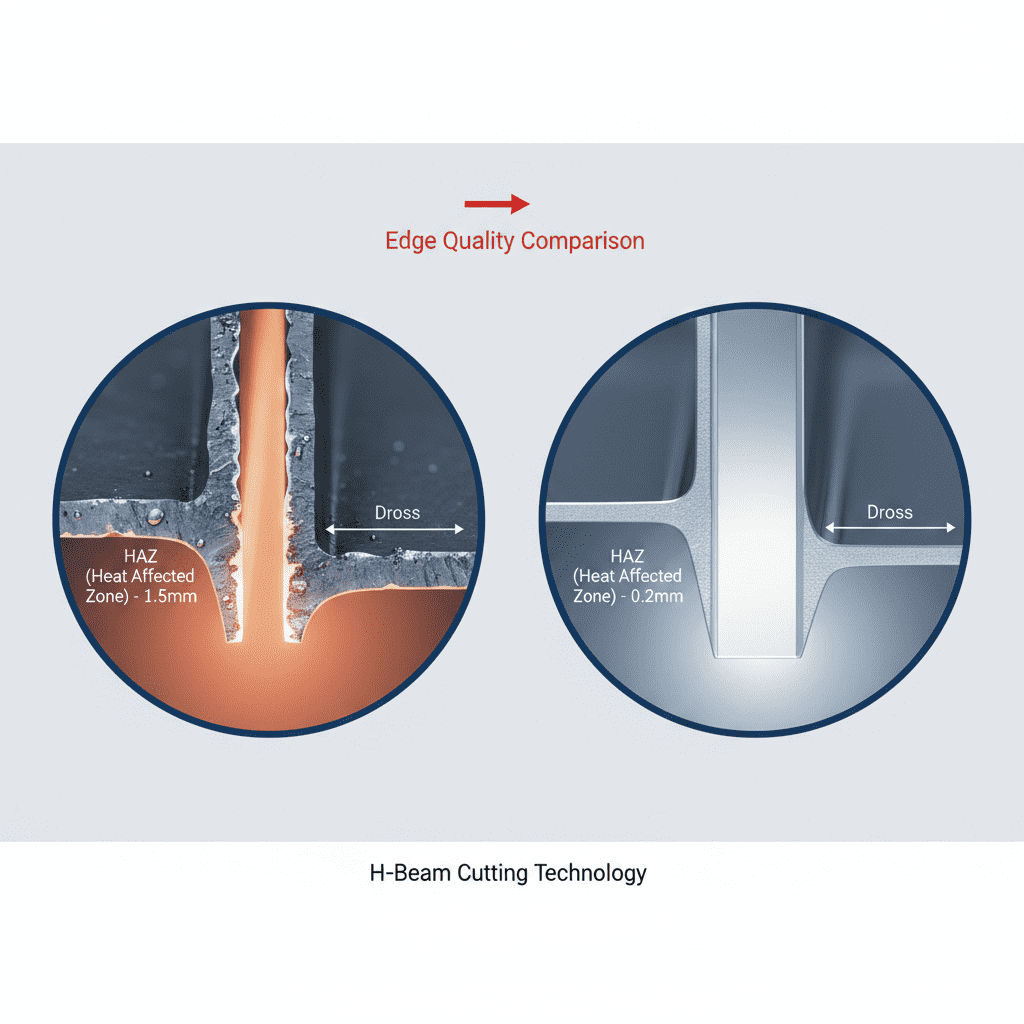
The core of the system is a 6-axis industrial manipulator integrated with a 1500W continuous wave (CW) fiber laser head. Unlike traditional MIG/MAG robotic cells, the Robotic Arm Welder utilizing laser technology requires sub-millimeter path accuracy. In this application, we utilized a “wobble” head attachment. This allows the beam to oscillate in various patterns (circular, zig-zag, or figure-eight), which is critical when dealing with the fit-up tolerances often found in Tool Steel welding. The synergy here is clear: the robot provides the repeatable pathing, while the 1500W laser provides a concentrated energy source that minimizes the Heat Affected Zone (HAZ).
Industrial Automation and Process Control
The integration of Industrial Automation goes beyond simple motion. At this site, we implemented a closed-loop feedback system using laser seam tracking. In Georgia’s high-throughput environments, manual jigging often introduces 0.5mm to 1.0mm of variance. The automation suite compensates for this in real-time, adjusting the robotic arm’s trajectory to ensure the focal point remains exactly on the joint interface. This level of synchronization is what separates basic mechanized welding from true automated industrial solutions.
Deep Dive: Practical Tool Steel Welding Challenges
Material Metallurgy: H13 and D2 Grades
The primary focus of this deployment was Tool Steel welding, specifically H13 hot-work tool steel and D2 cold-work steel. These materials are notoriously difficult to weld due to their high carbon and alloy content, which makes them prone to cracking if the cooling rate is not strictly controlled.
By using the 1500W Robotic Arm Welder, we were able to transition from a bulk-heating approach to a precision-striking approach. The 1500W power rating is the “sweet spot” for these materials. It provides enough energy to achieve deep penetration (up to 3mm in a single pass with the correct wire feed) without dumping excess heat into the surrounding substrate. This is vital for maintaining the hardness profile of the tool steel. If the HAZ becomes too large, the tool will fail prematurely in the field due to softening or stress-induced cracking.
Wire Feed Integration
For the repair of die edges, we integrated an automated cold-wire feeder into the Robotic Arm Welder setup. We utilized a 0.8mm ER80S-D2 filler wire. The Industrial Automation software was programmed to sync the wire feed speed precisely with the robot’s travel speed (measured in mm/s). Lessons learned in the field showed that a 10% lead in wire speed relative to travel speed helped in building up a “crown” on the weld, which is necessary for subsequent CNC machining back to the original tool dimensions.
Operational Synergy in the Georgia Workshop
In the context of the Georgia manufacturing landscape, the move to Industrial Automation is often driven by the need for 24/7 reliability. During the first two weeks of operation, the Robotic Arm Welder reduced the rework rate on tool repairs from 14% (manual) to less than 1.5%.
The synergy between the hardware and the local infrastructure was maximized by training local maintenance technicians on the PLC (Programmable Logic Controller) interface. We established a “Recipe Library” within the automation software. This allowed the operator to select “H13_Edge_Repair” or “D2_Joint_Fill,” and the robot would automatically adjust its power parameters, gas flow rates (Argon shielding), and travel speeds. This democratization of high-end welding expertise is the true value of Industrial Automation in a modern shop.
Lessons Learned and Technical Field Notes
1. Gas Shielding Dynamics
One of the primary issues encountered during the first 48 hours was porosity in the Tool Steel welding beads. We initially used a standard gas nozzle. However, the high-speed movement of the Robotic Arm Welder created a venturi effect, drawing in atmospheric oxygen and nitrogen. Lesson Learned: We switched to a custom-designed trailing shield nozzle that maintains a laminar flow of Argon over the weld pool for an additional 20mm behind the laser focal point. This eliminated porosity entirely.
2. Focal Point Drift
After four hours of continuous operation, we noticed a slight shift in penetration depth. Investigation revealed that the protective lens in the laser head was experiencing thermal shift. In an Industrial Automation setting, even a 0.2mm shift in the focal point can alter the energy density (W/cm²) enough to cause a “cold weld” on tool steel. Lesson Learned: We implemented a mandatory lens cleaning and calibration cycle every four hours of “arc-on” time, and upgraded to a gold-plated copper nozzle to better dissipate heat.
3. The Importance of Pre-heating in Automation
While the 1500W laser minimizes heat, Tool Steel welding still requires a baseline temperature to prevent martensitic cracking. We found that the robot’s precision actually worked against us if the base metal was too cold—the localized quench rate was too high. Lesson Learned: We integrated an induction heating coil into the robotic cell, controlled by the same Industrial Automation system. The robot now waits for an infrared sensor to confirm the tool steel has reached 250°C before initiating the weld sequence.
Conclusion and Future Outlook
The deployment of the 1500W Robotic Arm Welder in the Gainesville facility has proven that Industrial Automation is no longer just for high-volume automotive assembly lines; it is a surgical tool for the tool and die industry. The ability to perform Tool Steel welding with minimal distortion and high repeatability has significantly decreased the “time-to-market” for repaired molds.
For senior engineers looking to replicate this success in other Georgia-based facilities, the focus must remain on the integration of the peripheral systems—gas shielding, pre-heating, and real-time path correction. The Robotic Arm Welder is the engine, but the Industrial Automation logic is the driver. As we move forward, we are looking into integrating AI-based visual inspection to further refine the weld quality on the fly, ensuring that Georgia remains at the forefront of precision manufacturing.
Signed,
Senior Welding Engineer
Field Operations – Southeast Region