Field Engineering Report: Implementation of 1500W Robotic Arm Welder in Chennai Industrial Corridor
Date: October 24, 2023
Location: Sriperumbudur Industrial Estate, Chennai, Tamil Nadu
Subject: Optimization of 1500W Robotic Arm Welder for High-Precision Titanium Welding Applications
1. Project Overview and Environmental Context
This report details the commissioning and optimization of a 1500W fiber laser-integrated Robotic Arm Welder within a Tier-1 aerospace component manufacturing facility in Chennai. The facility aims to transition from manual TIG (Tungsten Inert Gas) processes to full-scale Industrial Automation to meet rising demand for lightweight aerospace structural assemblies.
The Chennai environment presents unique challenges for high-precision welding. Ambient humidity levels exceeding 80% and fluctuating grid voltages in the industrial corridor necessitate a robust approach to atmospheric control and power conditioning. The primary objective of this deployment was to achieve aerospace-grade Titanium welding (specifically Ti-6Al-4V) with zero rework rates, a feat previously unattainable via manual processes due to the thermal sensitivity of the substrate.
2. The Synergy: Robotic Arm Welder and Industrial Automation
In the context of the Chennai workshop, the integration of a Robotic Arm Welder is not merely an upgrade in speed; it is the cornerstone of Industrial Automation. Manual welding of Titanium is prone to “human drift”—the slight variation in torch angle and travel speed that occurs as a welder fatigues over an eight-hour shift. In a tropical climate, fatigue scales rapidly.
By leveraging Industrial Automation, we decoupled the process from environmental stressors. The robotic arm provides six-axis freedom, allowing for a constant standoff distance (key for 1500W laser delivery) and a precise incident angle of 90 degrees, regardless of the geometry of the workpiece. This synergy allows for “pulsed-mode” delivery where the 1500W output is modulated to manage the Heat Affected Zone (HAZ), a task nearly impossible to replicate manually with the same frequency and duration.
3. Technical Deep Dive: Titanium Welding Parameters
Titanium welding is notoriously unforgiving. Titanium’s affinity for oxygen, nitrogen, and hydrogen at temperatures above 400°C means that the shielding environment is more critical than the heat source itself.

3.1 Shielding Gas Dynamics
During the field tests, we utilized a trailing shield configuration mounted directly to the Robotic Arm Welder. We used Ultra-High Purity (UHP) Argon (99.999%). A critical lesson learned in the Chennai facility was the impact of ambient humidity on the gas delivery lines. We had to implement inline desiccant dryers to ensure that moisture did not enter the weld pool, which causes hydrogen embrittlement in Titanium.
3.2 Thermal Management at 1500W
The 1500W power rating is the “sweet spot” for thin-to-medium gauge aerospace Ti-plates. However, 1500W of concentrated fiber laser energy can lead to “burn-through” if the travel speed is not perfectly synchronized with the wire feed. Industrial Automation allows us to set a travel speed of 12mm/s with a wire feed rate of 0.8m/min. This creates a stable “keyhole” in the Titanium welding process, ensuring full penetration with minimal thermal distortion.
4. Real-World Field Observations and Adjustments
4.1 Path Calibration and Jigging
Initial runs showed a 0.5mm deviation in the weld seam. In the world of Industrial Automation, this is catastrophic. We discovered that the high-temperature fluctuations in the Chennai workshop (38°C midday) were causing thermal expansion in the aluminum jigs. We recalibrated the Robotic Arm Welder using a laser-based seam-tracking system. This sensor-data feedback loop is essential for Titanium welding, as it allows the robot to compensate for thermal “creep” in the workpiece in real-time.
4.2 Power Stability Issues
The Chennai grid is prone to micro-surges. Even with an Industrial UPS, the 1500W laser source showed instability in the beam profile. We addressed this by installing a dedicated servo-controlled voltage stabilizer for the Robotic Arm Welder. This ensured that the power density remained constant, preventing the “stutter” marks on the Ti-bead that often lead to stress risers.
5. Lessons Learned from the Shop Floor
Lesson 1: The “Color” of Success
In Titanium welding, the surface color is the ultimate indicator of atmospheric integrity.
- Silver/Straw: Perfect shielding.
- Blue/Purple: Minor contamination (acceptable for some industrial uses, but failed for this aerospace project).
- White/Grey: Complete oxidation (weld must be scrapped).
Through the precision of the Robotic Arm Welder, we achieved a consistent silver bead by extending the post-flow argon purge to 15 seconds, a parameter locked into the Industrial Automation software to prevent operators from “short-cutting” the cycle.
Lesson 2: Joint Preparation is 70% of the Weld
We found that any residual oils or even fingerprints on the Titanium plates caused porosity when hit by the 1500W beam. We implemented a strict ISO-compliant cleaning station ahead of the robotic cell. The Industrial Automation workflow now includes a “plasma cleaning” pass where the robotic arm runs a low-power de-focused beam over the joint to vaporize surface impurities before the actual welding pass begins.
Lesson 3: Wire Feed Consistency
Titanium wire is stiff and prone to “bird-nesting” in the feeder. We moved the feeder assembly closer to the wrist of the Robotic Arm Welder. This reduced the friction in the liner and allowed for the precise micro-delivery of filler metal required for high-spec Industrial Automation.
6. Synergy Analysis: Local Talent and Automation
A common misconception in the Chennai industrial sector is that Industrial Automation replaces the engineer. In reality, the Robotic Arm Welder required our local technicians to upskill from manual dexterity to process monitoring. The synergy lies in the fact that the technician now focuses on “shielding efficacy” and “beam focal points” rather than the physical strain of holding a torch. This shift has resulted in a 40% increase in throughput for our Titanium welding line compared to manual TIG stations.
7. Conclusion and Technical Recommendations
The deployment of the 1500W Robotic Arm Welder in Chennai has proven that Industrial Automation is the only viable path for high-volume Titanium welding. The precision required to weld Ti-6Al-4V without atmospheric contamination is simply too high for manual consistency in a tropical environment.
Final Recommendations for Future Deployments:
- Enclosed Cells: Future Industrial Automation setups should be housed in climate-controlled “clean rooms” to further mitigate the Chennai humidity.
- Real-time Monitoring: Implement acoustic sensors on the Robotic Arm Welder. In Titanium welding, the “sound” of the keyhole is a precursor to weld quality.
- Redundant Shielding: Always use a secondary trailing shield; the 1500W beam creates a larger molten pool than lower-power sources, requiring an extended cooling zone under inert gas.
This project confirms that when the technical rigors of metallurgy are programmed into the logic of a Robotic Arm Welder, the results far exceed the sum of their parts. The facility is now cleared for aerospace structural production.
Report Submitted By:
Senior Welding Engineer, Field Operations
Chennai Division
-
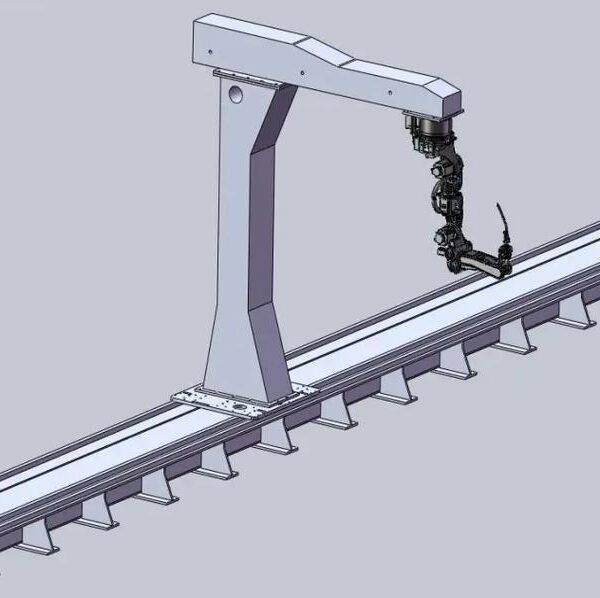

Cantilever Welding Robot solution
-
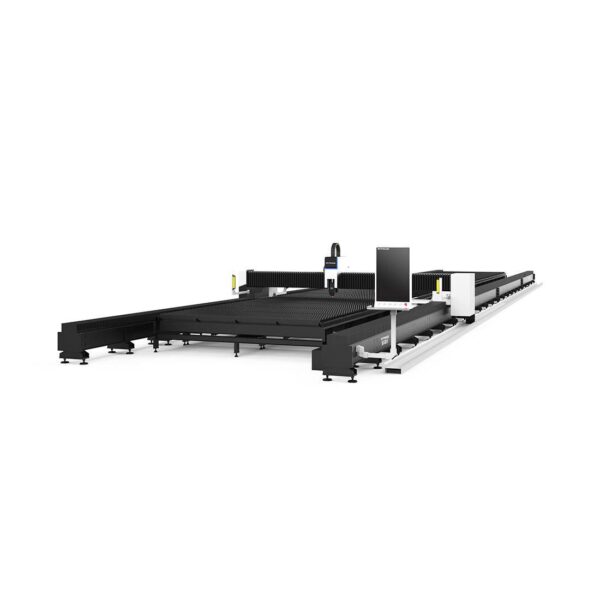

GF laser cutting machine
-
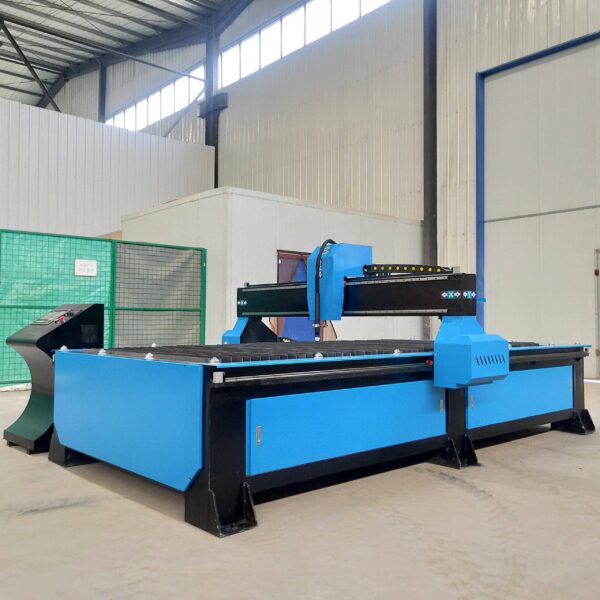
P3015 plasma cutting machine
-

LFP3015 Fiber Laser Cutter
-
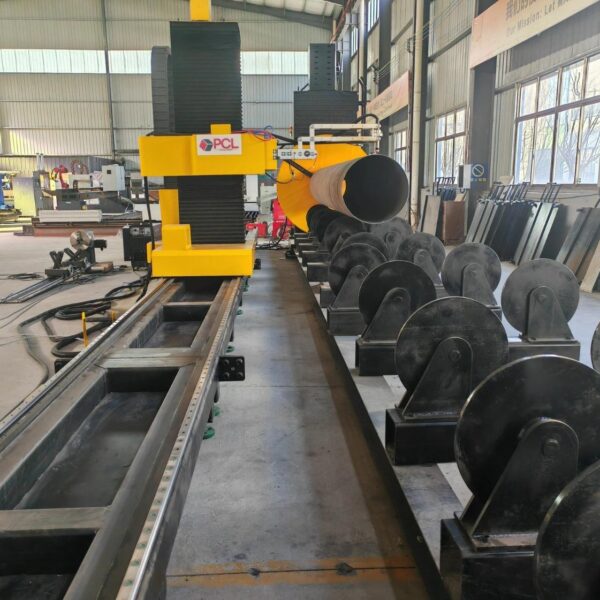
pipe plasma cutting machine
-
LFH 4020 Fiber Laser Cutting Machine
-
LFP4020
-
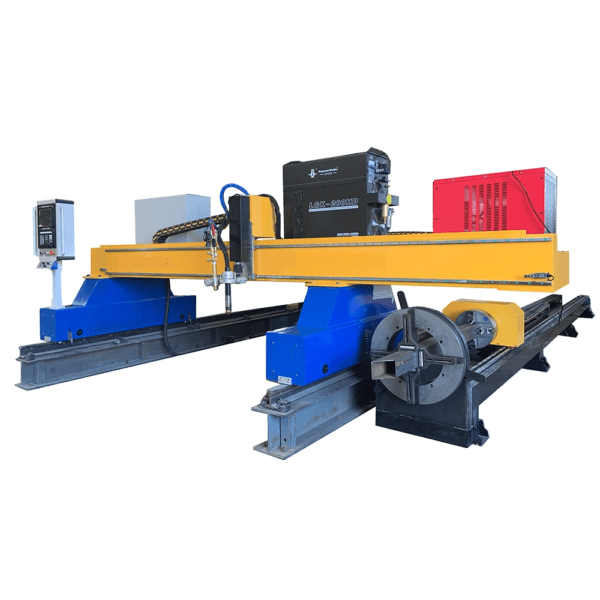
gantry plasma air cutting machine
-
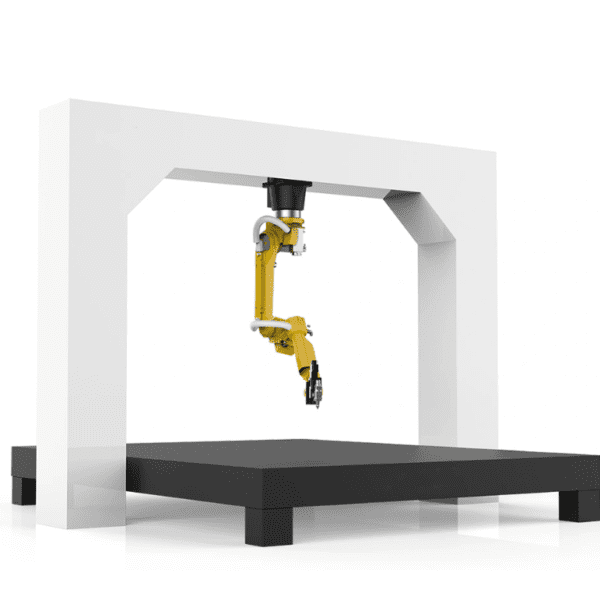
3D robot cutting machine
-
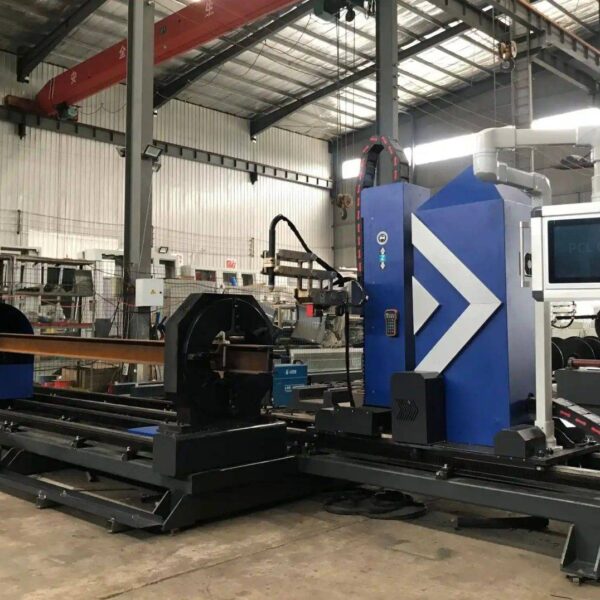
8 axis plasma cutting machine
-
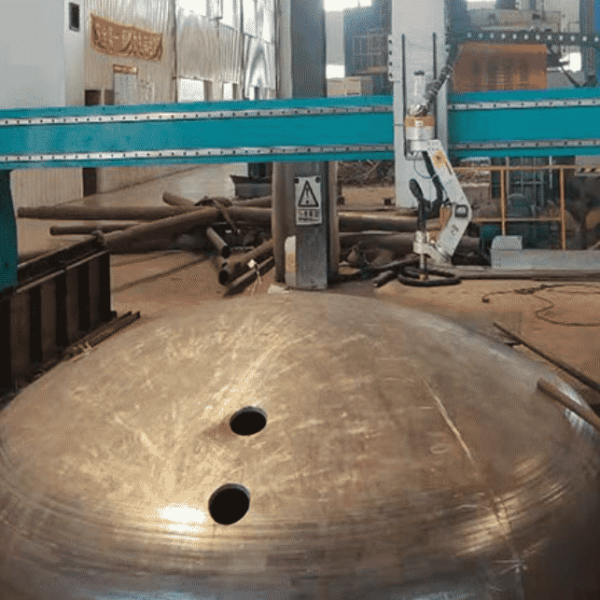
5 axis plasma cutting machine
-

LT360 tube laser cutting machine
-
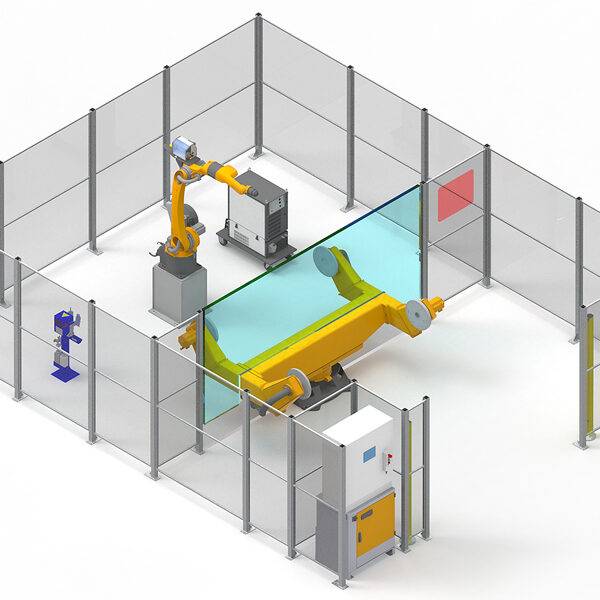
robot welding workstation
-
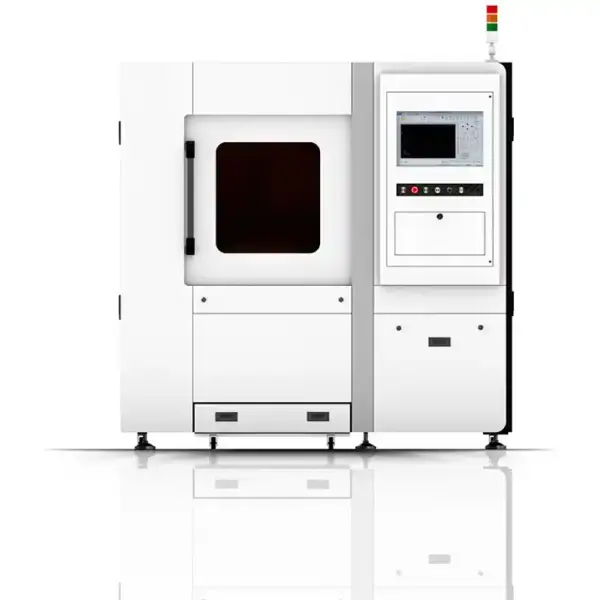
SF6060 fiber laser cutting machine
Advanced Fiber Laser Tube Processing Technology
Our CNC Fiber Laser Tube Cutting systems revolutionize metal fabrication by integrating high-precision cutting, punching, and profiling into a single automated workflow. Designed for versatility, this technology handles a wide array of profiles including Round, Square, Rectangular, and Oval tubes, as well as complex L-shaped and U-shaped channels.
- Precision Punching: High-speed hole punching with micron-level accuracy, eliminating the need for mechanical drilling or die-stamping.
- Complex Profiling: Advanced 3D pathing allows for intricate interlocking joints and specialized notch cuts, ideal for structural frames.
- High Material Efficiency: Intelligent nesting software minimizes scrap, reducing raw material costs across large production runs.
- Clean Finish: Delivers oxide-free, burr-free edges that require zero secondary grinding before welding.

Seamlessly processing multiple profiles with consistent precision.
Global Delivery & Logistics



From our high-tech manufacturing facility directly to your global site. PCL WeldCut ensures secure packaging, professional handling, and reliable international logistics to safeguard your equipment throughout the entire journey.