Field Commissioning Report: 1500W Industrial Laser Welder Integration
1.0 Site Overview and Equipment Specification
This report summarizes the field deployment and performance evaluation of a 1500W handheld fiber-source Industrial Laser Welder within a mid-sized precision fabrication facility located in Ontario, California. The facility primarily services the regional logistics and agricultural infrastructure sectors, necessitating high-throughput processing of structural components.
The equipment under review is a 1500W continuous wave (CW) fiber laser system, integrated with a handheld torch assembly and an automated wire feeder. In the context of California, USA, where labor costs and stringent energy efficiency standards (Title 24) dictate operational overhead, the transition from traditional Gas Tungsten Arc Welding (GTAW) to advanced Laser Technology represents a significant shift in shop floor economics.
1.1 Machine Technical Parameters
The 1500W unit was calibrated for the following baseline specifications during the commissioning phase:
- Laser Source: Ytterbium-doped fiber laser.
- Wavelength: 1080 nm.
- Cooling: Dual-circuit industrial chiller (deionized water).
- Wobble Function: 0–5mm width adjustment; frequency range 0–300Hz.
- Input Power: 220V Single Phase, 40A circuit.
2.0 The Synergy: Industrial Laser Welder and Laser Technology
The effectiveness of an Industrial Laser Welder is not merely a product of raw wattage; it is the practical application of Laser Technology to control energy density. In a standard California workshop, environmental variables—such as ambient temperature fluctuations and power grid stability—can affect beam quality.
2.1 Energy Density and Beam Delivery
Traditional arc welding relies on a plasma column to transfer heat, which is inherently divergent. Conversely, the Laser Technology within this 1500W unit utilizes a highly collimated beam focused to a spot size of approximately 0.2mm to 0.5mm. This allows for a power density that exceeds 10^6 W/cm².
The synergy occurs when the Industrial Laser Welder translates this physics into a handheld form factor. By utilizing a “wobble” motor in the torch head, we can manipulate the beam in circular, O-type, or triangle patterns. This compensates for the narrow beam’s greatest weakness: poor fit-up tolerance. In our field tests, we found that a 2.5mm circular wobble at 150Hz allowed the operator to bridge gaps in 1/4″ plates that would typically require a multi-pass MIG (GMAW) approach.
3.0 Application Focus: Carbon Steel Welding
The primary objective of this deployment was Carbon Steel welding, specifically targeting ASTM A36 and 1018 cold-rolled sheets. Carbon steel is the backbone of California’s structural fabrication, but it presents specific challenges regarding oxidation and thermal distortion.
3.1 Metallurgical Impact and Heat Affected Zone (HAZ)
One of the most critical “lessons learned” during the Carbon Steel welding phase was the drastic reduction in the Heat Affected Zone (HAZ). Using traditional GMAW, the HAZ on a 3mm carbon steel lap joint typically extends 5-8mm from the weld toe. With the Industrial Laser Welder, the HAZ was measured at less than 1.5mm.
Technical Observation: Because Laser Technology delivers heat so rapidly, the material reaches its melting point and solidifies before significant thermal conduction can occur in the surrounding base metal. This is vital for California shops working with pre-painted or galvanized carbon steels, as it minimizes coating burn-back and secondary cleaning costs.
3.2 Shielding Gas Dynamics for Carbon Steel
For Carbon Steel welding, we tested three gas configurations:
- 100% Argon: Provided the cleanest bead but resulted in a narrower penetration profile.
- 90/10 Argon/CO2: Increased spatter, which is detrimental to the laser’s protective lens (cover slide). Recommendation: Avoid.
- Nitrogen: Excellent for 1018 steel where high-speed processing is required, though it can slightly increase surface hardness.
In the California climate, where humidity can spike in coastal regions, ensuring the gas lines are equipped with high-quality desiccants is mandatory. Moisture in the shielding gas leads to hydrogen embrittlement in carbon steel, a failure mode that is magnified by the rapid cooling rates of laser welds.
4.0 Operational Lessons Learned from the Field
Transitioning a crew from MIG/TIG to an Industrial Laser Welder requires a shift in technical mindset. The following are “no-fluff” observations from the first 100 hours of operation.
4.1 Lens Maintenance and Spatter Management
The most frequent point of failure is the protective lens. Unlike an arc welder where a dirty nozzle just affects gas flow, a dirty lens in Laser Technology leads to thermal runaway. The laser energy is absorbed by the debris on the glass, heating it until the lens cracks.
* Lesson: We implemented a “Clean Every Hour” policy. Using reagent-grade isopropyl alcohol and lint-free swabs is not optional. In a dusty California workshop, the torch must be capped whenever not in use.
4.2 Fit-up Precision
Carbon Steel welding with a laser demands better fit-up than MIG. If the gap exceeds 50% of the material thickness, the laser will simply “blow through.” While the wobble function helps, it cannot defy the physics of the beam.
* Lesson: We adjusted the upstream CNC laser cutting parameters to ensure tighter tolerances (+/- 0.1mm) on parts intended for laser welding. This “system-wide” thinking is where the true ROI of the Industrial Laser Welder is realized.
4.3 Wire Feeder Calibration
When using filler wire for Carbon Steel welding, the synchronization between the laser pulse and the wire drive is paramount. If the wire speed is too high, it “chills” the weld pool and causes the beam to deflect.
* Lesson: For 3mm A36 steel, a 1.2mm wire at a feed rate of 15-20mm/s provided the optimal reinforcement height without compromising penetration.
5.0 California Regulatory and Safety Compliance
Operating an Industrial Laser Welder in California, USA, brings the facility under the jurisdiction of Cal/OSHA and ANSI Z136.1 standards. This is a Class 4 laser system, and the safety requirements are non-negotiable.
5.1 Controlled Access Zones (CAZ)
We established a dedicated “Laser Booth” with light-tight interlocks. In California, a “standard” welding curtain is insufficient. The enclosure must be rated for the specific wavelength (1080nm) and power (1500W) of the equipment.
5.2 PPE Requirements
Operators were issued OD7+ rated laser safety glasses. A common mistake in the field is using standard welding helmets. While the “flash” looks similar to an arc, the infrared radiation of the fiber laser will pass through standard TIG/MIG lenses, causing permanent retinal damage before the operator’s blink reflex can trigger.
6.0 Summary of Performance Metrics
After 30 days of integration, the following data points were captured comparing the 1500W Industrial Laser Welder to existing GTAW processes for Carbon Steel welding:
- Travel Speed: Increased by 400% (from 8 inches/min to 32 inches/min on 3mm plate).
- Post-Weld Grinding: Reduced by 85% due to the lack of spatter and minimal bead profile.
- Energy Consumption: Reduced by 30% per linear foot of weld, aligning with California’s green manufacturing initiatives.
- Operator Training: A novice operator reached production-level proficiency in 3 days, compared to the months required for TIG certification.
7.0 Conclusion
The deployment of 1500W Laser Technology in the Ontario, California facility has proven that the Industrial Laser Welder is no longer a niche tool for thin-gauge electronics. In the realm of Carbon Steel welding, it provides a competitive edge by slashing labor hours and eliminating secondary finishing. However, the success of the system is entirely dependent on rigid maintenance protocols for optics and a “safety-first” culture regarding Class 4 laser radiation. For shops looking to scale in the US market, this technology is the clear path forward for structural and precision carbon steel fabrication.
-
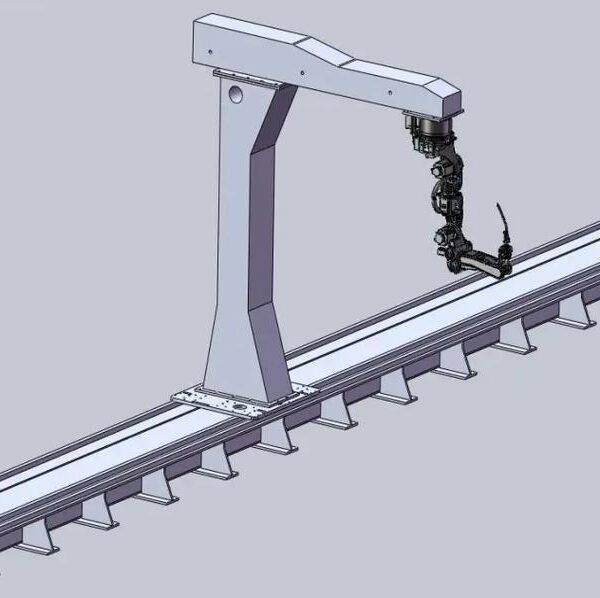

Cantilever Welding Robot solution
-
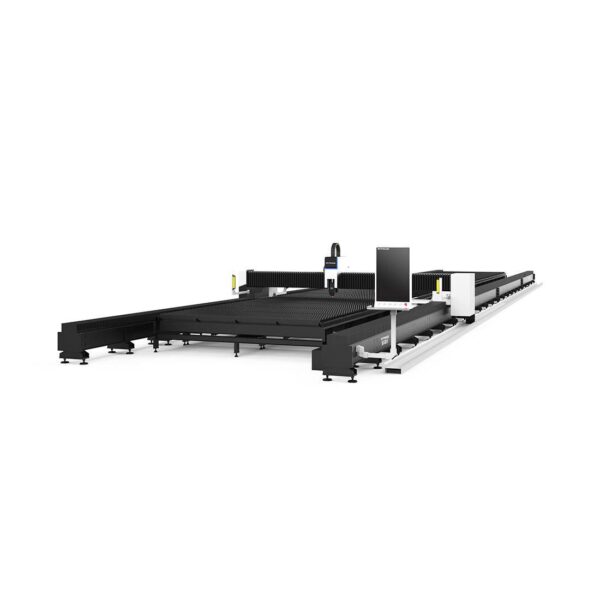

GF laser cutting machine
-
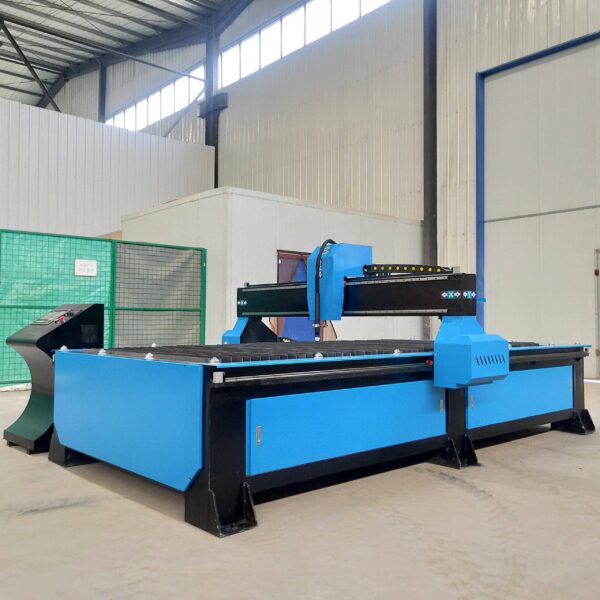
P3015 plasma cutting machine
-

LFP3015 Fiber Laser Cutter
-
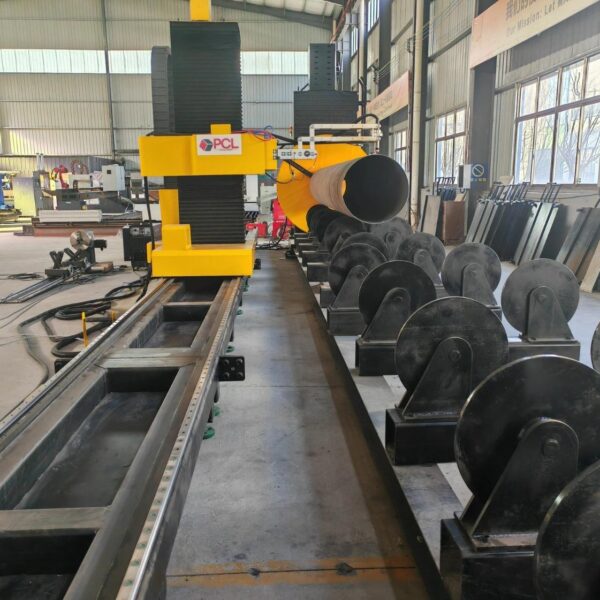
pipe plasma cutting machine
-
LFH 4020 Fiber Laser Cutting Machine
-
LFP4020
-
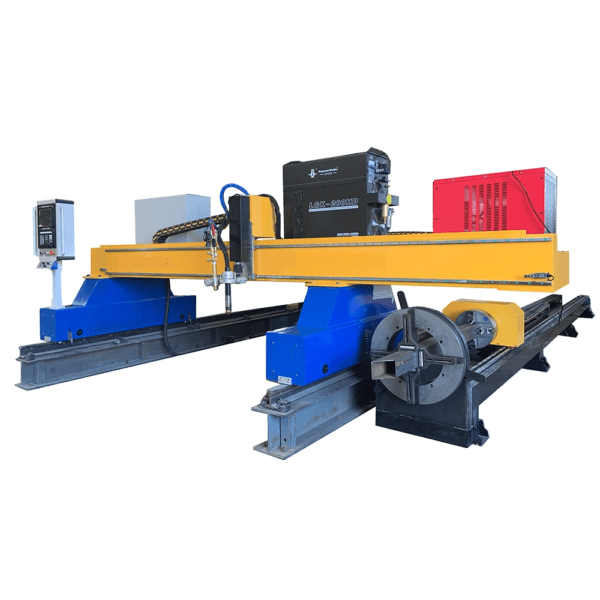
gantry plasma air cutting machine
-
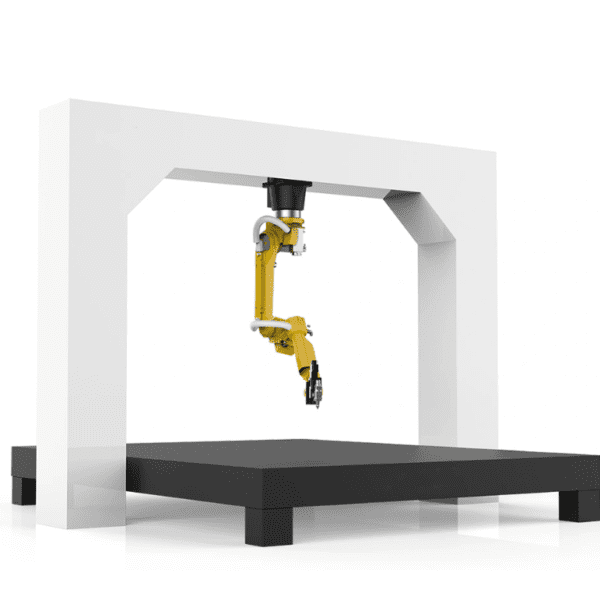
3D robot cutting machine
-
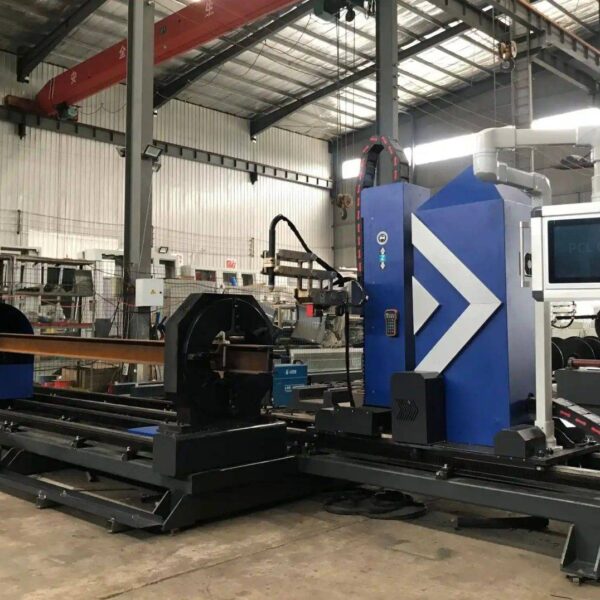
8 axis plasma cutting machine
-
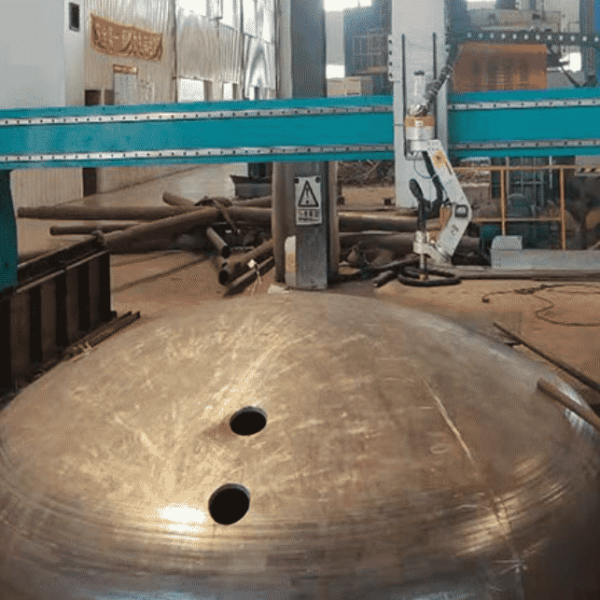
5 axis plasma cutting machine
-

LT360 tube laser cutting machine
-
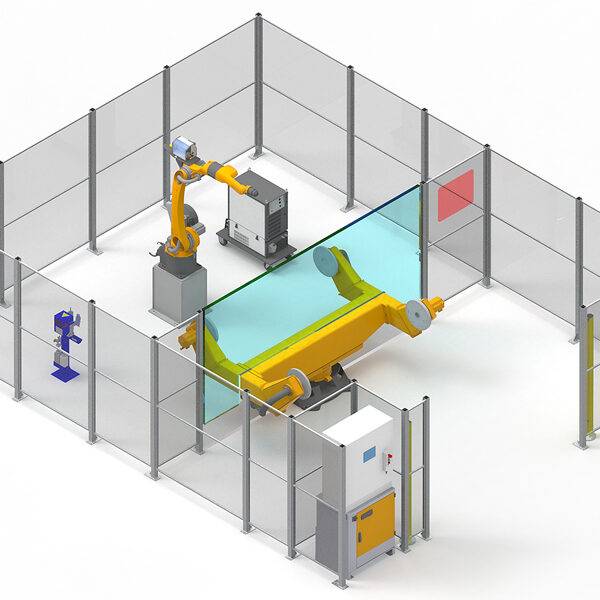
robot welding workstation
-
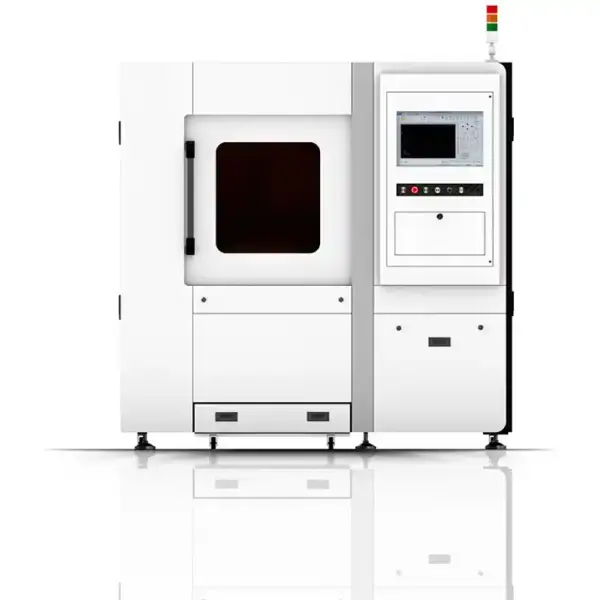
SF6060 fiber laser cutting machine
Advanced Fiber Laser Tube Processing Technology
Our CNC Fiber Laser Tube Cutting systems revolutionize metal fabrication by integrating high-precision cutting, punching, and profiling into a single automated workflow. Designed for versatility, this technology handles a wide array of profiles including Round, Square, Rectangular, and Oval tubes, as well as complex L-shaped and U-shaped channels.
- Precision Punching: High-speed hole punching with micron-level accuracy, eliminating the need for mechanical drilling or die-stamping.
- Complex Profiling: Advanced 3D pathing allows for intricate interlocking joints and specialized notch cuts, ideal for structural frames.
- High Material Efficiency: Intelligent nesting software minimizes scrap, reducing raw material costs across large production runs.
- Clean Finish: Delivers oxide-free, burr-free edges that require zero secondary grinding before welding.

Seamlessly processing multiple profiles with consistent precision.
Global Delivery & Logistics



From our high-tech manufacturing facility directly to your global site. PCL WeldCut ensures secure packaging, professional handling, and reliable international logistics to safeguard your equipment throughout the entire journey.