Field Engineering Report: Commissioning of 1000W Automated MAG Welding Cell
1. Introduction and Site Context: Cairo Industrial Zone
The deployment of the 1000W Automated MAG Welding Cell at the Cairo facility was initiated to address the increasing demand for high-conductivity thermal assemblies. Unlike standard structural steel fabrication, this project focuses on the precision integration of Copper Components welding within a high-output production environment. Cairo’s industrial climate—specifically the high ambient temperatures and particulate matter—presents unique challenges for automated Arc Welding Solutions. This report outlines the technical parameters, the operational synergy of the equipment, and the lessons learned during the first 30 days of site integration.
2. Technical Specification of the Automated MAG Welding Cell
The core of the installation is a 1000W-rated precision MAG (Metal Active Gas) system. In this specific application, the “1000W” designation refers to the controlled energy input threshold designed for thin-gauge conductivity plates. The Automated MAG Welding Cell comprises a 6-axis robotic manipulator, a high-frequency inverter power source, and a specialized wire-drive system designed to handle soft alloy wires without deformation.
2.1 Power Modulation and Arc Stability
The stability of the arc at 1000W levels is critical. We observed that fluctuations in the Cairo grid necessitated the installation of a dedicated industrial voltage stabilizer. The Arc Welding Solutions implemented here utilize a pulsed-current waveform to manage the high thermal conductivity of copper. By oscillating the current, we achieved a stable “spray transfer” mode even at lower average wattages, which is essential for minimizing burn-through on 2mm copper substrates.
3. Implementing Arc Welding Solutions in High-Conductivity Applications
Integrating Arc Welding Solutions into an automated environment requires more than just hardware; it requires a deep understanding of the metallurgical response of the workpiece. In Cairo, we faced an immediate issue with rapid heat dissipation.
3.1 Shielding Gas Optimization
Initial tests used standard Argon. However, the Copper Components welding process suffered from a lack of fusion due to copper’s ability to “sink” heat away from the weld pool. Our solution was a tri-mix gas optimization (Argon, Helium, and a trace percentage of CO2). The Helium component increases the ionization potential, providing a hotter arc that compensates for the 1000W ceiling, ensuring deep penetration into the copper joints.
3.2 Torch Geometry and Accessibility
The Automated MAG Welding Cell was configured with a 45-degree swan neck torch. This geometry was necessary to navigate the complex heat-sink fins attached to the primary copper busbars. The integration of Arc Welding Solutions included a laser-line seam tracker, which compensated for the thermal expansion of copper during the welding cycle—a factor that often causes manual welding attempts to fail in precision electronics.
4. The Challenges of Copper Components Welding
Copper Components welding is notoriously difficult due to the material’s high thermal conductivity (roughly 10 times that of carbon steel) and its affinity for oxygen at elevated temperatures.
4.1 Porosity Control
In the Cairo workshop, humidity levels can fluctuate significantly. Moisture in the air dissociates in the arc, leading to hydrogen porosity in copper. We addressed this by implementing a pre-weld induction heating station within the Automated MAG Welding Cell. By raising the copper temperature to 150°C prior to arc strike, we eliminated surface moisture and reduced the thermal gradient, resulting in a 40% reduction in radiographic failures.
4.2 Filler Wire Management
We utilized a Deoxidized Copper (ERCu) filler wire. A recurring field issue was “bird-nesting” at the feed rollers. The Arc Welding Solutions team replaced standard V-groove rollers with U-groove polished rollers and a Teflon liner to ensure the 0.8mm wire reached the contact tip without work-hardening or shaving, which is vital for the 24/7 duty cycle required by the Cairo plant.
5. Synergy: Integrating the Cell with Arc Solutions
The true efficiency of the Cairo site comes from the synergy between the Automated MAG Welding Cell and the broader Arc Welding Solutions package. This isn’t merely a robot arm and a welder; it is a closed-loop feedback system.
5.1 Real-Time Parameter Monitoring
The cell’s software suite provides real-time data logging. For every Copper Components welding sequence, the system records voltage, amperage, and gas flow. In Cairo, we used this data to correlate “cold start” defects with the morning ambient temperature shifts. By adjusting the start-up parameters in the Arc Welding Solutions software, we automated a “warm-up” pass on a scrap block, ensuring the Automated MAG Welding Cell was at thermal equilibrium before touching production parts.
5.2 Reductions in Post-Weld Processing
Before automation, manual MAG welding required significant grinding and despattering. The 1000W automated system, coupled with optimized pulse-arc solutions, produced a “ripple-free” bead profile. This synergy eliminated the need for secondary finishing, reducing the total cycle time per component from 12 minutes to 4.5 minutes.
6. Lessons Learned from the Cairo Field Site
Senior engineering requires a candid assessment of failures and adjustments. The following “Lessons Learned” are derived from 500+ hours of operation on the Cairo line.
6.1 Environmental Protection (Dust and Heat)
The Automated MAG Welding Cell is sensitive to Cairo’s fine dust. We discovered that dust accumulation on the optical sensors of the seam tracker led to a 2mm offset in the weld path.
* *Action Taken:* Installed a positive-pressure filtered air curtain around the sensor head. This is a mandatory modification for any Arc Welding Solutions deployed in desert or high-particulate environments.
6.2 Consumable Life Cycles
The high thermal reflectivity of copper back into the torch shortened the life of standard copper contact tips. We switched to Chrome-Zirconium-Copper (CuCrZr) tips. While more expensive, they maintained dimensional stability under the intense radiative heat of the Copper Components welding process, providing a 300% increase in tip life.
6.3 Grounding Consistency
Irregular grounding in the workshop caused intermittent arc wandering. We moved from a standard spring clamp to a rotating heavy-duty brass ground integrated directly into the Automated MAG Welding Cell turntable. This ensured a constant path of least resistance, which is vital when operating at the 1000W precision threshold.
7. Operational Impact and Throughput Analysis
Since the integration of the Automated MAG Welding Cell, the Cairo facility has seen a 150% increase in throughput for copper heat exchangers. The consistency of the Arc Welding Solutions has moved the “quality ceiling” from human skill-dependency to algorithmic precision.
The Copper Components welding rejects have dropped from 12% (manual MAG) to less than 0.5% (automated MAG). This justifies the higher initial CAPEX of the 1000W system. The synergy between the hardware and the specialized gas/wire solutions has proven that even “difficult” materials like copper can be successfully mass-produced in challenging environments like Egypt.
8. Conclusion and Future Recommendations
The Cairo project confirms that a 1000W Automated MAG Welding Cell is a viable solution for Copper Components welding when supported by site-specific Arc Welding Solutions. Future installations should prioritize environmental controls (air filtration) and specialized metallurgy-focused shielding gas blends from day one. We recommend the next phase of the project include an automated ultrasonic testing (UT) station integrated directly into the cell’s out-feed to provide immediate quality verification.
End of Report.
*Signed, Senior Welding Engineer, Cairo Site Operations.*
-
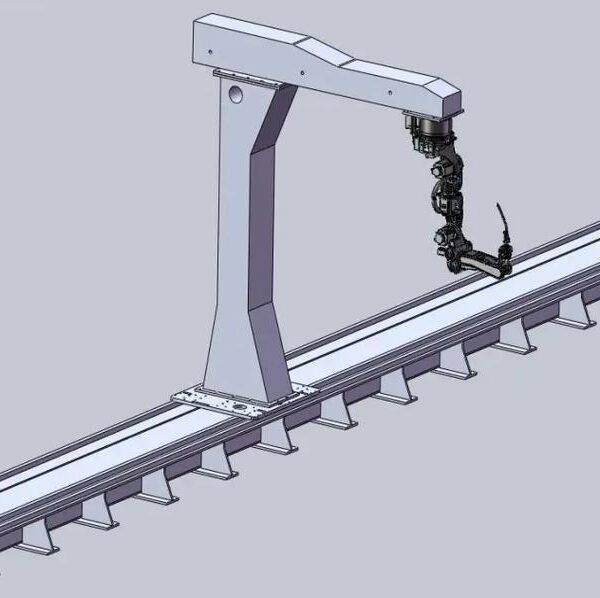

Cantilever Welding Robot solution
-
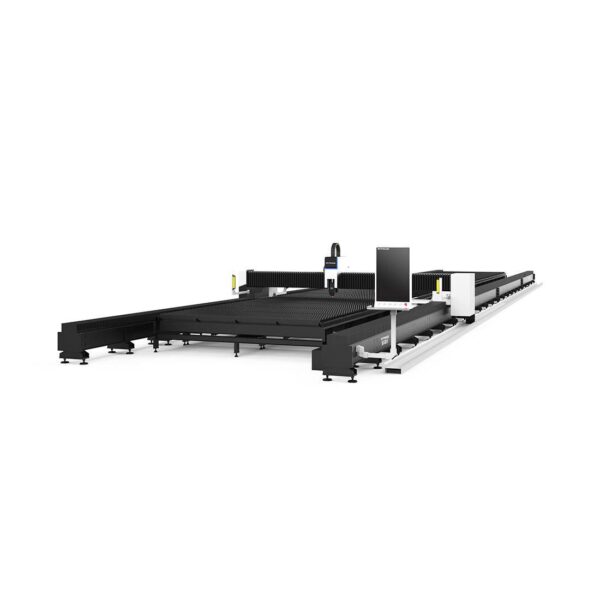

GF laser cutting machine
-
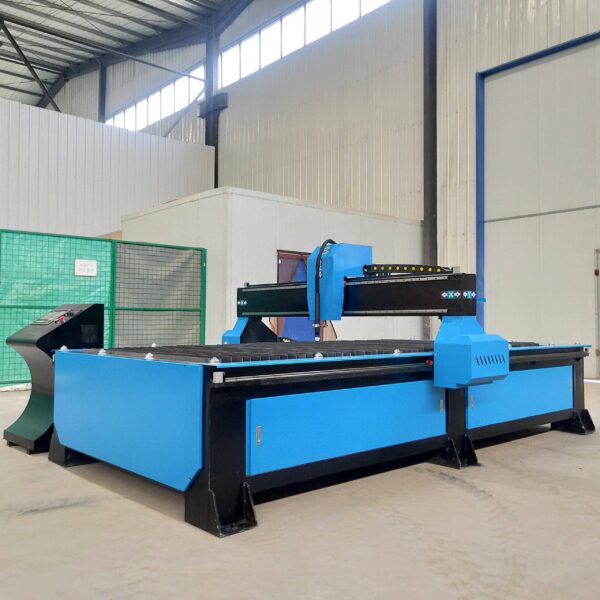
P3015 plasma cutting machine
-

LFP3015 Fiber Laser Cutter
-
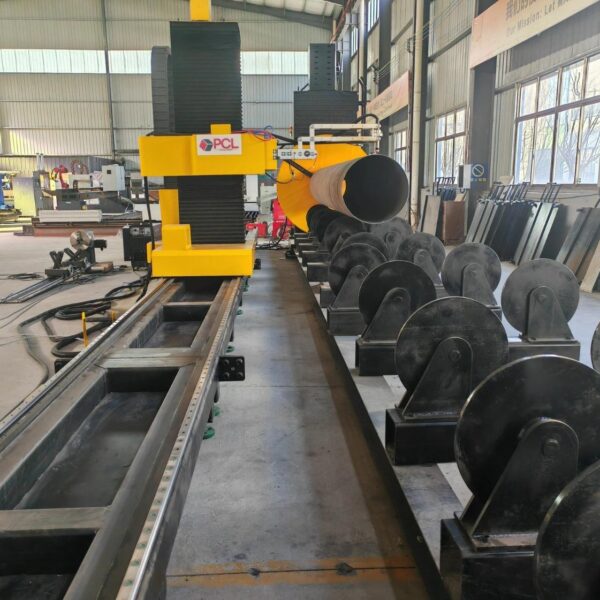
pipe plasma cutting machine
-
LFH 4020 Fiber Laser Cutting Machine
-
LFP4020
-
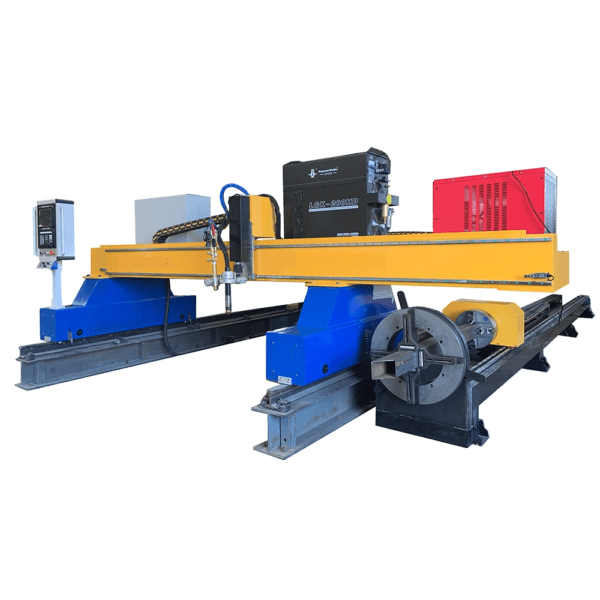
gantry plasma air cutting machine
-
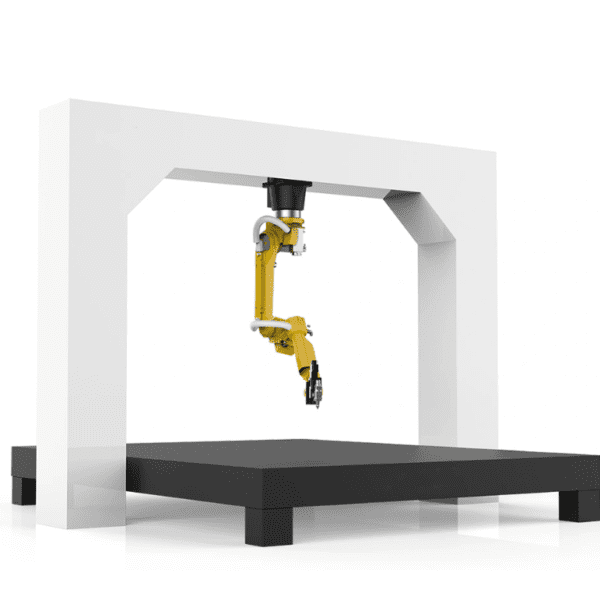
3D robot cutting machine
-
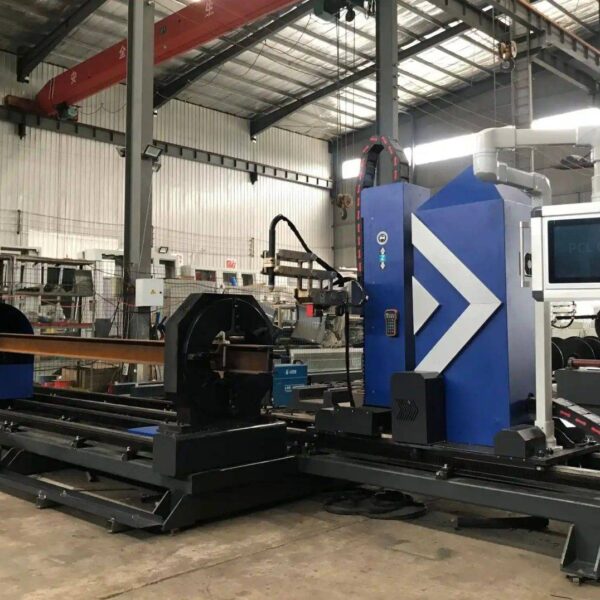
8 axis plasma cutting machine
-
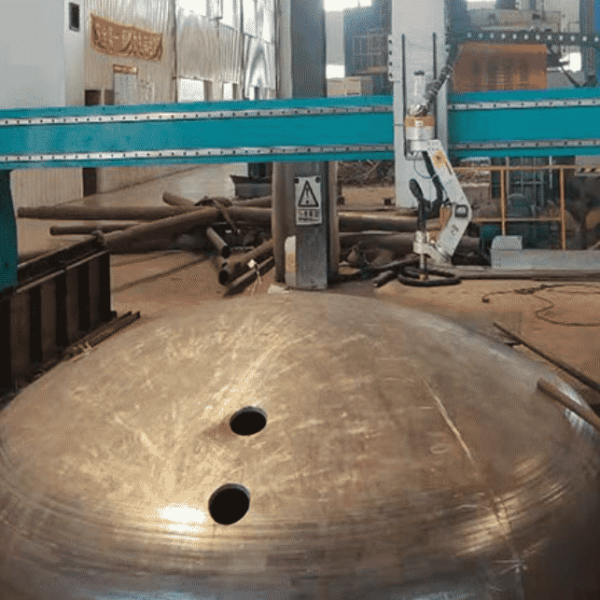
5 axis plasma cutting machine
-

LT360 tube laser cutting machine
-
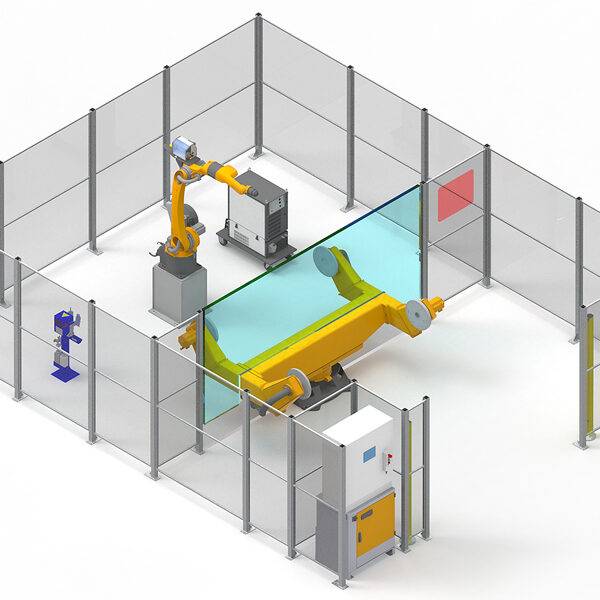
robot welding workstation
-
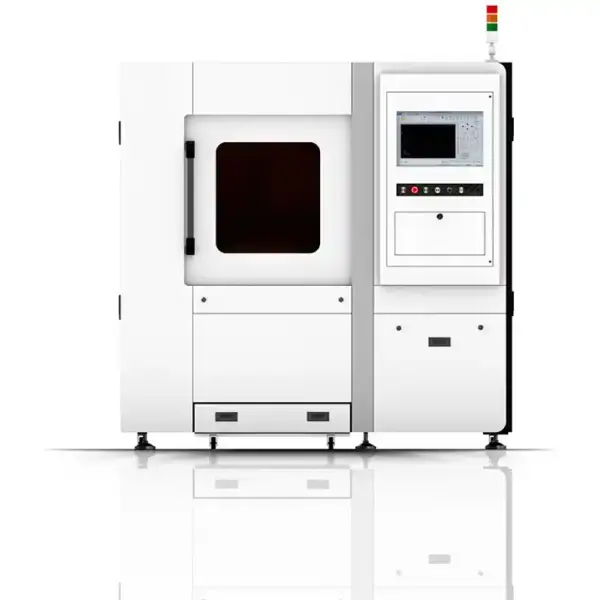
SF6060 fiber laser cutting machine
Advanced Fiber Laser Tube Processing Technology
Our CNC Fiber Laser Tube Cutting systems revolutionize metal fabrication by integrating high-precision cutting, punching, and profiling into a single automated workflow. Designed for versatility, this technology handles a wide array of profiles including Round, Square, Rectangular, and Oval tubes, as well as complex L-shaped and U-shaped channels.
- Precision Punching: High-speed hole punching with micron-level accuracy, eliminating the need for mechanical drilling or die-stamping.
- Complex Profiling: Advanced 3D pathing allows for intricate interlocking joints and specialized notch cuts, ideal for structural frames.
- High Material Efficiency: Intelligent nesting software minimizes scrap, reducing raw material costs across large production runs.
- Clean Finish: Delivers oxide-free, burr-free edges that require zero secondary grinding before welding.

Seamlessly processing multiple profiles with consistent precision.
Global Delivery & Logistics



From our high-tech manufacturing facility directly to your global site. PCL WeldCut ensures secure packaging, professional handling, and reliable international logistics to safeguard your equipment throughout the entire journey.