Double Pulse Robotic Arm Welder – Curitiba, Brazil
In this article
- Field Technical Report: Double Pulse Implementation in Curitiba Industrial District
- 1. Site Context and Objective
- 2. The Hardware Synergy: Robotic Arm Welder and Industrial Automation
- 3. Technical Deep Dive: Thin Metal Sheet Welding
- 4. Integration Challenges in the Curitiba Workshop
- 5. Data Analysis: Manual vs. Automated Results
- 6. Lessons Learned from the Field
- 7. Conclusion and Recommendations
Field Technical Report: Double Pulse Implementation in Curitiba Industrial District
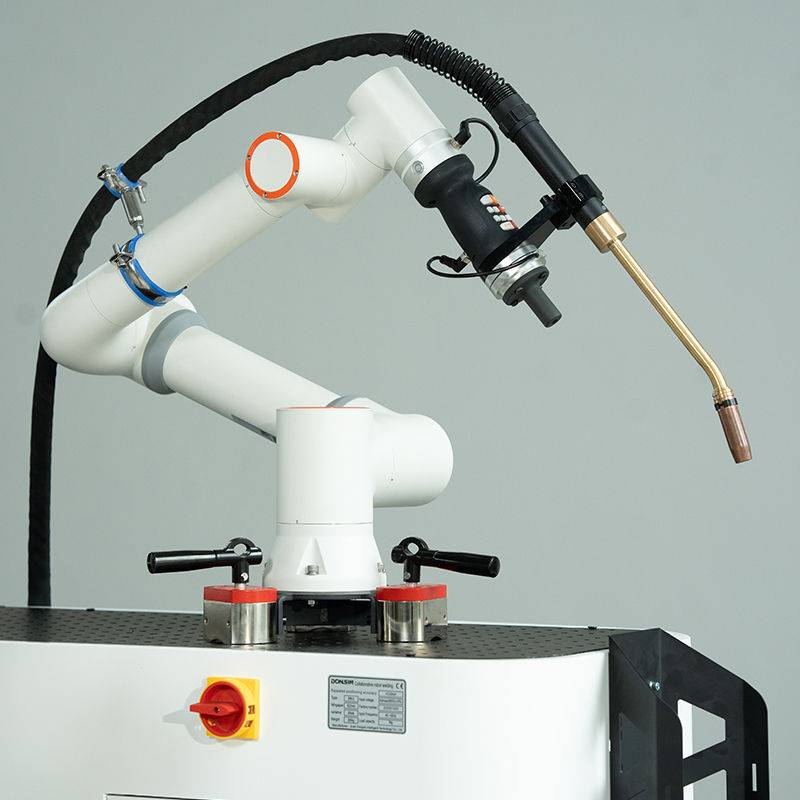
This report details the commissioning and optimization of a 6-axis Robotic Arm Welder system at our manufacturing facility in the Cidade Industrial de Curitiba (CIC), Brazil. The project objective was to transition from manual TIG processes to a fully integrated Industrial Automation solution focused specifically on Thin Metal Sheet welding (1.2mm to 2.0mm 5052 Aluminum and 304 Stainless Steel).
1. Site Context and Objective
The Curitiba plant operates under significant thermal fluctuations which impact gas shielding stability and material expansion. Previous manual interventions resulted in a 14% scrap rate due to burn-through and warping. By introducing a Robotic Arm Welder equipped with a high-speed inverter power source capable of double-pulse waveforms, we aimed to reduce the Heat Affected Zone (HAZ) while maintaining a production cadence required by the Tier 1 automotive contracts currently held by the facility.
2. The Hardware Synergy: Robotic Arm Welder and Industrial Automation
The core of this installation is the synergy between the mechanical precision of the Robotic Arm Welder and the overarching Industrial Automation ecosystem. In Curitiba, we integrated the arm with a centralized PLC (Programmable Logic Controller) that manages not just the weld path, but the pneumatic clamping sequence and real-time gas flow monitoring.
2.1 Kinematic Precision
A Robotic Arm Welder offers a level of Tool Center Point (TCP) repeatability that manual operators cannot achieve over an eight-hour shift. In Thin Metal Sheet welding, a deviation of even 0.5mm can result in the arc missing the joint interface, leading to “cold laps” or edge melt. Our field tests in the Curitiba lab showed that the robotic arm maintained a consistent 1.5mm standoff distance, which is critical when the voltage is modulated at high frequencies.
2.2 Automation Logic
Industrial Automation in this context refers to the “Cell Logic.” We implemented an Interlock System where the Robotic Arm Welder communicates with the jig sensors. If the thin metal sheets are not seated within a 0.1mm tolerance, the arc will not strike. This prevented the common issue of welding “air” or destroying expensive copper backing bars due to part misalignment—a frequent failure point in our previous manual setup.
3. Technical Deep Dive: Thin Metal Sheet Welding
Welding sheets thinner than 2.0mm requires a delicate balance of energy input. The “Double Pulse” technology used here effectively creates a “weld-on-weld” aesthetic and structural integrity by oscillating between a high-energy peak current and a low-energy base current.
3.1 Waveform Modulation
During the Curitiba trials, we set the primary pulse to handle penetration and the secondary (slower) pulse to allow the weld pool to partially solidify. This “shingled” bead appearance is not just for aesthetics; it significantly reduces the average current. In Thin Metal Sheet welding, reducing the average amperage by 15-20% through double-pulse modulation was the only way to prevent the 1.2mm aluminum from collapsing under its own molten weight.
3.2 Thermal Management
The high ambient humidity in Curitiba during the summer months can affect arc stability. The Robotic Arm Welder compensates for this through an adaptive arc length control algorithm. When the Industrial Automation system detects a change in wire feed resistance or voltage fluctuations, it adjusts the pulse frequency on the fly to maintain a stable plasma column.
4. Integration Challenges in the Curitiba Workshop
No field deployment is without friction. We encountered three specific technical hurdles during the first two weeks of operation.
4.1 Grounding and EMI
The Industrial Automation sensors were initially picking up electromagnetic interference (EMI) from the Robotic Arm Welder’s high-frequency start. We had to redesign the common ground busbar in the Curitiba facility to isolate the logic circuits from the welding current. This is a common “lesson learned” when combining high-power inverter welders with sensitive PLC environments.
4.2 Wire Feed Consistency
For Thin Metal Sheet welding, we use 0.8mm and 1.0mm wire. The long umbilical on the robotic arm initially caused “bird-nesting” at the drive rolls. We solved this by installing a front-drive “Push-Pull” torch. The Robotic Arm Welder must have a synchronized motor at the torch head to ensure the wire doesn’t buckle, especially when the arm is at extreme reach angles near the bottom of the workpiece jigs.
5. Data Analysis: Manual vs. Automated Results
After 30 days of Industrial Automation implementation, the metrics for the Curitiba line were analyzed against the previous year’s manual benchmarks.
- Cycle Time: Reduced from 420 seconds to 115 seconds per unit.
- Gas Consumption: Reduced by 30% due to the Robotic Arm Welder’s precise pre-flow and post-flow timings, which are optimized in the automation script.
- Distortion: Transverse shrinkage in the Thin Metal Sheet welding process was reduced by 60%, eliminating the need for post-weld hydraulic straightening.
6. Lessons Learned from the Field
As a senior engineer, the “lessons learned” section is the most vital part of this report. If you are deploying a Robotic Arm Welder in a similar industrial environment, consider the following:
6.1 The “Gap” Fallacy
Many assume Industrial Automation can fix poor part fit-up. It cannot. Thin Metal Sheet welding is extremely sensitive to gaps. If your stamping department delivers sheets with a gap exceeding 10% of the material thickness, the robot will burn through. We had to implement a stricter QC gate on the stamping line before the parts even reached the robotic cell.
6.2 Shielding Gas Laminar Flow
In Curitiba, we found that the shop floor’s overhead fans were creating turbulence that disrupted the shielding gas at the robot’s nozzle. Even though the Robotic Arm Welder was following the path perfectly, we were getting porosity. We had to install localized shielding curtains around the automation cell to ensure laminar gas flow over the thin melt pool.
6.3 Torch Angle and TCP Calibration
The transition between “Push” and “Pull” angles on a 6-axis arm needs to be carefully programmed during the “Air Move” phase. In Thin Metal Sheet welding, an incorrect torch angle leads to an asymmetric HAZ, which causes the sheet to “oil-can” (pop out of plane). We found that a consistent 15-degree lead angle provided the best balance between penetration and surface tension management.
7. Conclusion and Recommendations
The deployment of the Robotic Arm Welder in Curitiba has been a technical success. The synergy between Industrial Automation and the double-pulse power source has solved the primary issue of thermal distortion in Thin Metal Sheet welding.
Moving forward, I recommend the following:
- Predictive Maintenance: Implement a schedule to check the robotic arm’s cable harness every 500 arc-hours. The twisting motion required for complex sheet geometries puts high stress on the internal conduits.
- Software Updates: Continue to refine the “Pulse-on-Pulse” settings as we move into thinner 0.8mm gauge materials next quarter.
- Training: Transition our best manual welders into “Robot Technicians.” Their knowledge of weld pool behavior is invaluable for troubleshooting the Industrial Automation logic when the base metal chemistry fluctuates.
The Curitiba project serves as a blueprint for our other Latin American facilities. By focusing on the intersection of robotic precision and advanced waveform control, we have turned a high-risk manual process into a stable, high-throughput automated asset.
End of Report.
Senior Welding Engineer, Field Operations – Curitiba District.







